

 Download PDF
Market Overview
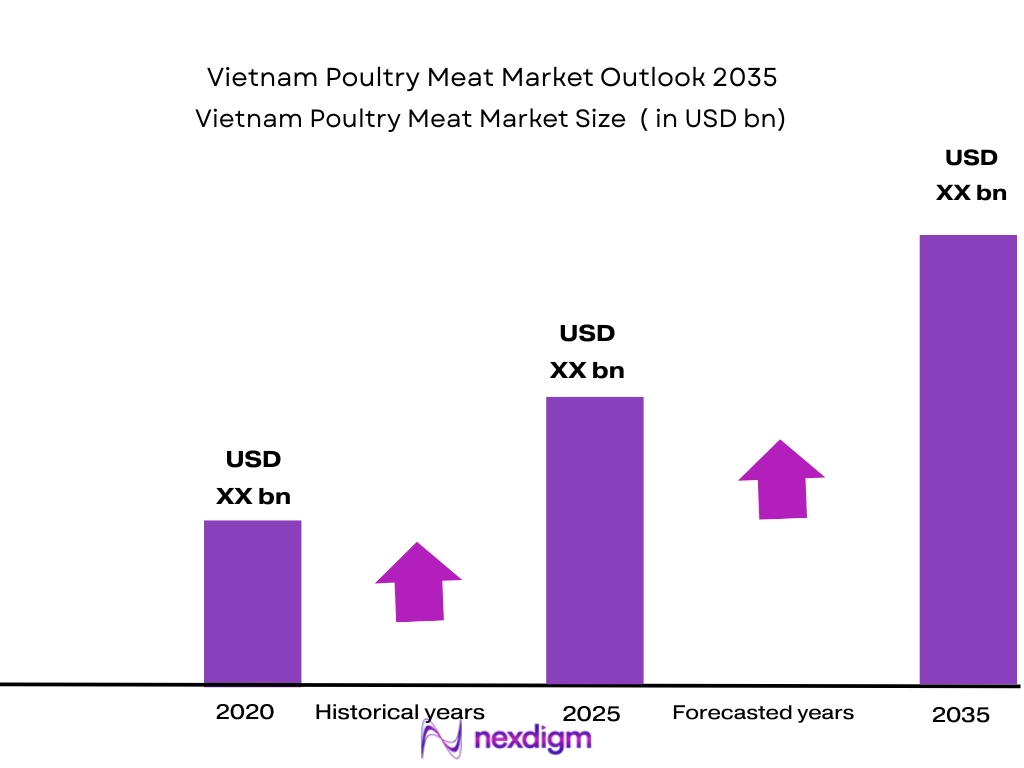
The Vietnam Poultry Meat Market is valued at USD ~ billion, based on a five-year historical analysis, with the wider poultry category reaching USD 9,050.9 million on the latest published baseline and expected to expand at a 7.18% CAGR over the forward period. The market is driven by higher protein intake, urban foodservice demand, and domestic poultry output of 2.46 million tonnes supported by a 584.4 million-bird flock.
The Vietnam Poultry Meat Market is concentrated around Ho Chi Minh City, Hanoi, Dong Nai, Binh Duong, Long An, and the Mekong Delta because these locations combine dense consumption clusters, integrated farms, feed mills, slaughtering units, cold-chain access, and modern retail infrastructure. The dominance is reinforced by total meat output of 8.1 million tonnes, poultry output above 2.4 million tonnes, and a food processing industry valued at USD 79.3 billion.
Market Segmentation
By Product Type
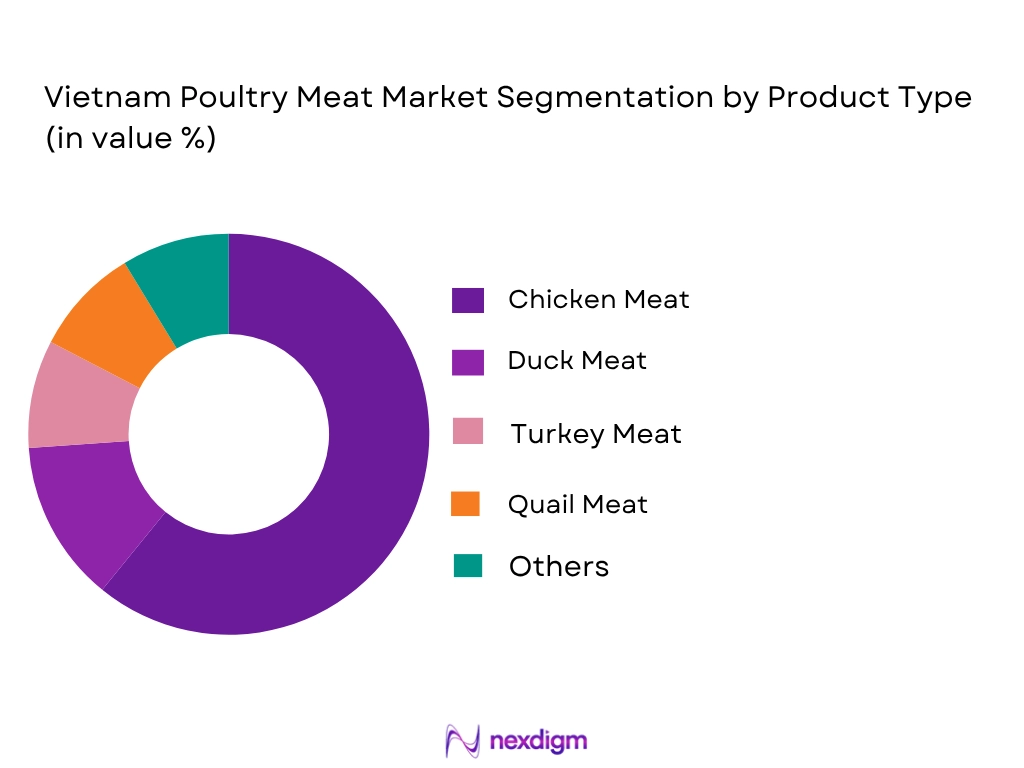
Vietnam Poultry Meat Market is segmented by product type into chicken meat, duck meat, quail meat, turkey meat, and others. Chicken meat has the dominant market share under this segmentation because it is the most scalable and commercially integrated poultry category in Vietnam. Broiler chicken has shorter production cycles, lower unit cost, wide availability in wet markets and supermarkets, and strong use across household cooking, quick-service restaurants, canteens, and processed meat products. Large integrated producers such as CP Vietnam, Japfa, Dabaco, and Masan MEATLife have built feed-to-farm-to-processing systems around chicken, making the supply more reliable than niche poultry categories. Chicken also benefits from its neutral taste, affordability, and suitability for fresh, frozen, marinated, and ready-to-cook formats.
By Distribution Channel
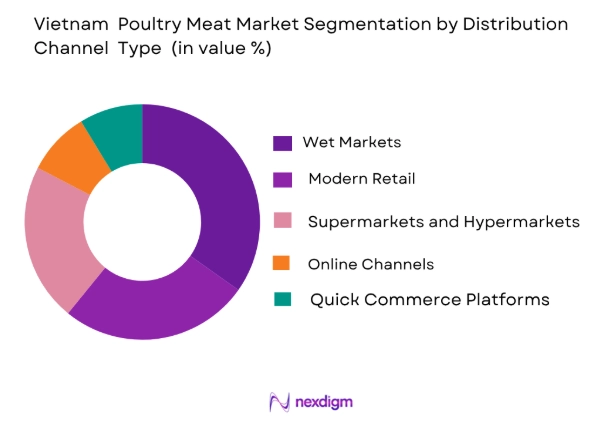
Vietnam Poultry Meat Market is segmented by distribution channel into wet markets, supermarkets and hypermarkets, direct sales, online channels, specialty meat stores, and convenience stores. Wet markets hold the dominant market share because Vietnamese consumers still prefer fresh poultry, visible product handling, daily purchasing, and price negotiation. These channels remain deeply embedded in household buying behavior, especially outside premium urban retail zones. Wet markets also offer broader access to whole birds, local chicken, duck, and freshly slaughtered poultry, which are important for traditional recipes and family meals. However, supermarkets, online meat platforms, and branded cold-chain retailers are gaining relevance as consumers become more concerned
about hygiene, traceability, packaging, and standardized quality.
Competitive Landscape
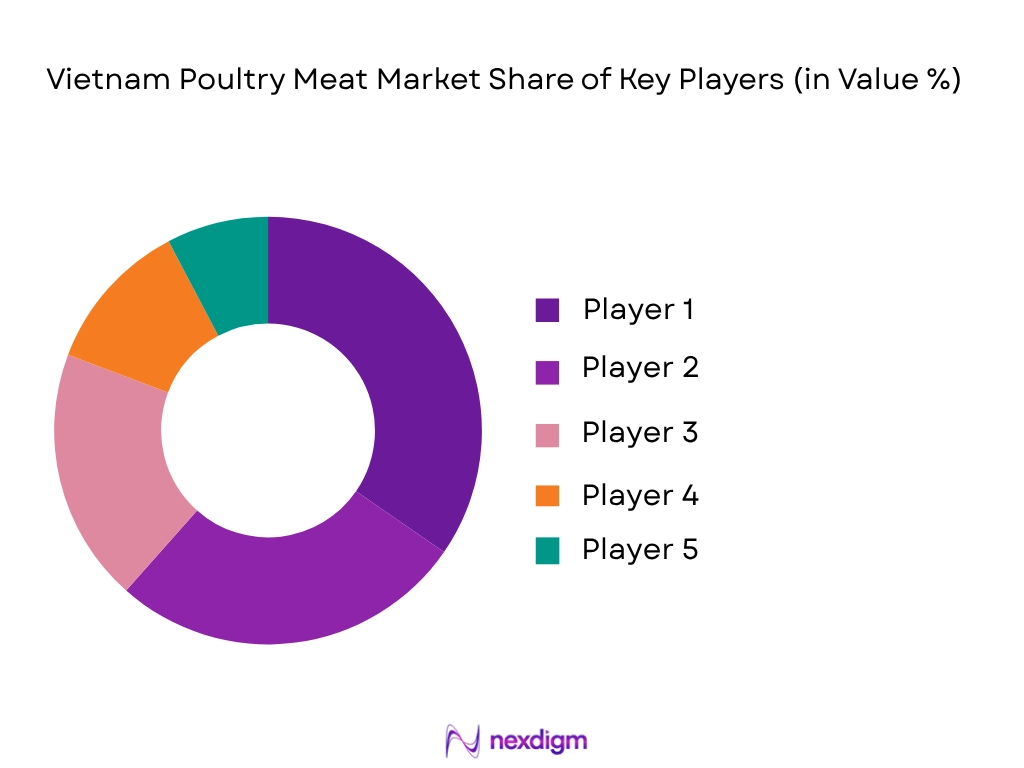
The Vietnam Poultry Meat Market is moderately consolidated at the integrated commercial end and highly fragmented at the smallholder and wet-market end. Large players such as CP Vietnam, Japfa Comfeed Vietnam, Dabaco Group, Masan MEATLife, and Ba Huân Corporation influence feed supply, breeding, farm integration, slaughtering, chilled meat distribution, and branded packaged poultry. At the same time, informal farms and regional traders continue to serve a large part of fresh poultry demand, especially through traditional markets.
| Company | Establishment Year | Headquarters | Core Poultry Products | Business Model | Distribution Strength | Processing Capability | Integration Level | Market Positioning |
| CP Vietnam Corporation | 1993 | Dong Nai, Vietnam | ~ | ~ | ~ | ~ | ~ | ~ |
| Japfa Comfeed Vietnam | 1996 | Dong Nai, Vietnam | ~ | ~ | ~ | ~ | ~ | ~ |
| Dabaco Group | 1996 | Bac Ninh, Vietnam | ~ | ~ | ~ | ~ | ~ | ~ |
| Masan MEATLife | 2011 | Ho Chi Minh City, Vietnam | ~ | ~ | ~ | ~ | ~ | ~ |
| Ba Huân Corporation | 2001 | Ho Chi Minh City, Vietnam | ~ | ~ | ~ | ~ | ~ |
Vietnam Poultry Meat Market Analysis
Growth Drivers
Rising Demand for Affordable Animal Protein
Vietnam’s poultry meat market is strongly driven by the rising demand for affordable animal protein among households, foodservice operators, and institutional buyers. Poultry is generally more economical than beef and many seafood products, making it suitable for daily consumption across income groups. Chicken, in particular, is widely accepted because it is easy to cook, adaptable to traditional Vietnamese dishes, and available in fresh, frozen, and processed formats. Growing awareness of protein-rich diets is also encouraging higher poultry consumption among urban and semi-urban consumers. As consumers seek nutritious food options without significantly increasing household food budgets, poultry meat continues to benefit from its affordability, accessibility, and versatility across both retail and foodservice channels.
Expansion of Modern Retail and Cold Chain Infrastructure
The expansion of supermarkets, hypermarkets, convenience stores, and online grocery platforms is supporting the growth of Vietnam’s poultry meat market. Modern retail channels are increasing the availability of packaged, chilled, and frozen poultry products, which appeal to consumers seeking hygiene, traceability, and standardized quality. Cold chain development is also helping producers and distributors reduce spoilage, maintain product freshness, and expand distribution beyond nearby production zones. This is particularly important for processed poultry, marinated products, and ready-to-cook formats. As organized retailers strengthen sourcing relationships with integrated poultry companies, branded poultry products are gaining shelf visibility. This shift is gradually moving consumer purchases from informal wet markets toward safer and more structured retail channels.
Market Challenges
Disease Outbreaks and Biosecurity Risks
Disease outbreaks remain one of the most significant challenges for Vietnam’s poultry meat market. Avian influenza and other poultry-related diseases can disrupt farm production, affect consumer confidence, and increase costs for producers. Small and medium-sized farms are especially vulnerable because they may lack advanced biosecurity systems, controlled housing, and consistent veterinary supervision. Outbreaks can also lead to temporary restrictions on movement, slaughtering, and trading, affecting the entire supply chain from farms to retail outlets. To reduce these risks, producers must invest in vaccination, disease surveillance, farm sanitation, and controlled breeding systems. However, these measures increase operational costs, especially for smaller farms competing against integrated commercial players.
Volatility in Feed Prices
Feed price volatility is a major challenge for Vietnam’s poultry meat market because feed accounts for a large portion of total poultry production costs. The industry depends heavily on corn, soybean meal, and other feed ingredients, many of which are exposed to global commodity price fluctuations, currency movements, and logistics disruptions. When feed prices rise, poultry farmers face margin pressure and may pass higher costs to wholesalers, retailers, and consumers. This becomes difficult in a price-sensitive market where consumers often compare poultry prices with pork, fish, and eggs. Smaller farms are more exposed to this challenge because they lack purchasing scale and long-term supply contracts, unlike integrated producers with stronger feed procurement systems.
Opportunities
Expansion of Processed and Value-Added Poultry Products
Processed and value-added poultry products present a strong opportunity in Vietnam’s poultry meat market. Urban consumers are increasingly seeking convenient meal solutions, including marinated chicken, sausages, nuggets, frozen cuts, ready-to-cook packs, and ready-to-eat poultry snacks. These products help consumers save cooking time while offering consistent taste, portion control, and improved hygiene. Foodservice operators also prefer standardized processed poultry because it reduces preparation time and improves kitchen efficiency. For poultry companies, value-added products offer better margins than raw meat and create opportunities for brand differentiation. Companies that invest in product innovation, attractive packaging, cold chain distribution, and modern retail partnerships are likely to benefit from this growing demand.
Rising Demand for Safe, Hygienic and Traceable Meat Products
Rising consumer concern around food safety is creating opportunities for branded and traceable poultry meat in Vietnam. Consumers are becoming more cautious about meat origin, slaughtering practices, storage conditions, and chemical or antibiotic usage. This is encouraging demand for poultry products with clear labeling, certified production systems, sealed packaging, and cold-chain assurance. Integrated poultry companies can benefit because they have better control over feed, farming, processing, and distribution. Supermarkets, specialty meat stores, and online platforms are also well-positioned to promote hygienic poultry products to middle-income and urban consumers. As trust becomes a key purchasing factor, companies offering transparent sourcing and quality assurance can strengthen long-term customer loyalty.
Future Outlook
Over the next five years, the Vietnam Poultry Meat Market is expected to expand steadily due to rising household protein demand, urbanization, and the shift from informal fresh meat toward branded, packaged, and cold-chain poultry. Growth will also be supported by feed efficiency, farm biosecurity upgrades, and foodservice recovery. The forecasted CAGR for the market is expected to remain near 7.18%, with demand led by chicken meat, processed poultry, and safer retail formats.
Major Players
- CP Vietnam Corporation
- Japfa Comfeed Vietnam
- Dabaco Group
- Masan MEATLife Corporation
- Ba Huân Corporation
- Emivest Vietnam
- De Heus Vietnam
- GreenFeed Vietnam
- CJ Vina Agri
- Vissan
- Phu Gia Agricultural JSC
- Mavin Group
- Hoa Phat Agriculture Development JSC
- Koyu & Unitek Co., Ltd.
- Bel Gà JSC
Key Target Audience
- Poultry meat producers and processors
- Integrated livestock and feed companies
- Supermarkets, hypermarkets, and modern retail chains
- Foodservice operators and quick-service restaurant chains
- Cold-chain logistics and warehousing companies
- Investments and venture capitalist firms
- Government and regulatory bodies
- Poultry equipment, breeding, and veterinary solution providers
Research Methodology
Step 1: Identification of Key Variables
The initial phase involves constructing an ecosystem map covering poultry farmers, feed suppliers, breeders, slaughterhouses, processors, distributors, retailers, foodservice operators, and regulatory bodies within the Vietnam Poultry Meat Market. The objective is to identify demand, supply, pricing, production, import, and channel variables that influence market performance.
Step 2: Market Analysis and Construction
In this phase, historical market data is compiled across poultry meat production, consumption, flock size, imports, processing capacity, and retail distribution. The analysis evaluates how fresh, frozen, chilled, and processed poultry formats contribute to revenue generation and how traditional and modern channels influence final market value.
Step 3: Hypothesis Validation and Expert Consultation
Market hypotheses are validated through structured interviews with poultry producers, meat processors, distributors, retail buyers, foodservice procurement teams, and feed industry participants. These discussions help refine assumptions on product mix, channel margins, pricing, supply constraints, and consumer preference shifts.
Step 4: Research Synthesis and Final Output
The final phase integrates desk research, trade indicators, production data, company-level analysis, and expert inputs to develop a validated market assessment. The output includes market size, segmentation, competitive landscape, growth outlook, target audience mapping, and strategic implications for stakeholders in the Vietnam Poultry Meat Market.

- Executive Summary
- Research Methodology (Market Definitions and Assumptions, Abbreviations, Market Sizing Approach, Consolidated Research Approach, Understanding Market Potential Through In-Depth Industry Interviews, Primary Research Approach, Limitations and Future Conclusions)

- Definition and Scope
- Market Dynamics Overview
- Market Genesis
- Major Players and Market Timeline
- Business Cycle and Trends
- Supply Chain and Value Chain Analysis

- Growth Drivers
Rising Demand for Affordable Animal Protein
Growing Urbanization and Changing Food Consumption Patterns
Expansion of Modern Retail and Cold Chain Infrastructure
Increasing Demand from Food Service and Quick-Service Restaurants
Rising Consumer Preference for Processed and Ready-to-Cook Poultry Products - Market Challenges
Disease Outbreaks and Biosecurity Risks
Volatility in Feed Prices
Competition from Imported Poultry Meat
Price Sensitivity Among Consumers
Fragmented Supply Chain and Informal Retail Channels - Opportunities
Expansion of Processed and Value-Added Poultry Products
Growth of Organized Poultry Farming
Rising Demand for Safe, Hygienic and Traceable Meat Products
Expansion of Online Grocery and Meat Delivery Platforms
Increasing Demand from Hotels, Restaurants and Food Processing Companies - Key Trends
Shift Toward Packaged and Branded Poultry Meat
Increasing Adoption of Cold Chain and Refrigerated Logistics
Growth of Ready-to-Cook and Marinated Poultry Products
Rising Focus on Food Safety and Traceability
Expansion of Poultry Product Lines by Leading Companies - Government Regulations
- SWOT Analysis
- Porter’s Five Forces

- By Value, 2020–2025
- By Volume, 2020–2025
- By Average Price, 2020–2025

- By Product Type (In Value %)
Chicken Meat
Duck Meat
Turkey Meat
Quail Meat
Others - By Meat Type (In Value %)
Fresh Poultry Meat
Frozen Poultry Meat
Processed Poultry Meat
Chilled Poultry Meat - By Processing Type (In Value %)
Raw Poultry Meat
Ready-to-Cook Poultry Meat
Ready-to-Eat Poultry Meat
Marinated Poultry Meat - By Application (In Value %)
Household Consumption
Food Service Industry
Hotels, Restaurants and Cafés
Institutional Consumption
Food Processing Industry - By Distribution Channel (In Value %)
Direct Sales
Wet Markets
Supermarkets and Hypermarkets
Online Channels
Convenience Stores
Specialty Meat Stores - By Region (In Value %)
Northern Vietnam
Central Vietnam
Southern Vietnam
Mekong Delta Region
Red River Delta Region
Rest of Vietnam

- Market Share of Major Players by Value/Volume
- Market Share of Major Players by Product Type
- Cross Comparison Parameters ( Company Overview, Business Strategies, Recent Developments, Strength, Weakness, Organizational Structure, Revenues, Revenues by Product Type, Number of Touchpoints, Distribution Channels, Number of Dealers and Distributors, Margins, Production Plant, Capacity, Unique Value Offering and Others)
- SWOT Analysis of Major Players
- Pricing Analysis Based on Product Categories for Major Players
- Detailed Profiles of Major Companies
CP Vietnam Corporation
Japfa Comfeed Vietnam
Masan MEATLife Corporation
Dabaco Group
Ba Huân Corporation
Emivest Vietnam
De Heus Vietnam
GreenFeed Vietnam
CJ Vina Agri
Vissan
Phu Gia Agricultural JSC
Mavin Group
Hoa Phat Agriculture Development JSC
Koyu & Unitek Co., Ltd.

- Market Demand and Utilization
- Purchasing Power and Budget Allocations
- Regulatory and Compliance Requirements
- Needs, Desires, and Pain Point Analysis
- Decision-Making Process

- By Value, 2026–2035
- By Volume, 2026–2035
- By Average Price, 2026–2035


 Request a Sample
 Ask for Customization
 Get a Quote
 Enquire Now