

 Download PDF
Market Overview
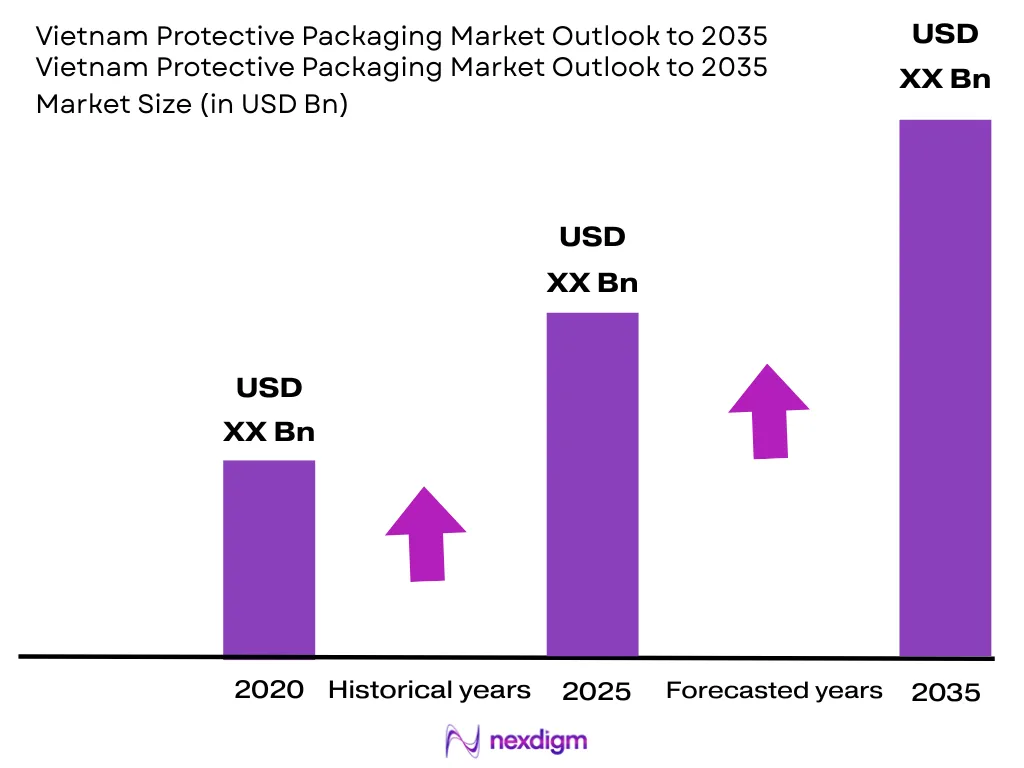
The Vietnam Protective Packaging Market was valued at USD ~ Billion in 2024 and is anticipated to expand at a CAGR of ~% during 2026–2035. The market is primarily driven by Vietnam’s emergence as a major global electronics manufacturing hub, anchored by large-scale production facilities operated by Samsung Electronics Vietnam, Foxconn Technology Group, LG Electronics Vietnam, Panasonic Vietnam, and Canon Vietnam, alongside an increasingly stringent Extended Producer Responsibility (EPR) framework established under the 2020 Law on Environmental Protection. Electronics now account for a rising share of Vietnam’s protective packaging demand following a surge in semiconductor investment, which has necessitated widespread adoption of anti-static corrugated partitions to protect sensitive components during storage, transportation, and distribution. Vietnam’s EPR system, which shifts the cost and logistics of packaging waste management from municipalities to producers, collected more than 64,000 tonnes of packaging for recycling in 2024, demonstrating the scheme’s growing effectiveness even as regulators continue to refine enforcement mechanisms through recent measures such as Decree No. 05/2025/ND-CP and Resolution 247/2025/QH15.
Market Segmentation
By Material
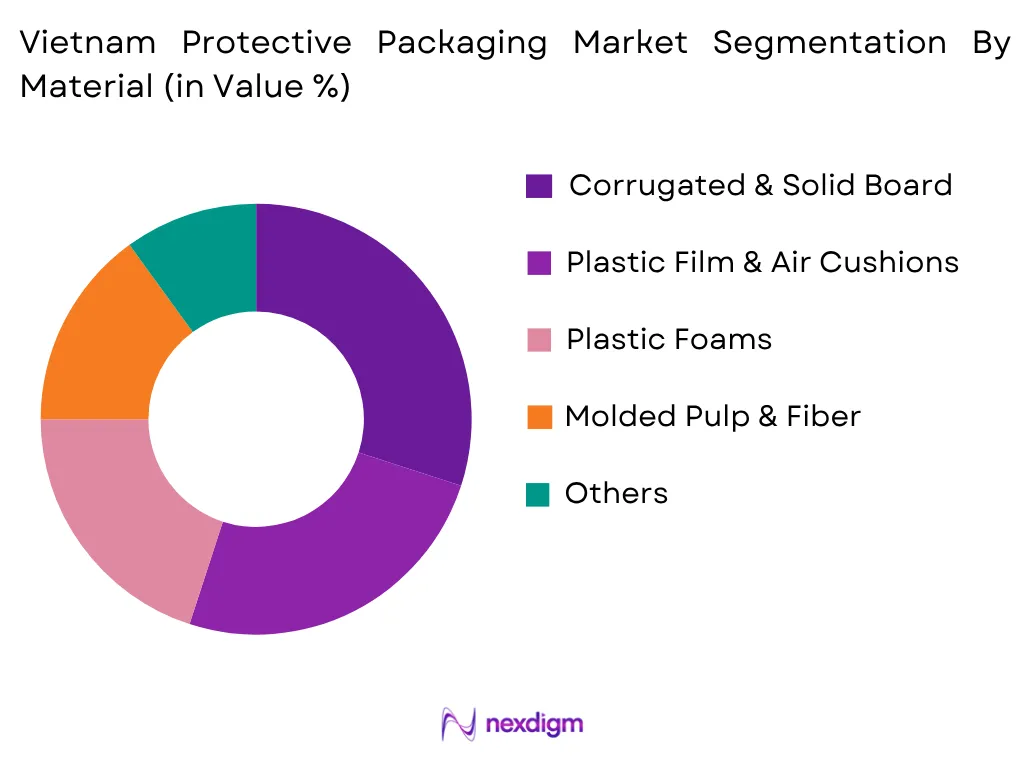
Corrugated & Solid Board represents the largest material category in the Vietnam Protective Packaging Market, commanding a 50.55% share of the broader Vietnam paper packaging market in 2025, reflecting the country’s substantial export container flows and its role as a major manufacturing and re-export hub. Molded Pulp & Fiber, while accounting for less than 10% of total volume, is projected to grow at an 11.78% CAGR, the fastest rate of any material category, driven jointly by plastic-reduction mandates under Vietnam’s EPR framework and rising demand for electronics cushioning as lightweight, form-fit pulp trays increasingly substitute for EPS foam, offering curb-side recyclability that EPS cannot match. EPR quotas requiring 20% recycled content are further favoring molded-fiber solutions designed from post-consumer waste streams, creating direct regulatory incentive for continued material innovation. Plastic Foams (EPS/EPE) retain an important role for high-value electronics protection despite this substitution trend, particularly for components requiring superior impact absorption that molded fiber alternatives cannot yet fully replicate.
By End-Use Industry
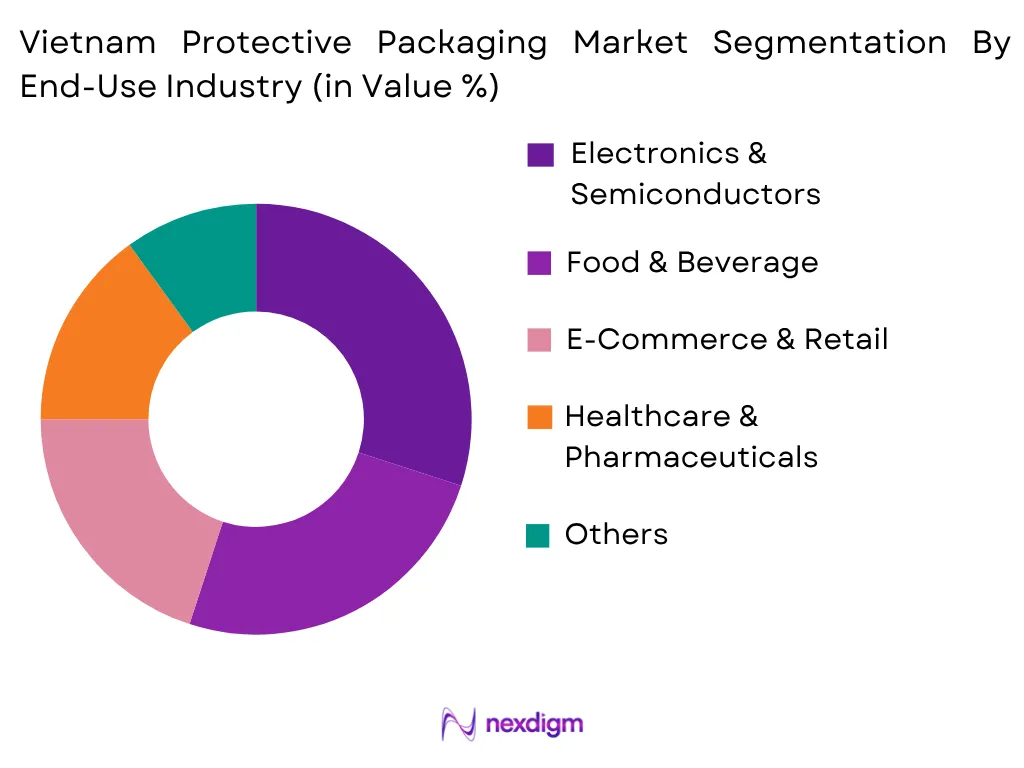
Electronics & Semiconductors represents an increasingly dominant and fast-growing end-use industry within the Vietnam Protective Packaging Market, a shift directly attributable to the country’s rapid rise as a global electronics manufacturing hub hosting major production facilities for Samsung, Foxconn, LG, Panasonic, and Canon. As Vietnam’s electronics industry remains heavily export-oriented, packaging materials must meet international standards for safe transportation and storage, driving demand for anti-static corrugated partitions and specialized cushioning as semiconductor investment continues to surge. Healthcare & Pharmaceuticals represents the fastest-growing end-use category by percentage growth, expanding at a 10.05% CAGR as Vietnam localizes pharmaceutical production under industrial policy incentives, driving adoption of tamper-evident folding cartons featuring braille embossing and moisture-barrier liners as standard specifications. Food & Beverage remains the largest single end-use category by overall share, accounting for 32.68% of the paper packaging market in 2025, supported by strong agricultural exports and rising domestic processed food consumption.
Competitive Landscape
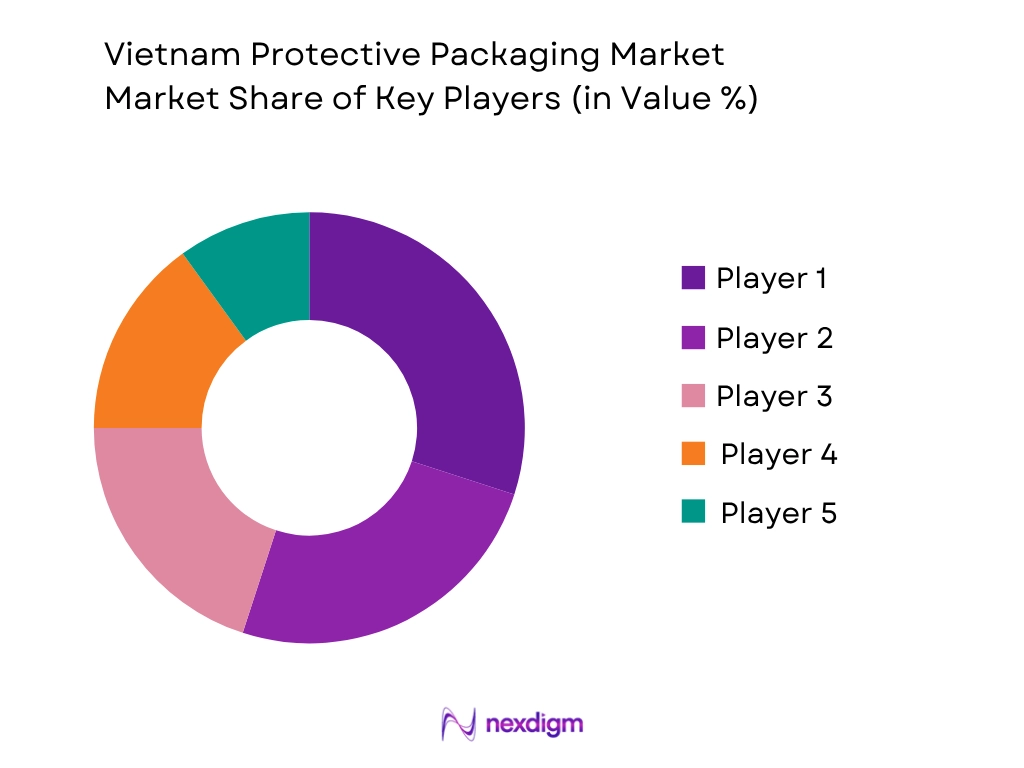
The Vietnam Protective Packaging Market is shaped by a combination of established domestic plastic and paper packaging manufacturers and global protective packaging specialists serving the country’s fast-growing electronics and export manufacturing base. EPP Vietnam Co., Ltd, drawing on more than 20 years of manufacturing and exporting experience, has built a position as a leading supplier of flexible plastic packaging products, including FIBCs, PP woven bags, and BOPP bags, with export relationships spanning Australia, New Zealand, the United States, Canada, Germany, Norway, Portugal, and the UAE, and current production capacity of approximately 6 million products annually. Rang Dong Plastic JSC represents another longstanding domestic manufacturer serving Vietnam’s diverse plastic packaging needs. Global protective packaging leaders including Sealed Air Corporation, Sonoco Products Company, and Storopack, the latter of which maintains particular strength in machine construction and industrial protective packaging applications relevant to Vietnam’s growing electronics and precision manufacturing sector, compete alongside these domestic players, with competitive dynamics increasingly shaped by the ability to deliver anti-static, export-certified, and EPR-compliant recycled-content packaging solutions to Vietnam’s demanding electronics manufacturing customer base.
| Company | Established | Headquarters | Primary Product Portfolio | Sustainable/Recyclable Portfolio | Manufacturing Presence | Major End-Use Industries | Key Strategic Focus | Certifications & Compliance |
| EPP Vietnam Co., Ltd | 2004 | ~ | ~ | ~ | ~ | ~ | ~ | ~ |
| Rang Dong Plastic JSC | 1960 | ~ | ~ | ~ | ~ | ~ | ~ | ~ |
| Sealed Air Corporation | 1960 | ~ | ~ | ~ | ~ | ~ | ~ | ~ |
| Sonoco Products Company | 1899 | ~ | ~ | ~ | ~ | ~ | ~ | ~ |
| Storopack | 1874 | ~ | ~ | ~ | ~ | ~ | ~ | ~ |
Vietnam Protective Packaging Market Analysis
Growth Drivers
Vietnam’s Emergence as a Global Electronics Manufacturing Hub
Vietnam’s rapid rise as a major global electronics manufacturing hub, anchored by large-scale production facilities operated by Samsung Electronics Vietnam, Foxconn Technology Group, LG Electronics Vietnam, Panasonic Vietnam, and Canon Vietnam, continues to be a primary driver of protective packaging demand. As Vietnam’s electronics industry is heavily export-oriented, packaging materials must meet international standards for safe transportation and storage, while advancements in electronics packaging technologies, such as surface mount technology and flip-chip packaging, continue to drive demand for increasingly specialized protective solutions. Electronics now account for a rising share of overall packaging demand following a surge in semiconductor investment, which has necessitated widespread adoption of anti-static corrugated partitions to protect sensitive components, reflecting the growing technical sophistication required of Vietnam’s protective packaging supply chain as the country’s electronics manufacturing base continues to scale.
EPR-Driven Shift Toward Recyclable and Molded Fiber Packaging
Vietnam’s Extended Producer Responsibility framework, established under the 2020 Law on Environmental Protection and progressively strengthened through Decree No. 05/2025/ND-CP and Resolution 247/2025/QH15, has fundamentally shifted the cost and logistics of packaging waste management from municipalities to producers, directly incentivizing packaging redesign for recyclability. The system’s impact is quantifiable: Vietnam’s EPR framework collected more than 64,000 tonnes of packaging for recycling in 2024, and mandatory recycling targets are set to increase every three years, encouraging continuous innovation in recyclable material adoption. Molded Pulp & Fiber, projected to grow at an 11.78% CAGR, the fastest rate of any material category, is benefiting directly from EPR quotas requiring 20% recycled content, as lightweight, form-fit pulp trays increasingly substitute for EPS foam in electronics cushioning applications while offering superior curb-side recyclability.
Market Challenges
Evolving and Uncertain EPR Enforcement Framework
Vietnamese regulators are actively reviewing the country’s EPR rules amid ongoing concerns about whether the system is delivering sufficient physical recycling activity on the ground, since fund contributions to the Vietnam Environmental Protection Fund provide financial resources for waste management without automatically guaranteeing the development of recycling infrastructure. Regulators are now considering whether the balance between financial compliance and producer-led recycling needs to shift toward requiring greater direct involvement from companies in collection and recycling systems, a policy direction that could require businesses to reassess packaging strategies, supplier networks, and sustainability reporting as regulatory expectations continue to evolve. This ongoing regulatory uncertainty creates planning challenges for packaging manufacturers and brand owners seeking to make long-term investment decisions around recycling infrastructure and packaging redesign.
Low Source-Separation Rates and Informal Waste Sector Challenges
A core structural challenge facing Vietnam’s EPR system lies in overcoming the logistical difficulties posed by informal waste sectors and low source-separation rates at the household and business level, both of which complicate efforts to achieve meaningful recycling scale even where fund contributions are being collected effectively. Balancing cost-effectiveness with the demand for high-quality and eco-friendly packaging materials continues to challenge Vietnamese manufacturers and suppliers, particularly as compliance with environmental regulations layers additional cost onto an industry already managing raw material price volatility and periodic supply chain disruptions affecting the availability of packaging materials and components.
Market Opportunities
Molded Fiber and EPS-Replacement Innovation for Electronics Cushioning
The convergence of EPR-driven plastic-reduction mandates and rising electronics cushioning demand is creating substantial opportunity for molded fiber innovation within Vietnam’s protective packaging market, a category projected to grow at an 11.78% CAGR as lightweight, form-fit pulp trays increasingly substitute for EPS foam. Domestic converters capable of investing in specialized tooling and barrier-coating expertise to serve this format transition, combining structural protection with EPR-compliant recycled content quotas, stand to capture significant share as Vietnam’s electronics manufacturers and export-oriented producers seek packaging solutions that satisfy both performance requirements and increasingly stringent sustainability mandates.
Anti-Static and Semiconductor-Grade Packaging Localization
The surge in semiconductor investment across Vietnam, necessitating widespread adoption of anti-static corrugated partitions and other specialized electronics protective packaging, creates a clear opportunity for domestic and international suppliers to localize production of semiconductor-grade packaging materials rather than relying on imports. As major electronics manufacturers including Samsung, Foxconn, LG, Panasonic, and Canon continue to expand their Vietnamese operations, packaging suppliers that can establish local anti-static material production and technical support capability stand to capture significant long-term supply relationships within Vietnam’s rapidly maturing electronics manufacturing ecosystem, reducing lead times and currency exposure associated with importing specialized packaging materials from overseas.
Future Outlook
The Vietnam Protective Packaging Market is expected to witness sustained expansion over the forecast period, supported by continued growth in electronics manufacturing investment, progressive tightening of the country’s EPR enforcement framework, and rising demand for tamper-evident and export-compliant packaging across pharmaceuticals and food & beverage sectors. Growing adoption of molded fiber and other EPS-replacement materials, alongside continued localization of anti-static and semiconductor-grade packaging production, will further accelerate demand for next-generation protective packaging solutions. The market is also likely to benefit from Vietnam’s continued positioning as a global electronics and export manufacturing hub, as domestic and international packaging suppliers alike invest in the technical capability, recycled-content compliance, and export certification required to serve the country’s fast-growing and increasingly sophisticated manufacturing base.
Major Players
- EPP Vietnam Co., Ltd
- Rang Dong Plastic JSC
- Sealed Air Corporation
- Sonoco Products Company
- Storopack
- Samsung Electronics Vietnam
- Foxconn Technology Group
- LG Electronics Vietnam
- Panasonic Vietnam Co., Ltd.
- Canon Vietnam Co., Ltd.
- Tan Long Group
- Vietnam Packaging Corporation (VPPC)
- Smurfit WestRock
- Mondi Group
- DS Smith Plc
Key Target Audience
- Protective Packaging Manufacturers and Converters
- Electronics and Semiconductor Manufacturers
- E-Commerce Retailers and Export Trading Companies
- Food & Beverage and Pharmaceutical Manufacturers
- Third-Party Logistics and Fulfillment Providers
- Investment and Venture Capitalist Firms
- Government and Regulatory Bodies (Ministry of Natural Resources and Environment – MONRE, Vietnam Environmental Protection Fund – VEPF)
- Raw Material Suppliers and Packaging Material Distributors
Research Methodology
Step 1: Identification of Key Variables
The research process begins with identifying the complete ecosystem of the Vietnam Protective Packaging Market, including raw material suppliers, packaging converters, electronics and export manufacturers, e-commerce retailers, and regulatory authorities. Extensive secondary research is conducted using company reports, government publications, trade associations, customs statistics, industry journals, and proprietary databases to determine the variables influencing market demand, pricing, production, consumption, and technological developments.
Step 2: Market Analysis and Construction
Historical market information is collected and analyzed to estimate market size, import volumes, application-wise demand, and pricing trends. A combination of top-down and bottom-up approaches is used to estimate market revenues and validate segment-level performance. Consumption patterns across electronics, e-commerce, food & beverage, healthcare, and industrial export applications are evaluated to establish an accurate representation of the industry.
Step 3: Hypothesis Validation and Expert Consultation
The preliminary findings are validated through Computer-Assisted Telephone Interviews (CATIs) and structured discussions with packaging converters, procurement managers, electronics manufacturing engineers, regulatory experts, and senior executives operating within the Vietnamese manufacturing and packaging industry. These interviews help verify market assumptions, competitive developments, technology adoption trends, pricing dynamics, and future investment opportunities while refining the overall market estimates.
Step 4: Research Synthesis and Final Output
The final stage integrates insights obtained from primary interviews with quantitative information collected through secondary sources. Data triangulation techniques are applied to reconcile differences between supply-side and demand-side estimates, ensuring robust market forecasting. The report is then reviewed through multiple quality assurance checkpoints to deliver a comprehensive analysis covering market size, segmentation, competitive landscape, future outlook, and strategic recommendations for industry stakeholders.

- Executive Summary
- Research Methodology (Market Definitions and Assumptions, Protective Packaging Taxonomy, Abbreviations, Market Sizing Approach, Top-Down Personal Care Product Consumption Analysis, Bottom-Up Packaging Supplier Aggregation, Packaging Units per Finished Product, Demand-Side Assessment, Supply-Side Capacity Mapping, Import–Export Reconciliation, Retail Channel Analysis, Primary Industry Interviews, Data Triangulation, Forecasting Framework, Scenario Analysis, Limitations and Future Conclusions)

- Definition and Scope
- Market Evolution and Industry Genesis
- Timeline of Major Industry Developments
- Protective Packaging Industry Value Chain Analysis
- Supply Chain Analysis

- Growth Drivers (Vietnam’s Emergence as a Global Electronics Manufacturing Hub, EPR-Driven Shift Toward Recyclable and Molded Fiber Packaging, Semiconductor Investment Surge, Growth of Export-Oriented Manufacturing, Localization of Pharmaceutical Production, Expansion of E-Commerce and Last-Mile Delivery)
- Market Challenges (Evolving and Uncertain EPR Enforcement Framework, Low Source-Separation Rates and Informal Waste Sector Challenges, Balancing Cost-Effectiveness with Eco-Friendly Material Requirements, Raw Material and Supply Chain Disruption Risk, Regulatory Complexity Across Export Destination Standards, Limited Domestic Recycling Infrastructure)
- Market Opportunities (Molded Fiber and EPS-Replacement Innovation for Electronics Cushioning, Anti-Static and Semiconductor-Grade Packaging Localization, Growth in Tamper-Evident Pharmaceutical Packaging, Recycled-Content Packaging Investment Under EPR Quotas, Regional ASEAN Export Hub Development, Public-Private Recycling Infrastructure Partnerships)
- Market Trends (Growth of Molded Fiber Substitution for EPS Foam, Rise of Anti-Static Corrugated Partitions for Semiconductors, Tamper-Evident Pharmaceutical Carton Innovation, EPR-Driven Recycled Content Adoption, Consolidation of Domestic Packaging Converters, Growing Use of Aseptic and Barrier Coating Technology)
- Government Regulations (2020 Law on Environmental Protection (EPR Framework), Resolution 247/2025/QH15 EPR Enforcement, Decree No. 05/2025/ND-CP EPR Amendments, Vietnam Environmental Protection Fund (VEPF), Vietnam Ecolabel Program (MONRE), National Electronic EPR Compliance Portal)
- Import and Export Analysis (Trade Volume, Major Import Sources, Export Destination Standards Compliance, HS Code Analysis, Trade Balance)
- Raw Material Availability Analysis (Domestic Corrugated and Solid Board Production, Molded Pulp Fiber Feedstock Availability, Imported Plastic Foam and Resin Feedstocks, Anti-Static Material Feedstocks, Recycled Content Material Supply)
- Technology Landscape (Molded Pulp Production Technology, Anti-Static Packaging Technology, Aseptic and Barrier Coating Technology, Corrugated and Solid Board Manufacturing, EPS/EPE Foam Molding Technology)
- Sustainability Assessment (EPR Recycled Content Compliance, Molded Fiber and EPS Substitution, Vietnam Ecolabel Certification Adoption, Plastic Reduction Mandates, Circular Economy Alignment)
- PESTLE Analysis
- SWOT Analysis
- Porter’s Five Forces Analysis
- Stakeholder Ecosystem
- Competition Ecosystem

- By Market Value (2020-2025)
- By Volume Consumption (2020-2025)
- By Average Selling Price (2020-2025)

- By Type (In Value %)
Flexible Protective Packaging
Foam Protective Packaging (EPS/EPE)
Rigid Protective Packaging
Anti-Static Electronics Packaging - By Material (In Value %)
Corrugated & Solid Board
Molded Pulp & Fiber
Plastic Foams (EPS/EPE)
Plastic Film & Air Cushions
Anti-Static Materials - By End-Use Industry (In Value %)
Electronics & Semiconductors
E-Commerce & Retail
Food & Beverage
Healthcare & Pharmaceuticals
Industrial & Export Manufacturing - By Function (In Value %)
Void Fill
Cushioning
Anti-Static Protection
Moisture & Barrier Protection
Blocking & Bracing - By Region (In Value %)
Northern Vietnam
Southern Vietnam
Central Vietnam
Mekong Delta
Central Highlands

- Market Share of Major Players (By Value, Volume, Material Type, End-Use Industry, Function)
- Cross Comparison Parameters (Electronics/Anti-Static Portfolio Breadth, Molded Fiber and Recyclable Portfolio, Export Certification Capability, Application Technical Support, Manufacturing Capacity, Regulatory Compliance & Certifications, Customer Base, Innovation & New Product Launch Frequency)
- SWOT Analysis of Major Players
- Pricing Analysis by Product Category and Application
- Production Capacity Analysis
- Manufacturing Footprint Analysis
- Distribution Network Analysis
- Innovation Benchmarking
- Detailed Profiles of Major Companies
EPP Vietnam Co., Ltd
Rang Dong Plastic JSC
Sealed Air Corporation
Sonoco Products Company
Storopack
Samsung Electronics Vietnam
Foxconn Technology Group
LG Electronics Vietnam
Panasonic Vietnam Co., Ltd.
Canon Vietnam Co., Ltd.
Tan Long Group
Vietnam Packaging Corporation (VPPC)
Smurfit WestRock
Mondi Group
DS Smith Plc

- Consumption Pattern Analysis (Industrial Usage, Batch Size, End-Use Industry Penetration, Seasonal Demand, Export Shipment Volume Impact)
- Purchasing Criteria (Protective Performance, Regulatory and EPR Compliance, Cost Efficiency, Anti-Static Capability, Recyclability, Export Standards Compatibility)
- Procurement and Supplier Selection Analysis
- Recycled Content and EPR Compliance Adoption Assessment
- Premium Electronics-Grade vs Standard Packaging Demand
- Product Attribute Preference Analysis (Cushioning Performance, Anti-Static Properties, Moisture-Barrier Performance, Recyclability, Dimensional Efficiency, Export Certification Compatibility)
- Sustainability & ESG Influence on Procurement Decisions
- Pain Point Analysis
- Decision-Making Process

- By Market Value (2026-2035)
- By Volume Consumption (2026-2035)
- By Average Selling Price (2026-2035)


 Request a Sample
 Ask for Customization
 Get a Quote
 Enquire Now