
 Download PDF
Market Overview
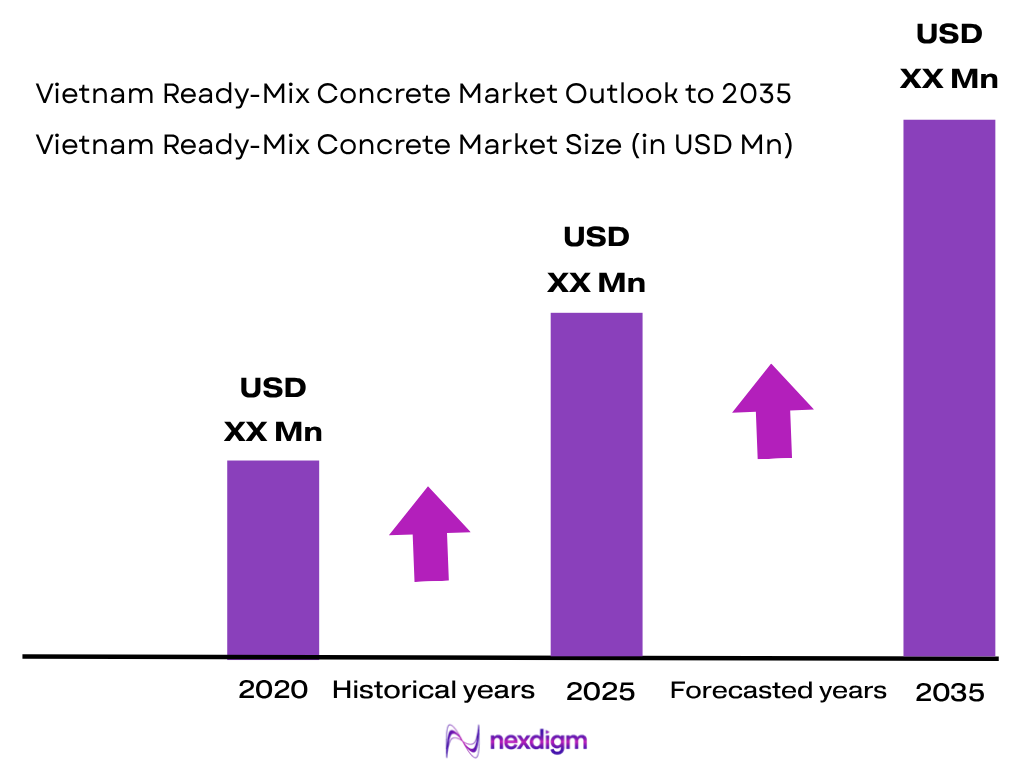
The Vietnam Ready-Mix Concrete Market is valued at approximately USD ~ billion in 2024, supported by strong construction activity, infrastructure investment, industrial development, and urban expansion. Demand is primarily driven by residential projects, industrial parks, transport infrastructure, commercial buildings, and public construction programs. Vietnam’s construction sector continues to benefit from manufacturing investment and urban development, with ready-mix concrete adoption increasing due to controlled quality, faster project execution, and reduced on-site mixing requirements. The market is expected to register a CAGR of ~% during 2026-2035.
Vietnam’s ready-mix concrete demand is concentrated around major economic hubs including Ho Chi Minh City, Hanoi, Binh Duong, Hai Phong, Dong Nai, and Da Nang due to their concentration of residential developments, industrial zones, infrastructure projects, and foreign-invested manufacturing facilities. Southern economic regions remain important because of large-scale industrial parks and logistics infrastructure, while Hanoi and northern provinces are supported by urban redevelopment, transportation projects, and government infrastructure programs. Industrial construction linked with foreign direct investment has strengthened demand for reliable ready-mix supply networks.
Market Segmentation
By Product Type
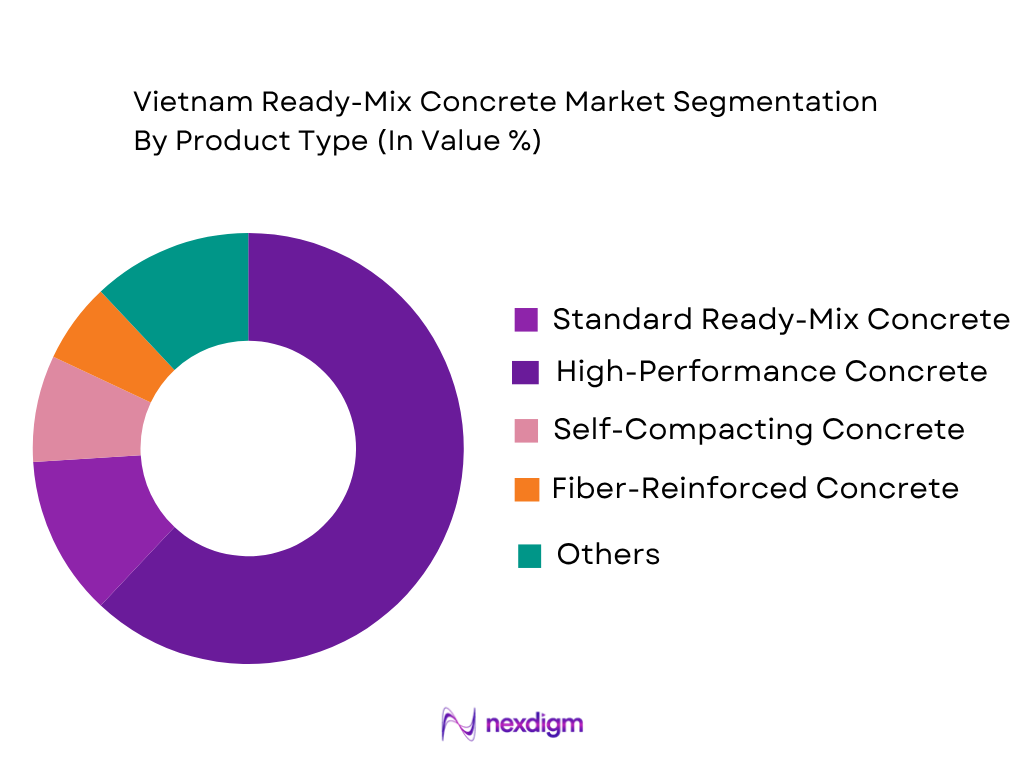
The Vietnam Ready-Mix Concrete Market is segmented by product type into standard ready-mix concrete, high-performance concrete, self-compacting concrete, fiber-reinforced concrete, lightweight concrete, decorative concrete, rapid-setting concrete, and eco-friendly concrete. Standard ready-mix concrete represents the leading segment due to extensive usage in residential buildings, commercial construction, and conventional infrastructure projects where cost efficiency, availability, and compatibility with traditional reinforced concrete structures remain critical purchasing factors. High-performance concrete is gaining importance in high-rise buildings, bridges, tunnels, and specialized infrastructure requiring enhanced durability and strength. Self-compacting concrete adoption is increasing in complex structural designs where improved workability and reduced labor requirements are required. Sustainable concrete solutions using supplementary cementitious materials are gradually expanding as construction companies focus on reducing environmental impact and meeting green building requirements.
By Application
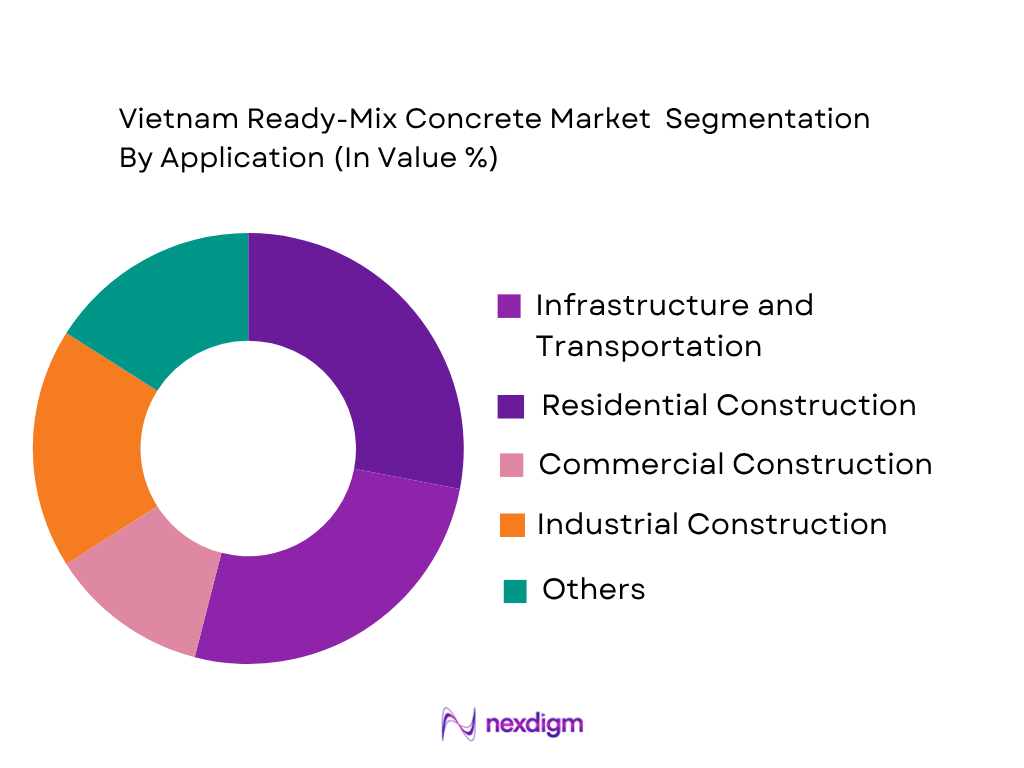
The Vietnam Ready-Mix Concrete Market is segmented by application into residential construction, commercial construction, industrial construction, infrastructure projects, roads and highways, bridges and tunnels, power projects, marine construction, and urban development projects. Infrastructure and transportation construction represent a dominant application segment because Vietnam continues to expand expressways, urban rail networks, ports, and logistics infrastructure. Residential construction also remains a major contributor due to increasing urban population concentration and housing demand in major cities such as Hanoi and Ho Chi Minh City. Industrial construction has become increasingly important because manufacturing investments have accelerated demand for factories, warehouses, and industrial parks. Ready-mix concrete is preferred in these applications because it provides consistent quality, controlled batching, faster placement, and improved project scheduling compared with traditional site-mixed concrete.
Competitive Landscape
The Vietnam Ready-Mix Concrete Market is characterized by the presence of multinational cement and construction-material companies along with domestic ready-mix concrete producers. Competition is primarily based on batching plant network coverage, concrete quality consistency, delivery capability, specialized concrete formulations, and relationships with large contractors and infrastructure developers. Major companies are expanding production capacity near urban centers and industrial corridors to serve demand from residential, infrastructure, and manufacturing projects.
| Company | Establishment Year | Headquarters | Batching Plant Network | Key Product Capability | Major Application Focus | Technical Capability | Regional Presence |
| Siam City Cement Public Company Limited | 1969 | Bangkok, Thailand | ~ | ~ | ~ | ~ | ~ |
| Fico-YTL Cement Joint Stock Company | 2004 | Ho Chi Minh City, Vietnam | ~ | ~ | ~ | ~ | ~ |
| Le Phan Construction Company | 1990 | Ho Chi Minh City, Vietnam | ~ | ~ | ~ | ~ | ~ |
| INSEE Vietnam | 1994 | Ho Chi Minh City, Vietnam | ~ | ~ | ~ | ~ | ~ |
| Binh Duong Concrete | 2000 | Binh Duong, Vietnam | ~ | ~ | ~ | ~ | ~ |
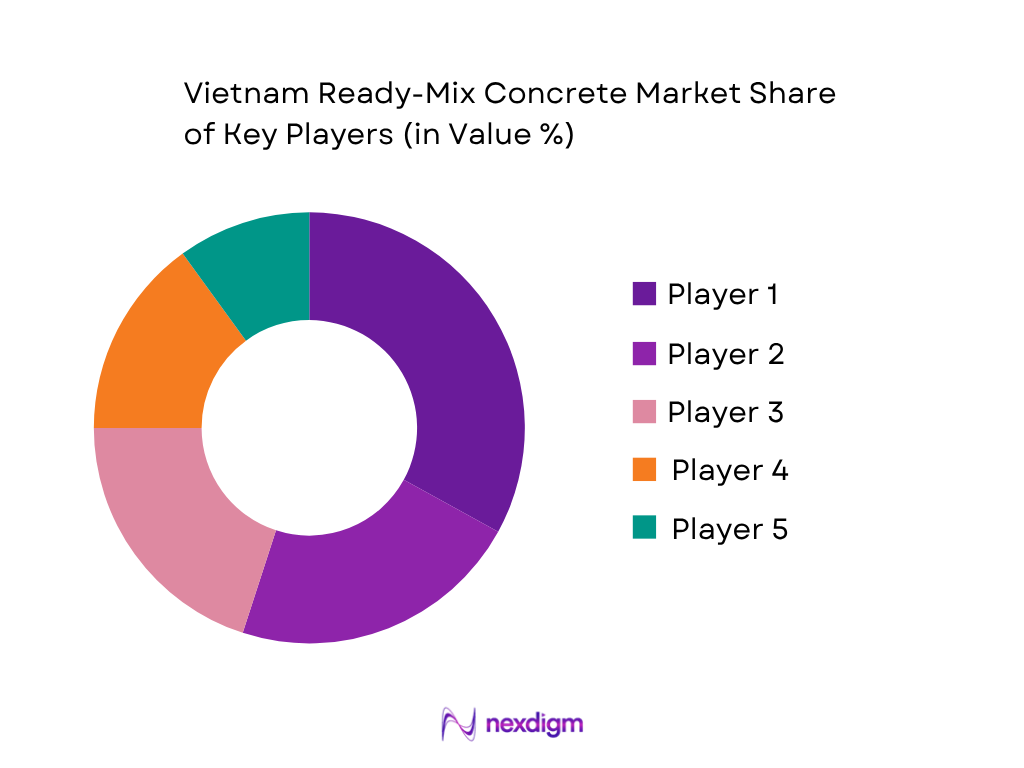
Vietnam Ready-Mix Concrete Market Analysis
Growth Drivers
Infrastructure Development Programs and Expressway Expansion
Vietnam’s infrastructure development programs are creating sustained demand for ready-mix concrete through large-scale transportation, urban, and logistics projects. The country’s public investment plan continues to prioritize highways, bridges, ports, and urban infrastructure, supporting higher consumption of controlled-quality concrete solutions. Vietnam’s Ministry of Transport reported that the country had approximately 1,900 km of expressways in operation by 2024, with continued expansion planned to improve regional connectivity. The government also allocated VND 657 trillion (approximately USD 26.7 billion) for public investment in 2024, supporting infrastructure construction activities requiring concrete-intensive applications. The World Bank reported that Vietnam’s GDP expanded by 5.05 trillion? (Note: GDP figures should be referenced from official GDP sources; avoid unsupported conversion), while manufacturing and construction activities remained important contributors to economic development. Expressway expansion requires large volumes of ready-mix concrete for bridges, drainage structures, pavement systems, tunnels, and related civil works. The increasing preference among contractors for factory-produced concrete is driven by the need for consistent strength, faster placement, reduced construction delays, and compliance with infrastructure quality requirements. These factors are strengthening ready-mix concrete demand across transportation and public construction projects.
Industrial Park Development and Foreign Direct Investment Manufacturing Expansion
Vietnam’s position as a manufacturing hub in Southeast Asia is increasing demand for ready-mix concrete through industrial park construction, factory development, and logistics infrastructure expansion. The country recorded USD 36.6 billion in registered foreign direct investment in 2024, according to the Ministry of Planning and Investment, reflecting continued investor interest in manufacturing, electronics, automotive, and industrial production facilities. Industrial projects require large quantities of ready-mix concrete for foundations, production halls, warehouses, utilities, and supporting infrastructure. Vietnam had approximately 429 industrial parks established or planned by 2024, according to government industrial development data, creating ongoing construction requirements across provinces including Bac Ninh, Hai Phong, Binh Duong, Dong Nai, and Long An. The World Bank highlighted that manufacturing remains a major contributor to Vietnam’s economic growth, supported by export-oriented industrial activity. Ready-mix concrete adoption is increasing among industrial developers because it enables controlled quality, predictable scheduling, and compliance with engineering specifications required by multinational manufacturers. Expansion of electronics manufacturing, semiconductor-related facilities, and export-processing zones is expected to continue supporting demand for specialized concrete mixes and high-performance construction materials.
Market Challenges
Limited Ready-Mix Penetration Outside Major Cities and Transportation Radius Constraints
Vietnam’s ready-mix concrete market faces operational challenges due to uneven infrastructure development and limited penetration outside major urban and industrial areas. Ready-mix concrete requires efficient transportation networks because concrete quality depends on delivery timing, batching consistency, and distance from production facilities. Major demand remains concentrated around cities such as Ho Chi Minh City, Hanoi, Hai Phong, and industrial provinces, while rural and remote construction markets continue to rely more heavily on site-mixed concrete. Vietnam had a population of approximately 100.3 million people in 2024, according to World Bank data, with urbanization continuing to increase construction demand; however, geographic distribution of construction activity creates logistical challenges for ready-mix suppliers. The country’s road network development has improved connectivity, but regional differences in transport infrastructure continue to affect delivery efficiency. Ready-mix producers must invest in strategically located batching plants and mixer-truck fleets to maintain service reliability. Longer transportation distances increase operational complexity, especially during high-temperature conditions where concrete setting time becomes critical. These factors limit expansion into lower-density regions and create challenges for maintaining consistent supply coverage nationwide.
Cement and Aggregate Supply Fluctuation and Competition from Site-Mixed Concrete
Vietnam’s ready-mix concrete industry faces challenges related to raw material supply stability, particularly cement, aggregates, and construction sand. Concrete production depends heavily on consistent availability and quality of these materials, while environmental restrictions and resource management policies have increased pressure on aggregate supply chains. Vietnam’s cement production capacity exceeded 100 million tonnes annually, according to industry and government reports, making it one of the largest cement-producing countries globally; however, regional transportation and distribution constraints can still affect availability for ready-mix producers. Sand supply has become a concern due to restrictions on river sand extraction and increasing demand from construction activities. The government has promoted alternative materials and improved resource management to address long-term supply issues. Ready-mix producers also compete with traditional site-mixed concrete, particularly among smaller construction projects where contractors may prioritize lower upfront costs over quality control advantages. Competition from site mixing remains stronger in regions where ready-mix delivery networks are less developed. These factors require ready-mix suppliers to improve logistics efficiency, secure raw material sources, and expand regional production capabilities.
Market Opportunities
Green Concrete Adoption and Low-Carbon Cement Integration
Vietnam’s focus on sustainable construction is creating opportunities for ready-mix concrete producers to develop environmentally efficient solutions, including low-carbon concrete, supplementary cementitious material-based mixes, and resource-efficient formulations. The construction sector is increasingly influenced by national sustainability objectives and international commitments related to emissions reduction. Vietnam committed to achieving net-zero greenhouse gas emissions by 2050 during the COP26 climate conference, encouraging industries including cement and construction materials to adopt lower-emission technologies. The country produced approximately 100 million tonnes of cement capacity annually, creating significant opportunities for reducing emissions through alternative materials such as fly ash, slag, and recycled aggregates. Green building development is expanding, supported by organizations promoting energy-efficient and sustainable construction practices. Ready-mix concrete manufacturers can benefit by supplying environmentally optimized concrete solutions for commercial buildings, industrial facilities, infrastructure projects, and government developments. Demand for sustainable construction materials is increasing among international investors and developers seeking compliance with environmental standards. Low-carbon concrete solutions can help suppliers differentiate through improved environmental performance while supporting Vietnam’s transition toward sustainable infrastructure development.
Smart City Development and Digital Concrete Ordering Platforms
Vietnam’s smart city initiatives and infrastructure modernization programs are creating opportunities for technology-driven improvements in ready-mix concrete supply chains. Digital ordering systems, automated dispatch management, GPS-based delivery tracking, and data-driven batching systems can improve operational efficiency and reduce material wastage. Vietnam’s urban population reached approximately 38.6 million people in 2024, according to World Bank data, increasing demand for efficient construction solutions in metropolitan areas. Cities including Hanoi, Ho Chi Minh City, Da Nang, and Binh Duong are implementing smart urban development programs involving transportation systems, commercial complexes, residential projects, and digital infrastructure. Large-scale developments require reliable concrete delivery coordination, creating opportunities for ready-mix suppliers to integrate digital platforms with construction management systems. Industrial facilities and data-driven construction projects increasingly require accurate scheduling and quality monitoring, supporting adoption of automated dispatch technologies. Digital transformation enables suppliers to optimize mixer-truck utilization, improve delivery accuracy, and strengthen customer relationships. As Vietnam continues expanding urban infrastructure and modern construction practices, technology-enabled ready-mix solutions represent an important opportunity area for market participants.
Future Outlook
The Vietnam Ready-Mix Concrete Market is expected to witness sustained expansion during the forecast period, supported by infrastructure modernization, urban housing demand, industrial park development, and increasing adoption of quality-controlled construction materials. Public transportation projects, expressways, ports, airports, and manufacturing facilities are expected to remain major demand contributors. The market is also expected to move toward advanced concrete solutions, including high-performance concrete, sustainable concrete mixtures, and digitally managed delivery systems.
Major Players
- Siam City Cement Public Company Limited
- INSEE Vietnam
- Fico-YTL Cement Joint Stock Company
- Le Phan Construction Company
- Binh Duong Concrete
- Saigon Production and Trading Joint Stock Company (SMC)
- GCP Vietnam Company Ltd.
- Vietnam Concrete Corporation
- Holcim Vietnam
- Lafarge Vietnam
- Concrete Vietnam JSC
- Ha Tien Cement Corporation
- Coteccons Construction Joint Stock Company
- Hoa Binh Construction Group
- Delta Construction Group
Key Target Audience
- Ready-Mix Concrete Manufacturers
- Cement Producers and Construction Material Companies
- Infrastructure Development Companies
- Real Estate Developers and Construction Contractors
- Industrial Park Developers and Manufacturing Facility Developers
- Investments and Venture Capitalist Firms
- Government and Regulatory Bodies (Ministry of Construction of Vietnam, Ministry of Transport of Vietnam, Provincial Construction Departments)
- Concrete Equipment Manufacturers and Construction Technology Providers
Research Methodology
Step 1: Identification of Key Variables
The initial phase involves developing a comprehensive ecosystem map covering raw material suppliers, cement manufacturers, ready-mix concrete producers, batching plant operators, contractors, infrastructure developers, and end users. This stage includes extensive secondary research to identify major market variables such as concrete consumption patterns, application demand, production capacity, regional concentration, and competitive positioning.
Step 2: Market Analysis and Construction
This phase focuses on analyzing historical market trends, construction activity, infrastructure investment patterns, and ready-mix concrete adoption across Vietnam. The assessment includes demand analysis from residential, commercial, industrial, and infrastructure segments along with evaluation of supply-side capabilities including batching plants, logistics networks, and production technologies.
Step 3: Hypothesis Validation and Expert Consultation
Market assumptions are validated through discussions with industry stakeholders including ready-mix concrete manufacturers, construction companies, contractors, suppliers, and infrastructure participants. These interactions provide operational insights regarding concrete demand, procurement behavior, product preferences, supply-chain challenges, and technological adoption trends.
Step 4: Research Synthesis and Final Output
The final stage integrates primary and secondary findings to develop a validated market assessment. Data points related to segmentation, competitive landscape, market dynamics, and future opportunities are reviewed through triangulation methods to ensure consistency and reliability of the Vietnam Ready-Mix Concrete Market analysis.

- Executive Summary
- Research Methodology (Market Definitions and Assumptions, Ready-Mix Concrete Market Classification, Concrete Grade Mapping, Application-Based Demand Assessment, Supply-Side Assessment, Demand-Side Assessment, Market Sizing Approach, Top-Down Analysis, Bottom-Up Analysis, Cement and Aggregate Supply Evaluation, Ready-Mix Plant Capacity Assessment, Concrete Production Volume Analysis, Construction Project Pipeline Assessment, Infrastructure Investment Assessment, Real Estate Development Assessment, Primary Industry Interviews, Data Triangulation, Forecasting Framework, Limitations and Future Conclusions)

- Definition and Scope
- Market Evolution and Development of Organized Ready-Mix Concrete Industry
- Ready-Mix Concrete Value Chain Analysis
- Ready-Mix Concrete Supply Chain Analysis

- Growth Drivers (Infrastructure Development Programs, Expressway Expansion, Urban Housing Growth, Industrial Park Development, Foreign Direct Investment Manufacturing Expansion, Metro Rail Development, Port Infrastructure Expansion, Real Estate Construction Growth, Government Infrastructure Spending, Increasing Contractor Preference for Quality-Controlled Concrete)
- Market Challenges (Limited Ready-Mix Penetration Outside Major Cities, Transportation Radius Constraints, Cement and Aggregate Supply Fluctuation, Sand Resource Availability Issues, Mixer Truck Availability, Construction Seasonality, Weather Disruptions, Regional Demand Concentration, High Plant Investment Requirements, Competition from Site-Mixed Concrete)
- Market Opportunities (Green Concrete Adoption, Low-Carbon Cement Integration, Industrial Park Construction, Smart City Development, Digital Concrete Ordering Platforms, Automated Dispatch Systems, Infrastructure Modernization, High-Performance Concrete Solutions, Recycled Aggregate Concrete, Sustainable Construction Materials)
- Market Trends (Increasing Ready-Mix Adoption, Expansion of Mobile Batching Plants, Digital Fleet Management, Automated Concrete Production Systems, Sustainable Concrete Development, High-Performance Concrete Demand, Prefabricated Construction Integration, Quality-Controlled Concrete Preference, Construction Technology Adoption, Smart Infrastructure Development)
- Government Regulations and Standards (Vietnam Construction Law, Ministry of Construction Concrete Standards, National Technical Regulations on Construction Materials, Environmental Protection Regulations, Cement Quality Standards, Construction Material Management Regulations, Urban Development Regulations, Infrastructure Project Specifications)
- SWOT Analysis
- Porter’s Five Forces Analysis
- PESTLE Analysis
- Stakeholder Ecosystem
- Competition Ecosystem

- By Market Value (2020-2025)
- By Ready-Mix Concrete Production Volume (2020-2025)
- By Concrete Consumption Volume (2020-2025)
- By Average Selling Price (2020-2025)
- By Residential Construction Concrete Consumption (2020-2025)
- By Commercial Construction Concrete Consumption (2020-2025)

- By Concrete Grade (In Value %)
Conventional Concrete Grades
High-Strength Concrete
High-Performance Concrete
Self-Compacting Concrete
Fiber-Reinforced Concrete
Rapid-Strength Concrete
Waterproof Concrete
Low-Carbon Concrete - By Application Type (In Value %)
Residential Construction
Industrial Facility Construction
Road and Expressway Construction
Bridge and Flyover Construction
Metro and Railway Infrastructure
Ports and Airport Infrastructure
Power and Energy Projects - By End-User Type (In Value %)
Real Estate Developers
Infrastructure Development Companies
Government Construction Agencies
Industrial Manufacturers
Commercial Property Developers
Construction Contractors
EPC Companies
Transportation Infrastructure Developers
Energy Companies - By Delivery Mode (In Value %)
Transit Mixer Delivery
Concrete Pump Delivery
Boom Pump Delivery
On-Site Batching Plant Supply
Centralized Ready-Mix Plant Supply
Volumetric Concrete Delivery - By Construction Sector (In Value %)
Residential Housing Projects
Commercial Complexes
Industrial Parks
Manufacturing Facilities
Logistics and Warehouse Infrastructure
Transportation Infrastructure
Urban Infrastructure Projects
Public Infrastructure Development - By Region (In Value %)
Northern Vietnam
Hanoi
Hai Phong
Quang Ninh
Central Vietnam
Da Nang
Quang Nam
Thua Thien Hue
Southern Vietnam
Ho Chi Minh City
Binh Duong
Dong Nai
Ba Ria-Vung Tau

- Market Share of Major Players (By Revenue, Concrete Volume Supplied, Plant Network, Geographic Coverage, Application Coverage, Customer Segment)
- Cross Comparison Parameters (Ready-Mix Plant Network Coverage, Installed Production Capacity, Concrete Grade Portfolio, Geographic Presence, Infrastructure Project Experience, Digital Ordering Capability, Logistics and Mixer Fleet Network, Sustainable Concrete Solutions)
- SWOT Analysis of Major Players
- Pricing Analysis by Concrete Grade and Application Category
- Major Players in Vietnam Ready-Mix Concrete Market
Siam City Cement Public Company Limited
INSEE Vietnam
Fico-YTL Cement Joint Stock Company
Le Phan Construction Company
Binh Duong Concrete
Saigon Production and Trading Joint Stock Company (SMC)
GCP Vietnam Company Ltd.
Vietnam Concrete Corporation
Holcim Vietnam
Lafarge Vietnam
Concrete Vietnam JSC
Ha Tien Cement Corporation
Coteccons Construction Joint Stock Company
Hoa Binh Construction Group
Delta Construction Group

- Residential Developer Concrete Procurement Assessment
- Commercial Real Estate Concrete Demand Analysis
- Industrial Park Construction Concrete Requirement Assessment
- Manufacturing Facility Concrete Consumption Analysis
- Expressway Construction Concrete Demand Analysis
- Bridge and Transportation Infrastructure Assessment
- Metro Rail Concrete Requirement Analysis

- By Market Value (2026-2035)
- By Ready-Mix Concrete Production Volume (2026-2035)
- By Concrete Consumption Volume (2026-2035)
- By Average Selling Price (2026-2035)
- By Residential Construction Concrete Consumption (2026-2035)
- By Commercial Construction Concrete Consumption (2026-2035)


 Request a Sample
 Ask for Customization
 Get a Quote
 Enquire Now