

 Download PDF
 Download PDF
Market Overview
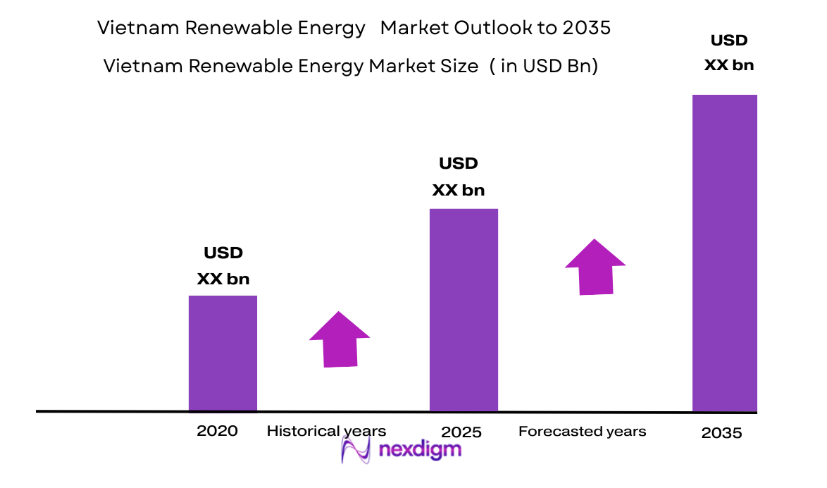
The Vietnam Renewable Energy Market is growing steadily, driven by the country’s increasing investments in sustainable energy sources. The market size for this sector is expanding due to government incentives, technological advancements, and the rising demand for clean energy solutions across various industries. The market is primarily fueled by solar, wind, and biomass energy solutions, supported by favorable regulatory policies, energy security concerns, and international collaborations. Based on a recent historical assessment, the market is valued in USD ~ billion and expected to continue its upward trajectory through the next years.
Vietnam is emerging as one of the most prominent renewable energy markets in Southeast Asia, primarily driven by the government’s efforts to reduce the country’s dependency on fossil fuels. Key regions in the country, including Hanoi, Ho Chi Minh City, and coastal areas, are leading in terms of renewable energy adoption, particularly solar and wind power projects. These areas benefit from optimal climate conditions for renewable energy generation, combined with substantial infrastructure investments aimed at enhancing energy grid stability and sustainability.
Market Segmentation
By Product Type:
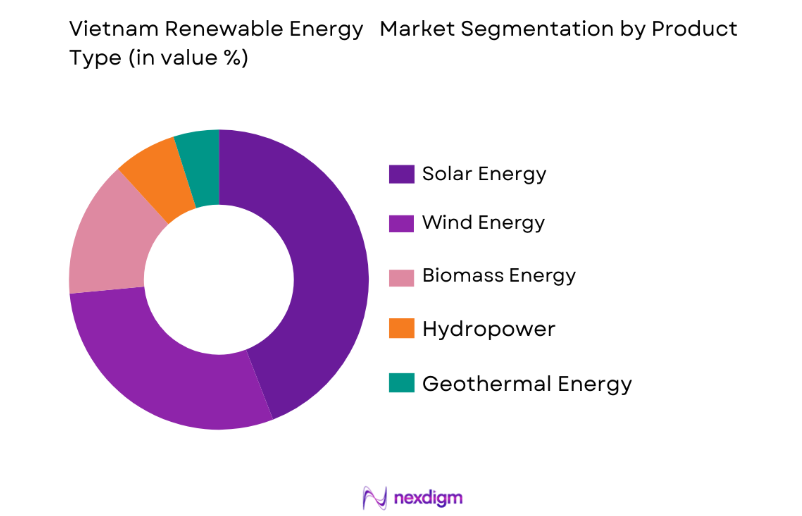
The Vietnam Renewable Energy Market is segmented by product type into solar, wind, biomass, hydropower, and geothermal energy. Recently, the solar energy sub-segment has been dominating the market share due to favorable government policies such as feed-in tariffs, falling installation costs, and the ease of system deployment. The rapid expansion of solar farms, coupled with the country’s vast potential for solar power generation, makes it a key driver of the market’s growth. Additionally, Vietnam’s commitment to meeting clean energy targets by 2030 further supports the dominance of solar energy.
By Platform Type:
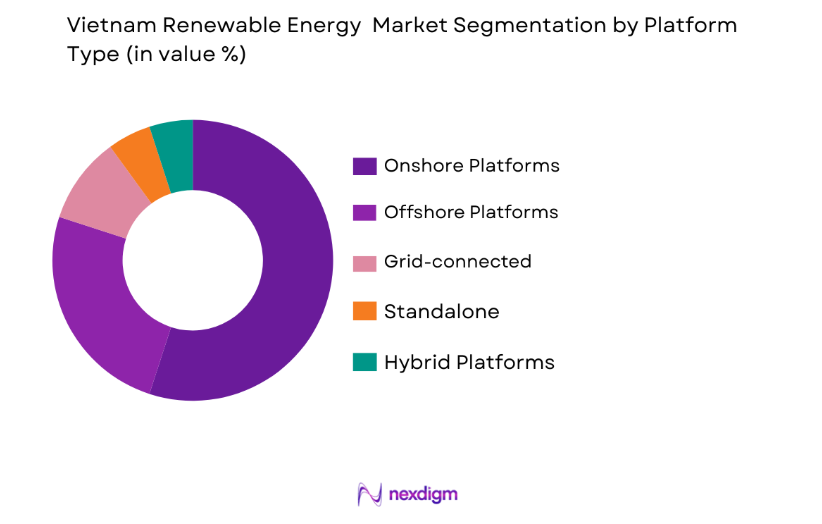
The market is segmented by platform type into onshore, offshore, grid-connected, standalone, and hybrid platforms. The onshore platform sub-segment has a dominant market share due to the increasing demand for cost-effective and scalable renewable energy projects. Onshore platforms, especially for solar and wind, are easier and less expensive to install compared to offshore platforms, making them the preferred choice for most investors and developers. The expansion of onshore renewable energy projects in areas with high resource potential, like coastal and rural regions, further drives this segment’s growth.
Competitive Landscape
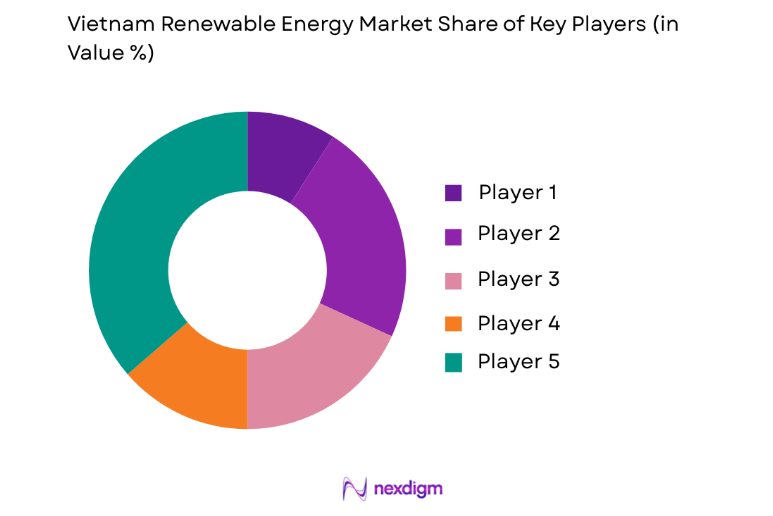
The Vietnam Renewable Energy Market is highly competitive, with both domestic and international players striving for a larger share of the market. The industry has seen considerable consolidation over the past few years, with major players investing heavily in renewable energy technologies and expanding their portfolios. As government incentives and supportive regulatory frameworks continue, industry leaders are focusing on expanding their operations, optimizing technology, and enhancing their market reach to stay competitive.
| Company Name | Establishment Year | Headquarters | Technology Focus | Market Reach | Key Products | Revenue | Additional Parameter |
| Vingroup | 1993 | Hanoi, Vietnam | ~ | ~ | ~ | ~ | ~ |
| Vietnam Electricity (EVN) | 1995 | Hanoi, Vietnam | ~ | ~ | ~ | ~ | ~ |
| First Solar | 1999 | Arizona, USA | ~ | ~ | ~ | ~ | ~ |
| Siemens Gamesa | 1976 | Spain | ~ | ~ | ~ | ~ | ~ |
| Trina Solar | 1997 | Changzhou, China | ~ | ~ | ~ | ~ | ~ |
Vietnam Renewable Energy Market Analysis
Growth Drivers
Government Incentives for Renewable Energy:
Government incentives are one of the key drivers for growth in the Vietnam Renewable Energy Market. The Vietnamese government has been proactive in implementing various policies that support the growth of renewable energy, such as feed-in tariffs, tax incentives, and subsidies. These incentives have reduced the cost of renewable energy systems, making them more accessible for businesses and consumers. With a strong commitment to achieving its clean energy goals, the government continues to provide financial and regulatory support to increase the adoption of solar, wind, and biomass energy systems. These efforts have not only enhanced the competitiveness of renewable energy projects but also attracted significant domestic and international investments into the sector, further accelerating market growth.
Technological Advancements in Renewable Energy:
Another major growth driver for the Vietnam Renewable Energy Market is the continuous advancement in renewable energy technologies. Solar and wind energy systems have become more efficient, reliable, and cost-effective due to innovations in solar panel efficiency, turbine design, and energy storage solutions. Technological improvements have significantly lowered the capital expenditure required for renewable energy projects, making them more attractive to investors. Additionally, the rise of smart grid technologies and energy storage systems is enabling better integration of renewable energy sources into the national grid, improving energy reliability and facilitating the shift towards clean energy. As technology continues to evolve, these advancements are expected to further reduce costs and enhance the scalability of renewable energy solutions, fueling market growth.
Market Challenges
High Initial Capital Investment in Renewable Projects:
One of the primary challenges facing the Vietnam Renewable Energy Market is the high upfront capital required to develop renewable energy infrastructure. Although the cost of renewable energy technologies has reduced over the years, the initial investments in solar farms, wind turbines, and energy storage systems remain substantial. This high capital expenditure can deter small and medium-sized enterprises from entering the market and may limit the speed at which renewable energy projects are implemented. Furthermore, despite the availability of government incentives, the long payback periods associated with renewable energy investments can still pose a challenge, particularly for businesses with limited access to financing or those in regions with less favorable resource potential.
Regulatory and Bureaucratic Challenges:
Despite the Vietnamese government’s commitment to renewable energy, regulatory and bureaucratic barriers still hinder the market’s full potential. The permitting process for renewable energy projects, particularly for large-scale solar and wind farms, can be lengthy and complex, leading to delays in project approvals and implementation. In addition, there is a lack of a streamlined regulatory framework for integrating renewable energy sources into the national grid, which further complicates the development of these projects. To accelerate the market’s growth, the government needs to address these regulatory challenges, simplify permitting processes, and ensure more efficient integration of renewable energy technologies into the energy grid.
Opportunities
Expansion of Solar and Wind Energy:
The expansion of solar and wind energy presents a significant opportunity for the Vietnam Renewable Energy Market. Vietnam boasts a high level of solar insolation and wind potential, especially in coastal and rural areas. This makes the country an ideal location for solar and wind power projects, which can contribute significantly to the national energy mix. As the government continues to prioritize the development of renewable energy sources, new opportunities for both domestic and international players to invest in and develop solar and wind farms will arise. Additionally, with the increasing global focus on renewable energy, there is potential for Vietnam to become a key exporter of clean energy in the region.
Development of Energy Storage Solutions:
The development of energy storage solutions is another growing opportunity in the Vietnam Renewable Energy Market. Energy storage systems, such as batteries and pumped hydro storage, can address the intermittent nature of renewable energy generation by storing excess energy during periods of high generation and releasing it during periods of low generation. The integration of energy storage with solar and wind projects will enhance grid stability and reliability, facilitating greater renewable energy adoption. As technology advances and costs decrease, energy storage solutions are expected to play a critical role in supporting the expansion of renewable energy capacity in Vietnam, creating new opportunities for businesses and investors in the energy storage sector.
Future Outlook
The future outlook for the Vietnam Renewable Energy Market is highly optimistic, with significant growth anticipated in the coming years. The market will continue to benefit from strong government support, technological advancements, and an increasing demand for clean energy solutions. The development of solar and wind energy projects, coupled with innovations in energy storage, is expected to drive further market expansion. Additionally, as Vietnam works towards its clean energy targets, the market will likely see increasing investments from both domestic and international players, further enhancing the country’s renewable energy capabilities.
Major Players
- Vingroup
- Vietnam Electricity (EVN)
- First Solar
- Siemens Gamesa
- Trina Solar
- SunPower
- GE Renewable Energy
- Goldwind
- Longi Solar
- Enel Green Power
- Jinko Solar
- Nordex
- Iberdrola
- Orsted
- Yingli Solar
Key Target Audience
- Investments and venture capitalist firms
- Government and regulatory bodies
- Energy developers and project financiers
- Utility companies
- Independent power producers (IPPs)
- Renewable energy system manufacturers
- Construction companies specializing in renewable energy projects
- Environmental NGOs
Research Methodology
Step 1: Identification of Key Variables
The initial step involves identifying the key factors that impact the renewable energy market in Vietnam. These include technological advancements, government policies, and market dynamics such as demand and supply trends.
Step 2: Market Analysis and Construction
Comprehensive analysis is carried out using historical data and predictive models to construct the current market framework and forecast future trends, including market size, product segmentation, and competitive landscape.
Step 3: Hypothesis Validation and Expert Consultation
Expert consultations and market validation through surveys and interviews with industry leaders, government officials, and technology providers ensure the accuracy of the formulated hypotheses and predictions.
Step 4: Research Synthesis and Final Output
The final step synthesizes all findings into a detailed report, including an analysis of growth drivers, challenges, opportunities, and forecasts, supported by data and expert insights.

- Executive Summary
- Research Methodology (Definitions, Scope, Industry Assumptions, Market Sizing Approach, Primary & Secondary Research Framework, Data Collection & Verification Protocol, Analytic Models & Forecast Methodology, Limitations & Research Validity Checks)

- Market Definition and Scope
- Value Chain & Stakeholder Ecosystem
- Regulatory / Certification Landscape
- Sector Dynamics Affecting Demand

- Growth Drivers
Government Incentives for Renewable Energy
Technological Advancements in Renewable Solutions
Growing Demand for Clean Energy - Market Challenges
High Initial Investment Costs
Grid Infrastructure Challenges
Regulatory Barriers to Project Approvals - Market Opportunities
Expansion of Solar and Wind Energy
Development of Energy Storage Solutions
Integration of Hybrid Energy Systems - Trends
Rising Adoption of Distributed Energy Resources
Focus on Green Hydrogen Projects
Shift Towards Smart Grid Technologies - Government Regulations
- SWOT Analysis of Key Competitors

- By Market Value, 2020-2025
- By Installed Units, 2020-2025
- By Average System Price, 2020-2025
- By System Complexity Tier, 2020-2025

- By System Type (In Value%)
Solar Energy
Wind Energy
Hydropower
Biomass Energy
Geothermal Energy - By Platform Type (In Value%)
Onshore Platforms
Offshore Platforms
Grid-connected Systems
Standalone Systems
Hybrid Platforms - By Fitment Type (In Value%)
On-site Solutions
Off-site Solutions
Utility-scale Projects
Residential Installations
Industrial Installations - By EndUser Segment (In Value%)
Residential Consumers
Commercial Enterprises
Industrial Users
Government & Public Sector
Energy Providers

- Market Share Analysis
- CrossComparison Parameters (System Type, Platform Type, Procurement Channel, EndUser Segment, Fitment Type)
- SWOT Analysis of Key Competitors
- Pricing & Procurement Analysis
- Porter’s Five Forces
- Key Players
Vingroup
Vietnam Electricity (EVN)
Tata Power
GE Renewable Energy
Siemens Gamesa
First Solar
Suzlon Energy
Mitsubishi Heavy Industries
Trina Solar
SunPower Corporation
EDP Renewables
Sungrow Power Supply Co.
Enel Green Power
NextEra Energy
Iberdrola

- Residential Sector’s Shift to Solar Energy
- Commercial Sector’s Push for Energy Efficiency
- Industrial Users Increasing Renewable Energy Adoption
- Energy Providers Integrating Renewable Sources

- Forecast Market Value, 2026-2035
- Forecast Installed Units, 2026-2035
- Price Forecast by System Tier, 2026-2035
- Future Demand by Platform, 2026-2035


 Request a Sample
 Ask for Customization
 Get a Quote
 Enquire Now