
 Download PDF
 Download PDF
Market Overview
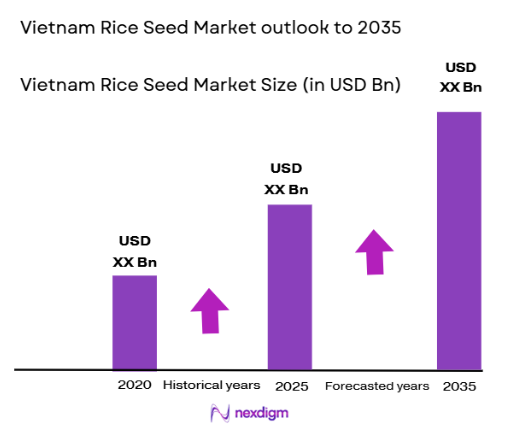
The Vietnam Rice Seed Market is projected to reach a market size of approximately USD ~ billion based on a recent historical assessment. This growth is driven by factors such as the increasing demand for high-quality rice varieties, technological advancements in seed development, and government incentives aimed at improving agricultural productivity. The rising preference for hybrid and genetically modified rice seeds has also significantly contributed to the market’s growth, catering to the diverse needs of the agricultural sector.
Vietnam remains one of the dominant players in the global rice market, driven by its rich agricultural history and strong farming practices. The country’s extensive rice cultivation areas in the Mekong Delta, along with its commitment to modernizing farming techniques, make it a key player in the rice seed market. Additionally, government support, such as subsidies and research initiatives, further strengthens the country’s position as a leading producer and consumer of rice seeds.
Market Segmentation
By Product Type:
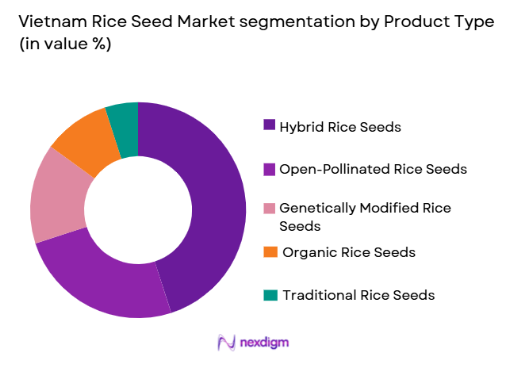
The Vietnam Rice Seed Market is segmented by product type into hybrid rice seeds, open-pollinated rice seeds, genetically modified rice seeds, organic rice seeds, and traditional rice seeds. The hybrid rice seed segment currently holds the dominant market share due to its higher yield potential and resistance to diseases, making it a popular choice among farmers looking to optimize their production. The increasing demand for high-yield varieties driven by both domestic consumption and export needs has bolstered the popularity of hybrid rice seeds.
By Platform Type:
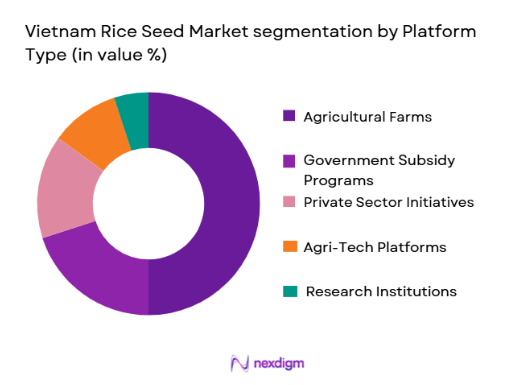
The market is also segmented by platform type, which includes agricultural farms, government subsidy programs, private sector initiatives, agri-tech platforms, and research institutions. Agricultural farms lead the market share in this segment, as they are the primary users of rice seeds, driven by the large-scale cultivation of rice across the country. The adoption of advanced agricultural technologies and improved irrigation practices has led to a shift towards higher-quality seeds, further increasing the demand for better rice varieties.
Competitive Landscape
The Vietnam Rice Seed Market is highly competitive, with several key players vying for market share. While the market is fragmented, there has been an increasing trend of consolidation, especially among the larger players who have the capacity to invest in research and development. The dominance of major seed producers is supported by their ability to offer high-yielding, disease-resistant varieties and the strong distribution networks they have built. As demand grows, market consolidation will likely continue, ensuring that the larger players maintain a significant share of the market.
| Company Name | Establishment Year | Headquarters | Technology Focus | Market Reach | Key Products | Revenue (USD Billion) | Additional Parameter |
| Viet Seed Group | 1997 | Ho Chi Minh City | ~ | ~ | ~ | ~ | ~ |
| Syngenta Vietnam | 2000 | Hanoi | ~ | ~ | ~ | ~ | ~ |
| Bayer CropScience | 2006 | Ho Chi Minh City | ~ | ~ | ~ | ~ | ~ |
| Monsanto Vietnam | 2008 | Hanoi | ~ | ~ | ~ | ~ | ~ |
| East West Seed Company | 2002 | Ho Chi Minh City | ~ | ~ | ~ | ~ | ~ |
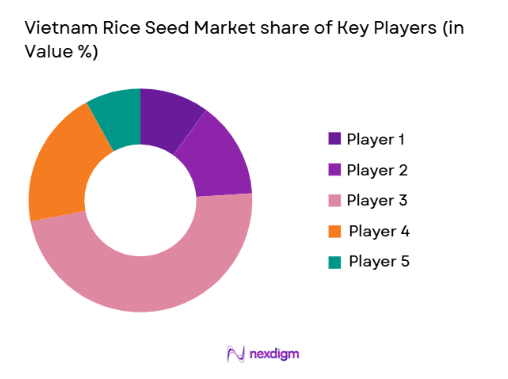
Vietnam Rice Seed Market Analysis
Growth Drivers
Government Support:
The Vietnamese government has been actively supporting the agriculture sector through subsidies, grants, and research initiatives. These initiatives are aimed at increasing rice yields and ensuring food security in the country. Government-backed programs such as rice seed research and development have encouraged both domestic and foreign investments in the sector, leading to a surge in high-quality rice seed production. Furthermore, the government’s commitment to enhancing the livelihoods of farmers through modern agricultural practices has stimulated demand for improved rice seed varieties, especially hybrid and genetically modified seeds. These growth drivers have propelled the market forward, establishing Vietnam as a significant rice seed producer globally.
Technological Advancements in Seed Development:
The continuous advancements in agricultural technology have played a key role in shaping the growth of the rice seed market in Vietnam. Innovations such as genetically modified (GM) rice seeds, which offer resistance to pests and diseases, have gained substantial traction among farmers looking to maximize their yields. Additionally, research into hybrid rice varieties has resulted in more robust and high-yielding crops that can thrive in varying environmental conditions. As such, technological advancements are not only increasing productivity but also driving the demand for superior-quality rice seeds, making them an essential growth driver for the market.
Market Challenges
Climate Change Impact on Rice Production:
One of the significant challenges faced by the rice seed market in Vietnam is the impact of climate change on rice production. The unpredictable weather patterns, including floods, droughts, and temperature fluctuations, have affected the overall agricultural output, especially in rice farming. Such environmental changes pose risks to crop health and productivity, undermining efforts to improve the quality and quantity of rice production. The vulnerability of rice crops to these climate changes makes it difficult for farmers to rely on consistent yields, creating a challenge for the rice seed market, especially when trying to encourage the adoption of high-quality and hybrid varieties.
Supply Chain and Distribution Challenges:
The rice seed market in Vietnam faces significant logistical challenges, particularly with the distribution of high-quality seeds to rural areas. Inadequate infrastructure, especially in remote regions, leads to delays and higher costs in transporting seeds from manufacturers to farmers. Furthermore, a lack of storage facilities and cold chain logistics hampers the quality maintenance of seeds. These supply chain inefficiencies not only increase the cost of seeds but also limit the availability of high-quality rice seeds to smaller farmers, thereby affecting market penetration in less developed areas.
Opportunities
Expansion of Hybrid Rice Varieties:
The growing demand for high-yielding rice varieties presents a significant opportunity for the expansion of hybrid rice seeds in Vietnam. As farmers seek to increase productivity and overcome environmental challenges, hybrid rice varieties that offer higher resistance to diseases, pests, and adverse weather conditions are becoming increasingly popular. The benefits of hybrid rice, such as better yield and quality, are driving the shift from traditional rice varieties to hybrids, and this transition is expected to continue, offering opportunities for both existing and new market players to capitalize on the growing demand for hybrid rice seeds.
Sustainability in Rice Seed Production:
As global attention shifts toward sustainable agricultural practices, there is a growing opportunity in Vietnam to promote environmentally friendly rice seed production methods. The increasing emphasis on organic farming and sustainable agricultural practices is creating a demand for organic rice seeds that are free from chemical pesticides and fertilizers. With rising consumer awareness about the environmental impact of farming, the demand for sustainable and organic rice varieties is expected to increase, presenting a lucrative market opportunity for producers who can meet these needs while maintaining high yields and crop quality.
Future Outlook
The Vietnam Rice Seed Market is expected to grow steadily in the coming years, driven by technological innovations, government initiatives, and the increasing demand for high-quality rice varieties. Advancements in genetic engineering, hybrid rice varieties, and organic farming practices will continue to shape the market’s growth trajectory. Additionally, increasing demand for rice, both domestically and for export, will further boost the market. Regulatory support for sustainable farming practices and the rising importance of food security are also key factors that will drive market expansion over the next five years.
Major Players
- Viet Seed Group
- Syngenta Vietnam
- Bayer CropScience
- Monsanto Vietnam
- East West Seed Company
- Limagrain Vietnam
- DuPont Vietnam
- KWS Vietnam
- Nufarm Vietnam
- SeedWorks International
- FPT Agriculture
- Pioneer Hi-Bred International
- GreenField Agriculture
- Limagrain Seed Company
- Harris Seeds
Key Target Audience
- Investments and venture capitalist firms
- Government and regulatory bodies
- Rice seed producers
- Agricultural cooperatives
- Retailers and distributors of agricultural products
- Agronomy and crop protection companies
- Agricultural researchers and innovators
- Exporters of rice seed varieties
Research Methodology
Step 1: Identification of Key Variables
In this step, we define the critical factors that influence the rice seed market, including the product types, technological advancements, and regulatory conditions affecting the sector.
Step 2: Market Analysis and Construction
We analyze market data, industry reports, and historical trends to build an accurate market model that reflects the current and projected conditions of the Vietnam rice seed market.
Step 3: Hypothesis Validation and Expert Consultation
Experts in agricultural science, technology, and seed production are consulted to validate our hypotheses and assumptions, ensuring that the findings align with real-world market conditions.
Step 4: Research Synthesis and Final Output
The final output integrates the findings from the previous steps, producing a comprehensive report that offers insights into the Vietnam rice seed market, complete with actionable data and forecasts.

- Executive Summary
- Research Methodology(Definitions, Scope, Industry Assumptions, Market Sizing Approach, Primary & Secondary Research Framework, Data Collection & Verification Protocol, Analytic Models & Forecast Methodology, Limitations & Research Validity Checks)

- Market Definition and Scope
- Value Chain & Stakeholder Ecosystem
- Regulatory / Certification Landscape
- Sector Dynamics Affecting Demand
- Strategic Initiatives & Infrastructure Growth

- Growth Drivers
Increase in Rice Consumption
Technological Advancements in Seed Development
Government Support for Rice Farming
Demand for High-Yield Rice Varieties
Expanding Rice Cultivation Areas - Market Challenges
Climate Change Impacts on Rice Production
Lack of Awareness on Advanced Seed Varieties
Supply Chain and Distribution Inefficiencies
High Cost of High-Quality Seeds
Intellectual Property Concerns in Seed Innovation - Market Opportunities
Expansion of Hybrid Rice Varieties
Sustainability in Rice Seed Production
Rising Demand for Organic Rice Seeds - Trends
Focus on Genetically Modified Rice Varieties
Use of Data-Driven Agricultural Practices
Growth of Rice Export Markets
Increased Investment in Agricultural Research
Shift Towards Sustainable Farming Practices - Government Regulations & Defense Policy
Regulations on GMO Rice Seeds
Support for Sustainable Farming Initiatives
Policies Promoting Rice Seed Research and Development - SWOT Analysis
- Stakeholder and Ecosystem Analysis
- Porter’s Five Forces Analysis
- Competition Intensity and Ecosystem Mapping

- By Market Value, 2020-2025
- By Installed Units, 2020-2025
- By Average System Price, 2020-2025
- By System Complexity Tier, 2020-2025

- By System Type (In Value%)
Hybrid Rice Seeds
Open-Pollinated Rice Seeds
Genetically Modified Rice Seeds
Organic Rice Seeds
Traditional Rice Seeds - By Platform Type (In Value%)
Agricultural Farms
Government Subsidy Programs
Private Sector Initiatives
Agri-tech Platforms
Research Institutions - By Fitment Type (In Value%)
Field-sown Seeds
Greenhouse Cultivation Seeds
Greenhouse Hybrid Seeds
Directly Planted Seeds
Nurtured and Transplanted Seeds - By EndUser Segment (In Value%)
Farmers
Agricultural Co-operatives
Seed Distributors
Government Bodies
Agri-tech Companies - By Procurement Channel (In Value%)
Direct Sales
Online Sales Platforms
Distributors
Government Procurement
Retail Channels - By Material / Technology (in Value%)
Hybrid Technology
Biotech Technology
Genetic Engineering
Organic Farming Techniques
Sustainable Agriculture Practices

- Market structure and competitive positioning
- Market share snapshot of major players
- CrossComparison Parameters (Seed Type, Technology Used, Geographic Coverage, Distribution Network, Price, Seed Yield, Brand Recognition, Research and Development, Customer Base, Sustainability Practices)
SWOT Analysis of Key Players
Pricing & Procurement Analysis - Key Players
Viet Seed Group
Syngenta Vietnam
Bayer CropScience
Monsanto Vietnam
BASF Vietnam
East West Seed Company
Pioneer Hi-Bred International
Limagrain Vietnam
SeedWorks International
FPT Agriculture
DuPont Vietnam
KWS Vietnam
Nufarm Vietnam
Rice Seed Co., Ltd.
GreenField Agriculture

- Farmers’ Need for Improved Rice Varieties
- Government Support for Farmers and Agricultural Institutions
- Demand for High-Quality Rice Seeds in Domestic and Export Markets
- Emerging Players in the Seed Production Sector

- Forecast Market Value, 2026-2035
- Forecast Installed Units, 2026-2035
- Price Forecast by System Tier, 2026-2035
- Future Demand by Platform, 2026-2035


 Request a Sample
 Ask for Customization
 Get a Quote
 Enquire Now