
 Download PDF
Market Overview
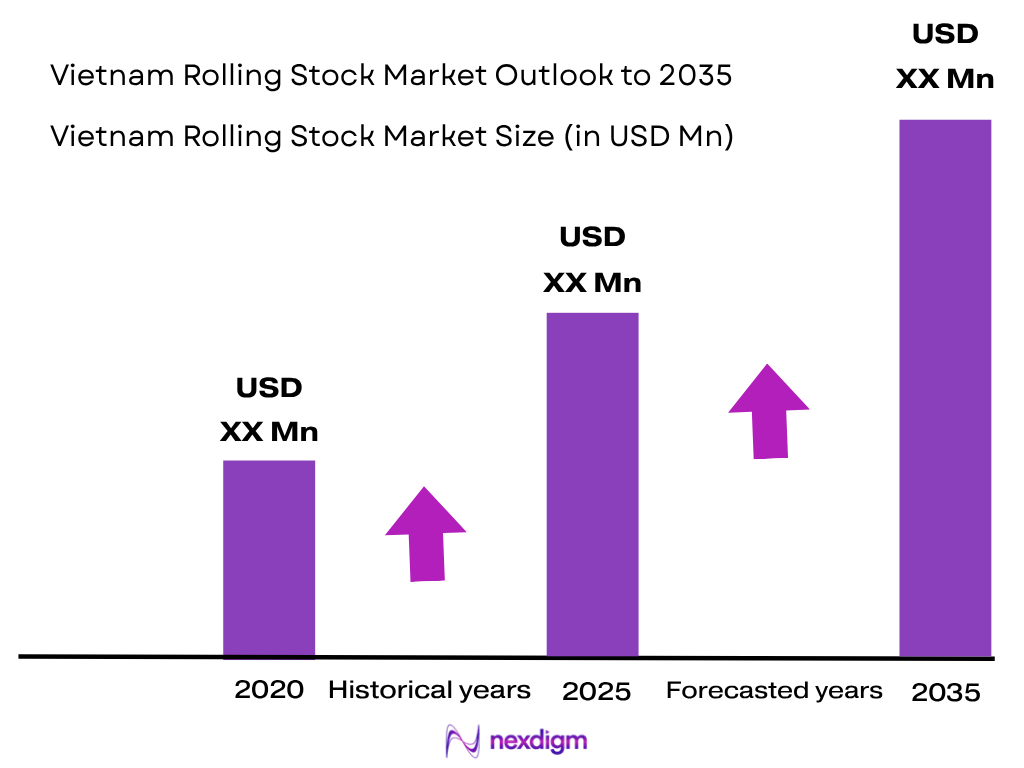
The Vietnam rolling stock market is valued at ~USD XX billion in 2024 and is supported by increasing railway modernization programs, urban transit expansion, and government-led infrastructure investments. The market is driven by demand for passenger coaches, locomotives, metro trainsets, and freight wagons as Vietnam upgrades its rail network. Vietnam’s railway development strategy emphasizes modernization of existing assets and expansion of urban rail systems, creating demand for advanced rolling stock technologies. Global rolling stock demand is also supported by infrastructure investments and fleet replacement activities across emerging economies.
The Vietnam rolling stock market is concentrated around major urban and industrial centers including Hanoi, Ho Chi Minh City, Hai Phong, Da Nang, and major freight corridors due to higher passenger mobility demand, industrial activity, and transportation infrastructure development. Hanoi and Ho Chi Minh City dominate because of metro rail development initiatives, including urban rapid transit projects aimed at reducing congestion. Industrial regions such as Hai Phong and Binh Duong contribute to freight rolling stock demand due to manufacturing growth and logistics requirements.
Market Segmentation
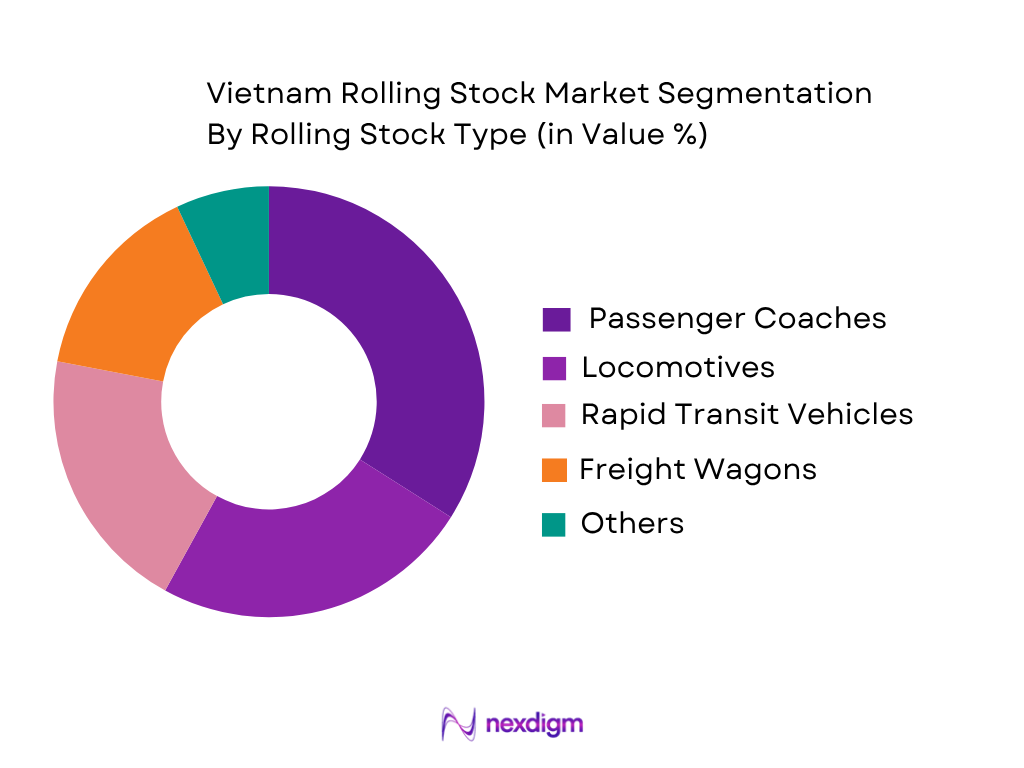
By Rolling Stock Type
Vietnam rolling stock market is segmented into passenger coaches, locomotives, rapid transit vehicles, freight wagons, and light rail vehicles. Passenger coaches account for the dominant share due to Vietnam’s dependence on intercity railway transportation and ongoing efforts to improve passenger experience through fleet modernization. The demand is supported by replacement of aging railway assets, improvement in passenger comfort standards, and modernization of conventional train services. Rapid transit vehicles are gaining importance due to metro developments in Hanoi and Ho Chi Minh City, while freight wagons remain important for industrial logistics. Locomotives continue to represent a significant segment due to their requirement across passenger and freight operations.
By Propulsion Type
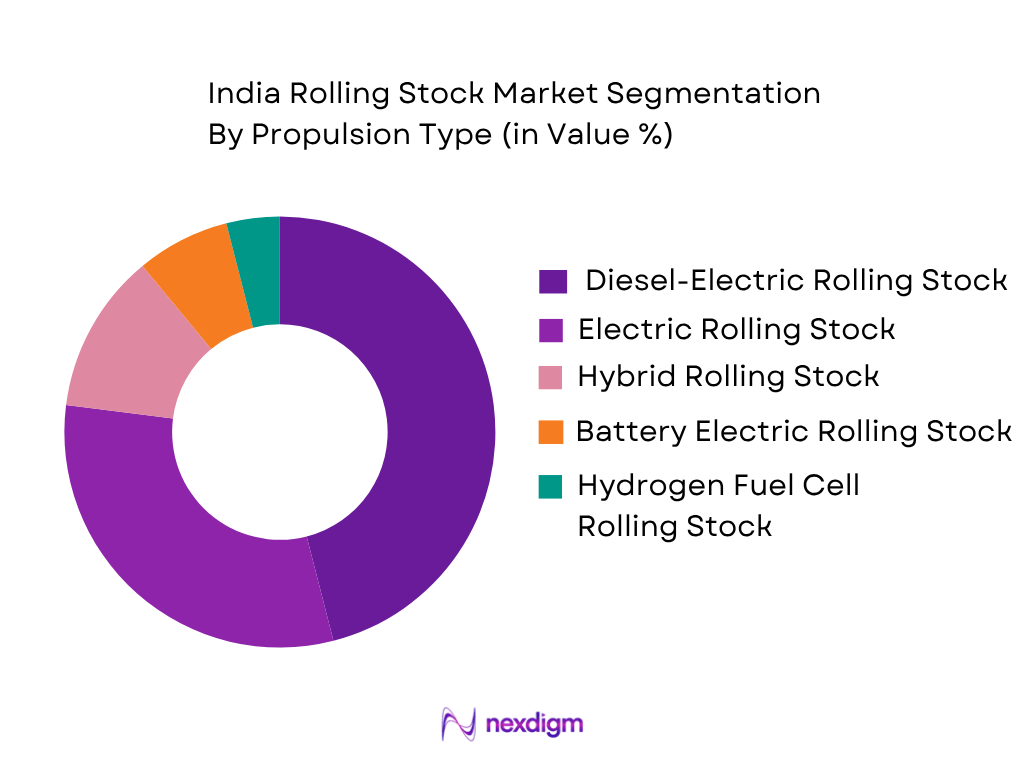
Vietnam rolling stock market is segmented into diesel-electric, electric, hybrid, battery electric, and hydrogen fuel cell rolling stock. Diesel-electric rolling stock dominates due to Vietnam’s existing railway infrastructure being primarily based on diesel-powered operations. However, electric rolling stock adoption is increasing due to government objectives focused on sustainable transportation and urban railway expansion. Metro projects in major cities are accelerating demand for electric multiple units and modern electric train systems. Battery-electric and hydrogen-based technologies remain emerging segments, supported by global decarbonization trends and Vietnam’s long-term interest in reducing transportation emissions.
Competitive Landscape
The Vietnam rolling stock market is moderately consolidated, with international manufacturers supplying advanced railway technologies and local railway organizations supporting domestic operations. Major companies compete through train manufacturing capabilities, signaling integration, maintenance services, propulsion technologies, and long-term railway contracts.
| Company | Establishment Year | Headquarters | Core Rolling Stock Segment | Key Products / Solutions | Vietnam Market Presence | Manufacturing Capability | Technology Focus |
| Alstom | 1928 | Saint-Ouen-sur-Seine, France | ~ | ~ | ~ | ~ | ~ |
| Siemens Mobility | 1847 | Munich, Germany | ~ | ~ | ~ | ~ | ~ |
| CRRC Corporation Limited | 2007 | Beijing, China | ~ | ~ | ~ | ~ | ~ |
| Hyundai Rotem | 1999 | Seoul, South Korea | ~ | ~ | ~ | ~ | ~ |
| Vietnam Railways Corporation | 2010 | Hanoi, Vietnam | ~ | ~ | ~ | ~ | ~ |
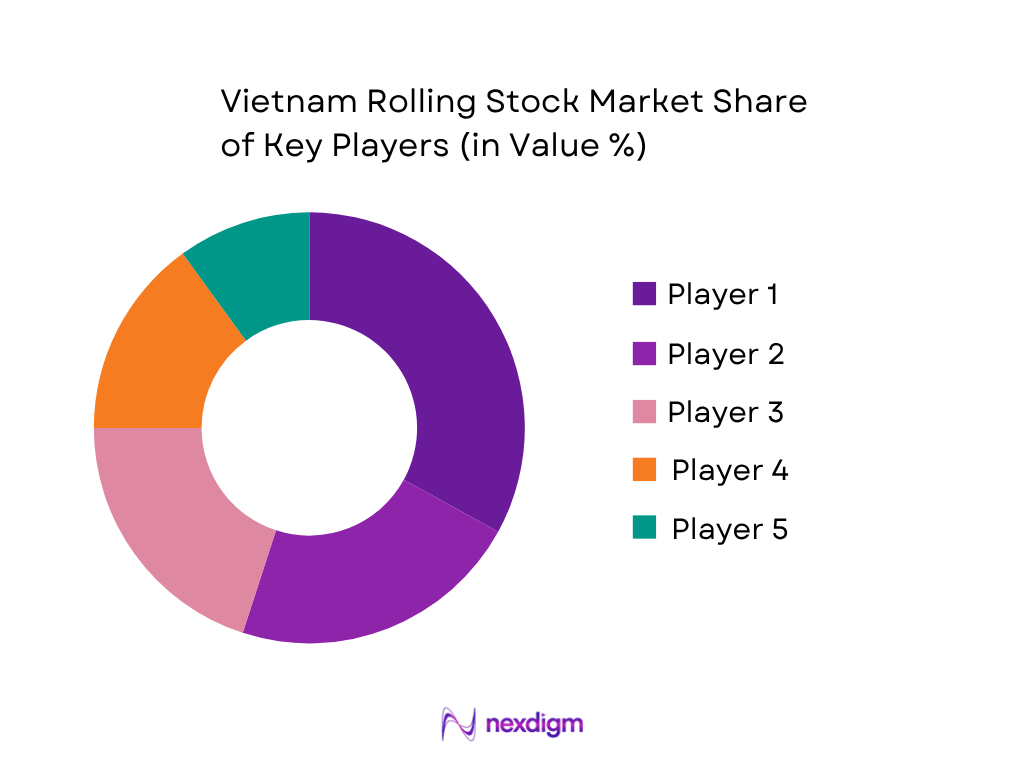
Vietnam Rolling Stock Market Analysis
Growth Drivers
Railway Infrastructure Modernization
Vietnam’s railway infrastructure modernization is a key driver for rolling stock demand as the country focuses on improving transportation efficiency and connectivity. Vietnam has a railway network of approximately 3,143 km, according to national transport infrastructure data, with modernization requirements due to aging assets and limited operational capacity. The country’s GDP reached approximately USD 476 billion in 2024, according to World Bank economic indicators, supporting higher government capacity for infrastructure investment. Railway modernization programs focus on upgrading locomotives, passenger coaches, signaling systems, and maintenance technologies. The increasing movement of goods and passengers between northern and southern economic regions is creating demand for more reliable rolling stock solutions. Vietnam’s industrial output expansion and logistics development are encouraging investment in freight railway capabilities, particularly along major industrial corridors. Modern rolling stock with improved energy efficiency, passenger comfort, and operational reliability is expected to become increasingly important as Vietnam upgrades its railway ecosystem.
Urban Metro Expansion
Urban metro expansion is significantly supporting Vietnam’s rolling stock market as major cities address increasing mobility requirements. Hanoi and Ho Chi Minh City are investing in urban rail systems to reduce road congestion and improve public transportation efficiency. Vietnam’s urban population reached approximately 38 million people in 2024, according to World Bank urbanization indicators, increasing demand for high-capacity transportation solutions. Hanoi Metro Line 2A has entered commercial operations, while Ho Chi Minh City continues development of its metro network with multiple planned routes. The country’s total population exceeded 100 million people in 2024, creating long-term demand for efficient urban mobility systems. Metro expansion requires electric multiple units, signaling-compatible trainsets, and advanced maintenance systems. Increasing urban density, rising commuting requirements, and government focus on sustainable transportation are expected to accelerate adoption of modern rapid transit rolling stock across major Vietnamese cities.
Market Challenges
Aging Railway Infrastructure
Aging railway infrastructure remains a major challenge for Vietnam’s rolling stock market because a significant portion of the existing railway system requires modernization. Vietnam’s railway network of approximately 3,143 km was primarily developed decades ago and continues to rely on conventional infrastructure with operational limitations. According to national railway development assessments, much of the network uses outdated technology, restricting train speed, capacity utilization, and service frequency. Vietnam’s GDP growth reached approximately 7.09 trillion VND trillion? correction: Vietnam recorded GDP growth supported by economic expansion in 2024, increasing infrastructure demand while requiring careful allocation of investment resources. Aging tracks, limited electrification, and outdated signaling systems create compatibility challenges for deploying advanced rolling stock. Modern train systems require upgraded infrastructure, including improved tracks, power supply systems, and digital railway management capabilities. These infrastructure constraints increase complexity for railway operators seeking to introduce new locomotives, electric trains, and automated railway technologies.
High Import Dependency for Advanced Components
Vietnam’s rolling stock industry faces challenges due to dependence on imported advanced railway components, including propulsion systems, signaling equipment, control systems, and specialized train technologies. Domestic manufacturing capabilities remain limited compared with established railway manufacturing countries. Vietnam recorded merchandise imports of approximately USD 380 billion in 2024, reflecting the country’s reliance on international supply chains for industrial equipment and technology components. Advanced rolling stock requires specialized components that are currently sourced from international suppliers, increasing project complexity and supply chain exposure. The railway sector also depends on foreign technology providers for metro systems, electric train technologies, and digital railway solutions. Developing local manufacturing capabilities requires investment in engineering skills, production facilities, and technology transfer partnerships. Import dependency can affect procurement timelines, maintenance availability, and lifecycle management of rolling stock fleets.
Market Opportunities
North-South High-Speed Railway Development
The planned North-South high-speed railway represents a major future opportunity for Vietnam’s rolling stock market by creating demand for advanced passenger trains, railway systems, and supporting technologies. The proposed railway corridor connects Hanoi and Ho Chi Minh City across approximately 1,541 km, according to government transport planning documents. Vietnam’s population exceeding 100 million people in 2024 supports long-term demand for high-capacity intercity transportation solutions. The project aligns with national objectives to improve connectivity between economic regions, reduce transportation pressure, and enhance passenger mobility. High-speed railway development will require advanced electric rolling stock, signaling systems, maintenance technologies, and railway infrastructure solutions. The project also creates opportunities for technology partnerships, local manufacturing development, and workforce capability enhancement. As Vietnam continues economic development, high-speed rail is positioned as a strategic transportation investment supporting future mobility requirements.
Railway Digitalization and Smart Maintenance Solutions
Railway digitalization presents significant opportunities for Vietnam’s rolling stock market through adoption of predictive maintenance, automated monitoring systems, and data-driven railway operations. Vietnam’s digital economy reached approximately USD 30 billion in 2024, according to government digital economy development assessments, demonstrating increasing adoption of technology solutions across industries. Smart maintenance technologies can improve fleet reliability by using sensors, artificial intelligence, and real-time monitoring systems to identify equipment issues before failures occur. Digital railway platforms can support improved scheduling, asset management, and operational efficiency for passenger and freight rail services. Vietnam’s growing technology ecosystem and increasing investment in digital transformation create favorable conditions for railway technology adoption. Rolling stock manufacturers and railway operators can leverage digital solutions to extend vehicle lifecycles, optimize maintenance activities, and improve passenger service quality. These technologies will become increasingly important as Vietnam expands modern railway infrastructure and introduces advanced train systems.
Future Outlook
Over the next decade, the Vietnam rolling stock market is expected to experience steady expansion driven by urban transportation requirements, railway modernization initiatives, and increasing focus on sustainable mobility. Demand will be supported by metro rail expansion in major cities, replacement of aging railway fleets, and adoption of technologically advanced train systems. The transition toward electric and digitally connected rolling stock is expected to create opportunities for international manufacturers and technology providers.
Major Players
- CRRC Corporation Limited
- Alstom SA
- Siemens Mobility
- Hitachi Rail
- Hyundai Rotem
- Stadler Rail
- Kawasaki Heavy Industries
- Mitsubishi Heavy Industries
- Toshiba Infrastructure Systems
- CAF Group
- Talgo
- Wabtec Corporation
- Knorr-Bremse
- Vietnam Railways Corporation
- Hanoi Metro Company
Key Target Audience
- Rolling stock manufacturers
- Railway operators and fleet management companies
- Urban metro authorities
- Railway infrastructure developers
- Investments and venture capitalist firms
- Government and regulatory bodies (Ministry of Transport Vietnam, Vietnam Railway Authority)
- Railway component suppliers
- Transportation technology providers
Research Methodology
Step 1: Identification of Key Variables
The initial phase involves defining the Vietnam rolling stock ecosystem by identifying major stakeholders including railway operators, rolling stock manufacturers, metro authorities, component suppliers, and government bodies. Extensive secondary research is conducted to understand fleet composition, railway infrastructure development, procurement activities, and technology adoption trends.
Step 2: Market Analysis and Construction
Historical market information is analyzed through assessment of rolling stock procurement, fleet replacement cycles, railway investment programs, and passenger and freight transportation requirements. Supply-side and demand-side factors are evaluated to estimate market development patterns and industry dynamics.
Step 3: Hypothesis Validation and Expert Consultation
Market assumptions are validated through discussions with railway industry participants, manufacturers, suppliers, and operational experts. These consultations provide insights into procurement strategies, technology preferences, manufacturing capabilities, and future investment priorities.
Step 4: Research Synthesis and Final Output
The final stage integrates primary and secondary research findings to develop a comprehensive market assessment. Data from railway operators, government sources, manufacturers, and industry stakeholders is analyzed to ensure accuracy and reliability of market conclusions.

- Executive Summary
- Research Methodology (Market Definition and Scope, Market Boundary Assessment, Data Collection Framework, Top-Down Market Sizing, Bottom-Up Market Validation, Demand-Side Assessment, Supply-Side Assessment, Primary Interviews, Data Triangulation, Forecasting Framework, Assumptions and Limitations)

- Definition and Scope
- Evolution of Vietnam Railway Industry
- Historical Development Timeline of Vietnamese Rail Transportation
- Railway Infrastructure Ecosystem Analysis
- Vietnam Railway Value Chain Analysis
- Rolling Stock Manufacturing Ecosystem
- Railway Supply Chain Analysis
- Key Stakeholders Mapping

- Growth Drivers (Railway Infrastructure Modernization, Urban Metro Expansion, Passenger Transportation Demand, Freight Logistics Development, Railway Electrification Initiatives, Government Transport Investment)
- Market Challenges (Aging Railway Infrastructure, High Import Dependency for Advanced Components, Limited Domestic Rolling Stock Manufacturing Capability, Long Procurement Cycles, Railway Gauge Constraints, Skilled Technical Workforce Availability)
- Market Opportunities (North-South High-Speed Railway Development, Metro Rail Expansion in Major Cities, Electric Rolling Stock Adoption, Railway Digitalization, Smart Maintenance Solutions, Freight Rail Automation)
- Market Trends (Railway Electrification, Urban Metro Development, Sustainable Transportation Adoption, Smart Railway Technologies, Domestic Manufacturing Expansion, Advanced Train Control Systems)
- Government Regulations and Industry Standards (Vietnam Railway Law, Ministry of Transport Railway Regulations, Railway Safety Standards, Environmental Compliance Requirements, Public Procurement Framework, Railway Infrastructure Development Policies)
- SWOT Analysis
- Porter’s Five Forces Analysis
- PESTLE Analysis

- By Market Value (2020-2025)
- By Rolling Stock Production Volume (2020-2025)
- By Fleet Procurement Volume (2020-2025)
- By Average Contract Value (2020-2025)
- By Replacement Demand Volume (2020-2025)
- By New Railway Project Demand (2020-2025)

- By Rolling Stock Type (In Value %)
Locomotives
Passenger Coaches
Freight Wagons
Metro Rolling Stock
Light Rail Vehicles
High-Speed Trainsets
Diesel Multiple Units (DMUs)
Electric Multiple Units (EMUs) - By Propulsion Type (In Value %)
Diesel-Electric Rolling Stock
Electric Rolling Stock
Hybrid Rolling Stock
Battery Electric Rolling Stock
Hydrogen Fuel Cell Rolling Stock - By Application Type (In Value %)
Passenger Transportation
Freight Transportation
Urban Transit Systems
Intercity Railway Services
Industrial Railway Operations - By Railway Service Type (In Value %)
Vietnam Railways Passenger Services
Urban Metro Operations
Freight Logistics Services
Industrial Rail Operations
Tourism Railway Services - By Procurement Type (In Value %)
New Rolling Stock Procurement
Fleet Replacement Programs
Rolling Stock Modernization
Maintenance and Refurbishment Services
Technology Upgrade Programs

- Market Share Analysis of Major Players (By Rolling Stock Type, Procurement Category, Technology Segment, Railway Application)
- Cross Comparison Parameters (Manufacturing Capacity, Rolling Stock Portfolio Breadth, Railway Project Experience, Localization Capability, Propulsion Technology Expertise, Maintenance Service Capability, Railway Digital Solutions Portfolio, Government Contract Execution Capability)
- Pricing and Contract Structure Analysis
- SWOT Analysis of Major Players
- Detailed Profiles of Major Companies
Hyundai Rotem
Alstom
Siemens Mobility
CRRC Corporation
Hitachi Rail
Stadler Rail
Toshiba Infrastructure Systems
Mitsubishi Heavy Industries
Kawasaki Heavy Industries
Talgo
Wabtec Corporation
CAF (Construcciones y Auxiliar de Ferrocarriles)
Škoda Transportation
Vietnam Railways (VNR)
Hanoi Metro Company

- Railway Passenger Demand Analysis
- Freight Transportation Demand Assessment
- Urban Transit Consumer Behaviour
- Passenger Demographic Analysis
- Railway Service Preference Analysis
- Fleet Operator Purchase Decision Analysis

- By Market Value (2026-2035)
- By Rolling Stock Production Volume (2026-2035)
- By Fleet Procurement Volume (2026-2035)
- By Average Contract Value (2026-2035)
- By Replacement Demand Volume (2026-2035)
- By New Railway Project Demand (2026-2035)


 Request a Sample
 Ask for Customization
 Get a Quote
 Enquire Now