
 Download PDF
Market Overview
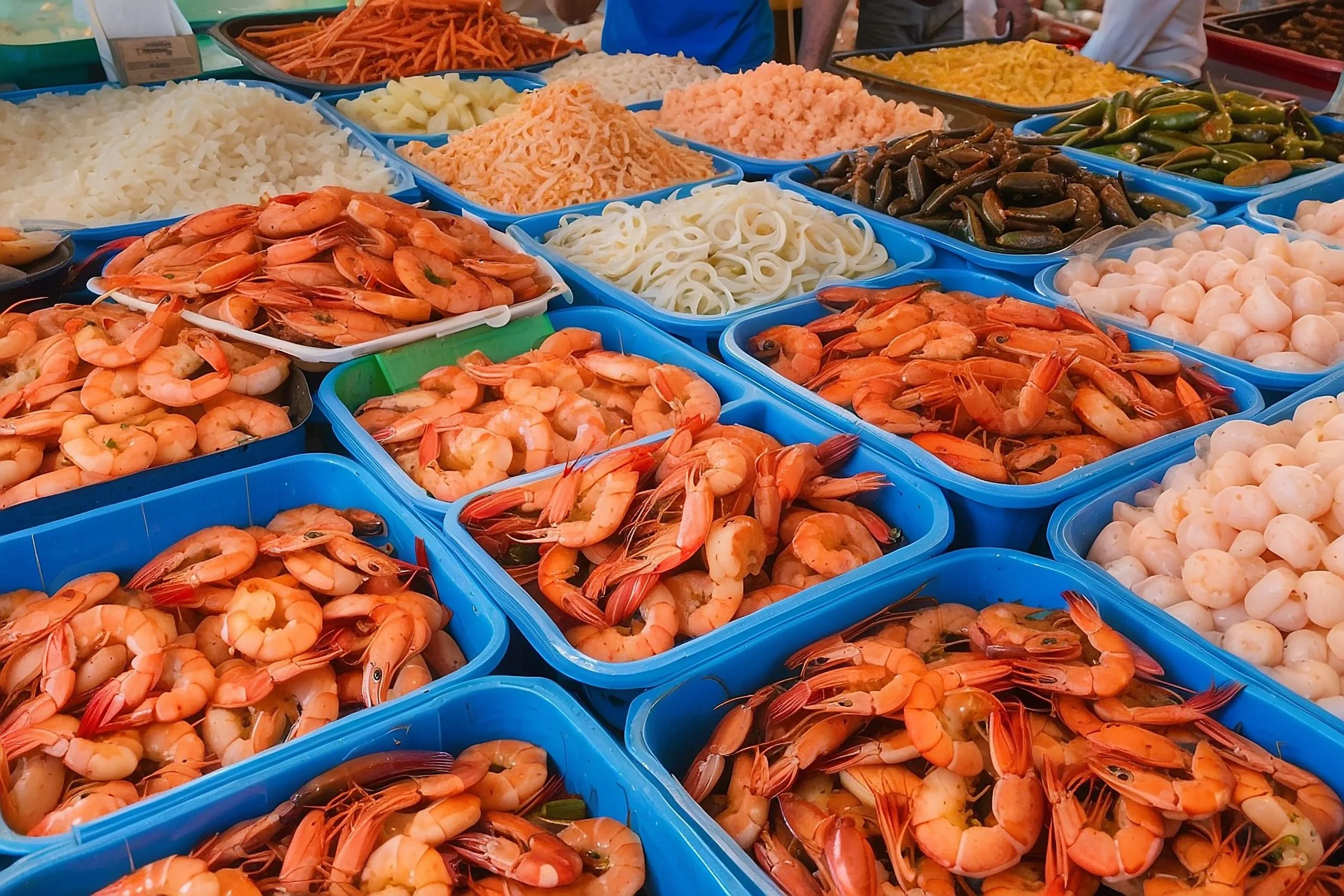
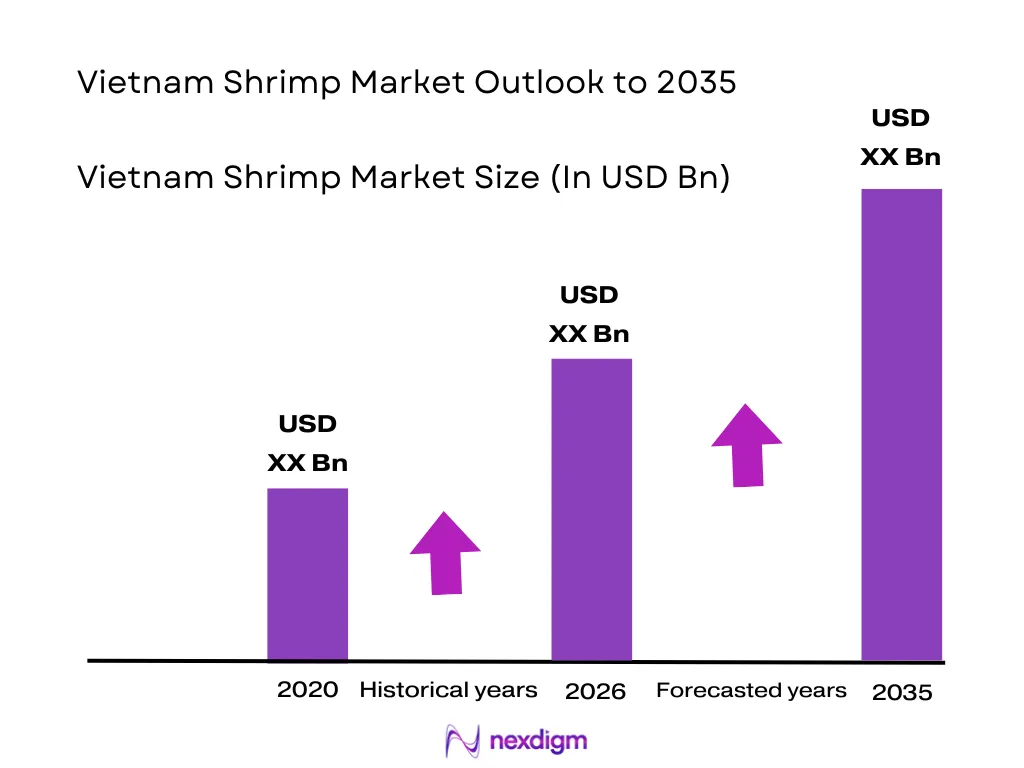
The Vietnam Shrimp Market is supported by strong seafood export activity, rising adoption of intensive aquaculture systems, and increasing global demand for frozen and processed shrimp products. Vietnam’s shrimp export turnover crossed nearly USD ~ billion, while total shrimp production exceeded 1.2 million metric tons through large-scale aquaculture farming clusters concentrated in southern provinces. Expansion of export-certified seafood processing facilities, high-tech farming systems, and sustainability-focused aquaculture practices continues to strengthen the country’s global shrimp trade competitiveness. Increasing demand from international retail chains and foodservice operators is further supporting processing and export expansion across Vietnam’s seafood industry.
Regions such as Ca Mau, Soc Trang, Bac Lieu, and the broader Mekong Delta dominate the Vietnam Shrimp Market due to favorable climatic conditions, strong aquaculture infrastructure, and concentration of intensive shrimp farming zones. Ca Mau remains a leading production and export hub because of its extensive shrimp-mangrove farming ecosystem and integrated seafood processing facilities. Soc Trang and Bac Lieu have emerged as high-tech shrimp farming centers with advanced hatchery infrastructure, automated aquaculture systems, and strong export-oriented seafood processing networks. Internationally, markets such as the United States, Japan, China, and the European Union dominate import demand because of high seafood consumption and rising preference for certified sustainable shrimp products.
Market Segmentation
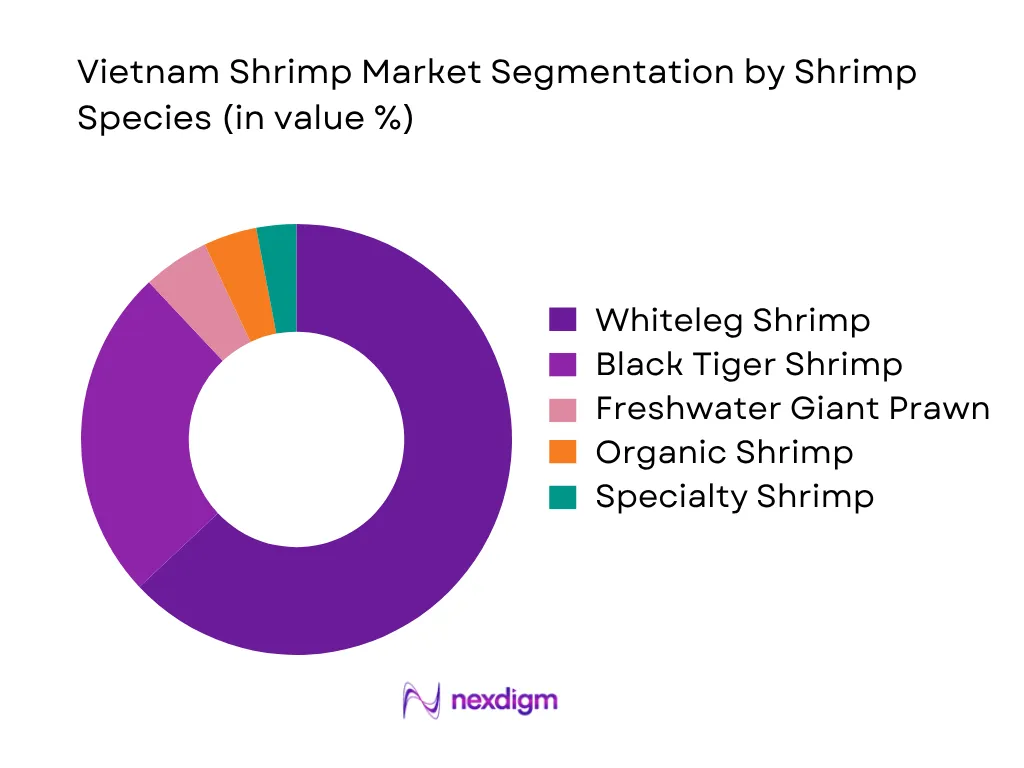
By Shrimp Species
The Vietnam Shrimp Market is segmented by shrimp species into whiteleg shrimp (vannamei), black tiger shrimp, freshwater giant prawn, organic shrimp, and specialty shrimp. Whiteleg shrimp dominates the Vietnam Shrimp Market under the shrimp species segmentation due to its higher productivity, shorter cultivation cycle, and strong compatibility with intensive and super-intensive farming systems. Farmers prefer vannamei shrimp because of better feed conversion efficiency, lower cultivation risks, and stronger export demand from North America and Asia-Pacific seafood importers. Processing companies also favor this species because it supports value-added shrimp production including peeled, cooked, frozen, and ready-to-cook product categories. Additionally, the expansion of automated aquaculture systems and biosecurity-focused farming infrastructure across the Mekong Delta has strengthened vannamei shrimp production capacity and improved supply chain consistency for exporters and seafood processors operating in Vietnam.
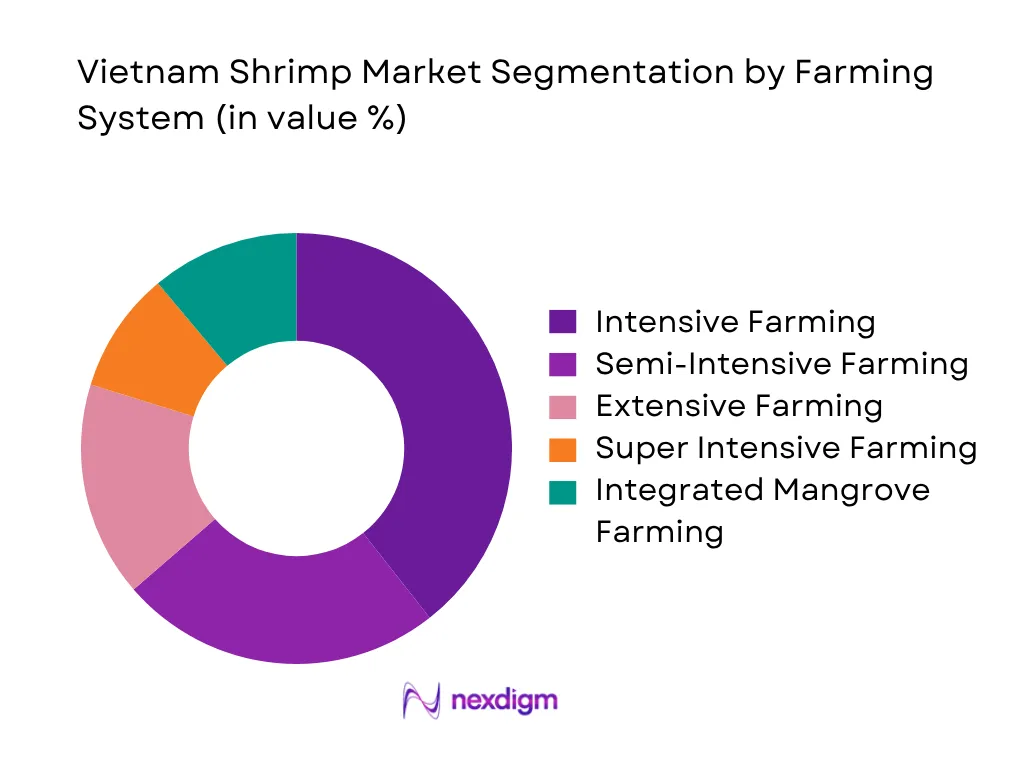
By Farming System
The Vietnam Shrimp Market is segmented by farming system into extensive farming, semi-intensive farming, intensive farming, super-intensive farming, integrated mangrove farming, biofloc farming, and recirculating aquaculture systems. Intensive farming dominates the Vietnam Shrimp Market because it enables higher production yields, multiple annual harvest cycles, and improved shrimp survival rates. Farmers are increasingly adopting automated aeration systems, lined ponds, water quality monitoring technologies, and precision feeding systems to maximize operational efficiency and improve export-grade shrimp production. Intensive farming is particularly dominant in provinces such as Bac Lieu and Soc Trang where high-tech aquaculture zones are expanding rapidly. Export-oriented seafood processors also prefer sourcing shrimp from intensive farms due to stronger traceability, consistency in shrimp sizing, and compliance with international food safety and sustainability standards. Additionally, increasing investments in smart aquaculture technologies continue to strengthen productivity across intensive shrimp farming operations in Vietnam.
Competitive Landscape
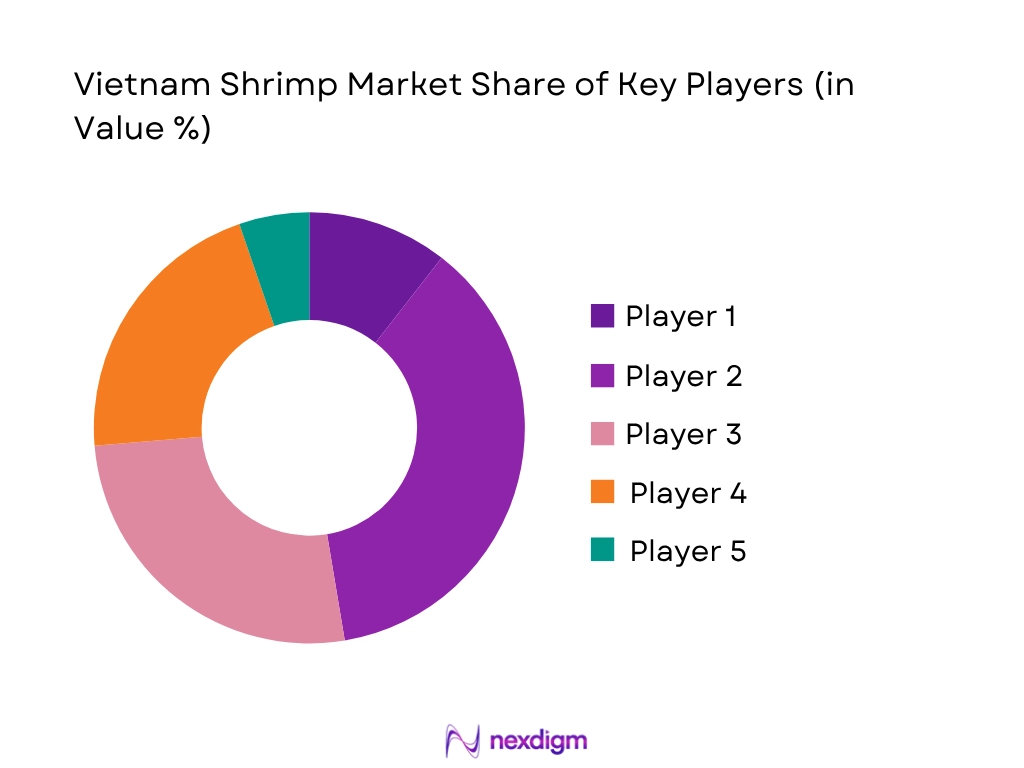
The Vietnam Shrimp Market is moderately consolidated, with leading seafood processors and aquaculture operators focusing on export expansion, value-added shrimp processing, and sustainable farming initiatives. Market participants are increasingly investing in automated aquaculture systems, cold storage infrastructure, hatchery modernization, and certification programs to strengthen export competitiveness. The industry is also witnessing growing emphasis on integrated farming models and traceability technologies to meet rising international demand for sustainable seafood products.
| Company | Establishment Year | Headquarters | Processing Capacity | Export Reach | Certification Portfolio | Farming Integration | Cold Storage Strength | Value-Added Product Focus |
| Minh Phu Seafood Corporation | 1992 | Ca Mau, Vietnam | ~ | ~ | ~ | ~ | ~ | ~ |
| Sao Ta Foods JSC | 1995 | Soc Trang, Vietnam | ~ | ~ | ~ | ~ | ~ | ~ |
| Stapimex | 1978 | Soc Trang, Vietnam | ~ | ~ | ~ | ~ | ~ | ~ |
| Camimex Group | 1977 | Ca Mau, Vietnam | ~ | ~ | ~ | ~ | ~ | ~ |
| C.P. Vietnam Corporation | 1993 | Dong Nai, Vietnam | ~ | ~ | ~ | ~ | ~ | ~ |
Vietnam Shrimp Market Analysis
Growth Drivers
Rising Shrimp Export Demand from Major Global Markets
Vietnam’s shrimp industry continues to benefit from rising seafood import demand from major international markets including the United States, China, Japan, and the European Union. Vietnam’s shrimp export turnover crossed USD 3.4 billion during the first eleven months of 2024, supported by stronger demand for processed and frozen shrimp products. The United States imported seafood worth more than USD 28 billion in 2024, while Japan’s seafood import value exceeded JPY 1.9 trillion, reflecting stable seafood consumption demand in premium Asian markets. Global urban population levels exceeded 4.4 billion people during 2024, strengthening demand for processed seafood and convenience food products. Vietnam’s strong export infrastructure, integrated seafood processing capacity, and strategic geographic location continue supporting growth in shrimp exports across high-consumption international seafood markets.
Expansion of Intensive and High-Tech Aquaculture Infrastructure
Vietnam’s shrimp market is witnessing strong growth due to increasing investments in intensive and high-tech aquaculture systems across southern provinces. Vietnam’s total shrimp farming area exceeded 740,000 hectares in 2024, with rapid expansion of automated farming zones in Bac Lieu, Ca Mau, and Soc Trang. High-tech shrimp farming systems equipped with oxygen aerators, automated feeding systems, and IoT-enabled water monitoring technologies are improving productivity and crop survival rates. Vietnam also operates more than 800 export-certified seafood processing facilities, strengthening processing and export capabilities. Rising investments in hatchery modernization, disease-resistant broodstock development, and aquaculture infrastructure are improving operational efficiency and enabling shrimp producers to meet increasing international seafood demand and sustainability standards.
Market Challenges
Disease Outbreaks and Biosecurity Risks
Disease outbreaks remain one of the most significant operational challenges affecting Vietnam’s shrimp aquaculture industry. Aquatic disease outbreaks impacted more than 38,000 hectares of shrimp farming areas across Vietnam during 2024. Diseases such as White Spot Syndrome Virus and Acute Hepatopancreatic Necrosis Disease continue affecting productivity and increasing mortality rates within intensive farming systems. Rising water temperature fluctuations and environmental stress caused by climate variability are further intensifying disease risks in aquaculture zones. The growing need for disease surveillance systems, water treatment infrastructure, and hatchery biosecurity investments continues increasing operational complexity for shrimp producers. These challenges are particularly severe in high-density farming clusters where disease transmission can rapidly affect commercial shrimp production cycles.
Climate Change and Salinity Intrusion
Climate change and salinity intrusion continue to create major risks for shrimp farming operations across the Mekong Delta region. Salinity intrusion affected more than 1.5 million hectares of land across the Mekong Delta during 2024, impacting water stability and aquaculture productivity. Rising sea levels, irregular rainfall patterns, and extreme weather conditions are disrupting shrimp pond management and increasing environmental pressure on farming operations. Southern Vietnam also experienced above-average temperature conditions during 2024, affecting water quality and shrimp health management. Shrimp producers are increasingly required to invest in pond lining systems, advanced water filtration technologies, and climate-resilient aquaculture infrastructure to maintain production stability and meet international seafood quality standards.
Market Opportunities
Growing Demand for Sustainable and Certified Shrimp Products
The increasing global preference for sustainable seafood products presents a major growth opportunity for Vietnam’s shrimp industry. Demand for traceable and environmentally certified seafood products continues rising across Europe, North America, and Japan due to stricter sustainability regulations and changing consumer preferences. Vietnam has expanded ASC-certified and organic shrimp farming operations, particularly within integrated mangrove farming systems in Ca Mau province. More than 80,000 hectares of shrimp-mangrove farming areas are currently operational across southern Vietnam, supporting sustainable shrimp cultivation practices. Growing emphasis on eco-certified seafood imports by international retailers and foodservice operators is strengthening export opportunities for certified Vietnamese shrimp exporters and processors capable of meeting sustainability-focused procurement requirements.
Expansion of Value-Added Shrimp Processing and Cold Chain Infrastructure
Vietnam’s expanding seafood processing and cold chain infrastructure is creating substantial opportunities for higher export realization and product diversification. Vietnam currently operates more than 800 seafood processing factories capable of producing cooked, peeled, breaded, frozen, and ready-to-eat shrimp products for international markets. Rising global demand for convenience seafood products and frozen food consumption is encouraging exporters to strengthen value-added shrimp processing capabilities. Vietnam’s container throughput exceeded 24 million TEUs during 2024, improving seafood export logistics efficiency and cold chain distribution capacity. Increasing investments in cold storage infrastructure across southern Vietnam are also reducing post-harvest losses, improving shelf life management, and supporting long-distance seafood exports to Europe, North America, and Asia-Pacific markets.
Future Outlook
The Vietnam Shrimp Market is expected to witness significant expansion over the coming years due to rising global seafood demand, increasing adoption of smart aquaculture technologies, and stronger investments in sustainable shrimp farming infrastructure. Expansion of intensive and super-intensive farming systems is expected to improve productivity, operational efficiency, and export competitiveness across Vietnam’s shrimp industry. Seafood processors are also expected to strengthen focus on value-added shrimp categories including peeled, cooked, breaded, and ready-to-eat shrimp products to improve export realization and product differentiation. The market is also likely to benefit from growing international preference for certified sustainable seafood products and expansion of cold chain logistics infrastructure. Increasing adoption of blockchain-based traceability systems, automated feeding technologies, and disease management solutions is expected to improve supply chain transparency and farming productivity. Additionally, rising seafood import demand from North America, Europe, China, and the Middle East is anticipated to strengthen Vietnam’s position among the leading global shrimp-exporting nations.
Major Players
- Minh Phu Seafood Corporation
- Stapimex
- Sao Ta Foods JSC
- Vinh Hoan Corporation
- Camimex Group
- Thuan Phuoc Seafood and Trading Corporation
- Quoc Viet Seafood Processing Trading and Import-Export Co., Ltd.
- Clean Seafood Corporation
- Nha Trang Seafood Joint Stock Company
- BIM Foods
- Viet Uc Seafood Corporation
- C.P. Vietnam Corporation
- Grobest Vietnam
- Australis Aquaculture Vietnam
- Mazzetta Company Vietnam
Key Target Audience
- Shrimp Aquaculture Farm Operators
- Seafood Processing and Export Companies
- Frozen Seafood Importers and Distributors
- Aquaculture Feed Manufacturers
- Investments and Venture Capitalist Firms
- Government and Regulatory Bodies
- Cold Chain and Seafood Logistics Providers
- Sustainable Seafood Certification Organizations
Research Methodology
Step 1: Identification of Key Variables
The initial phase involved identifying critical variables influencing the Vietnam Shrimp Market including shrimp farming productivity, seafood export demand, processing capacity, sustainability certification adoption, and aquaculture infrastructure expansion. Extensive secondary research was conducted using seafood trade databases, government publications, export statistics, and aquaculture industry reports to understand the market ecosystem and value chain structure.
Step 2: Market Analysis and Construction
Historical market analysis was conducted using shrimp production data, seafood export turnover, farming area statistics, processing capacity utilization, and international seafood trade flows. Market estimations were developed through bottom-up calculations based on production volumes, export revenue, processing output, and regional aquaculture activity across Vietnam.
Step 3: Hypothesis Validation and Expert Consultation
The preliminary market findings were validated through interviews with seafood exporters, shrimp processors, hatchery operators, aquaculture technology providers, and logistics companies. These consultations provided operational insights regarding disease management, sustainability compliance, export competitiveness, and shrimp farming economics within Vietnam’s seafood industry.
Step 4: Research Synthesis and Final Output
The final phase involved consolidating qualitative and quantitative findings derived from primary interviews, trade databases, government publications, and secondary research sources. Cross-validation was conducted using seafood export statistics, company disclosures, and aquaculture production data to ensure consistency and reliability of market estimations, segmentation analysis, and future growth projections for the Vietnam Shrimp Market.

- Executive Summary
- Research Methodology (Market Definitions and Assumptions, Abbreviations, Research Framework, Bottom-Up Market Estimation, Top-Down Validation, Aquaculture Production Mapping, Seafood Export Assessment, Trade Flow Analysis, Primary Interviews with Shrimp Processors and Exporters, Forecasting Model, Limitations and Assumptions)

- Definition and Scope
- Evolution of Shrimp Aquaculture in Vietnam
- Industry Ecosystem and Stakeholder Mapping
- Supply Chain and Value Chain Analysis
- Shrimp Hatchery and Feed Supply Landscape
- Shrimp Farming and Processing Flow

- Growth Drivers
Rising Shrimp Export Demand from Major Global Markets
Expansion of Intensive and High-Tech Aquaculture Infrastructure
Increasing Adoption of Sustainable Shrimp Farming
Growth in Value-Added Seafood Processing
Expansion of Cold Chain Logistics Infrastructure - Market Challenges
Disease Outbreaks and Biosecurity Risks
Climate Change and Salinity Intrusion
Volatility in Aquaculture Feed Supply
Stringent International Food Safety Standards - Market Opportunities
Growing Demand for Sustainable and Certified Shrimp Products
Expansion of Value-Added Shrimp Processing
Adoption of Smart Aquaculture Technologies
Expansion into Middle East and Emerging Asian Markets - Market Trends
Super Intensive Shrimp Farming Expansion
Blockchain-Based Seafood Traceability
Organic and Antibiotic-Free Shrimp Farming
Automated Feeding and IoT Monitoring Systems
Integrated Mangrove Shrimp Farming Adoption - Government Regulations
Aquaculture Development Policies
Seafood Export Compliance Standards
Environmental and Wastewater Regulations
Traceability and Sustainability Certification Policies
Trade Agreements and Tariff Regulations - Porter’s Five Forces Analysis
- PESTLE Analysis
- Pricing Analysis
- Competition Ecosystem

- By Value, 2020-2025
- By Volume, 2020-2025
- By Export Revenue, 2020-2025
- By Average Export Realization Price, 2020-2025

- By Shrimp Species (in Value %)
Production Volume
Export Demand
Yield Per Hectare
Disease Resistance
Average Harvest Weight - By Farming System (in Value %)
Stocking Density
Feed Conversion Ratio
Survival Rate
Aeration Intensity
Productivity Per Crop - By Product Form (in Value %)
Processing Yield
Shelf Life
Export Realization
Cold Storage Requirement
Value Addition Margin - By End Use Industry (in Value %)
Procurement Volume
Consumption Frequency
Contract Purchase Share
Margin Contribution
Product Preference - By Distribution Channel (in Value %)
Distribution Margin
Inventory Turnover
Cold Chain Penetration
Delivery Lead Time
Channel Profitability - By Export Destination (in Value %)
Export Volume
Average Export Price
Tariff Structure
Import Dependency
Consumption Demand - By Certification Type (in Value %)
Certified Farming Area
Compliance Cost
Export Premium
Traceability Adoption
Sustainability Index - By Geography (in Value %)
Mekong Delta
Ca Mau
Soc Trang
Bac Lieu
Kien Giang
Ben Tre
Tra Vinh
Other Provinces

- Market Share Analysis of Major Players on the Basis of Revenue and Export Volume
- Cross Comparison Parameters (Company Overview, Shrimp Processing Capacity, Export Reach, Farming Integration, Hatchery Capacity, Product Portfolio Breadth, Value-Added Product Strength, Cold Storage Capacity, Certification Portfolio, Distribution Network Strength, Sustainability Initiatives, Technology Adoption, Export Realization, Production Facilities, Strategic Collaborations, EBITDA Margins)
- Competitive Benchmarking Matrix
- SWOT Analysis of Major Players
- Pricing Analysis by Product Form and Export Destination
- Detailed Profiles of Major Companies
Minh Phu Seafood Corporation
Stapimex
Sao Ta Foods JSC
Vinh Hoan Corporation
Camimex Group
Thuan Phuoc Seafood and Trading Corporation
Quoc Viet Seafood Processing Trading and Import-Export Co., Ltd.
Clean Seafood Corporation
Nha Trang Seafood Joint Stock Company
BIM Foods
Viet Uc Seafood Corporation
C.P. Vietnam Corporation
Grobest Vietnam
Australis Aquaculture Vietnam
Mazzetta Company Vietnam

- Seafood Consumption Pattern Analysis
- International Buyer Procurement Behavior
- Export Demand Mapping
- Price Sensitivity and Purchasing Analysis
- Sustainability Preference Mapping

- By Value, 2026-2035
- By Volume, 2026-2035
- By Export Revenue, 2026-2035
- By Average Export Realization Price, 2026-2035


 Request a Sample
 Ask for Customization
 Get a Quote
 Enquire Now