

 Download PDF
 Download PDF
Market Overview
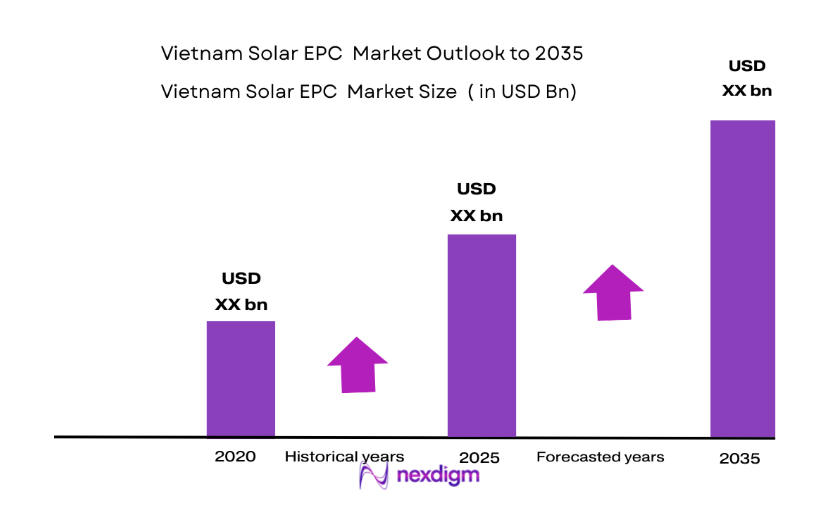
Based on a recent historical assessment, the Vietnam Solar EPC market is projected to reach a significant market size is $ ~ billion, driven by favorable government policies, increasing demand for renewable energy, and advancements in solar technology. The market is supported by strong government incentives, such as tax rebates and subsidies, that help reduce the upfront costs of solar installations. The growth of the commercial and industrial sectors seeking to meet sustainability goals, along with residential demand, has further fueled market expansion. Vietnam’s commitment to reducing its carbon footprint and increasing its share of renewable energy in the power mix ensures continued market growth, with solar power emerging as a key player in the country’s energy future.
The market is dominated by several major cities and regions that have embraced solar energy as part of their sustainability efforts. Ho Chi Minh City, Hanoi, and Binh Duong are some of the most active regions for solar installations due to their high industrial and commercial demand, government support, and access to adequate land for large-scale solar projects. The central and southern regions of Vietnam, with abundant sunlight, are particularly favorable for utility-scale solar systems, making these areas ideal for future growth. The government’s commitment to facilitating solar energy projects in these regions positions Vietnam as one of the leading players in Southeast Asia’s renewable energy market.
Market Segmentation
By System Type
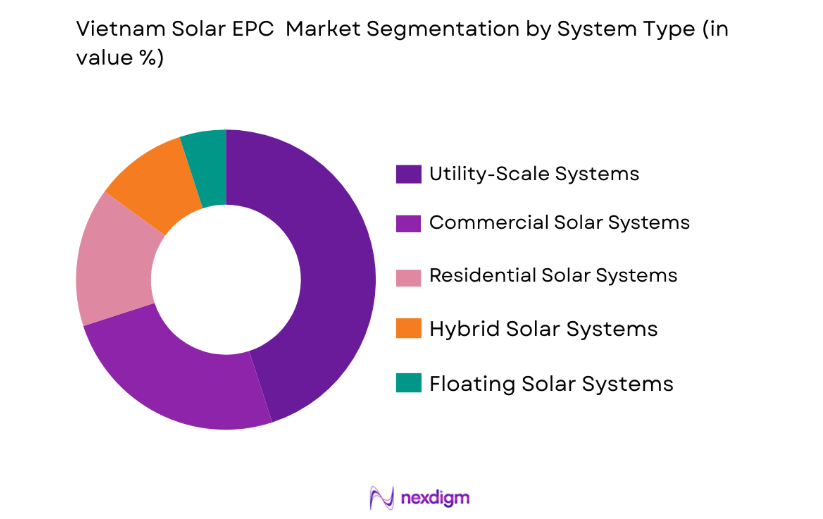
Vietnam Solar EPC market is segmented by system type into utility-scale, commercial, residential, hybrid, and floating solar systems. Among these, utility-scale systems have a dominant market share due to the increasing demand for large-scale renewable energy projects, supported by government incentives, technological advancements, and the need for grid stability. Utility-scale projects are also driven by the availability of vast land areas and financial support from both public and private sectors, making them the most feasible option for large solar farms.
By Platform Type
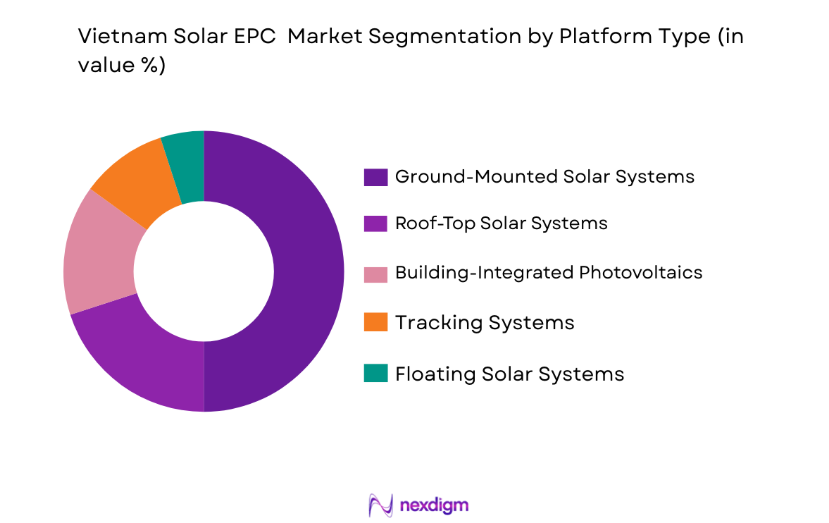
Vietnam Solar EPC market is segmented by platform type into ground-mounted, roof-top, building-integrated photovoltaics, tracking systems, and floating solar systems. Ground-mounted solar systems have gained the highest market share due to their cost-effectiveness, scalability, and suitability for large-scale projects, supported by favorable regulatory policies and the rapid growth of renewable energy infrastructure. These systems are preferred for both commercial and utility-scale applications as they can generate higher electricity output.
Competitive Landscape
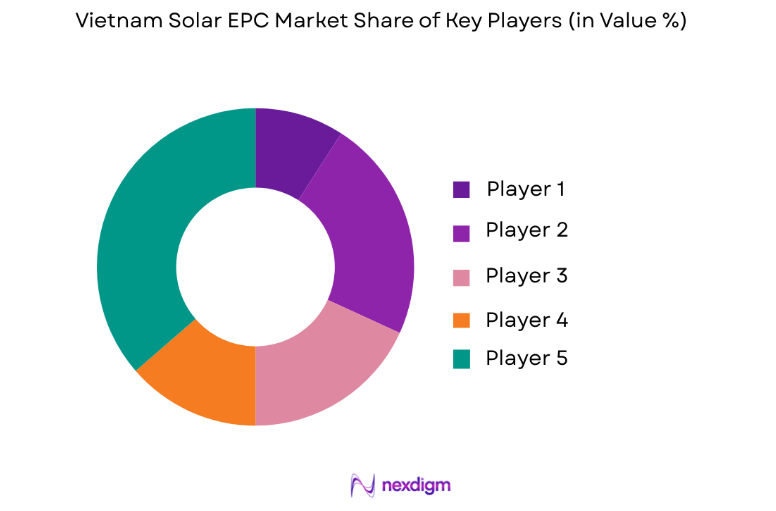
The Vietnam Solar EPC market is highly competitive, with both local and international players vying for market share. The market is characterized by significant collaboration between EPC contractors, technology providers, and government entities. Consolidation is evident as larger players, including multinational companies, acquire local players or enter into joint ventures to leverage the growing demand for solar energy projects. The influence of major players, along with the support of government incentives and favorable regulations, plays a key role in shaping the competitive dynamics of the market.
| Company Name | Establishment Year | Headquarters | Technology Focus | Market Reach | Key Products | Revenue | Additional Parameter |
| Vingroup | 1993 | Hanoi | ~ | ~ | ~ | ~ | ~ |
| SolarBK | 2015 | Ho Chi Minh | ~ | ~ | ~ | ~ | ~ |
| Trina Solar | 1997 | China | ~ | ~ | ~ | ~ | ~ |
| First Solar | 1999 | USA | ~ | ~ | ~ | ~ | ~ |
| JinkoSolar | 2006 | China | ~ | ~ | ~ | ~ | ~ |
Vietnam Solar EPC Market Analysis
Growth Drivers
Government incentives and subsidies:
Government initiatives such as tax credits and financial support for solar projects are one of the key growth drivers for the Vietnam Solar EPC market. These incentives help reduce upfront costs, making solar power more affordable for businesses and homeowners, which in turn boosts demand. The government’s goal to achieve net-zero emissions and invest in renewable energy infrastructure is expected to sustain these incentives.
Technological advancements in solar power:
The ongoing improvements in solar panel efficiency and the development of cost-effective storage solutions have also contributed to the market’s growth. As technologies improve, the cost of solar systems continues to fall, making solar energy more accessible to a wider consumer base. Furthermore, innovations like bifacial solar panels and energy storage integration have made solar power more reliable and efficient, enhancing its adoption.
Market Challenges
High initial capital investment:
Despite falling costs, the high upfront investment required for solar projects remains a significant barrier to market growth. Many businesses and homeowners are still hesitant to adopt solar power due to the high costs associated with installation and infrastructure development. While financing options and subsidies help, the capital-intensive nature of solar energy projects continues to be a challenge for widespread adoption.
Regulatory and policy barriers:
The lack of clear regulatory frameworks and inconsistencies in government policies have created uncertainties in the solar EPC market. These policy-related challenges can cause delays in project approvals and hinder market growth. Developers may face difficulties in navigating complex permitting processes, which may affect the pace of solar infrastructure expansion.
Opportunities
Rural electrification projects:
With Vietnam’s push to provide electricity to remote and underserved regions, solar power presents a viable and cost-effective solution. The use of off-grid and hybrid solar systems can help electrify rural areas without the need for extensive grid infrastructure. This creates a growing market for solar EPC solutions in rural electrification projects, supported by government initiatives and international aid.
Public-private partnerships in solar initiatives:
There is a significant opportunity for public-private partnerships to drive the growth of the solar EPC market. Collaborations between government bodies and private sector players can lead to the development of large-scale solar projects, facilitating the transition to renewable energy. These partnerships can help unlock funding, accelerate project execution, and improve the accessibility of solar power across the country.
Future Outlook
The Vietnam Solar EPC market is expected to continue growing at a strong pace, driven by supportive government policies, technological advancements, and an increasing demand for renewable energy solutions. With the country aiming to meet its climate goals and reduce its carbon footprint, solar energy will play a critical role in Vietnam’s energy mix. Future growth will be marked by the expansion of large-scale utility projects, the rise of energy storage integration, and innovations in solar technology that will further enhance system efficiency and reduce costs.
Major Players
- Vingroup
- SolarBK
- Trina Solar
- Suntech Power
- First Solar
- JinkoSolar
- JA Solar Technology
- Risen Energy
- Sungrow Power Supply
- LONGi Solar
- Hanwha Q CELLS
- Canadian Solar
- GCL-Poly Energy
- PowerChina
- BELECTRIC
Key Target Audience
- Investments and venture capitalist firms
- Government and regulatory bodies
- Utility companies
- Solar technology manufacturers
- Renewable energy developers
- EPC contractors
- Large industrial consumers
- Environmental agencies
Research Methodology
Step 1: Identification of Key Variables
This step involves determining the most critical factors affecting market dynamics, including technological trends, regulatory influences, and consumer demand. These variables help set the scope and boundaries for further research.
Step 2: Market Analysis and Construction
This step entails the compilation and analysis of secondary data from credible sources such as government reports, industry publications, and market surveys to create a comprehensive market structure.
Step 3: Hypothesis Validation and Expert Consultation
After identifying the key variables and building the market framework, consultations with industry experts, stakeholders, and market participants are conducted to validate assumptions and refine the research hypothesis.
Step 4: Research Synthesis and Final Output
Data collected through secondary research and expert consultations is synthesized to create a final report, providing detailed insights into market trends, opportunities, and forecasts.

- Executive Summary
- Research Methodology (Definitions, Scope, Industry Assumptions, Market Sizing Approach, Primary & Secondary Research Framework, Data Collection & Verification Protocol, Analytic Models & Forecast Methodology, Limitations & Research Validity Checks)

- Market Definition and Scope
- Value Chain & Stakeholder Ecosystem
- Regulatory / Certification Landscape
- Sector Dynamics Affecting Demand

- Growth Drivers
Government Incentives and Subsidies
Expanding Solar Power Capacity
Rising Demand for Clean Energy - Market Challenges
High Initial Capital Costs
Regulatory and Policy Barriers
Grid Integration and Storage Issues - Market Opportunities
Growth in Off-grid Solar Systems
Rising Demand for Hybrid Solar Solutions
Investment in Solar Energy Storage - Trends
Advancement in Solar Panel Efficiency
Integration of Solar with Energy Storage
Shift Towards Utility-scale Solar Projects - Government Regulations
- SWOT Analysis of Key Competitors

- By Market Value, 2020-2025
- By Installed Units, 2020-2025
- By Average System Price, 2020-2025
- By System Complexity Tier, 2020-2025

- By System Type (In Value%)
Solar Photovoltaic Systems
Concentrated Solar Power Systems
Energy Storage Solutions
Hybrid Systems
Solar Thermal Systems - By Platform Type (In Value%)
Residential Systems
Commercial Systems
Utility-scale Systems
Off-grid Systems
Floating Solar Systems - By Fitment Type (In Value%)
On-roof Installations
Ground-mounted Installations
Integrated Solar Panels
Building-integrated Photovoltaics
Carports & Canopy Systems - By EndUser Segment (In Value%)
Residential Consumers
Commercial Enterprises
Industrial Applications

- Market Share Analysis
- CrossComparison Parameters (System Type, Platform Type, EndUser Segment, Procurement Channel, Fitment Type)
- SWOT Analysis of Key Competitors
- Pricing & Procurement Analysis
- Porter’s Five Forces
- Key Players
Vinasolar
SolarBK
Gia Lai Electric Power
Trung Nam Group
Solar Viet
Sharp Solar
First Solar
Suntech Power
LONGi Green Energy
JinkoSolar
Sungrow Power
Enphase Energy
Canadian Solar
SunPower Corporation
Trina Solar

- Rising Residential Adoption of Solar Power
- Commercial and Industrial Shift to Solar Energy
- Increasing Government-led Solar Projects
- Interest from Energy Developers in Large-scale Installations

- Forecast Market Value, 2026-2035
- Forecast Installed Units, 2026-2035
- Price Forecast by System Tier, 2026-2035
- Future Demand by Platform, 2026-2035


 Request a Sample
 Ask for Customization
 Get a Quote
 Enquire Now