

 Download PDF
 Download PDF
Market Overview
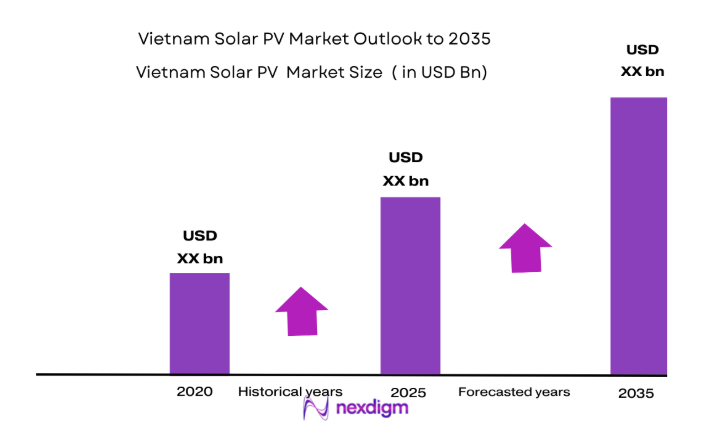
The Vietnam Solar PV market is experiencing rapid growth, with the market size projected to reach USD ~ billion in 2024. This growth is primarily driven by the government’s commitment to renewable energy, backed by favorable policies and incentives such as feed-in tariffs and tax exemptions. The country’s large-scale solar projects, especially in sunny regions, along with the increasing demand for clean energy, further fuel the market expansion. The cost reduction in solar panel technology and the rise in local production are also significant contributing factors to the market’s positive outlook.
Vietnam remains one of the dominant countries in the Southeast Asian solar PV market due to its strategic position, favorable climate, and government-driven initiatives. The country is seeing substantial investments in solar projects, particularly in provinces like Binh Thuan, Ninh Thuan, and Khanh Hoa, where solar power generation capacity is rapidly increasing. The government’s robust regulatory framework and international collaborations are pivotal in accelerating the adoption of solar energy. Moreover, with the support of international organizations and growing consumer demand for sustainable solutions, Vietnam is poised to lead the region’s renewable energy transformation.
Market Segmentation
By System Type:
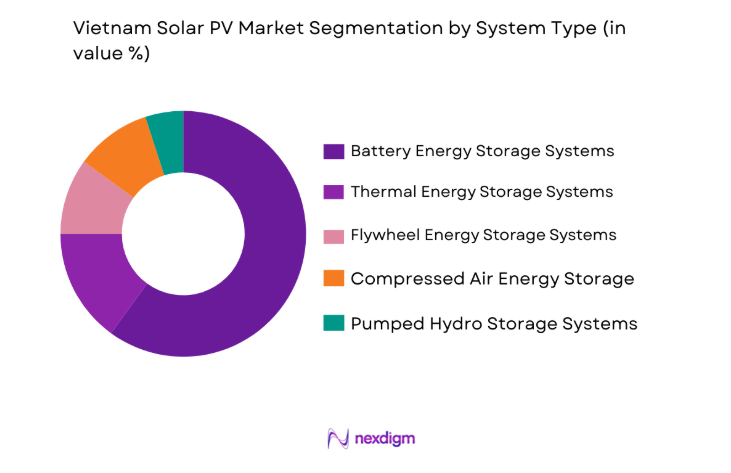
The Vietnam Solar PV market is segmented by system type into residential, commercial, industrial, utility-scale, and off-grid systems. Recently, the utility-scale systems have dominated the market due to factors such as large investments in solar farms, government incentives, and the growing demand for renewable energy at the grid level. Utility-scale solar installations benefit from economies of scale, enabling more affordable energy production, which attracts both local and foreign investments. The development of these large-scale solar farms is further driven by the need to meet the country’s growing electricity demand and achieve its renewable energy targets. With a large number of projects currently under construction, utility-scale solar is expected to maintain a dominant position in the market.
By Platform Type:
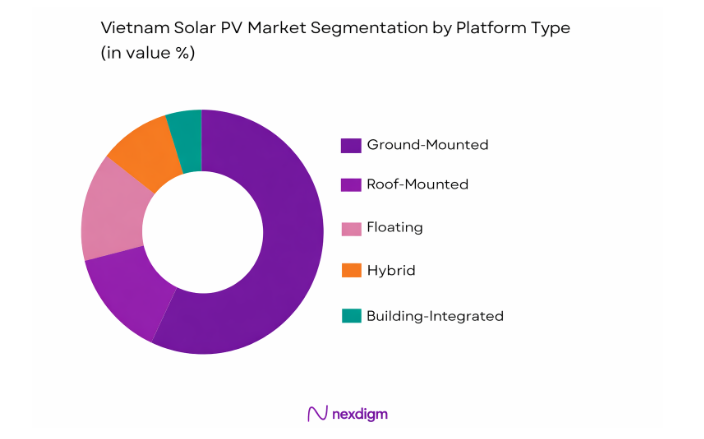
The Vietnam Solar PV market is segmented by platform type into ground-mounted, roof-mounted, floating, hybrid, and building-integrated photovoltaic systems. Ground-mounted systems currently hold the largest market share due to their cost-effectiveness and scalability, making them ideal for large solar farms in rural areas and open spaces. The widespread availability of land in these regions and the ability to install solar panels with minimal obstructions contribute to the popularity of ground-mounted systems. Additionally, the government’s focus on utility-scale projects has accelerated the deployment of ground-mounted solar farms. While other platforms like floating and hybrid systems are growing, ground-mounted systems remain the market leader.
Competitive Landscape
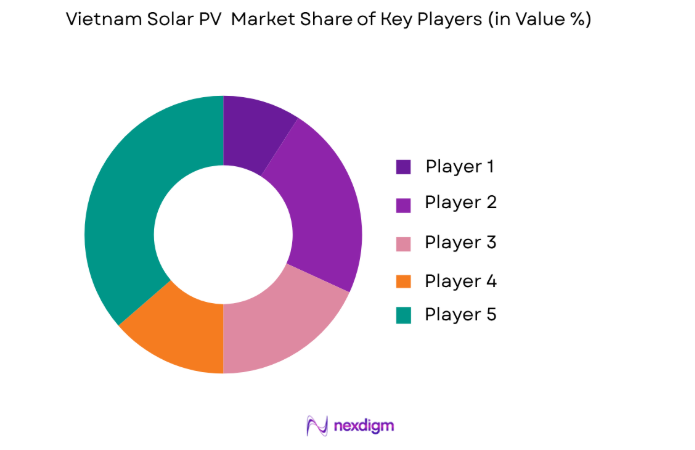
The competitive landscape of the Vietnam Solar PV market is characterized by significant activity from both domestic and international players. Market consolidation is driven by the increasing investments in large-scale projects and strategic partnerships. The leading players are expanding their capabilities through technological advancements and strategic acquisitions. The government’s supportive policies and growing interest from private investors make the market highly attractive. The market is competitive, with companies vying for the top position by capitalizing on cost-effective solutions and innovative energy storage systems.
| Company Name | Establishment Year | Headquarters | Technology Focus | Market Reach | Key Products | Revenue | Market-specific Parameter |
| First Solar | 1999 | USA | ~ | ~ | ~ | ~ | ~ |
| JA Solar | 2005 | China | ~ | ~ | ~ | ~ | ~ |
| Trina Solar | 1997 | China | ~ | ~ | ~ | ~ | ~ |
| GCL-Poly Energy | 1998 | China | ~ | ~ | ~ | ~ | ~ |
| Vietnam Electricity | 1995 | Vietnam | ~ | ~ | ~ | ~ | ~ |
Vietnam Solar PV Market Analysis
Growth Drivers
Government Support for Renewable Energy:
The primary growth driver for the Vietnam Solar PV market is the government’s increasing focus on renewable energy, including the development of solar power. Vietnam’s commitment to achieving 10% of its total energy from renewable sources by 2030, along with favorable policies like tax exemptions, feed-in tariffs, and financial incentives, has played a pivotal role in driving the market. These initiatives encourage both local and foreign investment in solar power projects, fostering the rapid expansion of solar capacity across the country. Additionally, the government’s focus on energy security and reducing reliance on fossil fuels has created a favorable regulatory environment for solar PV systems. The reduction of solar panel costs and the availability of land for large-scale installations have further bolstered government efforts to meet the rising energy demands in urban and rural areas.
Technological Advancements and Cost Reductions:
Technological advancements in solar PV technology, such as the development of more efficient panels and improved energy storage solutions, have been crucial in driving the growth of the Vietnam Solar PV market. The decreasing costs of solar panels, primarily due to innovations in manufacturing and economies of scale, have made solar power more affordable and accessible. These advancements allow for greater adoption of solar PV systems across residential, commercial, and utility-scale sectors. In addition, the integration of storage systems is increasing the efficiency and reliability of solar power, enabling consumers to utilize solar energy more effectively. This reduction in costs and the potential for higher efficiency have attracted numerous investors and developers to the market, fostering further growth in the industry.
Market Challenges
Regulatory and Bureaucratic Barriers:
Despite the government’s commitment to renewable energy, the Vietnam Solar PV market faces challenges related to regulatory and bureaucratic inefficiencies. These barriers include delays in permitting and licensing processes, which slow down the approval of large-scale solar projects. The complex and sometimes inconsistent enforcement of regulations can lead to project delays, hindering the smooth rollout of solar energy infrastructure. Additionally, some local governments may not have the resources or expertise to streamline the permitting process, which could further delay the development of solar PV systems. These regulatory challenges present a significant hurdle for investors and developers looking to capitalize on the growing demand for solar energy in Vietnam.
High Initial Investment Costs:
While the long-term benefits of solar power are clear, the high initial investment costs remain a significant challenge in the Vietnam Solar PV market. The capital required for the installation of solar panels, infrastructure development, and grid integration can be a major barrier, especially for smaller businesses and individuals in rural areas. Although government incentives have helped reduce costs, the initial outlay remains substantial. Furthermore, the financing options available to potential investors in the solar market are still limited in certain regions, especially in less developed areas. This financial constraint hinders the widespread adoption of solar PV systems and may delay the achievement of renewable energy goals.
Opportunities
Rural Electrification Projects:
One of the key opportunities in the Vietnam Solar PV market is the expansion of solar power to rural areas through off-grid solutions. A significant portion of the population in rural Vietnam still lacks access to reliable electricity, making them ideal candidates for off-grid solar solutions. With the decreasing costs of solar technology, off-grid solar systems are becoming an affordable and practical solution to meet the energy needs of these underserved regions. Additionally, the government’s rural electrification programs, combined with growing private sector involvement, create an ideal environment for the expansion of solar power in these areas. The opportunity to provide clean, reliable, and affordable energy to rural communities offers immense potential for growth in the Vietnam Solar PV market.
Integration of Solar Power with Smart Grid Systems:
The integration of solar power with smart grid systems presents another significant opportunity in the Vietnam Solar PV market. As the demand for renewable energy increases, the need for a more efficient and flexible grid system becomes crucial. Smart grid systems, which use advanced technology to monitor and manage energy distribution, can integrate solar power more effectively into the national grid. By enabling better energy management, smart grids can help maximize the potential of solar power, ensuring a more stable and reliable energy supply. This technological advancement, combined with the government’s push for energy modernization, presents a lucrative opportunity for the solar PV sector to grow while contributing to the country’s energy transition.
Future Outlook
Over the next five years, the Vietnam Solar PV market is expected to see continued growth driven by the government’s renewable energy goals and the increasing adoption of solar power in residential, commercial, and industrial sectors. Technological advancements in solar panel efficiency and energy storage solutions will further boost market growth. The government’s regulatory support, coupled with the rising demand for clean energy, will continue to propel the market forward, while the development of off-grid solar solutions in rural areas will help meet the country’s growing energy needs.
Major Players
- First Solar
- JA Solar
- Trina Solar
- GCL-Poly Energy
- Vietnam Electricity
- Canadian Solar
- LONGi Solar
- Risen Energy
- Sharp Corporation
- Yingli Green Energy
- SunPower
- Hanwa Q Cells
- Tigo Energy
- Suntech Power
- Vina Solar Technology
Key Target Audience
- Investments and venture capitalist firms
- Government and regulatory bodies
- Energy developers and providers
- Large-scale industrial solar users
- Commercial solar system developers
- Residential solar system developers
- Financial institutions and lenders
- International organizations and funding agencies
Research Methodology
Step 1: Identification of Key Variables
We identified key factors influencing the Vietnam Solar PV market, including policy support, technology developments, and infrastructure capabilities.
Step 2: Market Analysis and Construction
Comprehensive market analysis was conducted, including demand-supply dynamics, regulatory factors, and technology trends.
Step 3: Hypothesis Validation and Expert Consultation
We validated assumptions through expert consultations with industry leaders and stakeholders across the solar energy ecosystem.
Step 4: Research Synthesis and Final Output
The data was synthesized, and the final report was compiled to provide a comprehensive analysis of the Vietnam Solar PV market.

- Executive Summary
- Research Methodology (Definitions, Scope, Industry Assumptions, Market Sizing Approach, Primary & Secondary Research Framework, Data Collection & Verification Protocol, Analytic Models & Forecast Methodology, Limitations & Research Validity Checks)

- Market Definition and Scope
- Value Chain & Stakeholder Ecosystem
- Regulatory / Certification Landscape
- Sector Dynamics Affecting Demand

- Growth Drivers
Government Incentives and Policies
Decreasing Solar PV System Costs
Increase in Power Demand and Energy Security - Market Challenges
Land Acquisition Issues for Large-Scale Projects
Regulatory and Bureaucratic Delays
High Initial Capital Investment for Solar Installations - Market Opportunities
Rural Electrification via Solar Solutions
Off-Grid Solar Market Growth
International Investments in Vietnam’s Solar Industry - Trends
Growth of Floating Solar PV Systems
Increase in Solar Storage Integration
Emergence of Solar Power Purchase Agreements (PPAs) - Government Regulations
- SWOT Analysis of Key Competitors

- By Market Value, 2020-2025
- By Installed Units, 2020-2025
- By Average System Price, 2020-2025
- By System Complexity Tier, 2020-2025

- By System Type (In Value%)
Residential Solar PV Systems
Commercial Solar PV Systems
Industrial Solar PV Systems
Utility-Scale Solar PV Systems
Off-Grid Solar PV Systems - By Platform Type (In Value%)
Ground-Mounted Solar PV Systems
Roof-Mounted Solar PV Systems
Floating Solar PV Systems
Hybrid Solar PV Systems
Building-Integrated Photovoltaics - By Fitment Type (In Value%)
On-Grid Solutions
Off-Grid Solutions
Hybrid Solutions
Modular Systems
Integrated Solutions
- By EndUser Segment (In Value%)
Residential
Commercial
Industrial

- Market Share Analysis
- CrossComparison Parameters (System Type, Platform Type, Procurement Channel, EndUser Segment, Fitment Type)
- SWOT Analysis of Key Competitors
- Pricing & Procurement Analysis
- Porter’s Five Forces
- Key Players
Vietnam Electricity
Trung Nam Group
First Solar
JA Solar Technology
Sungrow Power Supply
Sharp Corporation
GCL-Poly Energy
Trina Solar
Hanwa Q Cells
LONGi Solar
Risen Energy
Canadian Solar
JinkoSolar
Tata Power Solar
Vina Solar Technology

- Rising Demand for Residential Solar Installations
- Commercial Sector Driving Adoption of Solar Solutions
- Industrial Sector’s Shift to Renewable Energy
- Government Incentives Fueling Solar Adoption

- Forecast Market Value, 2026-2035
- Forecast Installed Units, 2026-2035
- Price Forecast by System Tier, 2026-2035
- Future Demand by Platform, 2026-2035


 Request a Sample
 Ask for Customization
 Get a Quote
 Enquire Now