
 Download PDF
Market Overview
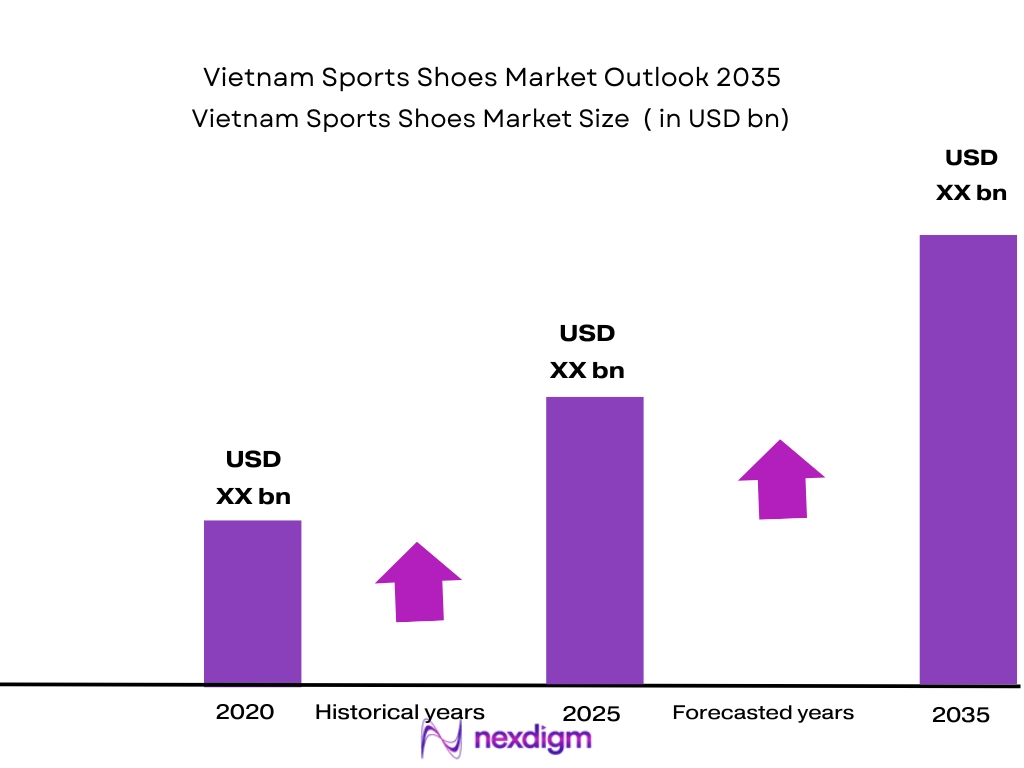
The Vietnam Sports Shoes Market is valued at USD ~ billion, based on a five-year historical analysis. The market is driven by increasing urbanization, higher disposable income, rising health consciousness, expanding e-commerce penetration, and the influence of global athletic brands. The broader footwear market is projected at USD 2.35 billion, while global athletic footwear demand reached USD 153.9 billion, supporting Vietnam’s role as both a consumption and manufacturing market.
Ho Chi Minh City and Hanoi dominate the Vietnam Sports Shoes Market due to large urban populations, strong retail networks, higher income levels, and better access to global and local brands. These cities have dense shopping malls, sports specialty stores, e-commerce adoption, fitness clubs, running communities, and youth-led athleisure consumption. Vietnam also has around 2,200 footwear companies concentrated near Ho Chi Minh City, strengthening product availability and supply chain depth.
Market Segmentation
By Product Type
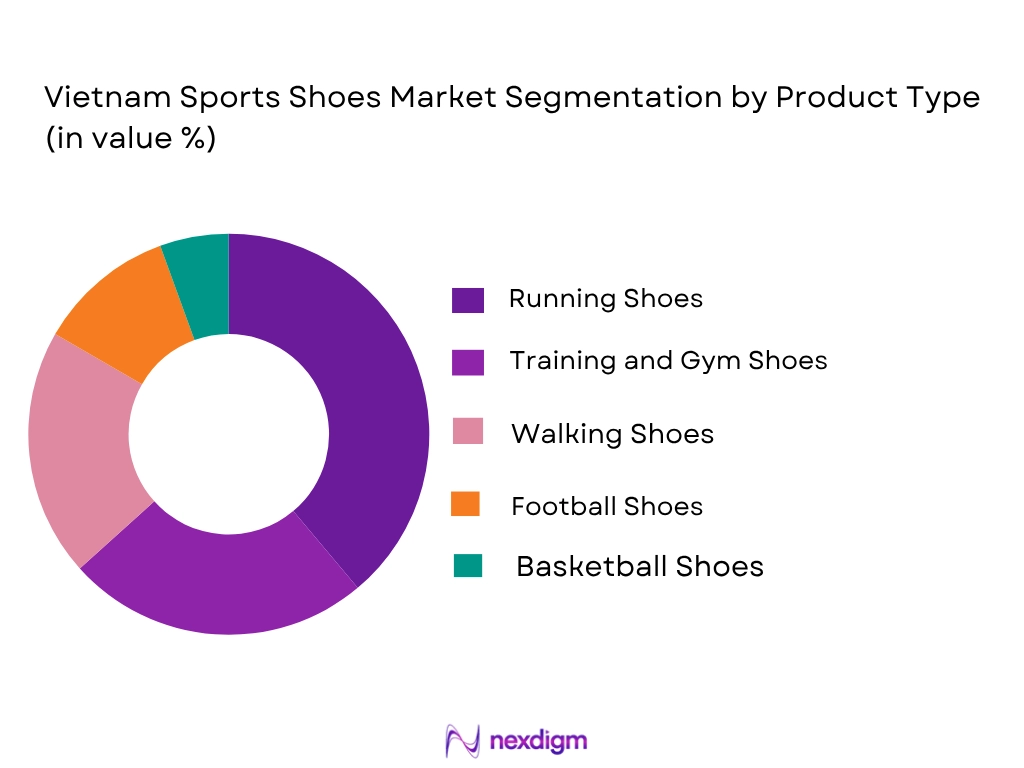
Vietnam Sports Shoes Market is segmented by product type into running shoes, training and gym shoes, walking shoes, sports-specific shoes, outdoor and trail shoes, and others. Recently, running shoes have a dominant market share in Vietnam under the segmentation product type, due to the rising popularity of running, jogging, walking, marathons, gym workouts, and everyday athleisure usage. Running shoes are widely preferred because they combine comfort, cushioning, light weight, breathable materials, and versatile styling. Consumers use them not only for sports activities but also for daily commuting, casual wear, school, university, and work-related movement. International brands such as Nike, Adidas, Puma, ASICS, and Skechers have invested heavily in running footwear lines, while local and regional brands compete through affordable models. Growing health awareness and urban fitness culture have further increased the adoption of running shoes.
By Distribution Channel
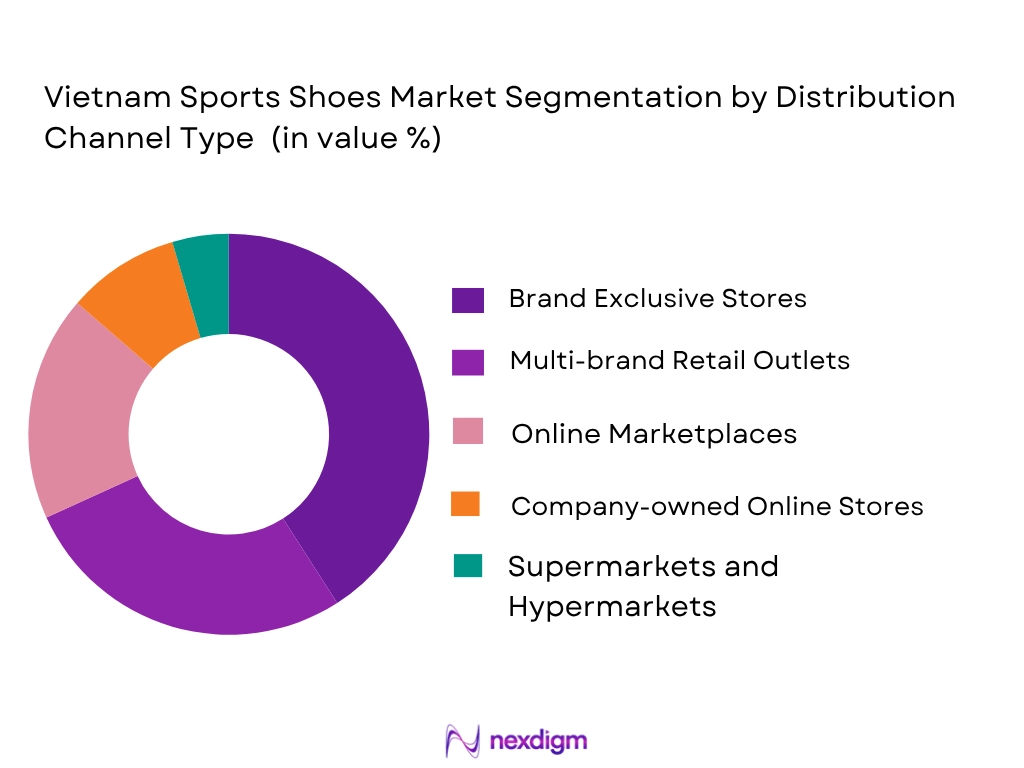
Vietnam Sports Shoes Market is segmented by distribution channel into offline retail, online retail, brand exclusive stores, sports specialty stores, supermarkets and hypermarkets, and others. Recently, offline retail has a dominant market share in Vietnam under the distribution channel segment, due to the consumer preference for trying footwear before purchase. Sports shoes require proper fit, comfort testing, size confirmation, and physical evaluation of sole support, cushioning, and material quality. This makes physical stores highly relevant, especially for premium and performance-based shoes. Brand stores, shopping malls, multi-brand outlets, and sports specialty stores remain important in Ho Chi Minh City, Hanoi, Da Nang, and other urban centers. However, online retail is expanding quickly due to discounts, broader assortment, app-based shopping, and easy product comparison. As a result, brands are increasingly adopting omnichannel models to combine offline trust with digital convenience.
Competitive Landscape
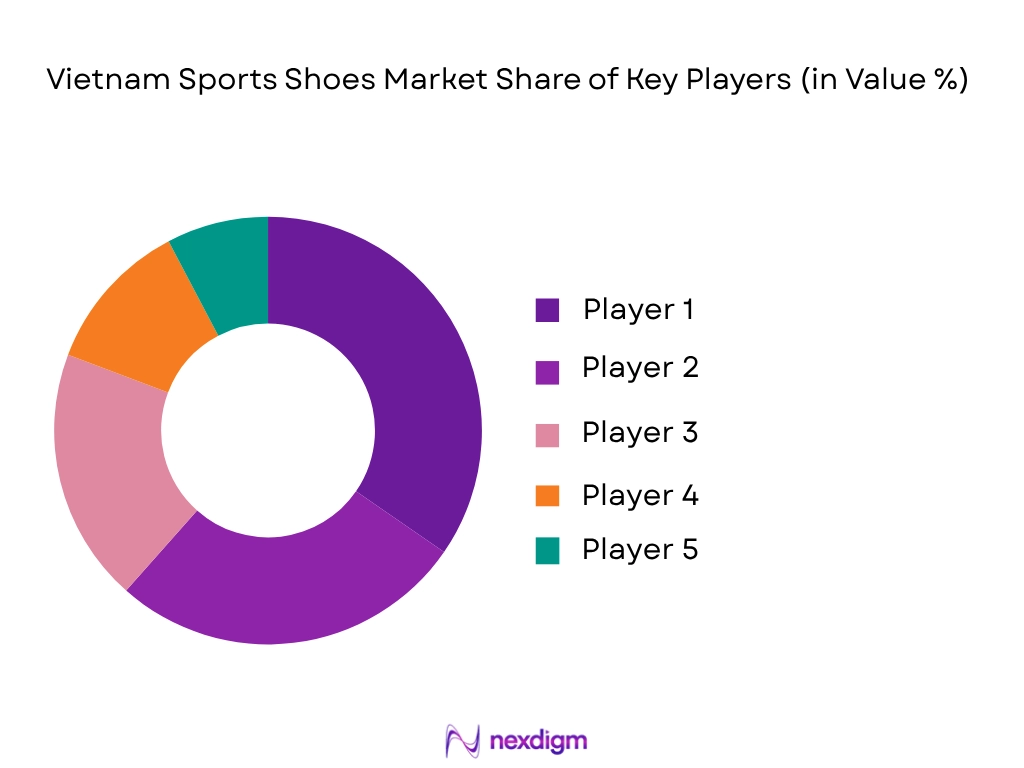
The Vietnam Sports Shoes Market is dominated by a mix of global athletic footwear brands and strong local players. Nike, Adidas, Puma, Skechers, and ASICS lead the premium and performance-oriented category, while domestic brands such as Biti’s, Ananas, Vina Giay, and Thuong Dinh compete through affordability, local relevance, and strong consumer familiarity. This competitive structure reflects a market where international brands influence performance and lifestyle trends, while local companies serve value-conscious consumers.
| Company | Establishment Year | Headquarters | Product Focus | Price Positioning | Distribution Strength | Target Consumers | Brand Strategy | Vietnam Market Relevance |
| Nike | 1964 | Beaverton, USA | ~ | ~ | ~ | ~ | ~ | ~ |
| Adidas | 1949 | Herzogenaurach, Germany | ~ | ~ | ~ | ~ | ~ | ~ |
| Puma | 1948 | Herzogenaurach, Germany | ~ | ~ | ~ | ~ | ~ | ~ |
| Skechers | 1992 | Manhattan Beach, USA | ~ | ~ | ~ | ~ | ~ | ~ |
| Biti’s | 1982 | Ho Chi Minh City, Vietnam | ~ | ~ | ~ | ~ | ~ | ~ |
Vietnam Sports Shoes Market Analysis
Growth Drivers
Rising Health and Fitness Awareness
Rising health and fitness awareness is a major growth driver for the Vietnam Sports Shoes Market. Urban consumers are increasingly adopting walking, running, gym workouts, cycling, yoga, and home fitness routines as part of daily lifestyle habits. This is increasing the demand for comfortable and supportive footwear that can be used for both exercise and regular movement. Sports shoes are now purchased not only by athletes, but also by students, office workers, young professionals, and older consumers seeking better foot comfort. Brands are responding with cushioned soles, breathable mesh uppers, lightweight designs, and improved arch support. Growing concern around obesity, sedentary lifestyles, and preventive healthcare is further encouraging consumers to invest in better-quality sports footwear.
Expansion of Online Retail and Direct-to-Consumer Channels
Expansion of online retail and direct-to-consumer channels is supporting faster growth in the Vietnam Sports Shoes Market. E-commerce platforms allow consumers to compare brands, prices, sizes, reviews, materials, and discounts before purchasing, which improves product discovery and buying confidence. Younger consumers in Ho Chi Minh City, Hanoi, Da Nang, and emerging urban centers are increasingly comfortable purchasing footwear through mobile apps and brand websites. Direct-to-consumer channels also help brands launch exclusive collections, limited-edition designs, and personalized promotions without relying only on traditional retail stores. Easy returns, digital payments, festive discounts, and influencer-led campaigns have strengthened online footwear sales. This shift is especially useful for new brands seeking wider reach at lower distribution costs.
Market Challenges
High Competition from Local and International Brands
High competition from local and international brands is a key challenge in the Vietnam Sports Shoes Market. Global companies such as Nike, Adidas, Puma, Skechers, ASICS, New Balance, and Under Armour compete strongly in premium and performance-based sports footwear. At the same time, local brands such as Biti’s, Ananas, Vina Giay, and Thuong Dinh offer affordable products suited to Vietnamese consumers. This creates pressure on pricing, product design, marketing spending, and retail visibility. Brands must continuously introduce new collections, improve comfort features, and maintain strong online and offline presence. Heavy promotional activity on e-commerce platforms also intensifies competition. As a result, companies face the challenge of protecting margins while remaining attractive to value-conscious consumers.
Price Sensitivity Among Vietnamese Consumers
Price sensitivity among Vietnamese consumers remains a significant challenge for the Vietnam Sports Shoes Market. Many buyers compare prices across physical stores, online platforms, discount campaigns, and local brands before making a purchase. While premium sports shoes are popular among urban youth and fitness consumers, a large portion of the market still prefers affordable and durable footwear. This limits the growth potential of high-end imported products outside major cities. Price sensitivity also encourages consumers to consider unorganized sellers, counterfeit products, or low-cost alternatives. Brands therefore need to balance comfort, quality, design, and affordability. Frequent discounting may increase sales volumes, but it can weaken brand equity and reduce profitability over time.
Opportunities
Growing Demand for Affordable Performance Footwear
Growing demand for affordable performance footwear presents a strong opportunity in the Vietnam Sports Shoes Market. Consumers increasingly want shoes that offer cushioning, grip, breathability, flexibility, and durability without premium pricing. This demand is especially strong among students, entry-level workers, casual runners, gym users, and buyers in emerging urban centers. Local and regional brands can benefit by offering sports shoes that combine practical performance features with accessible prices. International brands can also expand through entry-level collections designed for mass-market consumers. Affordable performance footwear is well suited for walking, running, school use, gym workouts, and casual athleisure. Brands that deliver reliable quality at competitive prices can capture high-volume growth across Vietnam.
Expansion in Tier 2 Cities and Emerging Urban Centers
Expansion in tier 2 cities and emerging urban centers offers major growth potential for the Vietnam Sports Shoes Market. Cities beyond Ho Chi Minh City and Hanoi are witnessing rising income levels, better retail infrastructure, expanding internet access, and growing interest in fitness and casual sportswear. Consumers in Da Nang, Hai Phong, Can Tho, Nha Trang, Hue, and other developing urban areas are increasingly adopting branded sports shoes for walking, school, work, gym use, and everyday fashion. E-commerce platforms and regional retail stores are improving product access in these locations. Brands that offer affordable pricing, durable construction, broad size availability, and localized promotions can build early loyalty among consumers in these fast-developing markets.
Future Outlook
Over the next five years, the Vietnam Sports Shoes Market is expected to record steady growth, supported by rising fitness awareness, urbanization, growing sports participation, and expanding consumer interest in athleisure. The market is forecasted to grow at a CAGR of around 5.0% during 2024–2030, in line with athletic footwear growth trends and rising sportswear adoption.
Major Players
- ike Vietnam
- Adidas Vietnam
- Puma Vietnam
- Skechers Vietnam
- ASICS Vietnam
- New Balance Vietnam
- Under Armour Vietnam
- Decathlon Vietnam
- Mizuno Vietnam
- Anta Sports
- Li-Ning
- Bitis
- Bitas
- Vina Giay
- Ananas
- Juno
- MWC
- Giay Thuong Dinh
- Vascara
- Dong Luc Sport
Key Target Audience
- Sports shoes manufacturers
- Athletic footwear brands
- Footwear raw material and component suppliers
- Online fashion and footwear platforms
- Sports retail chains and distributors
- Investments and venture capitalist firms
- Government and regulatory bodies
- Private equity firms and strategic investors
Research Methodology
Step 1: Identification of Key Variables
The initial phase involves constructing an ecosystem map encompassing all major stakeholders within the Vietnam Sports Shoes Market. This step is underpinned by extensive desk research, utilizing a combination of secondary and proprietary databases to gather comprehensive industry-level information. The primary objective is to identify and define the critical variables that influence market dynamics, including consumer demand, distribution, pricing, and brand penetration.
Step 2: Market Analysis and Construction
In this phase, we will compile and analyze historical data pertaining to the Vietnam Sports Shoes Market. This includes assessing product-wise penetration, online and offline sales contribution, organized retail expansion, and resultant revenue generation. Furthermore, an evaluation of product pricing, consumer purchase frequency, and retail availability will be conducted to ensure the reliability and accuracy of market estimates.
Step 3: Hypothesis Validation and Expert Consultation
Market hypotheses will be developed and subsequently validated through computer-assisted telephone interviews with industry experts representing sports footwear brands, distributors, retailers, online platforms, and manufacturing stakeholders. These consultations will provide valuable operational and financial insights directly from industry practitioners. The insights will be instrumental in refining and corroborating the market data.
Step 4: Research Synthesis and Final Output
The final phase involves direct engagement with multiple sports footwear companies and retail stakeholders to acquire detailed insights into product segments, sales performance, consumer preferences, and other pertinent factors. This interaction will serve to verify and complement the statistics derived from the bottom-up approach. The final output will ensure a comprehensive, accurate, and validated analysis of the Vietnam Sports Shoes Market.

- Executive Summary
- Research Methodology (Market Definitions and Assumptions Abbreviations, Market Sizing Approach, Consolidated Research Approach, Understanding Market Potential Through In-Depth Industry Interviews, Primary Research Approach, Limitations and Future Conclusions)

- Definition and Scope
- Market Dynamics Overview
- Market Genesis
- Major Players and Market Timeline
- Business Cycle and Trends
- Supply Chain and Value Chain Analysis

- Growth Drivers
Rising Health and Fitness Awareness
Increasing Participation in Sports and Outdoor Activities
Growth of Athleisure and Casual Sportswear Trends
Rising Disposable Income and Urbanization
Expansion of Online Retail and Direct-to-Consumer Channels
Increasing Demand from Women and Youth Consumers
Growth of Organized Sports, Marathons, Gyms, and Fitness Centers
Strong Presence of Footwear Manufacturing and Export Ecosystem - Market Challenges
High Competition from Local and International Brands
Price Sensitivity Among Vietnamese Consumers
Counterfeit and Unorganized Footwear Market Presence
Fluctuations in Raw Material and Manufacturing Costs
Supply Chain and Inventory Management Issues
Changing Consumer Preferences and Short Product Life Cycles
Dependence on Imported Premium Sports Footwear
Pressure from Discounting and Promotional Sales - Opportunities
Growing Demand for Affordable Performance Footwear
Expansion in Tier 2 Cities and Emerging Urban Centers
Rise of Women-focused Sports Shoes
Innovation in Lightweight, Breathable, and Sustainable Materials
Growth of Customization and Smart Sports Shoes
Increasing Brand Collaborations with Athletes, Influencers, and Fitness Communities
Expansion of Omnichannel Retail Models
Development of Locally Produced Sports Footwear for Domestic Consumption - Key Trends
Shift Toward Athleisure and Everyday Sports Footwear
Rising Popularity of Running, Walking, and Training Shoes
Growing Demand for Sustainable and Eco-friendly Footwear
Increase in Online-first and D2C Sports Footwear Brands
Use of Advanced Cushioning, Grip, and Breathable Materials
Celebrity, Athlete, and Influencer-led Brand Positioning
Premiumization Among Urban Consumers
Expansion of Sports Lifestyle Stores in Major Cities - Government Regulations
Product Quality and Safety Standards
Footwear Labeling and Packaging Requirements
Import and Export Regulations
Customs Duties and Trade Compliance
Consumer Protection Regulations
E-commerce and Online Retail Compliance
Labor and Manufacturing Standards
Environmental and Sustainability Requirements for Footwear Production - SWOT Analysis
- Porter’s Five Forces

- By Value, 2020–2025
- By Volume, 2020–2025
- By Average Price, 2020–202

- By Product Type (In Value %)
Running Shoes
Training and Gym Shoes
Walking Shoes
Football Shoes
Basketball Shoes - By Price Category (In Value %)
Economy Sports Shoes
Mid-Range Sports Shoes
Premium Sports Shoes
Luxury and Performance Sports Shoes - By End User (In Value %)
Men
Women
Kids - By Consumer Type (In Value %)
Professional Athletes
Fitness Enthusiasts
Casual and Lifestyle Users
School and University Students
Outdoor and Adventure Consumers
Others - By Material Type (In Value %)
Mesh Sports Shoes
Synthetic Sports Shoes
Leather Sports Shoes
Knitted Sports Shoes
Rubber and EVA-based Sports Shoes
Others - By Application (In Value %)
Running and Jogging
Gym and Training
Walking and Daily Fitness
Football and Team Sports
Basketball and Court Sports
Outdoor and Adventure Activities
Casual and Athleisure Use
Others - By Distribution Channel (In Value %)
Brand Exclusive Stores
Multi-brand Retail Outlets
Online Marketplaces
Company-owned Online Stores
Supermarkets and Hypermarkets - By Region (In Value %)
Northern Vietnam
Southern Vietnam
Central Vietnam
Mekong Delta
Central Highlands - By City (In Value %)
Ho Chi Minh City
Hanoi
Da Nang
Hai Phong
Can Tho
Nha Trang
Others

- Market Share of Major Players by Value/Volume
- Market Share of Major Players by Product Type
- Market Share of Major Players by Distribution Channel
- Cross Comparison Parameters (Company Overview, Business Strategies, Recent Developments, Strengths, Weaknesses, Organizational Structure, Revenues, Revenues by Product Type, Number of Touchpoints, Distribution Channels, Number of Dealers and Distributors, Margins, Manufacturing Plants, Production Capacity, Unique Value Offering, Product Portfolio, Pricing Strategy, Marketing and Promotion Strategy)
- SWOT Analysis of Major Players
- Pricing Analysis Based on Product Categories for Major Players
- Detailed Profiles of Major Companies
Nike Vietnam
Adidas Vietnam
Puma Vietnam
Skechers Vietnam
ASICS Vietnam
New Balance Vietnam
Under Armour Vietnam
Decathlon Vietnam
Mizuno Vietnam
Anta Sports
Li-Ning
Bitis
Bitas
Vina Giay
Ananas
Juno
MWC
Giay Thuong Dinh
Vascara
Dong Luc Sport

- Market Demand and Utilization
- Purchasing Power and Budget Allocations
- Consumer Preferences and Buying Behavior
- Regulatory and Compliance Requirements
- Needs, Desires, and Pain Point Analysis
- Decision-Making Process
- Brand Loyalty and Switching Behavior

- By Value, 2026–2035
- By Volume, 2026–2035
- By Average Price, 2026–2035


 Request a Sample
 Ask for Customization
 Get a Quote
 Enquire Now