

 Download PDF
Market Overview
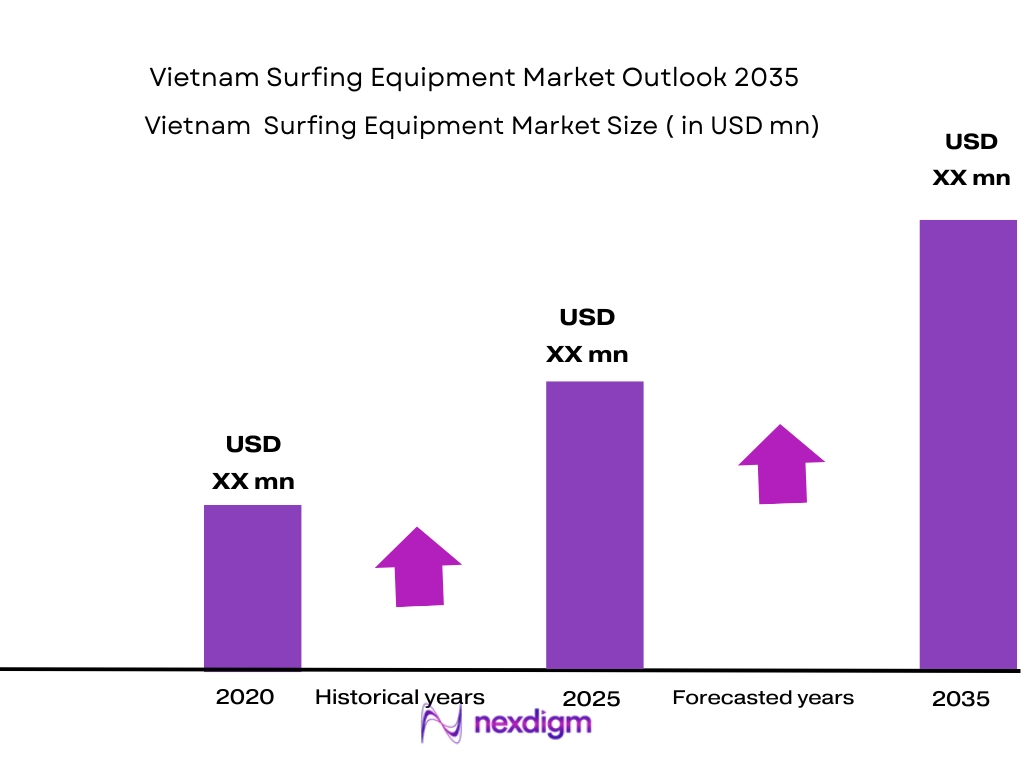
The Vietnam surfing equipment market is currently experiencing a significant surge in growth due to the increasing popularity of surfing as a recreational activity and the country’s expanding coastal tourism industry. The market size is USD ~ million and growth is driven by rising disposable incomes, increasing tourism, and the growing interest in water sports, especially among the younger population. Vietnam’s long coastline and favorable climate conditions provide the perfect environment for surfing, further driving demand for surfing equipment. In recent years, the market has seen a steady increase in demand for surfboards, wetsuits, and accessories, as well as greater interest in eco-friendly and sustainable surfing equipment.
The key cities driving the Vietnam surfing equipment market are Ho Chi Minh City, Da Nang, Hanoi, and Nha Trang. These cities are the primary hubs for both local surfers and international tourists, with Ho Chi Minh City serving as the economic center and a major destination for water sports enthusiasts. Da Nang and Nha Trang are particularly known for their beach resorts and surfing spots, drawing significant tourist traffic, both domestic and international. The dominance of these regions is largely attributed to their access to surf-friendly coastlines, robust tourism infrastructure, and growing interest in water sports among locals and tourists alike.
Market Segmentation
By Product Type
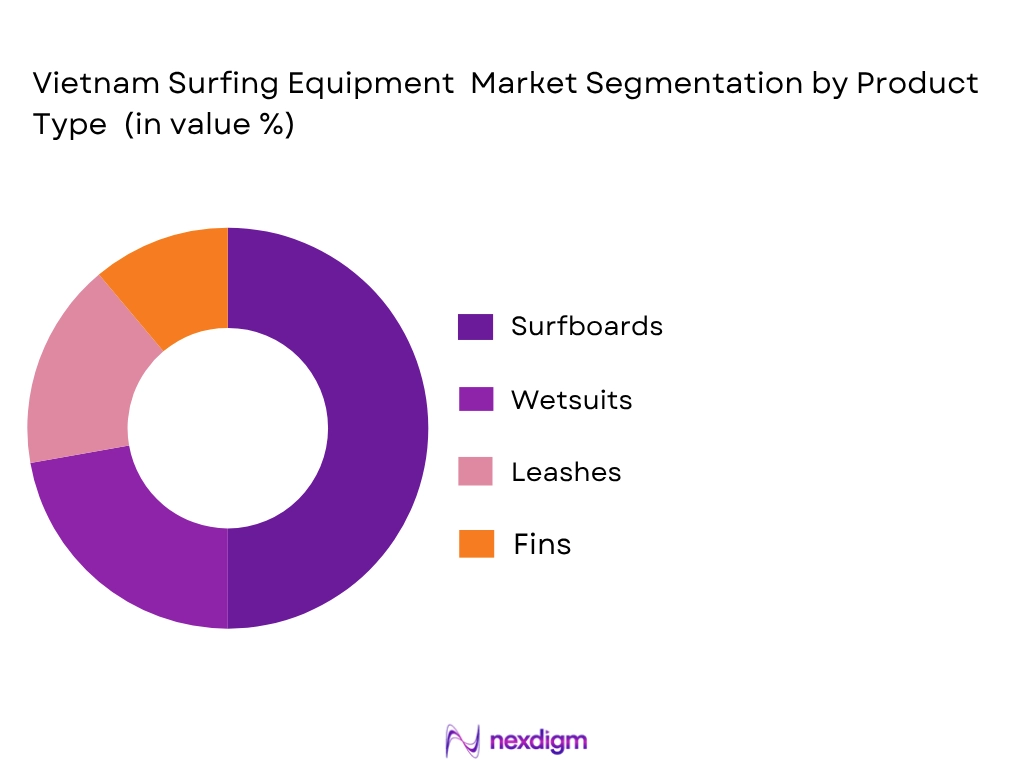
The Vietnam surfing equipment market is segmented by product type into surfboards, wetsuits, leashes, fins, and accessories. Among these, surfboards dominate the market share due to their essential role in surfing, with a variety of designs available to suit different surfing styles. The demand for high-performance surfboards, especially those made from eco-friendly materials, has been on the rise. Surfboards made from sustainable materials such as recycled plastics and eco-friendly resins are gaining popularity, driven by an increasing awareness of environmental concerns. Leading local brands and international surfboard manufacturers continue to introduce innovative designs and technology, further fueling the demand in this segment.
By Material Type
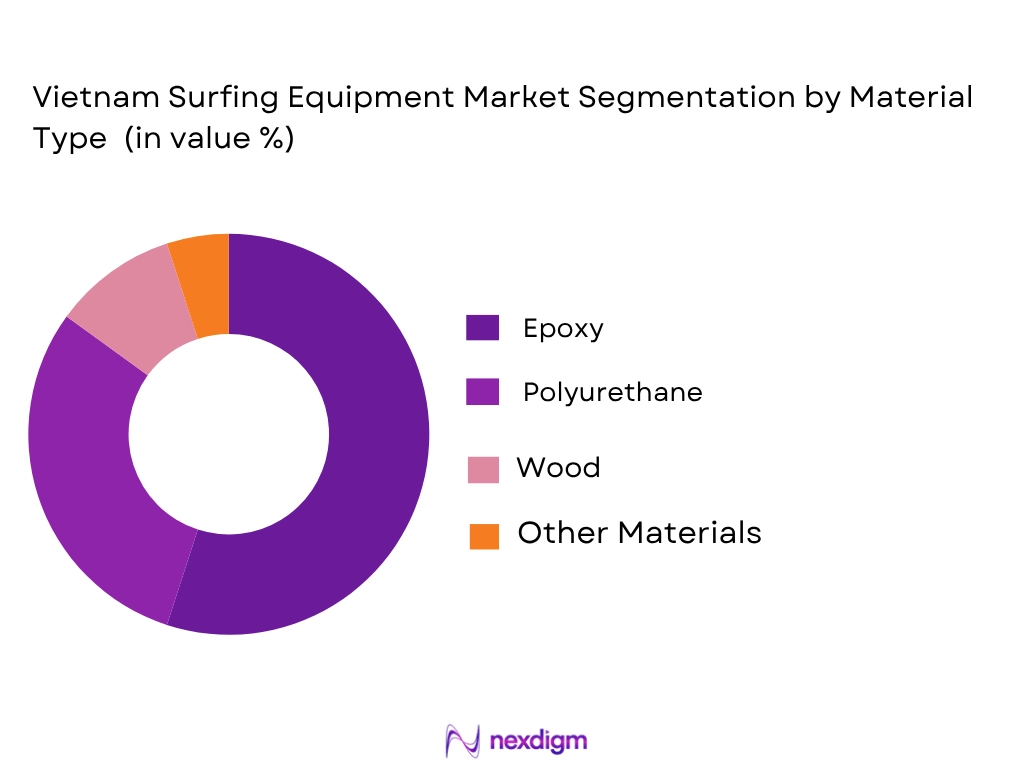
The Vietnam surfing equipment market is also segmented by material type into epoxy, polyurethane, wood, and other materials. Among these, epoxy materials dominate the market share due to their lightweight and durable nature, making them ideal for producing high-performance surfboards. Epoxy surfboards are increasingly preferred by both professional and recreational surfers as they provide better floatation, strength, and resistance to cracking. Additionally, epoxy boards are more environmentally friendly compared to traditional polyurethane boards, aligning with the growing trend towards sustainability. The continuous technological advancements in epoxy-based materials are expected to maintain their dominance in the market.
Competitive Landscape
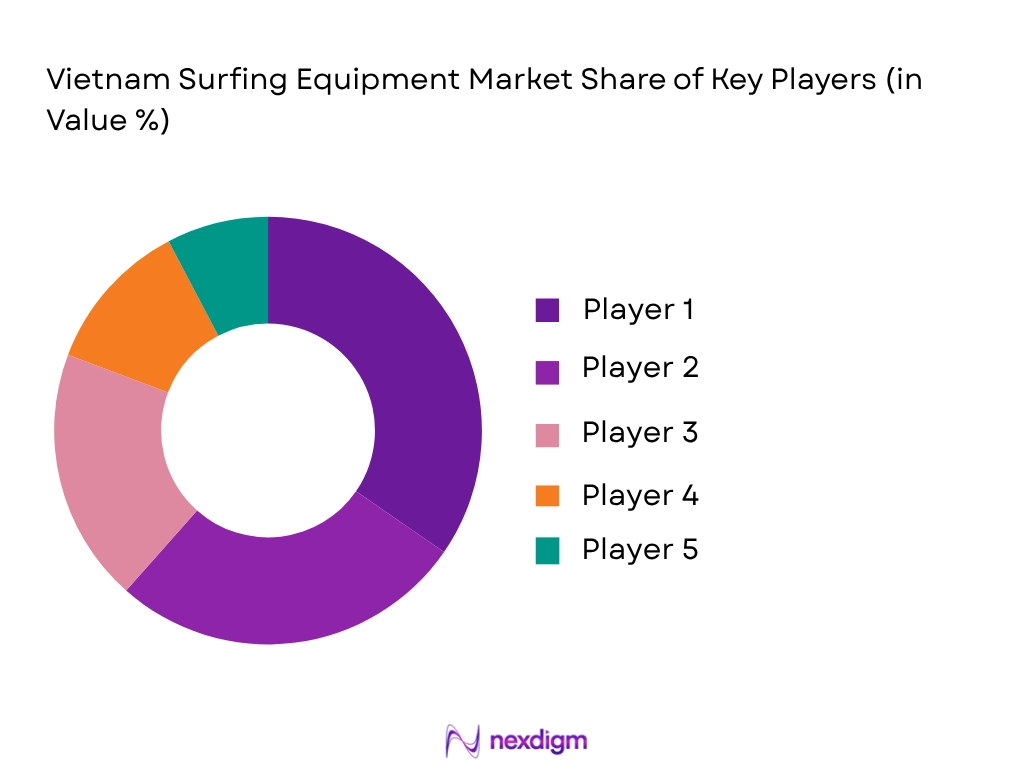
The Vietnam surfing equipment market is highly competitive and characterized by the presence of both local and international players. Major international brands such as Quiksilver, Rip Curl, and Billabong dominate the market, along with growing local brands catering to the increasing demand for surfing gear. The consolidation of the market is evident, with these key players investing in distribution networks, marketing efforts, and product innovation to capture the attention of local surfers and tourists.
| Company Name | Establishment Year | Headquarters | Market Share (2024) | Product Focus | Distribution Channels | Revenue |
| Quiksilver | 1969 | USA | ~ | ~ | ~ | ~ |
| Rip Curl | 1969 | Australia | ~ | ~ | ~ | ~ |
| Billabong | 1973 | Australia | ~ | ~ | ~ | ~ |
| O’Neill | 1952 | USA | ~ | ~ | ~ | ~ |
| Dakine | 1979 | USA | ~ | ~ | ~ | ~ |
Vietnam Surfing Equipment Market Analysis
Growth Drivers
Rising Popularity of Surfing as a Water Sport
Surfing has become increasingly popular in Vietnam, particularly among the younger population and tourists. With its scenic coastline and favorable weather conditions, the country offers ideal conditions for surfing, leading to a growing number of enthusiasts. Surfing schools and lessons are becoming more common, attracting both locals and international visitors. As more people are introduced to the sport, demand for surfing equipment continues to rise. The growing influence of surfing culture, both locally and globally, is also contributing to the sport’s popularity, with the younger generation especially embracing water sports as a form of leisure and fitness.
Expanding Tourism Industry in Coastal Areas
Vietnam’s expanding tourism industry, especially along its coastlines, has directly contributed to the growth of the surfing equipment market. Coastal cities like Da Nang, Nha Trang, and Ho Chi Minh City are attracting increasing numbers of domestic and international tourists each year, many of whom are drawn to the beaches for surfing. The country’s popularity as a tourist destination, coupled with the establishment of surf resorts and schools, has created a favorable environment for the growth of the surfing equipment market. This trend is expected to continue as more regions develop infrastructure to cater to the growing number of surfing tourists.
Market Challenges
High Import Dependence for Surfing Equipment
Vietnam faces a significant challenge in its surfing equipment market due to the high dependence on imported products. While the demand for surfboards, wetsuits, and other related gear is increasing, a large portion of the equipment is imported, particularly from countries with established surfing industries like the U.S. and Australia. This reliance on imports results in higher costs for consumers, as well as potential supply chain vulnerabilities. Import duties and logistical challenges also contribute to higher retail prices, making it more difficult for local businesses to compete against well-established global brands.
Price Sensitivity in the Local Market
The local market for surfing equipment in Vietnam is highly price-sensitive, with many consumers, especially in less affluent regions, reluctant to purchase high-end or expensive gear. This price sensitivity is primarily driven by the relatively low average income levels and the perception of surfing as a luxury sport. Many customers opt for budget-friendly, lower-quality products or even second-hand gear, which limits the growth potential of premium product segments. To address this, brands need to offer a wide range of products to cater to different income levels and continue exploring cost-efficient manufacturing and pricing strategies.
Opportunities
Increasing Demand for Sustainable and Eco-Friendly Surfing Equipment
There is a growing trend toward sustainability in the global surfing community, and Vietnam is no exception. Consumers, particularly the younger generation, are becoming more environmentally conscious and are seeking products that are eco-friendly and sustainably sourced. Surfboard manufacturers and accessory producers are increasingly incorporating eco-friendly materials, such as recyclable plastics, organic resins, and biodegradable packaging. This demand for sustainable surfing equipment presents an opportunity for companies to differentiate themselves in the market by offering products that align with the values of environmentally conscious consumers.
Expansion of Surf Tourism in Emerging Regions
As surfing gains popularity in Vietnam, emerging coastal regions that were once less known for surfing are beginning to attract attention from both local surfers and international tourists. Areas outside of major tourist hotspots like Da Nang and Nha Trang are gradually becoming popular surf destinations, offering untapped potential for surf-related businesses. As these regions develop their infrastructure to accommodate surfers, the demand for surfing equipment will naturally increase. This expansion of surf tourism in less established regions presents an opportunity for local brands to grow their presence and reach new customer segments in emerging markets.
Future Outlook
Over the next 5 years, the Vietnam surfing equipment market is expected to experience significant growth driven by a combination of increasing interest in surfing, expanding tourism, and advancements in surfing technology. The demand for eco-friendly surfing equipment is expected to rise, with local manufacturers innovating to meet the needs of eco-conscious consumers. Additionally, the popularity of surfing among young people, coupled with the country’s development as a key surfing destination, will likely lead to further growth in the market.
Major Players
- Quiksilver
- Rip Curl
- Billabong
- O’Neill
- Dakine
- Hurley
- Volcom
- Body Glove
- Lost Surfboards
- Channel Islands Surfboards
- FCS
- Firewire Surfboards
- JS Industries
- Torq Surfboards
- Takayama Surfboards
Key Target Audience
- Surfing Equipment Manufacturers
- Surfing Gear Distributors and Wholesalers
- Tourism and Hospitality Businesses
- Retail Chains and E-commerce Platforms
- Investments and Venture Capitalist Firms
- Government and Regulatory Bodies
- Surfing Event Organizers
- Eco-conscious Consumers
Research Methodology
Step 1: Identification of Key Variables
The initial phase involves constructing an ecosystem map of the Vietnam surfing equipment market, identifying key players, stakeholders, and variables influencing market dynamics. This phase is supported by secondary research, focusing on government reports, industry publications, and global market databases.
Step 2: Market Analysis and Construction
In this phase, historical market data will be compiled, and segment-specific trends will be analyzed. This includes evaluating surfing equipment sales volumes, demand fluctuations, and emerging market trends. The goal is to construct an accurate representation of the market landscape for further forecasting.
Step 3: Hypothesis Validation and Expert Consultation
Market hypotheses and assumptions will be validated through consultations with industry experts, including manufacturers, distributors, and retailers. These consultations will provide insights into the operational realities and challenges faced by market participants.
Step 4: Research Synthesis and Final Output
The final phase involves synthesizing data gathered from both primary and secondary sources. Detailed reports will be generated, incorporating the insights gathered during expert consultations and the extensive data analysis conducted in previous phases. This will lead to a comprehensive understanding of the Vietnam surfing equipment market.

- Executive Summary
- Research Methodology (Market Definitions and Assumptions; Abbreviations; Market Sizing Approach; Consolidated Research Approach; Understanding Market Potential Through In-Depth Industry Interviews; Primary Research Approach; Limitations and Future Conclusions)

- Definition and Scope
- Market Dynamics Overview
- Market Genesis
- Major Players and Market Timeline
- Business Cycle and Trends
- Supply Chain and Value Chain Analysis

- Growth Drivers
Rising Popularity of Surfing as a Water Sport
Expanding Tourism Industry in Coastal Areas
Increasing Disposable Income
Growth in Local Surfing Communities - Market Challenges
High Import Dependence for Surfing Equipment
Price Sensitivity in the Local Market
Limited Awareness in Remote Areas
Competitive Pricing Pressure - Opportunities
Increasing Demand for Sustainable and Eco-Friendly Surfing Equipment
Expansion of Surf Tourism in Emerging Regions
Growth of Local Surf Brands
Innovation in Surfboard Materials and Designs - Key Trends
Rise in Eco-Conscious Surfing Equipment
Adoption of Advanced Surfboard Technologies
Growth in Women’s Surfing Gear Market
Popularity of Custom and Handcrafted Surfboards - Government Regulations
Import Regulations and Tariffs
Environmental Standards for Surfing Equipment
Certification and Quality Standards - SWOT Analysis
- Porter’s Five Forces

- By Value, 2020–2025
- By Volume, 2020–2025
- By Average Price, 2020–2025

- By Product Type (In Value %)
Surfboards
Wetsuits
Leashes
Fins - By Material Type (In Value %)
Epoxy
Polyurethane
Wood
Other Materials - By Application (In Value %)
Professional Surfing
Recreational Surfing
Competitive Surfing - By Distribution Channel (In Value %)
Direct Sales
Distributors and Wholesalers
Retail Stores
Online Channels - By Region (In Value %)
Ho Chi Minh City
Da Nang
Hanoi
Nha Trang
Rest of Vietnam

- Market Share of Major Players by Value/Volume
- Market Share of Major Players by Product Type
- Cross Comparison Parameters (Company Overview, Business Strategies, Recent Developments, Strength, Weakness, Organizational Structure, Revenues, Revenues by Product Type, Number of Touchpoints, Distribution Channels, Number of Dealers and Distributors, Margins, Production Plant, Capacity, Unique Value Offering, and Others)
- SWOT Analysis of Major Players
- Pricing Analysis Based on Product Categories for Major Players
- Detailed Profiles of Major Companies
Quiksilver
Rip Curl
Billabong
Volcom
Hurley
O’Neill
Body Glove
Dakine
Lost Surfboards
Channel Islands Surfboards

- Increasing number of young adults actively participating in surfing.
- Rising number of female surfers, with an increasing demand for gender-specific equipment.
- Older surfers seeking more accessible and comfortable gear options.
- The growth of family and group surfing experiences.
- Rising youth participation in surfing through schools and camps

- By Value, 2026–2035
- By Volume, 2026–2035
- By Average Price, 2026–2035


 Request a Sample
 Ask for Customization
 Get a Quote
 Enquire Now