

 Download PDF
 Download PDF
Market Overview
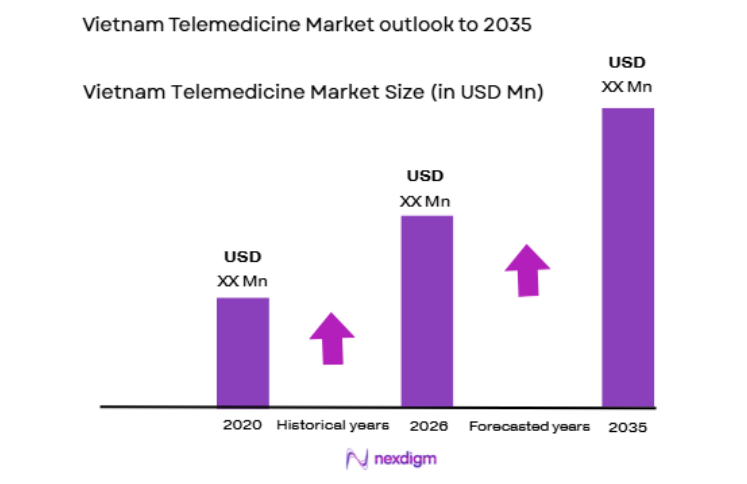
Based on a recent historical assessment, the Vietnam Telemedicine Market is valued at approximately USD ~ million. The market is primarily driven by the increasing demand for accessible healthcare, especially in rural and underserved regions. With the rise in chronic diseases and an aging population, there is a growing need for efficient, remote healthcare services. Government support for telemedicine platforms, along with advancements in mobile and internet connectivity, has contributed to market growth, making telemedicine a viable option for many patients and healthcare providers.
Ho Chi Minh City and Hanoi dominate the Vietnam Telemedicine Market, with their highly developed healthcare infrastructure and large urban populations. These cities lead the adoption of telemedicine solutions due to better internet access, a higher concentration of healthcare providers, and significant government initiatives promoting digital health. The large number of healthcare providers and technology companies in these cities drives the growth of telemedicine services, making them key hubs for remote healthcare in Vietnam.
Market Segmentation
By Product Type
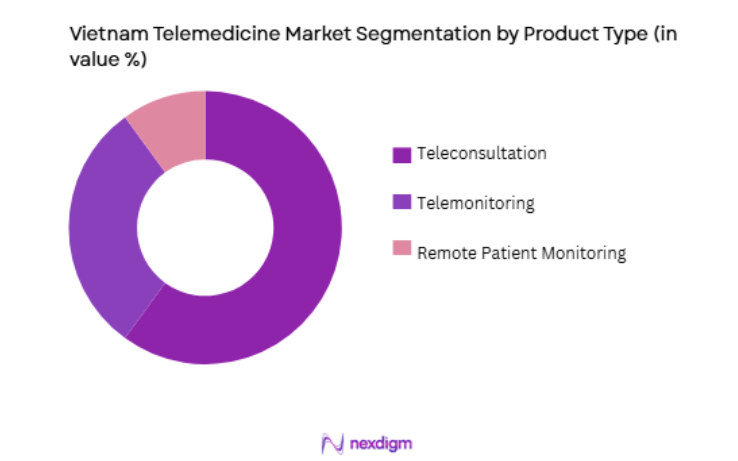
Vietnam Telemedicine market is segmented by product type into Teleconsultation, Telemonitoring, and Remote Patient Monitoring. Recently, Teleconsultation has a dominant market share due to its wide-ranging use in offering remote consultations with healthcare providers. This product allows patients to connect with doctors virtually, which is particularly beneficial for those living in rural or remote areas with limited access to healthcare facilities. As internet access improves and the adoption of smartphones increases, teleconsultation platforms have become more accessible to a broader population. Moreover, government policies encouraging the use of telemedicine services in the healthcare system have further boosted the demand for teleconsultation, driving its dominance in the market.
By End User
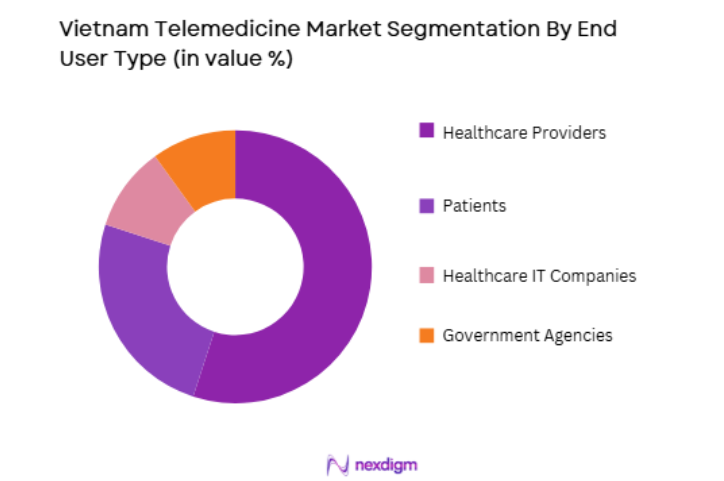
Vietnam Telemedicine market is segmented by end user into Healthcare Providers, Patients, Healthcare IT Companies, and Government Agencies. Recently, Healthcare Providers have a dominant market share due to their central role in adopting telemedicine services to enhance patient care and reduce healthcare costs. Telemedicine solutions enable healthcare providers, particularly hospitals and clinics, to offer remote consultations and monitor patients’ conditions without requiring physical visits. This not only improves access to healthcare but also reduces the strain on healthcare facilities. The increased adoption of telemedicine platforms by healthcare providers, in line with government initiatives to improve healthcare accessibility, has solidified their position as the leading end user segment in the market.
Competitive Landscape
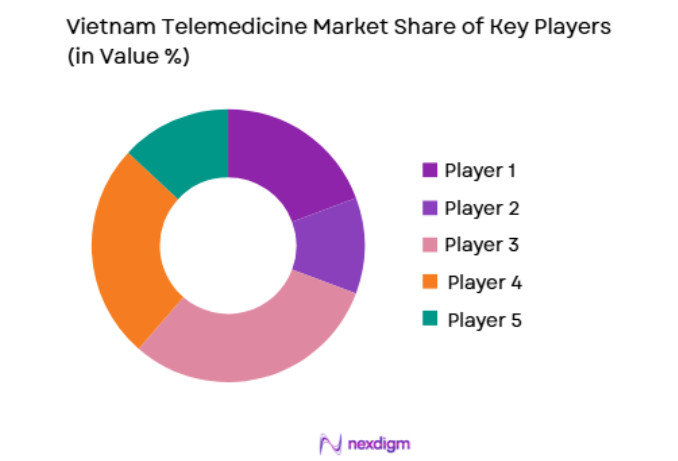
The Vietnam Telemedicine Market is competitive, with a growing number of local and international companies offering telemedicine solutions. The market is characterized by both established healthcare providers integrating telemedicine into their services and tech companies developing telemedicine platforms. There is also an increasing focus on public-private partnerships to accelerate telemedicine adoption in rural and underserved areas. As the demand for remote healthcare services grows, the competitive landscape will likely see consolidation, with larger players acquiring smaller startups or forming partnerships to expand their service offerings and reach.
| Company Name | Establishment Year | Headquarters | Technology Focus | Market Reach | Key Products | Revenue | Market-Specific Parameter |
| Viettel Group | 2004 | Hanoi | ~ | ~ | ~ | ~ | ~ |
| Doctor Anywhere Vietnam | 2017 | Ho Chi Minh City | ~ | ~ | ~ | ~ | ~ |
| Vinmec Healthcare System | 2012 | Hanoi | ~ | ~ | ~ | ~ | ~ |
| Medlink Vietnam | 2016 | Ho Chi Minh City | ~ | ~ | ~ | ~ | ~ |
| Hanoi Medical University | 1902 | Hanoi | ~ | ~ | ~ | ~ | ~ |
Vietnam Telemedicine Market Analysis
Growth Drivers
Government Support for Digital Health Integration
Government Support for Digital Health Integration is a key growth driver in the Vietnam Telemedicine Market. The Vietnamese government has recognized the potential of digital health in improving healthcare access and reducing regional disparities in healthcare delivery. Initiatives such as the National Strategy for Digital Health and funding for telemedicine projects have been instrumental in promoting telemedicine solutions. These policies have enabled healthcare providers, especially in rural areas, to incorporate telemedicine services into their offerings. By facilitating telemedicine adoption and encouraging public-private partnerships, the government is helping drive the growth of the market, making telemedicine more accessible to both healthcare providers and patients across the country.
Technological Advancements in Healthcare
Technological Advancements in Healthcare have significantly contributed to the growth of the Vietnam Telemedicine Market. The widespread availability of smartphones, high-speed internet, and cloud computing has created an enabling environment for the growth of telemedicine services. These technologies allow for seamless video consultations, remote monitoring, and electronic health records integration, which have improved the overall efficiency and accessibility of healthcare services. Innovations in AI and machine learning are also being integrated into telemedicine platforms, enhancing diagnostic accuracy and enabling better patient care management. As these technologies continue to evolve, the telemedicine market in Vietnam is expected to expand further, with new opportunities for growth and innovation.
Market Challenges
Regulatory and Data Privacy Challenges
Regulatory and Data Privacy Challenges are a significant concern in the Vietnam Telemedicine Market. While the government has made strides in promoting digital health, regulations governing the use of telemedicine services, particularly concerning patient data privacy, remain a challenge. Healthcare providers must comply with stringent data protection laws to ensure patient information is secure, and non-compliance could lead to penalties and loss of trust. Additionally, the lack of a comprehensive regulatory framework for telemedicine makes it difficult for healthcare providers to navigate the legal requirements surrounding telemedicine consultations and reimbursement policies. These regulatory and privacy concerns can delay the widespread adoption of telemedicine services and hinder market growth.
Limited Internet Access in Rural Areas
Limited Internet Access in Rural Areas represents another significant challenge to the growth of the Vietnam Telemedicine Market. While urban areas such as Hanoi and Ho Chi Minh City have relatively high internet penetration, rural areas still struggle with limited access to reliable internet services. This digital divide creates a barrier to telemedicine adoption in underserved regions where the need for remote healthcare services is greatest. Without reliable internet infrastructure, telemedicine platforms cannot deliver effective services, limiting their potential reach. Although efforts are being made to improve internet connectivity in rural areas, the challenge remains a key obstacle to the widespread adoption of telemedicine across Vietnam.
Opportunities
Expansion of Telemedicine Services in Rural Areas
Expansion of Telemedicine Services in Rural Areas presents a significant opportunity for the Vietnam Telemedicine Market. Despite the limited internet access in rural regions, there is an increasing demand for remote healthcare services in these areas due to the shortage of healthcare professionals and medical facilities. The government’s initiatives to expand digital health infrastructure, combined with the availability of mobile telecommunication networks, provide an opportunity for telemedicine platforms to reach underserved populations. By offering remote consultations, diagnostics, and health monitoring, telemedicine services can improve healthcare access in rural areas, driving market growth and enhancing healthcare equity in Vietnam.
Growing Acceptance of Telehealth by Healthcare Providers
Growing Acceptance of Telehealth by Healthcare Providers represents another major opportunity for the Vietnam Telemedicine Market. Healthcare providers in Vietnam are increasingly adopting telemedicine services to expand their patient base, improve care delivery, and streamline operations. The COVID-19 pandemic has accelerated the adoption of telemedicine, and many providers are continuing to offer virtual consultations even as in-person visits resume. With ongoing improvements in digital health technologies and supportive government policies, healthcare providers are becoming more willing to integrate telemedicine into their services. This trend is expected to continue, offering significant growth potential for telemedicine providers in Vietnam.
Future Outlook
The Vietnam Telemedicine Market is poised for continued growth, supported by government initiatives, technological advancements, and increasing healthcare demand. The expansion of telemedicine services in rural areas, along with the growing acceptance of telehealth by healthcare providers, will drive market growth in the coming years. As internet access improves and new technologies such as AI and machine learning are integrated into telemedicine platforms, the market will continue to evolve and provide new opportunities for service providers and healthcare institutions alike.
Major Players
- Viettel Group
- Doctor Anywhere Vietnam
- Vinmec Healthcare System
- Medlink Vietnam
- Hanoi Medical University
- FV Hospital
- Phyathai Hospitals
- Samitivej Hospitals
- Raffles Medical Group
- Aetna Healthcare
- Sun Life Vietnam
- Global Healthcare Vietnam
- Docter Raksa
- Hoa Sen Healthcare
- TechMed
Key Target Audience
- Investments and venture capitalist firms
- Government and regulatory bodies
- Healthcare providers
- Digital health technology developers
- Medical device manufacturers
- Pharmaceutical companies
- Insurance companies
- Healthcare IT providers
Research Methodology
Step 1: Identification of Key Variables
Key market variables such as healthcare access, telemedicine adoption rates, government policies, and technological advancements were identified to assess the market’s growth drivers and challenges.
Step 2: Market Analysis and Construction
Market analysis was conducted by examining healthcare demand, patient needs, telemedicine adoption patterns, and government healthcare policies across Vietnam.
Step 3: Hypothesis Validation and Expert Consultation
Assumptions were validated through consultations with healthcare providers, digital health experts, and government officials to confirm emerging trends and market growth drivers.
Step 4: Research Synthesis and Final Output
Data was synthesized from primary and secondary sources to provide a comprehensive view of the Vietnam Telemedicine Market, integrating expert insights, market data, and government initiatives.

- Executive Summary
- Research Methodology (Definitions, Scope, Industry Assumptions, Market Sizing Approach, Primary & Secondary Research Framework, Data Collection & Verification Protocol, Analytic Models & Forecast Methodology, Limitations & Research Validity Checks)

- Market Definition and Scope
- Value Chain & Stakeholder Ecosystem
- Regulatory / Certification Landscape
- Sector Dynamics Affecting Demand

- Growth Drivers
Government Support for Telemedicine
Rising Demand for Remote Healthcare Services
Adoption of Digital Health Technologies - Market Challenges
Infrastructure Limitations in Rural Areas
Regulatory and Policy Barriers
Data Privacy and Security Concerns - Market Opportunities
Expansion of Telemedicine Services in Rural Areas
Partnerships Between Healthcare Providers and Tech Firms
Increasing Demand for Virtual Health Consultations - Trends
Integration of AI and IoT in Telemedicine
Growth of Telemedicine in Chronic Disease Management - Government Regulations
- SWOT Analysis
- Porter’s Five Forces

- By Market Value, 2020-2025
- By Installed Units, 2020-2025
- By Average System Price, 2020-2025
- By System Complexity Tier, 2020-2025

- By System Type (In Value%)
Teleconsultation Services
Remote Patient Monitoring Systems
Telemedicine Software Platforms
Mobile Health Applications
Telemedicine Integration Systems - By Platform Type (In Value%)
Cloud-Based Platforms
Web-Based Platforms
Mobile Applications
On-Premise Solutions
Integrated Telemedicine Platforms - By Fitment Type (In Value%)
On-demand Solutions
Subscription-Based Solutions
Customizable Telemedicine Solutions
Cloud-Based Solutions - By End User Segment (In Value%)
Hospitals
Clinics and Healthcare Providers
Patients

- Market Share Analysis
- Cross Comparison Parameters (System Type, Platform Type, End User Segment, Fitment Type, Procurement Channel, Service Delivery Model, Technological Advancements, Regulatory Compliance, Customer Support, Adoption Rate)
- SWOT Analysis of Key Competitors
- Pricing & Procurement Analysis
- Key Players
Vinmec Healthcare System
Bệnh viện Chợ Rẫy
Hoan My Medical Corporation
Hanh Phuc International Hospital
The Vietnam Ministry of Health
Bệnh viện Đại học Y Dược
Medlatec Group
Sai Gon General Hospital
Viet Health Group
Bệnh viện Từ Dũ
Kangnam Hospital
Bệnh viện Phụ Sản Trung Ương
Hanoi Medical University Hospital
PV Gas Medical Center
Bệnh viện Việt Đức

- Growth of Telemedicine in Urban and Rural Areas
- Government Focus on Expanding Telemedicine Coverage
- Rising Consumer Preference for Remote Consultations
- Healthcare Providers’ Increasing Adoption of Telemedicine Solutions

- Forecast Market Value, 2026-2035
- Forecast Installed Units, 2026-2035
- Price Forecast by System Tier, 2026-2035
- Future Demand by Platform, 2026-2035


 Request a Sample
 Ask for Customization
 Get a Quote
 Enquire Now