

 Download PDF
Market Overview
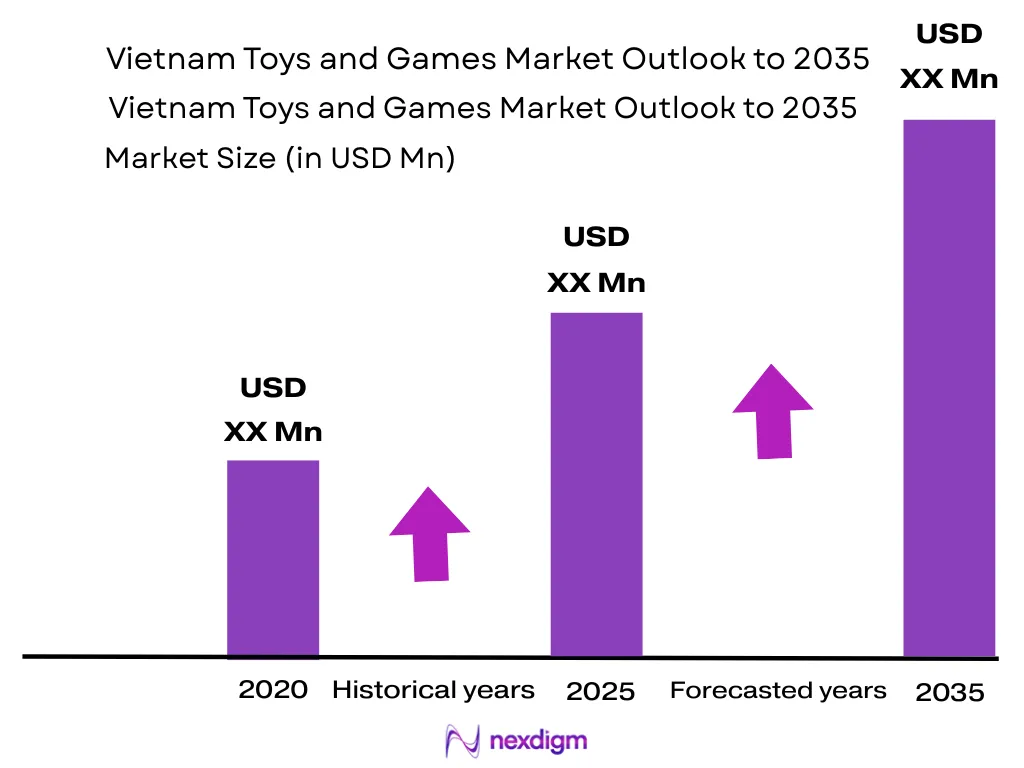
The Vietnam toys and games market is valued at approximately USD ~ million, reflecting robust consumer expenditure on children’s play, licensed merchandise, electronic games, and educational toys underpinned by rising disposable incomes and a large youth base. Historical industry tracking shows that this market has expanded from prior years due to urbanization, rising middle‑class spending, and increased retail penetration through e‑commerce platforms. The significant annual birth cohorts in Vietnam (about 1 million births annually with a population of over 101 million) create a sustained consumer base for both traditional and interactive play products, driving sustained sector appetite across urban centers such as Ho Chi Minh City and Hanoi.
Major urban hubs such as Ho Chi Minh City, Hanoi, and Da Nang dominate the Vietnam toys and games market due to higher household consumption power, concentration of modern retail infrastructure, and strong digital commerce adoption. These cities host major retail chains, specialty toy stores, and regional distribution centres, enabling efficient product availability from global franchises to niche local brands. Additionally, Vietnam’s strategic position in Southeast Asia draws manufacturing ties from multinational toy firms seeking alternatives to China, integrating production and distribution networks that further amplify market activity in these regional hubs.
Market Segmentation
By Product Type
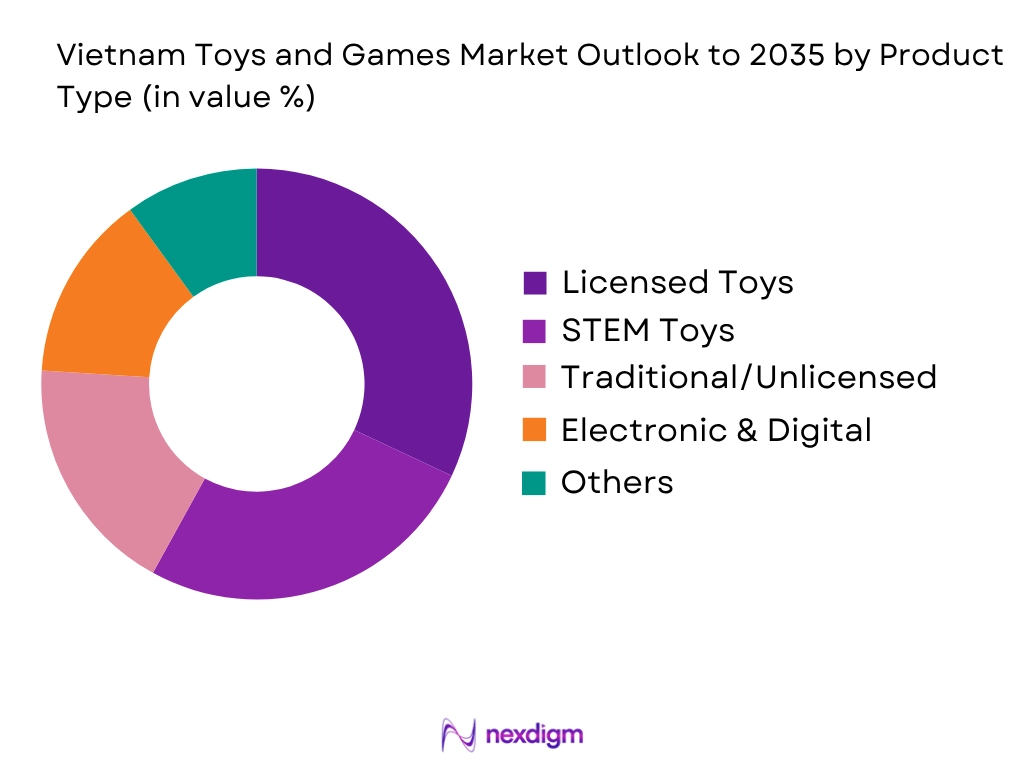
The Vietnam toys and games market, segmented by product type into licensed toys, educational & STEM toys, traditional/unlicensed toys, electronic & digital toys, and plush/soft toys, is currently led by licensed toys. Licensed toys linked to globally recognised franchises benefit from strong brand affinity among children and parents, enhanced by familiarity through media and entertainment channels. These products often command premium pricing and higher perceived quality, which influences purchasing decisions in urban centers with greater disposable income. Educational and STEM toys hold substantial share due to rising parental focus on cognitive development and structured play. The growing penetration of digital platforms also fuels interest in interactive and app‑linked toys, but licensed merchandise remains dominant due to emotional and brand recognition factors.
By Distribution Channel
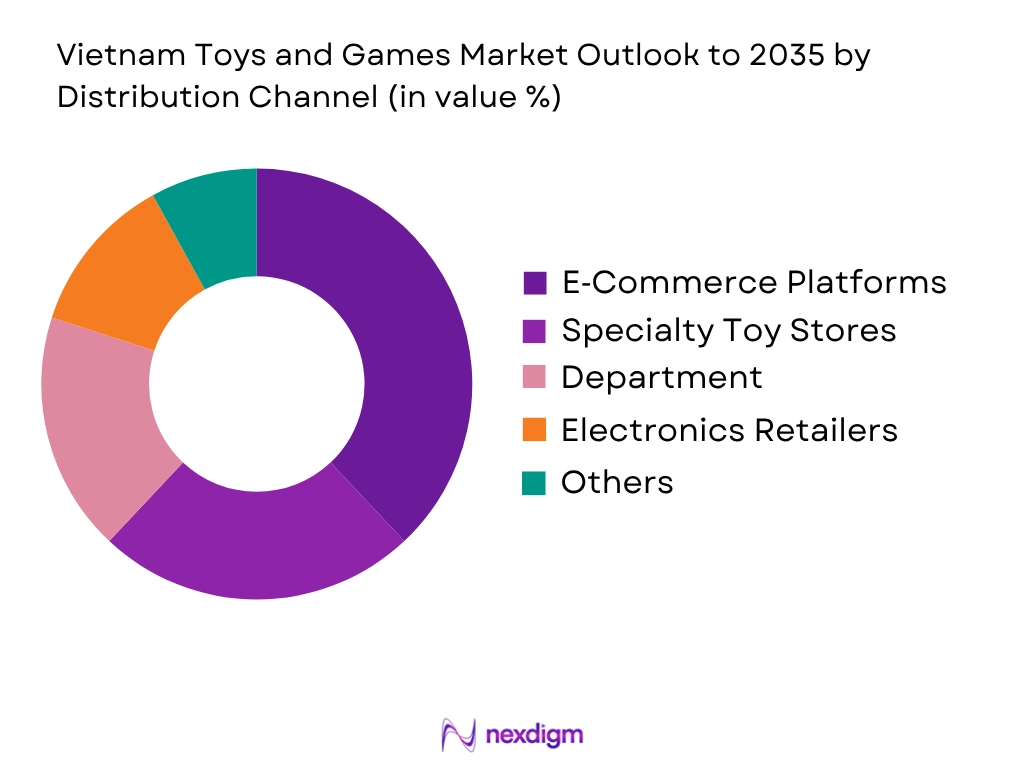
Within distribution channels, e‑commerce platforms such as Shopee, Lazada, Tiki, and Sendo lead the Vietnam toys and games market due to the convenience, broader product ranges, and frequent promotional activities they offer to consumers. The sheer accessibility of online retail — especially post‑pandemic — has enabled buyers across urban and peri‑urban regions to browse diverse product portfolios, compare prices, and access seasonal deals without geographical constraints. Specialty toy stores retain meaningful share as experience‑driven destinations, while department stores and hypermarkets provide captive footfall. Electronics retailers support the sale of digital and app‑linked toy categories. The increasing digitisation of consumer behaviour supports online channels’ continued prominence in reaching tech‑savvy purchasers.
Competitive Landscape
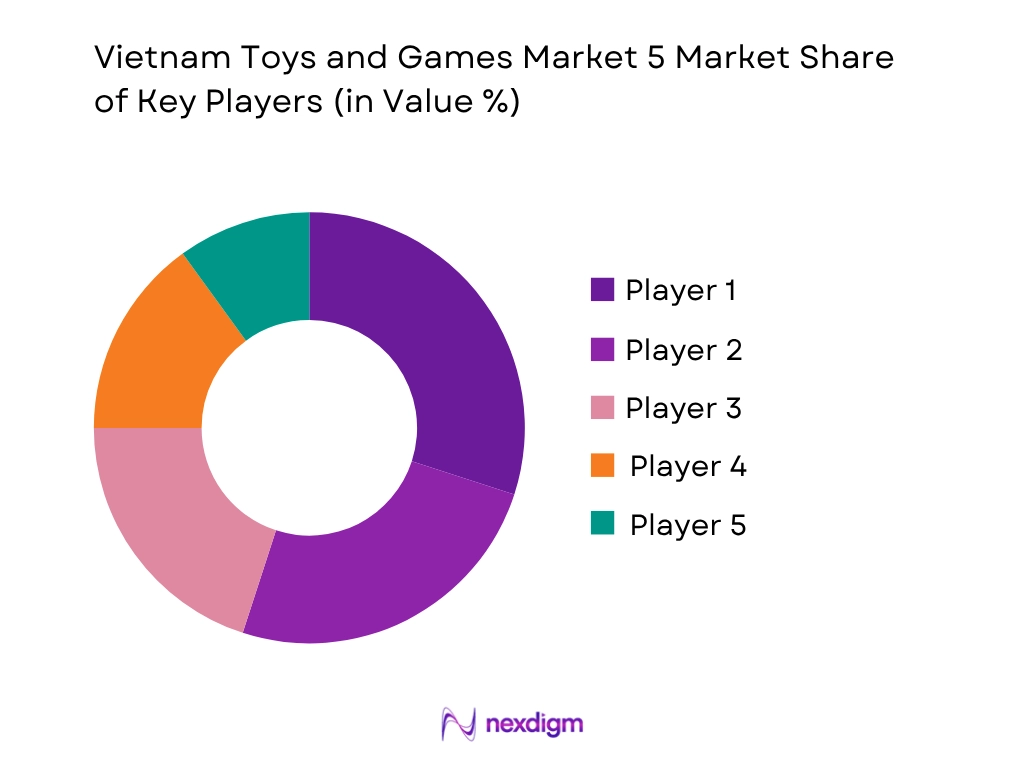
The Vietnam toys and games industry features a mix of global multinationals and strong domestic players that influence product innovation, licensing trends, and distribution reach. This competitive ecosystem reflects both manufacturing capabilities and retail penetration strategies that serve diverse consumer segments.
| Company | Est. Year | Headquarters | Product Portfolio Breadth | Distribution Network | Licensed IP Partners | Manufacturing Footprint | E‑Commerce Presence | Retail Channel Coverage |
| LEGO Vietnam | 1932 (global) | Binh Duong, VN | ~ | ~ | ~ | ~ | ~ | ~ |
| Mattel SEA | 1945 (global) | Hai Phong, VN | ~ | ~ | ~ | ~ | ~ | ~ |
| Hasbro Vietnam | 1923 (global) | VN (Ops Office) | ~ | ~ | ~ | ~ | ~ | ~ |
| Simba Toys VN | 1980s | VN | ~ | ~ | ~ | ~ | ~ | ~ |
| Cotec Plastic Corp | 1990s | VN | ~ | ~ | ~ | ~ | ~ | ~ |
Vietnam Toys and Games Market
Growth Drivers
Rising Consumer Spending Supporting Entertainment Goods
Vietnam’s broad consumer expenditure trajectory demonstrates growing household purchasing power that supports discretionary spending on toys and recreational products. According to official national data compiled by Trading Economics and the General Statistics Office of Vietnam, total consumer spending at current prices reached 6,201,832 billion Vietnamese dong in 2024, up from 5,605,180 billion VND in 2023, representing a significant expansion in aggregate household outlays on goods and services that are not strictly essential. This increased spending capacity is relevant because toys and games fall into the broader category of consumer discretionary purchases, which benefit when overall consumption expands. Strong consumer spending activity coexists with macroeconomic strength, including Vietnam’s GDP of USD 476.39 billion in 2024 and GDP per capita of USD 4,717.3, reflecting greater national output available to support rising domestic consumption levels. Moreover, robust job growth and employment expansion reported by the General Statistics Office in 2024 — with the labor force reaching nearly 53.2 million people and employment rising by over 600,000 workers year‑on‑year — further underpin income availability that fuels retail demand. These macroeconomic underpinnings create a supportive environment for toys and games purchases across economic segments.
Large Youth Population Creating a Stable Base of Demand
Demographic factors in Vietnam strongly support long‑term demand for toys and games because children and youth represent a significant segment of the population. World Bank demographic data indicate that Vietnam’s total population was approximately 100,987,686 in 2024, with roughly 23.61 percent of the population aged under 15 in 2023, meaning that nearly one in four residents are children — the core market for toys and gaming products. This youth demographic coincides with a population growth of 0.6 percent in 2024, sustaining ongoing generation replacement and ensuring a continuing presence of young consumers. Young population segments typically drive family purchase behavior for play, learning, and entertainment products, which directly impacts toys and games demand. Moreover, the country’s macroeconomic environment — characterized by GDP growth of 7.1 percent in 2024, low unemployment of 1.6 percent, and inflation at 3.6 percent — supports consumer confidence and spending among households with children. The confluence of a large youth base, improving standards of living, and relatively stable prices creates fertile conditions for steady consumption of toys and games. These demographic and economic conditions foster predictable and sustained market demand.
Market Challenge
Inflation and Cost Pressures Reducing Discretionary Budget
Despite macroeconomic resilience, inflation remains a structural challenge that influences discretionary spending patterns in Vietnam, including purchases of toys and games. According to the World Bank, consumer price inflation in Vietnam was 3.6 percent in 2024, reflecting upward pressure on the general cost of goods and services. Although this level is moderate, inflation affects household budgets, particularly for non‑essential items such as toys and recreational products, as rising food, housing, and energy costs absorb larger portions of household income. Concurrently, consumer surveys indicate heightened sensitivity toward price increases, with many Vietnamese adults expressing concern about rising costs for essentials, and a notable share indicating reduced discretionary spending on categories such as books, movies, and toys. This behavioral trend reflects how inflationary pressures can suppress demand for leisure goods by redirecting finite spending to necessities. At the same time, macro statistics show inflation continues to have ripple effects across supply chains and retail pricing dynamics, affecting import costs and production inputs. Given that a portion of toys and games inventory in Vietnam is imported or assembled from imported components, price pressures can reduce margins or increase retail prices, potentially dampening consumer purchases. This combination of inflation and shifting consumer budgets is a material challenge for market growth.
Economic Vulnerability to External Demand Fluctuations
Vietnam’s economic performance and export orientation expose the broader consumer market to external demand shifts, which can indirectly impact domestic discretionary spending, including toys and games. Reuters and official data report that Vietnam’s GDP grew by 7.09 percent in 2024, reaching USD 476.3 billion, with exports contributing significantly to this expansion, including electronics, textiles, and agricultural products. However, reliance on global demand means any slowdown in key export markets — such as the United States and European Union — can affect employment and income prospects within Vietnam’s manufacturing and service sectors. When external demand softens, it can slow factory activity and wage growth across export‑linked industries, which in turn may temper household confidence and discretionary purchases like toys and gaming products. Moreover, macro trends such as fluctuations in personal remittances — which accounted for 3.4 percent of GDP in 2024 — can also influence disposable income levels when global economic conditions shift. As Vietnam remains integrated into global value chains, external market volatility poses a structural challenge to consistent consumer spending, particularly in non‑essential arenas, amplifying the need for market players to align product and pricing strategies with economic sensitivities.
Market Opportunities
Rapid Expansion of Digital Retail Platforms
Vietnam’s digital commerce ecosystem presents a significant opportunity for the toys and games market, as digital retail channels enable broader access, reduced distribution friction, and tailored consumer engagement. Recent macro retail data highlight that Vietnamese consumers spent nearly 1.7 trillion VND daily on online shopping across major multi‑category platforms such as Shopee, TikTok Shop, Lazada, and Tiki in the first quarter of the year, with total gross merchandise value reaching 148.6 trillion VND on these channels. This scale of digital consumer activity indicates that e‑commerce platforms have become integral to the purchasing habits of Vietnamese households, including categories traditionally sold through physical toy stores. The volume of products sold — nearly 1.14 billion items across these platforms — demonstrates how critical digital reach is to capturing consumer demand at scale, especially among tech‑native younger parents and caregivers. Furthermore, World Bank data show that 84 percent of Vietnam’s population were internet users in 2024, which reinforces the depth of digital penetration and connectivity across age groups. With high internet access and a thriving online marketplace ecosystem, toy manufacturers and retailers can leverage digital channels to reach consumers beyond urban centres, increase product visibility, and deploy targeted marketing strategies that align with online shopping behaviours and preferences.
Strong Youth Human Capital Supporting Long‑Term Consumption
Vietnam’s demographic profile and human capital indicators signal durable foundation for prolonged consumption of toys and games as children mature and families prioritise learning and play products. Official data indicate that Vietnam’s total population was approximately 100,987,686 in 2024, with a significant portion still in childhood age brackets and a continuous inflow of new young consumers. World Bank indicators also show that life expectancy was around 75 years and internet usage reached 84 percent of the population in 2024, suggesting improving health, connectivity, and potential for digital engagement across all ages, including younger cohorts. The prevalence of internet accessibility contributes to early adoption of digital entertainment and interactive learning tools among children, while rising human capital levels — supported by education and health infrastructure — reflect a society where parents increasingly value educational and developmental attributes in play products. This demographic and macroeconomic setting fosters an environment in which demand for toys that combine learning and play grows with consumer sophistication. As Vietnamese families invest in their children’s cognitive and social development, opportunities emerge for product diversification and segmentation, especially in educational toys, digital‑assisted games, and hybrid learning play formats.
Future Outlook
The Vietnam toys and games market is expected to continue its growth trajectory driven by sustained urbanisation, rising household incomes, expanding retail ecosystems, and evolving consumer preferences toward educational and interactive toys. Increasing integration of licensed products backed by media franchises and trends in digital entertainment will further diversify product portfolios and consumption behaviours. Retail advancements such as social commerce and omnichannel strategies are anticipated to enhance accessibility. Emerging demand for hybrid physical‑digital toys and STEM‑oriented products aligns with broader global trends that emphasise learning through play. Based on credible industry projections, the market is expected to grow at a forecasted CAGR during 2026–2035 that builds upon the mid‑2020s expansion patterns and broader economic drivers shaping retail and discretionary spending in Vietnam.
Major Players
- LEGO Vietnam
- Mattel Southeast Asia (Vietnam operations)
- Hasbro Vietnam
- Simba Toys Vietnam
- Cotec Plastic Corporation
- Dream International Limited
- Canh Dieu Toys
- Viet Tinh Anh Toys
- ToyLand (Phuong Nga)
- TiniToy
- ToyCity (Con Cung)
- FunnyLand (Golden Kids)
- Bandai Namco (distribution partners)
- Spin Master (via distributors)
- Ravensburger (via local retail partners)
Key Target Audience
- Strategic Investments and Venture Capitalist Firms
- Private Equity Funds in Consumer Retail and Toys
- Large Retail Chains Category Heads
- Large E‑Commerce Marketplaces
- Multinational Toy Manufacturers’ Expansion Teams
- Government and Regulatory Bodies
- Major Distributors and Franchise Operators
- Export & Trade Associations
Research Methodology
Step 1: Identification of Key Variables
The initial phase involved mapping ecosystem stakeholders, product taxonomies, retail channels, and distribution dynamics within the Vietnam toys and games market. This step integrated historical data from verified sources and segmented industry variables to ensure model clarity.
Step 2: Market Analysis and Construction
This phase compiled 2020–2024 historical data and analysed revenue flows, distribution adoption rates, and consumption patterns across product categories and channels. Economic and demographic data supported demand validation for play products across age cohorts.
Step 3: Hypothesis Validation and Expert Consultation
Draft hypotheses related to growth imperatives, competitive structures, and retail patterns were validated through consultations with regional toy distributors, category managers, and retail executives active in Vietnam’s toy sector.
Step 4: Research Synthesis and Final Output
The final integration involved consolidating primary insights, secondary industry data, and economic indicators into a validated market view, ensuring comprehensive coverage of value drivers, competitive benchmarking, and strategic perspectives.

- Executive Summary
- Research Methodology (Market Definitions & Taxonomy, Abbreviations, Historical Data Sources & Verification, Market Sizing & Revenue Estimation Approach, Primary Research Framework, Competitive Mapping Approach, Limitations and Assumptions)

- Definition and Scope
- Industry Genesis and Evolution (Market Adoption Curves)
- Youth and Demographic Demand Drivers (Population Age Profiling)
- Supply Chain and Value Chain Complexity (Sourcing to Retail)
- Regulatory Landscape ( Safety Standards, Certification, Import Compliance)

- Growth Drivers (Rising Disposable Income & Urban Consumption Patterns, Youth Population and Birth Demographic Trends, Growth of Online Retail and Digital Penetration, Licensed Merchandise & Franchise Influence, Shift toward Educational & STEAM‑oriented Products)
- Market Challenges (Counterfeit & Unbranded Products Affecting Consumer Trust, Regulatory Compliance & Toy Safety Standards, Competitive Pressure from Digital Entertainment Options)
- Market Opportunities (Expansion of Export Manufacturing and FDI Inflows, Growth in E‑Commerce and Social Commerce Channels, Demand for Sustainable and Eco‑Friendly Toys)
- Trends (Increase of STEM & Learning‑Oriented Play Tools, Hybrid Physical‑Digital Play Experiences, Retail Innovation & Experiential Outlets, Seasonal and Festive Sales Events Dynamics)
- Government Policies Impact (Product Safety Regulations & Import Standards, Incentives for Domestic Manufacturing, Free Trade Agreements Affecting Supply Chains)
- SWOT Analysis
- Porter’s Five Forces Analysis

- By Value (2020-2025)
- By Volume (2020-2025)
- By Average Retail Price & ASP (2020-2025)

- By Product Type (In Value %)
Traditional Toys (Licensed Character Toys)
Non‑Licensed/Unbranded Toys
Educational & STEM Toys
Electronic & Digital Toys
Dolls & Figures - By Distribution Channel (In Value %)
E‑Commerce Platforms
Department & Hypermarkets
Specialty Toy Stores
Consumer Electronics Stores
Mass Merchandisers - By End‑User Age Group (In Value %)
Age 0‑5 Years
Age 6‑10 Years
Age 11‑15 Years
Age 16+ (Adult Games & Hobby) - By Region (In Value %)
Northern Vietnam
Southern Vietnam
Central Vietnam
Major Metros & Urban Zones

- Market Share Analysis (Value & Volume)
- Cross‑Comparison Parameters (Company Overview & Legal Structure, Product Portfolio Diversity, Distribution Network Scale, Retail Footprint & Channel Mix, Licensing & IP Partnerships, Production & Manufacturing Capacity, Online Sales Penetration, Brand Strength & Consumer Loyalty, Import vs Domestic Supply Ratio, Quality & Safety Certifications, Revenue by Product Segment, Marketing & Promotional Reach, R&D & New Product Launch Velocity, Supply Chain Integration, Export Capability & Geographical Presence)
- SWOT Analysis of Major Players
- Retail Pricing & SKU Positioning Analysis
- Detailed Company Profiles
LEGO Vietnam
Mattel Southeast Asia
Hasbro Vietnam
Spin Master Asia
Viet Tinh Anh Toys (Mykingdom)
Cotec Plastic Corporation
Dream International Limited
Simba Toys Vietnam Limited
Canh Dieu Toys
Vina Scholastic Toys
TiniToy
FunnyLand (Golden Kids)
ToyLand (Phuong Nga)
ToyCity (Con Cung)
International Licensing Partners

- Household Spending Patterns on Toys & Recreation
- Urban vs Rural Consumption Differences
- Socio‑demographic Purchasing Power Segmentation
- Retail Adoption Patterns & Price Sensitivity
- Decision‑Making Processes in Toy Purchases

- By Value (2026-2035)
- By Volume (2026-2035)
- By Pricing & Realized Shelf ASPs (2026-2035)


 Request a Sample
 Ask for Customization
 Get a Quote
 Enquire Now