

 Download PDF
Market Overview
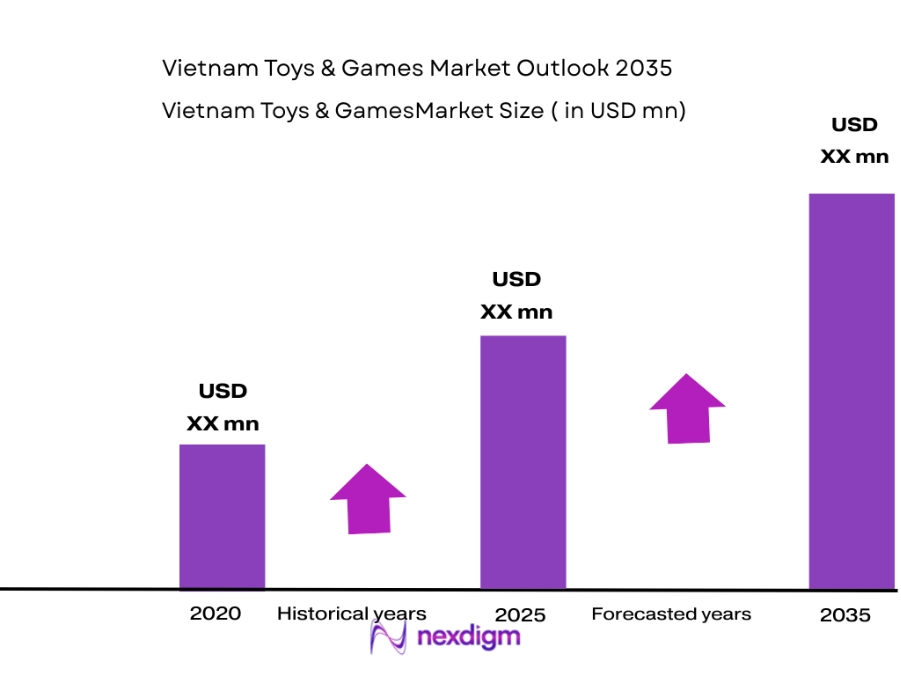
The Vietnam Toys & Games market is valued at USD ~ million in 2025, based on a comprehensive industry study that integrates historical performance and recent consumer demand trends. Growth is driven by a large youth population exceeding ~ million people, rising disposable income among urban households, and expanding online retail channels which have improved accessibility and purchase convenience for toy products nationwide.
Leading urban centres such as Hanoi and Ho Chi Minh City dominate the market due to their concentrated consumer base, higher purchasing power, and extensive retail networks. These cities also attract international toy manufacturers to set up distributors and partnerships because of advanced logistics infrastructure, robust retail ecosystems, and a growing middle class with a higher propensity to spend on premium and educational toys The market is projected to expand at a compound annual growth rate (CAGR) of approximately 10.3% from 2025 to 2035, indicating strong upward momentum based on historical and forecasted trends in consumer spending, product diversification, and digital channel growth.
Market Segmentation
By Product Category
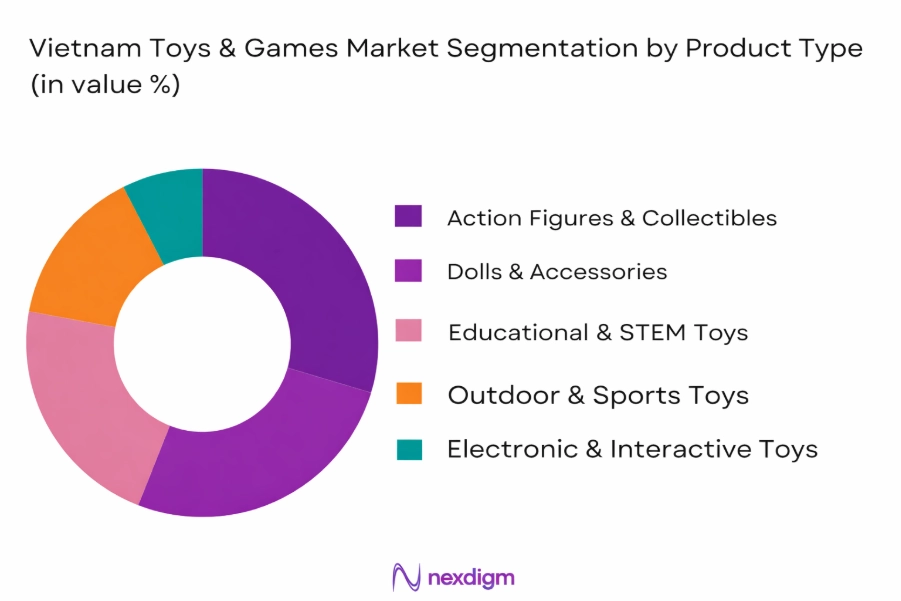
By product category, Building Sets & Construction Toys hold the dominant share of the Vietnam Toys & Games market due to their dual appeal as both entertainment and educational tools. These products, including LEGO and similar construction kits, benefit from strong brand visibility, wide applicability across age groups, and increasing parental preference for toys that support cognitive development. Educational toys also feature prominently, driven by rising awareness about early learning benefits and adoption in both home and school environments, reinforcing the dominance of cognitive development-focused segments in the product mix.
By Distribution Channel
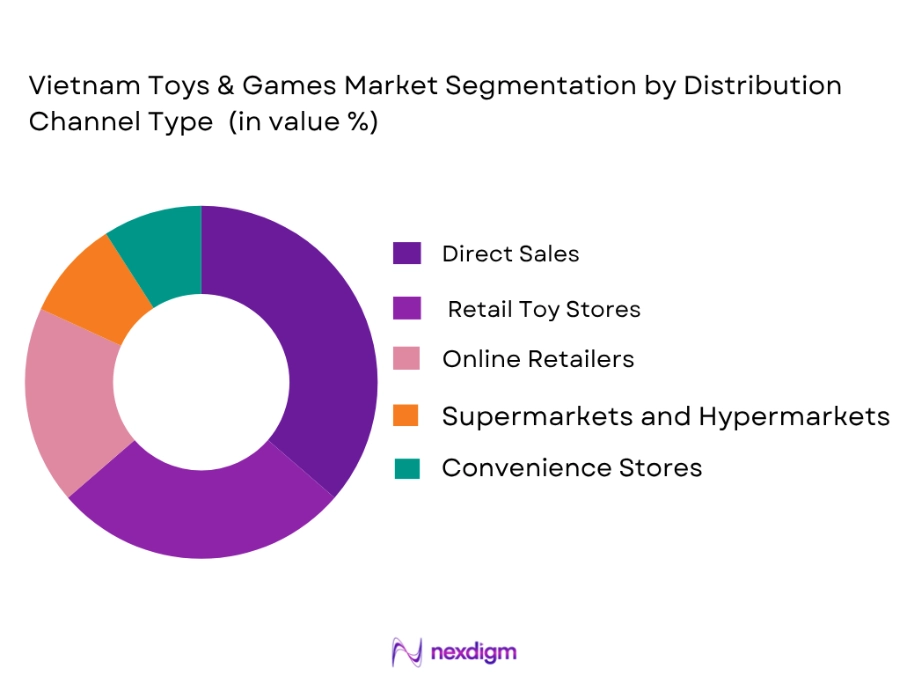
By distribution channels, Online Retail holds the largest share in the toys & games market owing to increasing internet penetration, widespread smartphone usage, and the convenience of e-commerce platforms like Shopee and Lazada. Online channels enable consumers across cities and smaller towns to access a diverse product assortment and competitive pricing, attracting busy parents and tech-savvy shoppers. Specialty toy retail stores maintain strong relevance as well due to curated selections and brand-backed experiences, but online sales continue to outpace traditional channels due to ease of purchase and broader reach.
Competitive Landscape
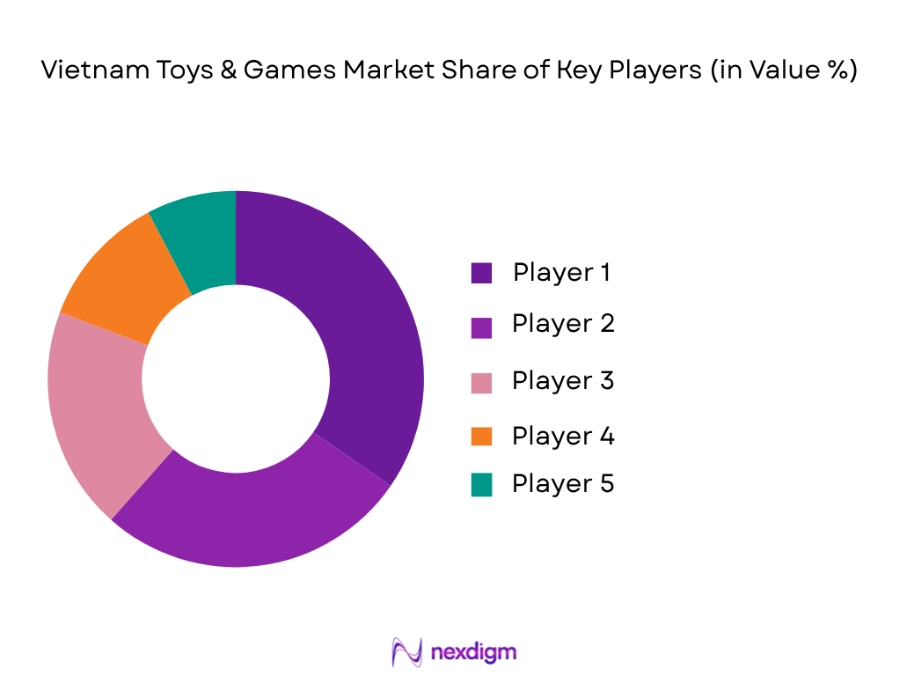
The Vietnam Toys & Games market exhibits moderate concentration with both multinational and local players influencing product availability and innovation. This consolidation reflects international brands leveraging global supply chains while local firms cater to domestic preferences and affordability.
| Company | Establishment Year | Headquarters | Product Range | Distribution Reach | Regional Presence | Brand Licensing | Digital Engagement |
| LEGO Group | 1932 | Billund, Denmark | ~ | ~ | ~ | ~ | ~ |
| Mattel Inc. | 1945 | El Segundo, USA | ~ | ~ | ~ | ~ | ~ |
| Hasbro Inc. | 1923 | Pawtucket, USA | ~ | ~ | ~ | ~ | ~ |
| Simba Dickie Group | 1982 | Germany | ~ | ~ | ~ | ~ | ~ |
| Cotec Plastic Corporation | 1970s | Vietnam | ~ | ~ | ~ | ~ | ~ |
Vietnam Toys & Games Market Analysis
Growth Drivers
Increase in Birth Rates and Young Population
Vietnam’s young population, comprising over 25% of the total population, is a significant driver for the toys and games market. The steady birth rate, combined with urban family structures that prioritize early childhood development, has led to sustained demand for toys targeting infants, toddlers, and children up to 12 years. Parents increasingly view toys as essential tools for skill development, entertainment, and education. This demographic trend is reinforced by rising awareness of developmental benefits of age-appropriate toys, prompting retailers and manufacturers to expand their product offerings to meet diverse needs, from traditional playsets to interactive and educational toys, ensuring consistent market growth and robust consumer engagement.
Rising Disposable Income and Growing Middle-Class Population
Vietnam’s expanding middle-class population has enhanced household purchasing power, enabling increased spending on non-essential items such as toys and games. Rising disposable incomes allow parents to invest in higher-quality, branded, and educational products rather than low-cost alternatives. This economic uplift has also fueled demand for imported toys and international brands, which are often perceived as safer and more innovative. The combination of better income, urbanization, and exposure to global lifestyles motivates families to prioritize child enrichment products. Consequently, domestic and multinational players have increased investments in marketing, distribution, and product innovation, catering to consumers seeking premium, interactive, and educational toy solutions.
Market Challenges
High Competition from Low-Cost and Unbranded Toys
The Vietnam Toys & Games market faces intense competition from inexpensive local and imported products, often unbranded or of questionable quality. These low-cost alternatives appeal to price-sensitive families, particularly in rural and semi-urban areas, limiting market share for branded manufacturers. The abundance of such products also pressures profit margins for organized players who invest in product safety, marketing, and distribution infrastructure. As a result, major brands must differentiate themselves through quality assurance, licensing, and targeted marketing. Navigating this highly competitive environment requires continuous innovation, effective branding, and strong retail relationships to maintain customer loyalty and counteract the appeal of cheaper alternatives flooding the market from regional suppliers and online marketplaces.
Safety and Regulatory Compliance Concerns
Consumer safety and regulatory compliance remain critical challenges for the Vietnam Toys & Games market. Imported and domestic toys must meet strict safety standards, including material quality, chemical composition, and mechanical safety regulations. Non-compliance can result in recalls, reputational damage, and legal penalties, affecting market stability. Rapid product launches and increasing imports complicate regulatory monitoring, making adherence to national and international safety certifications essential. Parents are increasingly cautious, favoring products with clear safety assurances, which pressures manufacturers to maintain rigorous testing and quality control protocols. Failure to meet these expectations can erode trust, reduce sales, and create barriers for smaller or new entrants attempting to establish themselves in the market.
Opportunities
Expansion of E-commerce and Online Retail Channels
The rapid adoption of e-commerce in Vietnam presents a significant opportunity for the toys and games sector. Online platforms such as Shopee, Lazada, and Tiki provide extensive reach to urban and semi-urban consumers, enabling brands to target tech-savvy parents who prefer convenient shopping. E-commerce allows for greater product assortment, competitive pricing, and personalized recommendations, enhancing the consumer experience. Brands can leverage digital marketing, influencer partnerships, and social media campaigns to boost engagement and sales. Additionally, online channels reduce dependence on physical stores, offering scalability and cost efficiency. This growth avenue is particularly vital for niche, educational, or premium toys, which may not have broad shelf space in traditional retail but can reach a wide audience online.
Growing Demand for Educational, STEM, and Eco-friendly Toys
Rising parental awareness of child development and environmental sustainability drives demand for educational, STEM, and eco-friendly toys. Parents are increasingly prioritizing products that promote learning, cognitive skills, and creativity while minimizing environmental impact. STEM-focused kits, eco-friendly materials, and interactive learning toys are gaining popularity, encouraging manufacturers to innovate with safer, sustainable, and engaging product lines. These segments often command premium pricing and foster brand loyalty, presenting revenue growth opportunities. Moreover, schools and early learning centers are adopting educational toys as part of curriculum support, further expanding the market. This shift aligns with global trends toward responsible consumption, positioning Vietnam as a growth hub for sustainable and skill-enhancing toys.
Future Outlook
Over the next decade, the Vietnam Toys & Games market is expected to sustain robust expansion, underpinned by several structural and consumer dynamics. Demand will be principally supported by increased urban consumption, sustained digital retail growth, rising parental emphasis on educational and skill-building toys, and the expansion of licensed and interactive toy segments. E‑commerce growth will continue to reshape the distribution landscape, enabling wider product reach and competitive pricing structures. Furthermore, continued foreign direct investment by major toy manufacturers is anticipated to enhance product diversification and supply chain resilience within the market.
By 2035, the market is forecast to register a strong CAGR of approximately 10.3%, reflecting both consumer-driven and structural growth factors. The ongoing shift towards hybrid toy formats that integrate physical and digital play is also expected to diversify demand and accelerate innovation across product categories.
Major Players
- LEGO Group
- Mattel Inc.
- Hasbro Inc.
- Simba Dickie Group
- Cotec Plastic Corporation
- Viet Tinh Anh Toys
- Canh Dieu Toys
- Dream International Limited
- VTech Vietnam
- Bkids Vietnam
- Funskool Vietnam
- Nickelodeon Licensed Retail Partners
- Spin Master
- Fisher-Price (Mattel Subsidiary)
- Melissa & Doug
Key Target Audience
- Toy Manufacturers and Global Brands
- Retail Chains and E‑commerce Platforms
- Consumer Goods Investors & Holdings
- Private Equity & Venture Capital Firms
- Retail Market Analysts and Consumer Insights Teams
- Government and Regulatory Bodies
- Toy Distributors and Wholesale Networks
- Children’s Retail Store Operators
Research Methodology
Step 1: Identification of Key Variables
The initial phase involved mapping core stakeholders in the Vietnam Toys & Games market by conducting extensive secondary research using verified industry databases, published reports, and trade publications. The objective was to define critical influence factors such as consumer demand drivers, distribution channels, product innovations, and regulatory frameworks.
Step 2: Market Analysis and Construction
This phase compiled historical and current revenue data, assessing market penetration by product category and distribution channel. Analytical models evaluated growth trends, purchase frequency, and value contribution across segments. Rigorous cross‑validation was conducted to ensure the accuracy of revenue estimates and channel performance.
Step 3: Hypothesis Validation and Expert Consultation
Market assumptions were tested through structured interviews with toy distributors, retail executives, and brand managers who operate in the Vietnamese toy ecosystem. These consultations provided first‑hand insights into consumer behavior, pricing dynamics, and product mix trends which enhanced the validity of forecast projections.
Step 4: Research Synthesis and Final Output
The final phase incorporated direct engagement with key industry players to refine product segmentation, distribution reach, and competitive positioning. Data from bottom‑up and top‑down estimation approaches were reconciled to deliver robust market sizing and forward‑looking growth forecasts that inform strategic decision‑making.

- Executive Summary
- Research Methodology (Market Definitions and Assumptions, Abbreviations, Market Sizing Approach, Consolidated Research Approach, Understanding Market Potential Through In-Depth Industry Interviews, Primary Research Approach, Limitations and Future Conclusions)

- Definition and Scope
- Market Dynamics Overview
- Market Genesis
- Major Players and Market Timeline
- Business Cycle and Trends
- Supply Chain and Value Chain Analysis

- Growth Drivers
Increase in Birth Rates and Young Population
Rising Disposable Income and Growing Middle-Class Population
Growing Awareness of Child Development and Educational Toys
Urbanization and Shift to Modern Lifestyles
Influence of Social Media, Parenting Blogs, and Digital Platforms - Market Challenges
High Competition from Low-Cost and Unbranded Toys
Safety and Regulatory Compliance Concerns
Fluctuating Raw Material Costs
Counterfeit and Imitation Products
Limited Availability in Rural Areas - Opportunities
Expansion of E-commerce and Online Retail Channels
Growing Demand for Educational, STEM, and Eco-friendly Toys
Innovations in Interactive, Smart, and Digital Toys
Rising Demand for Premium and Branded Toys
Untapped Potential in Rural and Semi-urban Markets - Key Trends
Shift Toward Educational and STEM Toys
Increased Adoption of Digital and Interactive Toys
Rise in Premium Product Offerings with Advanced Features
Popularity of Subscription Boxes and Toy Rental Services
Focus on Sustainable and Eco-friendly Materials - Government Regulations
- SWOT Analysis
- Porter’s Five Forces

- By Value, 2020–2025
- By Volume, 2020–2025
- By Average Price, 2020–2025

- By Product Type (In Value %)
Action Figures & Collectibles
Dolls & Accessories
Educational & STEM Toys
Outdoor & Sports Toys
Electronic & Interactive Toys - By Age Group (In Value %)
Infants
Toddlers
Children (5–12 years)
Teenagers - By Distribution Channel (In Value %)
Direct Sales
Retail Toy Stores
Online Channels
Supermarkets and Hypermarkets
Convenience Stores - By Region (In Value %)
Northern Vietnam
Central Vietnam
Southern Vietnam
Rest of Vietnam

- Market Share of Major Players by Value/Volume
- Market Share of Major Players by Product Type
- Cross Comparison Parameters (Company Overview, Business Strategies, Recent Developments, Strength, Weakness, Organizational Structure, Revenues, Revenues by Product Type, Number of Touchpoints, Distribution Channels, Number of Dealers and Distributors, Margins, Production Plant, Capacity, Unique Value Offering and Others)
- SWOT Analysis of Major Players
- Pricing Analysis Based on Product Categories for Major Players
- Detailed Profiles of Major Companies
Mattel Inc.
Hasbro Inc.
LEGO Group
Bandai Namco
Spin Master
Vietnam’s Leading Local Brands
VTech Vietnam
Fisher-Price (Mattel)
Funskool Vietnam
Bkids Vietnam
Boon & Baby Innovations
Nickelodeon Licensed Toys

- Market Demand and Utilization
- Purchasing Power and Budget Allocations
- Regulatory and Compliance Requirements
- Needs, Desires, and Pain Point Analysis
- Decision-Making Process

- By Value, 2026–2035
- By Volume, 2026–2035
- By Average Price, 2026–2035


 Request a Sample
 Ask for Customization
 Get a Quote
 Enquire Now