
 Download PDF
 Download PDF
Market Overview
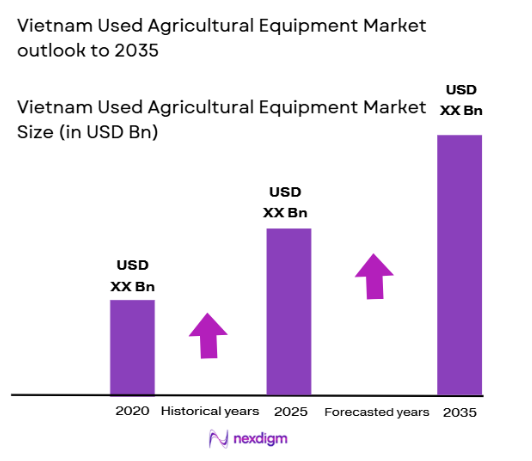
The Vietnam Used Agricultural Equipment Market is valued at USD ~ billion based on a recent historical assessment, with substantial growth attributed to the increasing adoption of mechanized farming practices, rising agricultural production, and the need for cost-effective solutions. This growth is further driven by a significant demand for refurbished equipment due to the high cost of new machinery and the growing preference for second-hand agricultural machinery. Used equipment is increasingly favored for its affordability and immediate availability, making it a key contributor to market expansion in Vietnam.
Vietnam, especially the Mekong Delta and Red River regions, is seeing significant demand for used agricultural equipment, driven by large-scale farming activities and the need for advanced machinery. Urban centers such as Hanoi and Ho Chi Minh City also contribute to this growth due to better access to distribution networks and service centers. These areas exhibit higher adoption rates of mechanized farming, leading to a steady rise in the market for used agricultural machinery, positioning Vietnam as a key player in Southeast Asia.
Market Segmentation
By Product Type:
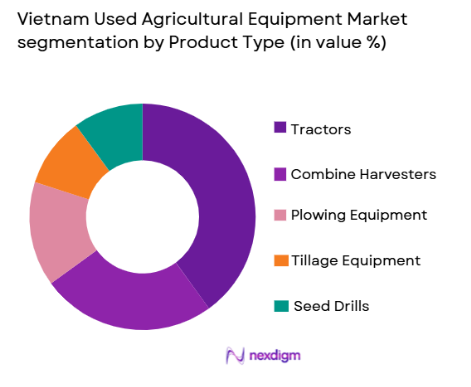
The Vietnam Used Agricultural Equipment Market is segmented by product type into tractors, combine harvesters, plowing equipment, tillage equipment, and seed drills. Recently, tractors have dominated the market share due to their widespread usage in rice farming, which is the backbone of Vietnam’s agricultural sector. The increasing mechanization of rice cultivation, particularly in the Mekong Delta, has driven the demand for second-hand tractors, which are both affordable and easily accessible in rural areas. The availability of refurbished models at lower prices, combined with the reliability of these machines, makes tractors the preferred choice for small to medium-scale farmers.
By End-User:
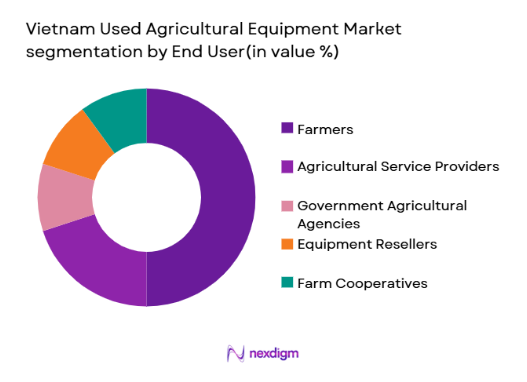
The Vietnam Used Agricultural Equipment Market is segmented by end-user into farmers, agricultural service providers, government agricultural agencies, equipment resellers, and farm cooperatives. Farmers, particularly those in rural and suburban areas, have a dominant market share due to their substantial need for affordable, durable, and readily available machinery. Used agricultural equipment meets the specific needs of small to medium-sized farms, where budget constraints and the immediate availability of machinery are key considerations. As farmers look to enhance productivity and reduce operational costs, second-hand agricultural equipment offers the perfect solution.
Competitive Landscape
The competitive landscape of the Vietnam Used Agricultural Equipment Market is characterized by a blend of domestic and international players. Major global manufacturers of agricultural machinery play a significant role in the market, particularly in providing high-quality used machinery. Additionally, local dealerships and resellers contribute to market consolidation, offering refurbished equipment. The market is highly fragmented, with both large equipment manufacturers and smaller resellers competing for market share. This fragmented structure enables a competitive environment, offering various pricing options and equipment models, catering to both large-scale and small-scale farmers.
| Company Name | Establishment Year | Headquarters | Technology Focus | Market Reach | Key Products | Revenue (USD Billion) | Additional Parameter |
| John Deere | 1837 | USA | ~ | ~ | ~ | ~ | ~ |
| AGCO Corporation | 1990 | USA | ~ | ~ | ~ | ~ | ~ |
| Kubota Corporation | 1890 | Japan | ~ | ~ | ~ | ~ | ~ |
| New Holland | 1895 | Netherlands | ~ | ~ | ~ | ~ | ~ |
| Mahindra & Mahindra | 1945 | India | ~ | ~ | ~ | ~ | ~ |
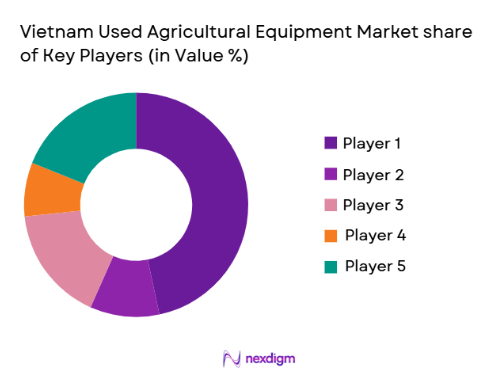
Vietnam Used Agricultural Equipment Market Analysis
Growth Drivers
Government Support for Agricultural Mechanization:
The Vietnamese government has placed significant emphasis on mechanizing agriculture to increase productivity and reduce labor costs. Policies and initiatives aimed at promoting the adoption of advanced machinery, including used agricultural equipment, have played a crucial role in driving market growth. Government subsidies, financial assistance, and favorable import duties for used equipment have made it more accessible to small and medium-scale farmers. This has led to an increased demand for refurbished machinery, particularly in rural and underserved areas. The government’s strategic focus on modernizing the agricultural sector through mechanization and supporting smallholder farmers with affordable equipment options ensures long-term growth for the used agricultural equipment market.
Rising Cost of New Agricultural Equipment:
The rising cost of new agricultural machinery has been a significant driver for the growth of the used agricultural equipment market in Vietnam. New equipment is often beyond the budget of small to medium-sized farmers who require cost-effective alternatives. The high upfront investment and financing challenges for new machinery push farmers toward the more affordable used equipment options, which offer reliable performance at a fraction of the cost. The demand for second-hand machinery is further compounded by the fact that used equipment can be readily available, allowing farmers to upgrade their machinery without facing the prohibitive costs associated with new purchases.
Market Challenges
Quality Concerns with Used Equipment:
One of the key challenges facing the Vietnam Used Agricultural Equipment Market is the quality concerns surrounding second-hand machinery. Used equipment often comes with an uncertain history regarding maintenance, repair, and operational reliability, which can pose risks for farmers. Even though refurbished equipment may offer an affordable alternative, the lack of transparency in the condition of the equipment can affect its performance and longevity. Farmers may face unexpected downtime or repair costs, making them hesitant to invest in second-hand equipment. Ensuring the reliability and quality of used agricultural equipment remains a critical challenge for the market, requiring robust inspection and certification processes.
Limited Financing Options for Small Farmers:
While used agricultural equipment presents a cost-effective option, limited financing options for small farmers continue to be a significant challenge. Most farmers in rural Vietnam do not have easy access to credit or financing to purchase used machinery. As a result, they rely on personal savings or informal lending systems, which can limit their purchasing power and access to quality equipment. The lack of formal financing mechanisms tailored to the needs of small-scale farmers hinders the growth of the used agricultural equipment market, preventing many from upgrading their machinery and further modernizing their farming practices.
Opportunities
Expansion of E-Commerce Platforms for Agricultural Equipment:
The growing adoption of e-commerce platforms presents a major opportunity for the Vietnam Used Agricultural Equipment Market. With the increasing penetration of the internet and mobile devices in rural areas, more farmers are turning to online platforms to purchase agricultural machinery, including used equipment. This shift opens up new channels for equipment resellers and dealers, allowing them to reach a broader customer base beyond traditional brick-and-mortar dealerships. E-commerce platforms provide farmers with greater access to a variety of used equipment, along with the convenience of online comparison and secure payment methods. This trend is expected to drive market growth by providing farmers with more affordable and accessible machinery options.
Growth in Precision Agriculture Solutions:
The growing demand for precision agriculture solutions offers a significant opportunity for the Vietnam Used Agricultural Equipment Market. Precision farming involves using advanced technologies like GPS, sensors, and data analytics to optimize farming operations and improve yields. As more farmers in Vietnam look to adopt precision farming techniques, the demand for used agricultural equipment equipped with precision technologies is expected to rise. The affordability of used equipment with integrated technology offers a cost-effective way for farmers to access these advanced tools, providing an opportunity for market players to offer refurbished machinery with precision farming capabilities.
Future Outlook
The Vietnam Used Agricultural Equipment Market is expected to continue its upward trajectory over the next five years, with an increasing focus on mechanization and technological adoption in the agricultural sector. Technological advancements in precision agriculture and the rising demand for cost-effective solutions are likely to drive the market forward. Government support for mechanization and the availability of refurbished equipment will also contribute to market growth. Furthermore, the rise of e-commerce platforms and enhanced access to financing for farmers are expected to play a significant role in expanding market reach, offering increased opportunities for both equipment resellers and farmers.
Major Players
- John Deere
- AGCO Corporation
- Kubota Corporation
- New Holland
- Mahindra & Mahindra
- Case IH
- Yanmar
- CLAAS Group
- Tafe Motors and Tractors
- Zoomlion
- SDF Group
- Tractors and Farm Equipment Limited
- VST Tillers Tractors
- Escorts Limited
- Landini Tractors
Key Target Audience
- Investments and venture capitalist firms
- Government and regulatory bodies
- Agricultural machinery resellers
- Farm cooperatives
- Agricultural technology companies
- Large-scale farming enterprises
- Equipment financing institutions
- Agricultural exporters
Research Methodology
Step 1: Identification of Key Variables
Understanding market drivers, challenges, and segmentation axes.
Step 2: Market Analysis and Construction
Compiling and analyzing data from primary and secondary sources.
Step 3: Hypothesis Validation and Expert Consultation
Consulting with industry experts to validate hypotheses and insights.
Step 4: Research Synthesis and Final Output
Synthesizing the data into a comprehensive market report.

- Executive Summary
- Research Methodology(Definitions, Scope, Industry Assumptions, Market Sizing Approach, Primary & Secondary Research Framework, Data Collection & Verification Protocol, Analytic Models & Forecast Methodology, Limitations & Research Validity Checks)

- Market Definition and Scope
- Value Chain & Stakeholder Ecosystem
- Regulatory / Certification Landscape
- Sector Dynamics Affecting Demand
- Strategic Initiatives & Infrastructure Growth

- Growth Drivers
Rising Demand for Cost-Effective Equipment
Government Support for Agricultural Mechanization
Technological Advancements in Used Agricultural Equipment
Increasing Agricultural Exports
Adoption of Sustainable Farming Practices - Market Challenges
High Maintenance Costs
Limited Access to Financing for Small Farmers
Quality Assurance Issues in Used Equipment
Lack of Skilled Workforce for Equipment Operation
Regulatory Barriers to Importing Equipment - Market Opportunities
Growth in Precision Agriculture Solutions
Expansion of E-Commerce Platforms for Equipment Sales
Strategic Partnerships with Equipment Manufacturers - Trends
Shift Towards Eco-Friendly and Energy-Efficient Equipment
Increased Automation in Agricultural Equipment
Emerging Market for Refurbished Agricultural Machines - Government Regulations & Defense Policy
Regulations on Agricultural Equipment Import and Export
Subsidies for Mechanization in Agriculture
Land Use and Ownership Laws Affecting Equipment Adoption - SWOT Analysis
- Stakeholder and Ecosystem Analysis
- Porter’s Five Forces Analysis
- Competition Intensity and Ecosystem Mapping

- By Market Value, 2020-2025
- By Installed Units, 2020-2025
- By Average System Price, 2020-2025
- By System Complexity Tier, 2020-2025

- By System Type (In Value%)
Tractors
Combine Harvesters
Plowing Equipment
Tillage Equipment
Seed Drills - By Platform Type (In Value%)
Land-Based Equipment
Trailer-Mounted Equipment
Self-Propelled Equipment
Portable Equipment
Integrated Systems - By Fitment Type (In Value%)
Manual Fitment
Automated Fitment
Semi-Automated Fitment
Custom Fitment
Pre-Installed Fitment - By EndUser Segment (In Value%)
Farmers
Agricultural Service Providers
Government Agricultural Agencies
Equipment Resellers
Farm Cooperatives - By Procurement Channel (In Value%)
Direct Purchase
Dealerships
Online Platforms
Government Procurement
Third-Party Distributors - By Material / Technology (In Value%)
Steel
Composite Materials
Hydraulics
Electronic Components

- Market structure and competitive positioning
- Market share snapshot of major players
- CrossComparison Parameters (System Type, Platform Type, Procurement Channel, EndUser Segment, Fitment Type, Market Share, Growth Rate, Pricing, Technological Integration, Distribution Reach)
- SWOT Analysis of Key Players
- Pricing & Procurement Analysis
- Key Players
John Deere
CNH Industrial
AGCO Corporation
Kubota Corporation
Mahindra & Mahindra
SDF Group
Yanmar
Claas Group
New Holland
Case IH
Tractors and Farm Equipment Limited
Zoomlion
Sichuan Chengdu Agricultural Machinery
Tafe Motors and Tractors
VST Tillers Tractors

- Farmers’ Growing Focus on Cost Efficiency
- Agricultural Service Providers Adopting Modernized Equipment
- Government Agencies Investing in Mechanization
- Equipment Resellers Seeking to Improve Product Offerings

- Forecast Market Value, 2026-2035
- Forecast Installed Units, 2026-2035
- Price Forecast by System Tier, 2026-2035
- Future Demand by Platform, 2026-2035


 Request a Sample
 Ask for Customization
 Get a Quote
 Enquire Now