

 Download PDF
 Download PDF
Market Overview
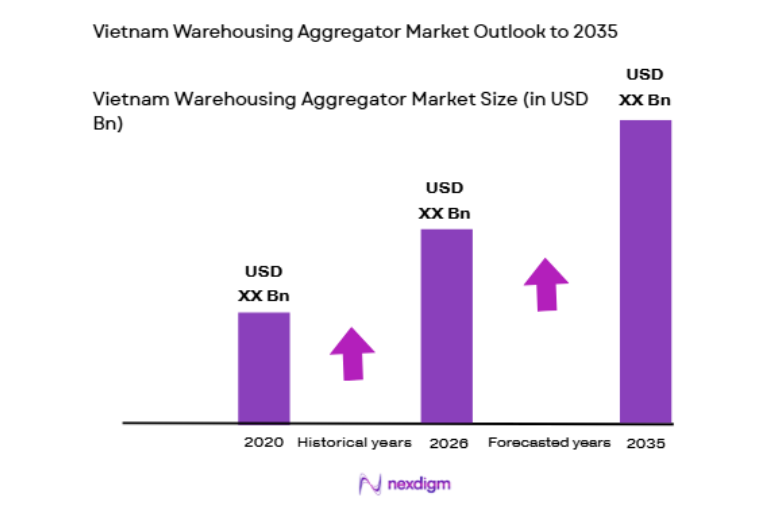
The Vietnam warehousing aggregator market is projected to reach approximately USD ~ billion, driven by the robust growth of e-commerce, logistics, and manufacturing sectors. Increased demand for third-party logistics services, coupled with the country’s ongoing infrastructure development, has further fueled the market. The expansion of warehousing services is vital for businesses seeking efficient inventory management and faster delivery, which is essential to remain competitive in today’s fast-paced retail and manufacturing industries.
Dominant cities such as Ho Chi Minh City, Hanoi, and Hai Phong play pivotal roles in the warehousing market. Ho Chi Minh City, being the economic hub of Vietnam, has a strong presence of distribution centers, especially for consumer goods. Hanoi, with its proximity to industrial zones, sees significant demand for warehousing services, while Hai Phong’s port facilities make it a major player for logistics and storage. These cities are central to the market’s growth due to their developed transportation infrastructure and proximity to key industries.
Market Segmentation
By Product Type
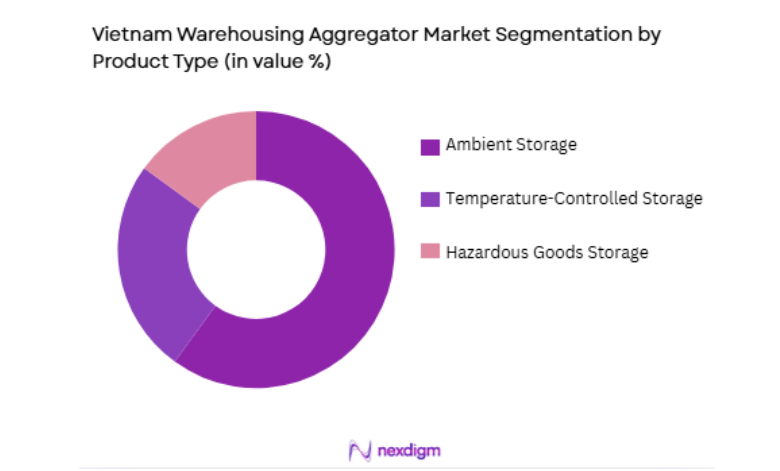
The Vietnam warehousing aggregator market is segmented by product type into ambient storage, temperature-controlled storage, and hazardous goods storage. Recently, ambient storage has become the dominant sub-segment due to the growing demand for retail products, especially as e-commerce continues to flourish. Ambient storage is favored for consumer goods, electronics, and textiles, which are often stored at room temperature and do not require specialized storage conditions. The development of modern logistics parks and the demand for quick order fulfillment have made ambient storage the preferred choice for businesses in the country.
By Warehouse Size
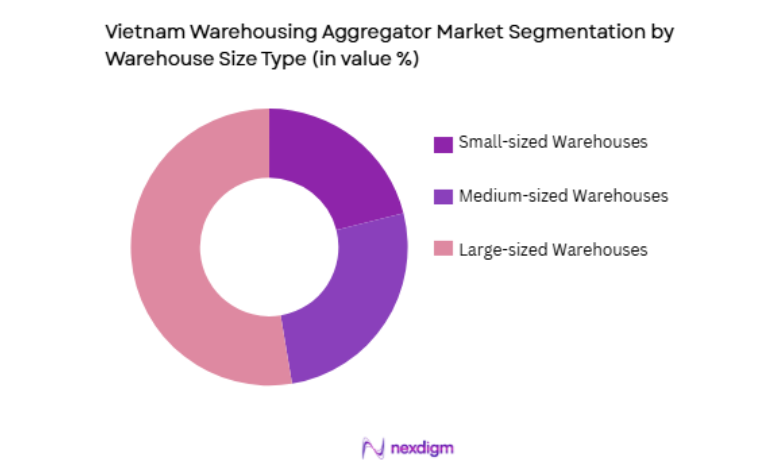
The Vietnam warehousing aggregator market is segmented by warehouse size into small, medium, and large-sized warehouses. Recently, large-sized warehouses have dominated the market due to the growing demand for large-scale storage to accommodate the increasing volume of goods in sectors such as e-commerce and manufacturing. The rise of industrial parks and logistics hubs, particularly in Ho Chi Minh City and Hai Phong, has led to an increase in large warehouse facilities that offer extensive storage and logistics capabilities. These large warehouses provide economies of scale and can handle diverse inventories, driving their dominance.
Competitive Landscape
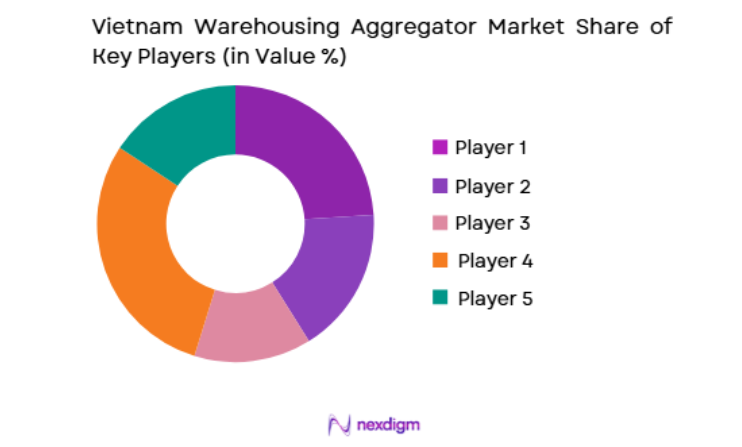
The competitive landscape of the Vietnam warehousing aggregator market is evolving with both local and international players expanding their footprint. Major warehousing companies are increasing their market share by leveraging technology to improve efficiency in operations, such as implementing robotics, IoT for inventory management, and advanced automation. Consolidation within the market is also occurring as key players seek to offer integrated logistics solutions. The focus on providing faster, more cost-effective services in key logistics hubs is intensifying competition.
| Company Name | Establishment Year | Headquarters | Technology Focus | Market Reach | Key Products | Revenue (USD) | Additional Parameter |
| Tuan Anh Logistics | 1999 | Ho Chi Minh | ~ | ~ | ~ | ~ | ~ |
| Vietnam Logistics Co. | 1997 | Hanoi | ~ | ~ | ~ | ~ | ~ |
| Gemadept Logistics | 1988 | Ho Chi Minh | ~ | ~ | ~ | ~ | ~ |
| Sai Gon Freight | 2000 | Ho Chi Minh | ~ | ~ | ~ | ~ | ~ |
| Vietnam Freight Hub | 2010 | Hanoi | ~ | ~ | ~ | ~ | ~ |
Vietnam Warehousing Aggregator Market Analysis
Growth Drivers
Rise of E-commerce in Vietnam
The rapid growth of e-commerce in Vietnam has significantly driven the demand for warehousing solutions. With major platforms such as Shopee and Lazada expanding their market reach, the need for faster delivery and efficient inventory management has become critical. The Vietnamese e-commerce market is expected to continue growing, fueling the demand for warehousing services that can accommodate diverse inventory needs. This trend is especially evident in Ho Chi Minh City, where e-commerce and logistics hubs are being developed to cater to the rising consumer demand. Furthermore, businesses in the e-commerce sector increasingly rely on third-party logistics providers for integrated warehousing solutions that enable them to manage inventory efficiently and fulfill orders in a timely manner. The e-commerce boom is not only increasing the need for traditional warehousing but also pushing for smart, automated warehousing solutions that enhance operational efficiency and order accuracy.
Government Initiatives and Infrastructure Development
The Vietnamese government’s commitment to infrastructure development, particularly in logistics and transportation, is a key driver for the warehousing aggregator market. Under the National Logistics Development Strategy, Vietnam is focusing on building and expanding its logistics network, including ports, highways, and warehousing facilities. The development of logistics parks and industrial zones, especially in Ho Chi Minh City, Hanoi, and Hai Phong, is fostering the growth of warehousing services. These infrastructure projects are helping create a more efficient and cost-effective logistics network that benefits warehousing aggregators. Additionally, the government’s push towards digitalization and modern logistics practices provides a favorable environment for technological innovations in the warehousing sector. As a result, warehousing providers are investing in automation, robotics, and IoT to stay competitive and meet the growing demands of their clients.
Market Challenges
High Real Estate Costs in Key Cities
One of the major challenges facing the Vietnam warehousing aggregator market is the rising cost of real estate, particularly in key logistics hubs like Ho Chi Minh City and Hanoi. The demand for warehouse space in these cities is outpacing supply, leading to higher rental prices for warehousing facilities. As businesses seek to scale their operations and increase inventory capacity, the increasing costs of securing warehouse space are putting pressure on warehousing providers. Additionally, limited availability of land in prime areas near ports and transportation hubs restricts the expansion of large warehouses, making it more difficult for aggregators to meet the rising demand. To remain competitive, companies must explore alternative warehouse locations, optimize their existing space, or adopt technology-driven solutions to maximize storage efficiency.
Technological Integration and Automation Costs
While technological advancements such as IoT, automation, and robotics present significant opportunities for the warehousing aggregator market, they also pose challenges. The high cost of implementing these technologies, especially for small to medium-sized operators, can be a significant barrier to entry. Additionally, integrating new technologies into existing warehousing infrastructure requires substantial capital investment and time. Many warehousing providers face challenges in adopting these technologies due to the complexity of system integration and the lack of skilled labor to operate and maintain advanced systems. For companies looking to stay ahead in the market, the high upfront costs and operational challenges associated with adopting cutting-edge technology are important obstacles that need to be addressed to maintain long-term competitiveness.
Opportunities
Adoption of Smart Warehousing Solutions
One of the key opportunities in the Vietnam warehousing aggregator market lies in the adoption of smart warehousing solutions. As businesses increasingly demand faster and more accurate inventory management, the need for automation and data-driven warehousing solutions is growing. Technologies such as AI, robotics, and IoT-enabled devices are transforming the way warehouses operate, allowing for more efficient space utilization, real-time inventory tracking, and automated order fulfillment. The integration of cloud-based platforms is also enabling businesses to manage their supply chains more effectively, providing them with real-time insights into inventory levels, order statuses, and shipments. Warehousing aggregators that invest in these advanced technologies will be well-positioned to meet the growing demand for faster delivery times and more efficient operations in the e-commerce and manufacturing sectors.
Expansion of Sustainable Warehousing Practices
As sustainability becomes a growing concern for businesses and consumers, there is an increasing demand for green and energy-efficient warehousing solutions in Vietnam. Companies are looking for ways to reduce their carbon footprint, and adopting eco-friendly practices in warehousing is an effective solution. This includes the use of energy-efficient lighting, solar-powered facilities, and sustainable packaging materials. Additionally, warehouses can reduce their environmental impact by implementing waste-reduction strategies and optimizing their supply chains to minimize transportation emissions. The growing focus on sustainability provides warehousing aggregators with an opportunity to differentiate themselves by offering green solutions that appeal to environmentally conscious customers. Government policies promoting green building and sustainable logistics practices further support this trend, creating a favorable environment for the growth of eco-friendly warehousing services.
Future Outlook
The future outlook for the Vietnam warehousing aggregator market is optimistic, with continued growth driven by the expansion of e-commerce, infrastructure development, and the adoption of technological innovations. Over the next five years, the market is expected to experience increasing demand for automated and smart warehousing solutions, particularly in logistics hubs like Ho Chi Minh City and Hanoi. Government initiatives aimed at improving the country’s logistics infrastructure will further fuel the growth of the warehousing sector, creating opportunities for companies to expand their services and adopt more sustainable practices.
Major Players
- Tuan Anh Logistics
- Vietnam Logistics Co.
- Gemadept Logistics
- Sai Gon Freight
- Vietnam Freight Hub
- Vinafreight Logistics
- Transimex Logistics
- SHB Logistics
- IndoTrans Logistics
- IDI Logistics
- Long Hau Logistics
- Vietrans Logistics
- TCE Logistics
- KWE Vietnam
- VinaGroup Logistics
Key Target Audience
- Investments and venture capitalist firms
- Government and regulatory bodies
- E-commerce companies
- Logistics service providers
- Retailers and wholesalers
- Manufacturing companies
- Industrial parks and real estate developers
- Freight forwarding companies
Research Methodology
Step 1: Identification of Key Variables
This step involves identifying key market drivers such as e-commerce growth, government infrastructure initiatives, and technological adoption in warehousing.
Step 2: Market Analysis and Construction
This step focuses on analyzing market trends, evaluating market segments, and constructing a model based on data from credible sources, including industry reports and expert consultations.
Step 3: Hypothesis Validation and Expert Consultation
Industry experts and stakeholders are consulted to validate the research hypotheses, ensuring the findings align with current market conditions and future trends.
Step 4: Research Synthesis and Final Output
The final report is synthesized to provide a comprehensive analysis, integrating all collected data into a structured and actionable format.

- Executive Summary
- Research Methodology (Definitions, Scope, Industry Assumptions, Market Sizing Approach, Primary & Secondary Research Framework, Data Collection & Verification Protocol, Analytic Models & Forecast Methodology, Limitations & Research Validity Checks)

- Market Definition and Scope
- Value Chain & Stakeholder Ecosystem
- Regulatory / Certification Landscape
- Sector Dynamics Affecting Demand

- Growth Drivers
Increase in E-commerce Growth
Rising Demand for Warehouse Automation
Government Initiatives to Improve Logistics Infrastructure - Market Challenges
High Initial Capital Expenditure
Technological Integration Barriers
Labor Shortage and Skills Gap - Market Opportunities
Growth in Cross-border Trade
Demand for Real-time Inventory Management Solutions
Expansion of Warehouse Automation Solutions - Trends
Integration of Artificial Intelligence in Warehouse Management
Use of Robotics and Automated Vehicles
Adoption of Energy-efficient Technologies - Government regulations
- SWOT analysis
- Porters 5 forces

- By Market Value, 2020-2025
- By Installed Units, 2020-2025
- By Average System Price, 2020-2025
- By System Complexity Tier, 2020-2025

- By System Type (In Value%)
Inventory Management Systems
Order Fulfillment Systems
Warehouse Management Systems
Automated Storage & Retrieval Systems
Warehouse Control Systems - By Platform Type (In Value%)
Cloud-based Platforms
On-premise Platforms
Hybrid Platforms
Mobile Platforms
Integrated Platforms - By Fitment Type (In Value%)
Standalone Solutions
Modular Solutions
Cloud-based Solutions
Hybrid Solutions
Custom Solutions - By EndUser Segment (In Value%)
E-commerce Retailers
Third-party Logistics Providers
Manufacturers
Automotive Industry
Food & Beverage Industry - By Procurement Channel (In Value%)
Direct Procurement
Third-party Procurement
Online Procurement

- Market Share Analysis
- Cross Comparison Parameters (System Type, Platform Type, Procurement Channel, End User Segment, Fitment Type, Technological Integration, Supply Chain Efficiency, Service Level, Scalability, Regional Penetration)
- SWOT Analysis of Key Competitors
- Pricing & Procurement Analysis
- Key Players
Viettel Post
Giao Hang Nhanh
TAN Hiep Phat Group
Saigon Newport Corporation
DHL Supply Chain
Kuehne + Nagel
Agility Logistics
Siemens Logistics
Dematic
Honeywell Intelligrated
Manhattan Associates
XPO Logistics
JDA Software
DB Schenker
FedEx Logistics

- E-commerce Companies Needing Efficient Fulfillment Solutions
- Logistics Providers Looking for Cost-effective Automation
- Manufacturers Adopting Advanced Warehouse Solutions
- Food & Beverage Industry Focused on Temperature-controlled Storage

- Forecast Market Value, 2026-2035
- Forecast Installed Units, 2026-2035
- Price Forecast by System Tier, 2026-2035
- Future Demand by Platform, 2026-2035


 Request a Sample
 Ask for Customization
 Get a Quote
 Enquire Now