

 Download PDF
 Download PDF
Market Overview
Vietnam’s wealth management market reflects assets managed for affluent and high-net-worth individuals through banks, securities firms, and private advisory platforms. Based on recent historical assessments by global wealth studies and central bank disclosures, professionally managed personal financial assets exceed USD ~ billion, driven by expanding private wealth pools, capital market participation, and formalization of investment portfolios away from cash and property into structured financial instruments and advisory-led allocations.
Dominance within the wealth management landscape is concentrated in Ho Chi Minh City and Hanoi, where financial institutions, brokerage networks, and private banking services are densest. These cities host most securities trading accounts, investment advisory offices, and high-income households linked to corporate ownership, export industries, and technology entrepreneurship. Urbanization, financial literacy access, and proximity to capital markets infrastructure reinforce their leadership in discretionary portfolio management and advisory-led wealth preservation strategies.
Market Segmentation
By Client Type
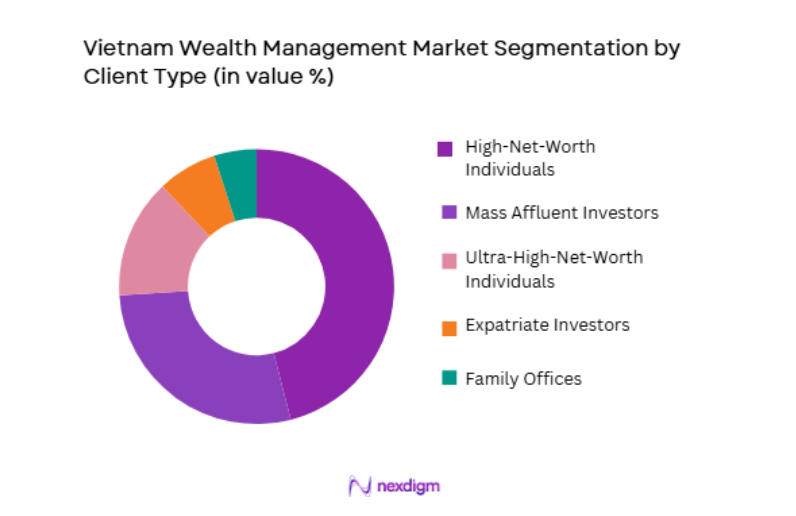
Vietnam Wealth Management market is segmented by client type into high-net-worth individuals, mass affluent investors, ultra-high-net-worth individuals, expatriate investors, and family offices. Recently, high-net-worth individuals have a dominant market share due to factors such as rising entrepreneurial wealth, equity market participation, and demand for structured investment advisory services. This segment represents the largest pool transitioning from self-directed property holdings into diversified financial portfolios managed through banks and securities firms. Expanding domestic capital markets and private banking services increasingly target this group with discretionary mandates, portfolio construction, and succession planning.
By Product Type
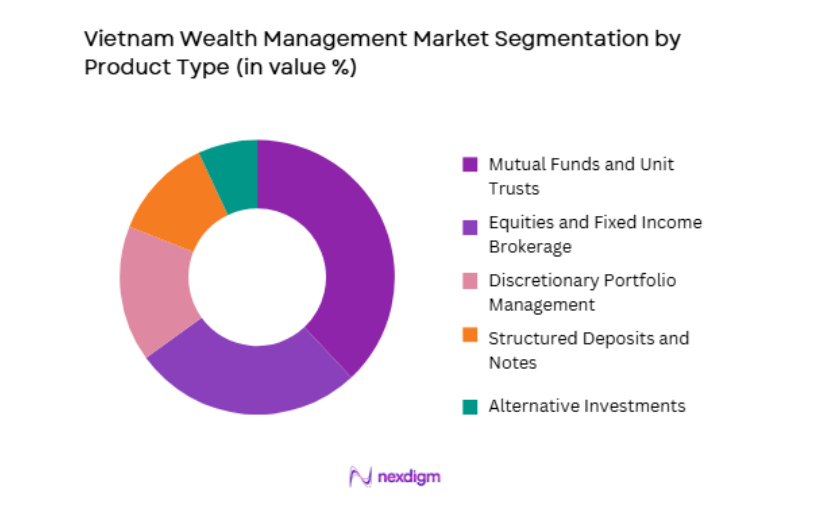
Vietnam Wealth Management market is segmented by product type into discretionary portfolio management, mutual funds and unit trusts, structured deposits and notes, equities and fixed income brokerage, and alternative investments. Recently, mutual funds and unit trusts have a dominant market share due to factors such as regulatory support for collective investment schemes, accessibility through banking channels, and growing investor preference for diversified professionally managed vehicles. Domestic asset management companies distribute funds via commercial banks and securities platforms, enabling scale across emerging affluent investors transitioning from direct stock trading.
Competitive Landscape
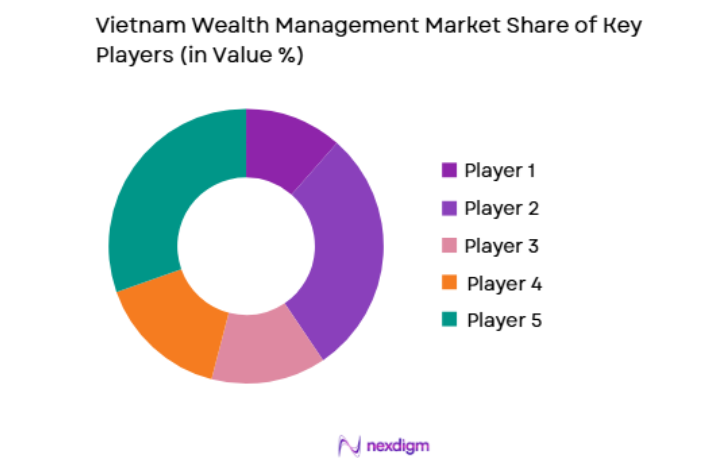
Vietnam’s wealth management sector is moderately concentrated around domestic commercial banks, securities companies, and asset managers affiliated with financial conglomerates. Leading institutions leverage distribution through banking networks and brokerage platforms, while international banks target ultra-wealth segments with cross-border advisory. Consolidation is visible through bank-owned securities firms and integrated asset management subsidiaries, creating universal financial platforms combining brokerage, fund distribution, and discretionary portfolio services across major urban wealth centers.
| Company Name | Establishment Year | Headquarters | Technology Focus | Market Reach | Key Products | Revenue | Client Segment Focus |
| Vietcombank Securities | 2002 | Hanoi | ~ | ~ | ~ | ~ | ~ |
| SSI Securities | 1999 | Ho Chi Minh City | ~ | ~ | ~ | ~ | ~ |
| Techcombank Wealth | 1993 | Hanoi | ~ | ~ | ~ | ~ | ~ |
| VinaCapital | 2003 | Ho Chi Minh City | ~ | ~ | ~ | ~ | ~ |
| Dragon Capital | 1994 | Ho Chi Minh City | ~ | ~ | ~ | ~ | ~ |
Vietnam Wealth Management Market Analysis
Growth Drivers
Rising high net worth population and asset formalization
Vietnam’s income growth is expanding affluent households seeking portfolio structuring, tax efficiency, succession planning, and diversified investment access beyond deposits and estate. Entrepreneurial wealth from manufacturing, technology, and trade sectors is increasingly monetized through financial assets rather than retained in operating businesses or informal holdings. Capital market deepening through equities and bond issuance is widening investable instruments available to domestic investors and private banks. Financial literacy campaigns and digital brokerage platforms are enabling broader participation in funds and advisory portfolios among urban professionals. Regulatory encouragement of collective investment schemes and asset management licensing supports professional wealth intermediation and investor protection. Demographic transition toward aging founders is creating intergenerational transfer needs requiring estate planning and discretionary portfolio management services. Banking sector competition is intensifying private banking offerings including relationship management and structured products tailored for affluent clients. Growing cross-border wealth mobility within Asia is encouraging diversification through internationally allocated portfolios managed by domestic wealth advisors. Formalization of wealth reporting and taxation frameworks is incentivizing transparent financial asset management within regulated channels.
Expansion of domestic capital markets and investment vehicles
Vietnam’s securities market expansion is providing diversified instruments that enable wealth managers to construct balanced portfolios for affluent clients. Equity listings, corporate bonds, and regulated mutual funds are increasing asset classes accessible through advisory mandates and discretionary portfolios. Asset management companies are launching thematic and balanced funds distributed through commercial banks and digital investment platforms nationwide. Regulatory modernization is strengthening investor confidence through disclosure standards and fund governance requirements across financial products. Wealth managers are integrating brokerage analytics, portfolio monitoring, and automated reporting tools to enhance advisory engagement and client retention. Domestic savings historically concentrated in property and deposits are gradually reallocating toward market-linked investment products. Pension and insurance-linked savings vehicles are emerging as complementary wealth accumulation channels for long-term investors. Financial technology adoption enables scalable client onboarding, suitability assessment, and portfolio personalization across affluent segments. Market volatility awareness is reinforcing demand for professional asset allocation and risk-managed investment strategies among investors.
Market Challenges
Limited maturity of discretionary advisory culture and trust
Vietnam’s wealth management sector faces constraints due to historically self-directed investment behavior and preference for tangible assets like property and gold. Investors often perceive brokerage or relationship managers as transactional intermediaries rather than fiduciary portfolio advisors. Lack of long-term track records for discretionary mandates reduces confidence in professional portfolio management outcomes. Cultural emphasis on direct control over assets slows adoption of managed accounts and advisory fee models. Market volatility episodes have reinforced skepticism toward financial institutions and equity-linked products among conservative wealth holders. Fragmented investor education and inconsistent advisory standards across firms weaken perceived credibility of wealth management services. High reliance on short-term trading behavior conflicts with strategic asset allocation frameworks promoted by wealth managers. Relationship continuity challenges due to staff turnover affect trust development in private banking relationships. Overall trust deficits slow transition from self-managed holdings to professionally managed diversified portfolios.
Regulatory and product depth constraints in investment universe
Vietnam’s wealth management growth is limited by relatively narrow domestic investment product availability compared with mature markets. Alternative assets, structured solutions, and global diversification vehicles remain constrained by regulatory approvals and market infrastructure. Corporate bond market disruptions have reduced investor confidence in fixed income diversification channels available to wealth portfolios. Foreign investment access limitations restrict seamless international allocation for affluent investors seeking geographic diversification. Taxation and reporting complexities for cross-border investments increase operational friction for wealth managers and clients. Fund industry scale remains modest, limiting product specialization across asset classes and risk profiles demanded by sophisticated investors. Derivatives and hedging instruments are still developing, constraining portfolio risk management capabilities domestically. Regulatory conservatism toward innovative financial products slows market evolution and diversification opportunities. Overall product ecosystem limitations restrict portfolio sophistication and value proposition of domestic wealth management services.
Opportunities
Digital wealth platforms and hybrid advisory models
Vietnam’s digitally active population and mobile banking penetration create strong potential for scalable digital wealth management platforms. Hybrid advisory combining automated portfolio construction with human relationship management can reach emerging affluent investors cost-effectively. Online onboarding, risk profiling, and portfolio monitoring tools enable efficient client acquisition and engagement across urban centers. Digital distribution allows asset managers to scale mutual funds and discretionary portfolios without extensive branch infrastructure. Younger affluent professionals demonstrate openness toward app-based investment and advisory experiences compared with legacy private banking models. Integration with digital banking ecosystems enables seamless funding, reporting, and portfolio rebalancing across wealth accounts. Data analytics can personalize asset allocation recommendations based on investor behavior and lifecycle stage. Lower operational costs through automation enable competitive fee structures attractive to first-time wealth clients. Digital platforms therefore expand addressable wealth segments beyond traditional high-net-worth demographics.
Intergenerational wealth transfer and succession planning services
Vietnam’s first generation of large private wealth creators is approaching retirement, creating significant succession and inheritance planning needs. Family-owned businesses require transition strategies integrating estate planning, liquidity structuring, and portfolio diversification for heirs. Wealth managers can provide trust structures, family governance advisory, and long-term investment stewardship solutions. Younger inheritors exhibit higher financial sophistication and openness toward diversified financial portfolios over concentrated operating assets. Private banking services tailored for family wealth preservation and philanthropic structuring remain underdeveloped domestically. Cross-border education and migration trends among heirs create demand for internationally diversified portfolios and advisory. Legal modernization around inheritance and trust frameworks can enable formal succession planning instruments in coming years. Wealth managers positioned with family office capabilities can capture multi-generational relationships and long-term assets under management growth. Succession-driven portfolio restructuring thus represents a major expansion pathway for Vietnam wealth advisory services.
Future Outlook
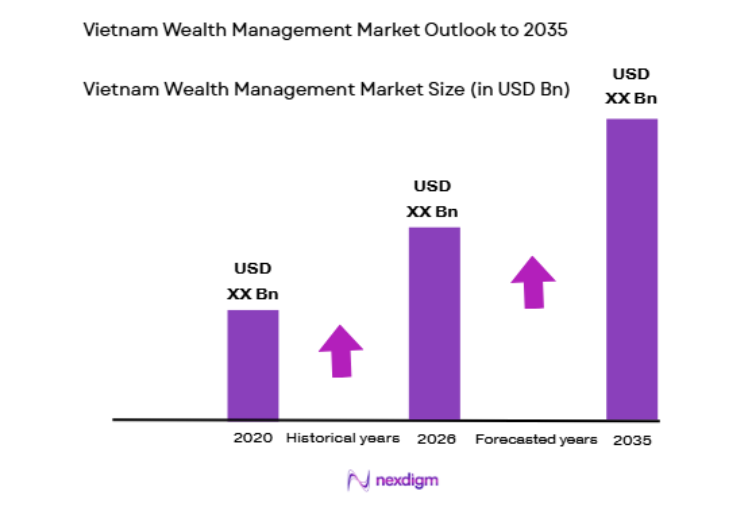
Vietnam’s wealth management market is expected to expand steadily over the next five years as private financial wealth accumulates and investment behavior formalizes. Digital advisory platforms, broader mutual fund penetration, and regulatory strengthening of capital markets will deepen portfolio diversification channels. Urban affluent populations and intergenerational wealth transfer will increase demand for structured advisory services. Banks and asset managers are likely to integrate technology-enabled private banking and discretionary mandates, supporting sustained industry growth.
Major Players
- Vietcombank Securities
- SSI Securities
- Techcombank Wealth
- VinaCapital
- Dragon Capital
- BIDV Securities
- VPBank Securities
- MB Securities
- VietinBank Securities
- Bao Viet Fund
- Manulife Investment Vietnam
- Mirae Asset Vietnam
- KIS Vietnam
- HSC Securities
- ACB Securities
Key Target Audience
- Commercial banks
- Securities companies
- Asset management firms
- Insurance companies
- Family offices
- Investments and venture capitalist firms
- Government and regulatory bodies
- Private banking divisions
Research Methodology
Step 1: Identification of Key Variables
Key variables including affluent population size, financial asset pools, advisory penetration, and investment product availability were identified through financial reports, central bank statistics, and global wealth studies. Market drivers and constraints were mapped across demographic, regulatory, and capital market dimensions.
Step 2: Market Analysis and Construction
Industry structure was constructed by analyzing wealth distribution channels including banks, securities firms, and asset managers. Product segmentation and client segmentation were derived from institutional disclosures and investment market data. Market size alignment ensured consistency with reported managed financial assets.
Step 3: Hypothesis Validation and Expert Consultation
Findings were validated through triangulation with asset management data, securities market participation trends, and private banking disclosures. Expert perspectives from financial sector professionals informed adoption dynamics and competitive positioning across Vietnam’s wealth ecosystem.
Step 4: Research Synthesis and Final Output
Quantitative and qualitative insights were synthesized into market sizing, segmentation, and strategic analysis. Growth drivers, challenges, and opportunities were assessed against structural economic and regulatory trends to produce a coherent outlook for Vietnam wealth management evolution.

- Executive Summary
- Research Methodology (Definitions, Scope, Industry Assumptions, Market Sizing Approach, Primary & Secondary Research Framework, Data Collection & Verification Protocol, Analytic Models & Forecast Methodology, Limitations & Research Validity Checks)

- Market Definition and Scope
- Value Chain & Stakeholder Ecosystem
- Regulatory / Certification Landscape
- Sector Dynamics Affecting Demand

- Growth Drivers
Rapid Expansion of High-Net-Worth Population
Capital Market Development and Product Access
Regulatory Support for Private Wealth Services - Market Challenges
Limited Sophisticated Investment Products
Low Investor Trust and Transparency Gaps
Shortage of Certified Wealth Advisors - Market Opportunities
Digital Advisory and Hybrid Wealth Models
Offshore Diversification and Global Assets
ESG and Alternative Investment Adoption - Trends
Shift Toward Discretionary Mandates
Bank-Insurance-Securities Integration - Government Regulations
- SWOT Analysis
- Porter’s Five Forces

- By Market Value, 2020-2025
- By Installed Units, 2020-2025
- By Average System Price, 2020-2025
- By System Complexity Tier, 2020-2025

- By System Type (In Value%)
Discretionary Portfolio Management
Advisory-Led Investment Services
Brokerage-Based Wealth Solutions
Digital Robo-Advisory Platforms
Family Office & Estate Structuring - By Platform Type (In Value%)
Bank-Led Wealth Platforms
Securities Firm-Led Platforms
Insurance-Linked Wealth Channels
Independent Asset Managers
Digital-Only Wealth Platforms - By Fitment Type (In Value%)
Onshore Domestic Booking
Offshore Booking Structures
Hybrid Onshore-Offshore Portfolios
Custodian-Based Nominee Accounts - By End User Segment (In Value%)
High-Net-Worth Individuals
Ultra-High-Net-Worth Individuals
Mass Affluent Investors

- Market Share Analysis
- Cross Comparison Parameters (Service Model, Client Segment Focus, Product Breadth, Advisory Depth, Digital Capability, Minimum Investment Threshold, Fee Structure, Relationship Management Coverage)
- SWOT Analysis of Key Competitors
- Pricing & Procurement Analysis
- Key Players
Vietcombank
BIDV
VietinBank
Techcombank
VPBank
Asia Commercial Bank
Sacombank
MB Bank
VIB
HDBank
SSI Securities
VinaCapital
Dragon Capital
Manulife Investment Vietnam
Prudential Vietnam Fund Management

- Growing Demand for Diversified Financial Portfolios
- Preference for Bank-Anchored Advisory Relationships
- Rising Interest in Offshore and Alternative Assets
- Increasing Intergenerational Wealth Planning Needs

- Forecast Market Value, 2026-2035
- Forecast Installed Units, 2026-2035
- Price Forecast by System Tier, 2026-2035
- Future Demand by Platform, 2026-2035


 Request a Sample
 Ask for Customization
 Get a Quote
 Enquire Now