
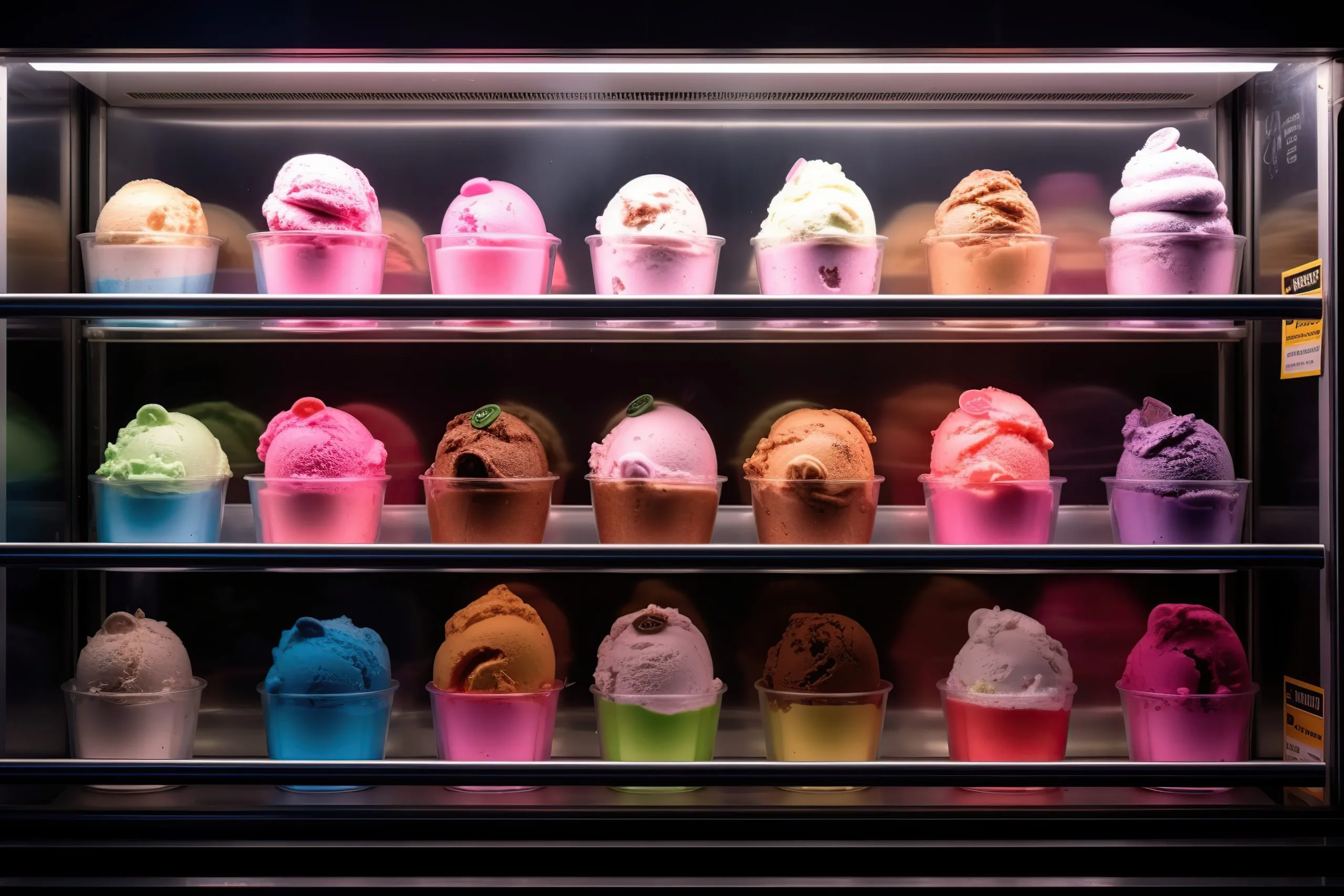
Brazil’s commercial ice cream freezers market is expanding as demand for frozen desserts grows across supermarkets, convenience stores, ice cream parlors, cafés, restaurants, and quick-service food outlets. The country is a leading ice cream market in South America, accounting for 52.02% of regional ice cream demand. Brazil’s ice cream market was valued at around USD 1,467.1 million, while the foodservice market stood at approximately USD 18.56 billion. These factors are supporting demand for display freezers, chest freezers, gelato cabinets, and energy-efficient commercial refrigeration systems.
Key Drivers Accelerating the Brazil’s commercial ice cream freezers market
Rising Ice Cream Consumption and Dessert Retail Growth
Brazil’s warm climate, large urban population, and strong consumer preference for frozen desserts are major drivers of commercial ice cream freezer demand. Ice cream is consumed across traditional parlors, supermarkets, kiosks, convenience stores, restaurants, and delivery-led dessert outlets. As brands introduce premium, reduced-sugar, artisanal, plant-based, and impulse ice cream formats, retailers need reliable freezing equipment that preserves product quality and improves visibility. Display freezers are especially important for impulse purchases, where attractive product presentation and easy access can influence consumer decisions. Growth in take-home tubs, single-serve formats, and premium frozen desserts is further increasing the need for varied freezer formats across retail and foodservice channels.
Expansion of Foodservice and Modern Retail
Brazil’s foodservice sector is expanding through quick-service restaurants, cafés, dessert chains, bakeries, cloud kitchens, shopping mall outlets, and independent restaurants. This is creating demand for compact, durable, and high-capacity refrigeration equipment. Supermarkets and convenience stores are also investing in frozen food and dessert aisles to capture greater consumer spending. As modern retail formats expand, businesses require commercial freezers that offer temperature consistency, energy efficiency, product visibility, and lower maintenance costs. The broader global commercial ice cream freezers market is valued at around USD 12.38 billion, reflecting strong demand for specialized freezing equipment across food retail and hospitality.
Energy Efficiency and Equipment Replacement
Rising electricity costs and sustainability goals are pushing retailers and foodservice operators toward energy-efficient freezer models. Businesses are replacing older equipment with systems using improved compressors, better insulation, LED lighting, digital temperature control, and climate-friendly refrigerants. This replacement trend is especially relevant for ice cream, where stable low-temperature performance is critical for texture, shelf life, and food safety.
Government Support, Energy Efficiency and Refrigeration Standards
Brazil’s energy efficiency framework supports modernization in commercial refrigeration. Programs involving INMETRO, PROCEL, CEPEL, and the Ministry of Mines and Energy have contributed to appliance efficiency labeling, performance standards, and energy conservation policies. Brazil has also worked with international partners to develop minimum energy performance standards and labels for commercial refrigeration products. These initiatives encourage businesses to adopt efficient freezers that reduce electricity consumption, operating costs, and environmental impact.
Competitive Landscape, Efficiency and Display Innovation
The Brazil commercial ice cream freezers market includes domestic refrigeration manufacturers, global equipment suppliers, and specialized foodservice equipment brands. Companies compete through cooling performance, energy efficiency, storage capacity, cabinet design, durability, after-sales service, and price. Demand is spread across display freezers, chest freezers, upright freezers, gelato cabinets, and customized branded freezers. Ice cream manufacturers and distributors also influence the market by providing branded freezer units to retailers, helping improve visibility and product availability at the point of sale.
Market Challenges, Cost and Adoption Barriers
High Operating and Maintenance Costs
Commercial ice cream freezers require continuous power and stable low-temperature operation, making electricity consumption a major operating cost. Poor maintenance, compressor failure, and temperature fluctuations can also affect product quality and increase business losses.
Price Pressure Among Small Retailers
Many small shops, kiosks, and independent foodservice operators remain highly price-sensitive. Higher upfront costs for energy-efficient or premium freezer models can slow adoption, even when long-term operating savings are attractive.
Future Outlook
The Brazil commercial ice cream freezers market is expected to grow steadily as frozen dessert consumption, modern retail, and foodservice expansion continue to strengthen. Demand will likely increase for energy-efficient display freezers, compact units for convenience stores, premium gelato cabinets, and customized branded freezer solutions. Operators will increasingly prioritize lower energy consumption, better product visibility, food safety compliance, and equipment durability. As ice cream brands expand premium, artisanal, and impulse formats, commercial freezers will remain essential to cold-chain performance and point-of-sale growth across Brazil.
Consultants at Nexdigm, in their latest publication “Brazil commercial ice cream freezers market Outlook to 2035,” analyze the sector by By Product Configuration (Upright Ice Cream Freezers, Chest / Horizontal Ice Cream Freezers, Walk‑In Ice Cream Freezers, By End Use,(Supermarkets & Hypermarkets, Specialty Ice Cream Shops, Hospitality & Hotels).
Nexdigm suggests that businesses should prioritize energy-efficient freezer models, strong after-sales service, modern display formats, and retail partnerships to capture growth in Brazil’s commercial ice cream freezers market.
To take the next step, simply visit our Request a Consultation page and share your requirements with us.
Harsh Mittal
+91-8422857704