
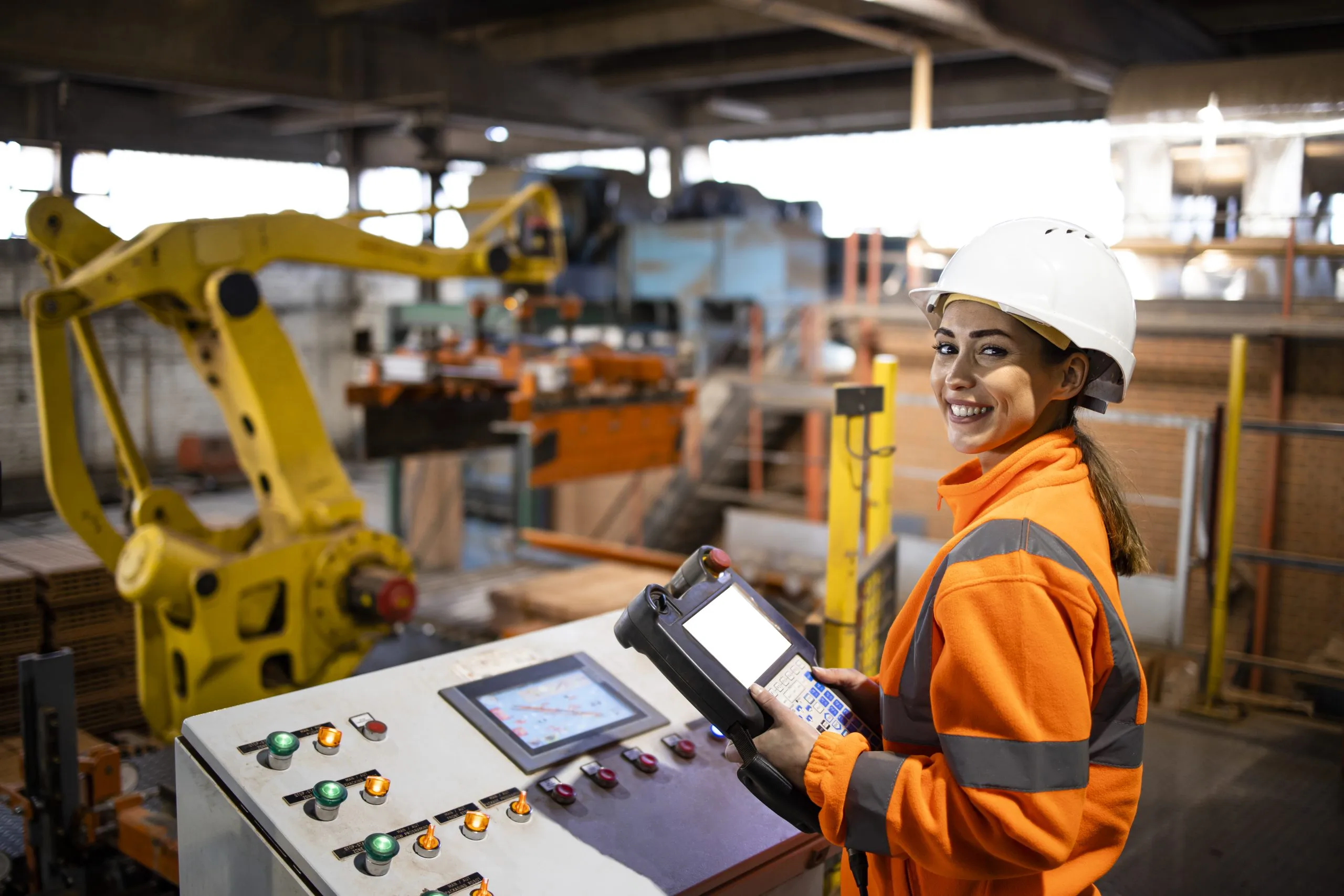
Brazil’s industrial automation market is entering a stronger growth phase as manufacturers modernize plants, improve productivity, and respond to pressure for higher quality and lower operating costs. The market was valued at about USD 4.96 billion in 2024 and is projected to reach USD 10.4 billion by 2033, growing at a CAGR of 8.58%; extending that trajectory suggests a potential market size of roughly USD 12 billion by 2035. Growth will be led by automotive, food and beverage, oil and gas, mining, chemicals, and electronics manufacturing.
Key Factors Driving Brazil’s Shift Toward Smart Manufacturing
Industry 4.0 Adoption and Smart Manufacturing
Brazilian manufacturers are increasingly adopting robotics, SCADA, PLCs, distributed control systems, sensors, machine vision, predictive maintenance, and industrial IoT to improve throughput and reduce downtime. The U.S. International Trade Administration notes that automation and robotics adoption in Brazil is already relatively strong, especially in logistics automation, automated quality control, and robotic assembly lines, with automotive and electronics among the leading adopters.
Automotive and Mobility Investments
The automotive sector remains one of the most important demand centers for industrial automation. Brazil produced 2.55 million vehicles in 2024, up 9.7% from 2023, while domestic vehicle sales rose 14.1%. This level of production requires automated welding, painting, inspection, assembly, and material-handling systems. In addition, green mobility investment is creating fresh demand for flexible manufacturing lines, battery-related processes, and quality-control systems; the sector announced around USD 22 billion in investments through 2032.
Productivity, Safety, and Cost Pressure
Automation is becoming a practical response to labor constraints, quality requirements, and energy-efficiency goals. Globally, factories had 4.28 million operational industrial robots in 2023, a 10% increase, indicating the broader direction of manufacturing competitiveness. Brazil’s manufacturers are expected to follow this trend as companies seek lower defect rates, safer shop floors, and better asset utilization.
Government Initiatives Supporting Brazil’s Industrial Modernization
Government policy is another catalyst. Brazil launched New Industry Brazil in January 2024 to strengthen national industry through 2033, with emphasis on technological development, competitiveness, sustainability, and industrial modernization. The policy framework supports areas closely tied to automation, including digital transformation, advanced computing, productive innovation, and more competitive domestic manufacturing. These initiatives should encourage investment in smart factories, connected machinery, and local technology ecosystems.
Key Players Shaping Brazil’s Industrial Automation Ecosystem
The market includes multinational automation leaders and strong domestic industrial technology suppliers. Key participants typically include Siemens, ABB, Schneider Electric, Rockwell Automation, Emerson, Honeywell, Bosch Rexroth, Mitsubishi Electric, Yokogawa, WEG, and local system integrators. Competition is shifting from hardware-only sales toward integrated solutions, including robotics, industrial software, cybersecurity, lifecycle services, remote monitoring, and predictive maintenance platforms. Vendors with strong service networks and sector-specific expertise are likely to gain share.
Key Challenges Restraining Industrial Automation Adoption in Brazil
High Upfront Investment
Automation projects often require significant capital expenditure, especially robotics, industrial software, plant retrofits, and integration with legacy systems. Small and mid-sized manufacturers may delay adoption because payback periods can be uncertain during periods of high interest rates or weak industrial demand.
Skills and Integration Gaps
Brazil also faces shortages in engineering, robotics, AI, data analytics, and industrial cybersecurity skills. This can slow down deployment, increase integration costs, and make it harder for companies to maintain advanced systems. Workforce training will be essential for broader adoption.
Future Outlook
By 2035, Brazil’s industrial automation market is expected to be larger, more software-driven, and more closely linked to sustainability and productivity targets. Demand will expand beyond large automotive and process-industry plants into mid-sized factories, logistics hubs, agribusiness processing, and packaging operations. The strongest growth areas are likely to include robotics, machine vision, digital twins, industrial IoT, AI-enabled predictive maintenance, and energy-management systems. If policy support, industrial investment, and skills development continue, Brazil could become one of Latin America’s most important smart-manufacturing markets by 2035.
Consultants at Nexdigm, in their latest publication “Brazil Industrial Automation Market Outlook to 2035,” analyze the sector by System Type (Robotics, PLC Systems, DCS Systems, SCADA Systems), By Platform Type (Cloud-based Platforms, Edge Computing Platforms, On-premise Solutions), and By Fitment Type (On-premise Solutions, Cloud-based Solutions, Hybrid Solutions). Nexdigm suggests that businesses should prioritize scalable automation investments, strengthen local supplier and integration partnerships, and align technology adoption with Brazil’s evolving industrial policy and smart manufacturing goals to remain competitive through 2035.
To take the next step, simply visit our Request a Consultation page and share your requirements with us.
Harsh Mittal
+91-8422857704