
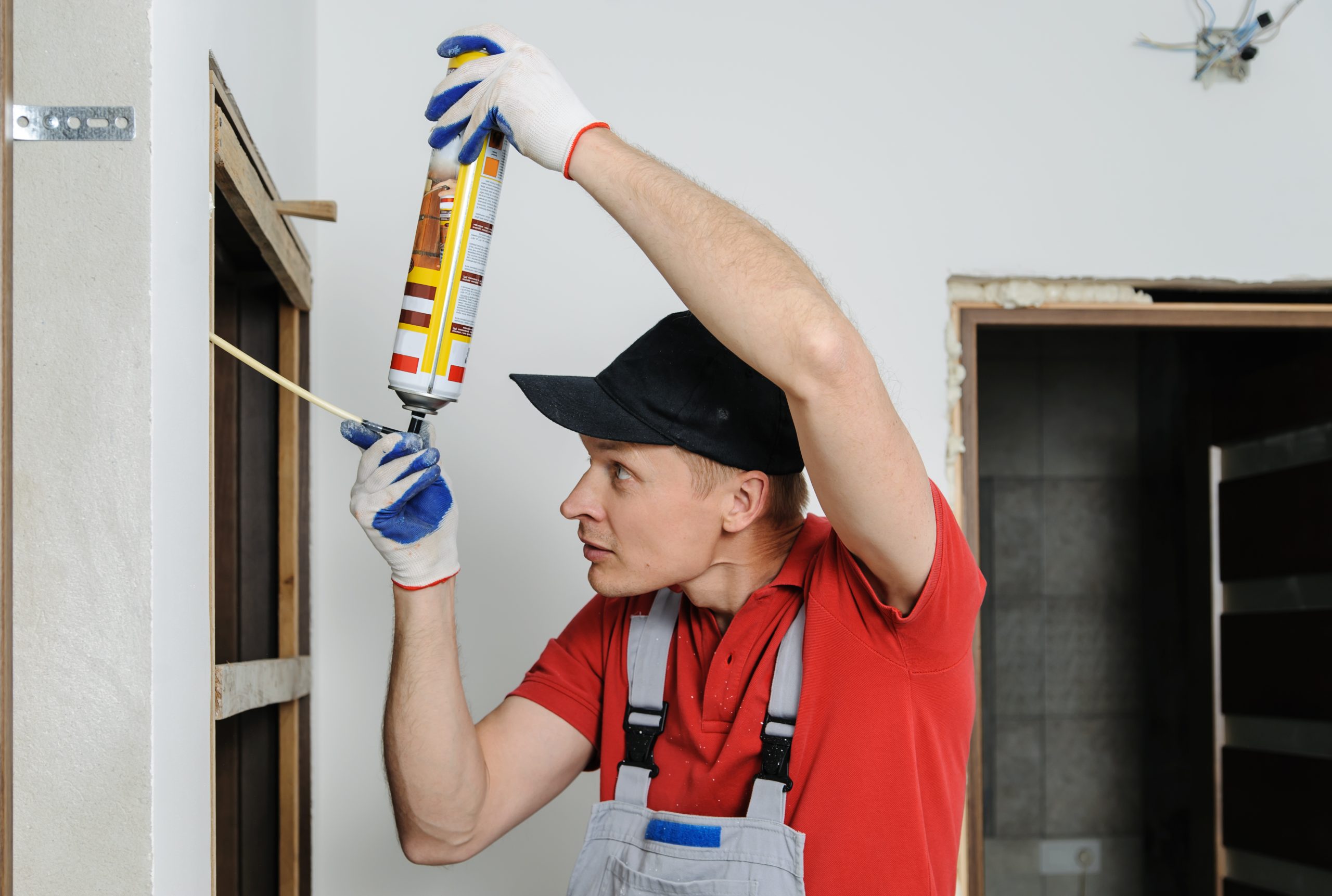
Germany’s adhesives and sealants market is positioned for steady expansion through the next decade, supported by demand from construction, automotive, packaging, electronics, and industrial manufacturing. One recent market estimate values the German adhesives market at US$5.8 billion in 2026, with projections reaching US$8.04 billion by 2035, representing a CAGR of about 3.7%. Meanwhile, sustainable adhesives are developing faster, with one estimate forecasting 7.9% CAGR through 2030. The market is increasingly shifting toward low-emission, lightweight, durable, and recyclable bonding and sealing technologies.
Market Drivers Advancing the Germany Adhesives and Sealants Industrial Growth
Construction Renovation and Energy Efficiency
Construction remains a major demand center for adhesives and sealants in Germany. One industry estimate indicates that building and construction represented 43.35% of German adhesives demand in 2025. Renovation of aging buildings, insulation upgrades, window replacement, flooring, façades, roofing, and energy-efficient construction are creating opportunities for high-performance bonding and sealing solutions. Germany’s building sector also accounts for more than 30% of the country’s energy use, strengthening the long-term case for energy-efficient renovation. Adhesives and sealants support these applications by improving airtightness, thermal performance, weather resistance, and installation efficiency.
Automotive Lightweighting and Electrification
Automotive manufacturing is another important growth engine. Adhesives increasingly replace mechanical fasteners and welding in multi-material vehicle construction, helping manufacturers reduce weight while improving durability and design flexibility. Germany’s transition toward Electric vehicles is further increasing demand for structural adhesives used in battery assemblies, electronics, composites, and lightweight components. The automotive segment is estimated to record a 6.47% CAGR through 2031 in Germany’s adhesives market. Henkel, for example, introduced a new structural adhesive in 2026 designed for automated body-in-white production, highlighting the sector’s emphasis on high-performance and automation-compatible bonding.
Sustainability and Low-Emission Formulations
Environmental requirements are accelerating the shift toward water-based, solvent-free, bio-based, and recyclable adhesive technologies. Water-borne adhesives accounted for an estimated 41.15% of Germany’s adhesives market in 2025, while hot-melt technologies are forecast to expand rapidly. Demand is also being influenced by circular-economy objectives, packaging recyclability, lower VOC emissions, and manufacturers’ efforts to reduce product carbon footprints.
Government Initiatives Supporting Germany Adhesives and Sealants Industry
Government-backed building modernization is an important indirect catalyst. Germany’s reformed Federal Funding for Efficient Buildings (BEG) has continued supporting energy-efficient renovations since July 2026. The program includes financing for insulation, windows, heating modernization, and broader efficiency upgrades. KfW also provides financing of up to €150,000 per residential unit for certain efficiency-building renovations, supporting construction activity where adhesives and sealants are widely used.
Competitive Landscape of Germany Adhesives and Sealants Industry
Germany has a strong presence of global and European adhesive and sealant manufacturers, including Henkel, Sika, H.B. Fuller, and other specialty chemical producers. Henkel’s Adhesive Technologies business is a global market leader in adhesives, sealants, and coatings. Sika supplies bonding and sealing solutions across construction and industrial applications, while H.B. Fuller serves automotive, packaging, construction, renewable energy, and other sectors. Competition increasingly centers on formulation of innovation, sustainability, application speed, customization, and technical service.
Challenges Affecting the Germany Adhesives and Sealants Industry
Regulatory and Sustainability Costs
Increasing environmental requirements are encouraging cleaner formulations but also raising development, testing, certification, and compliance costs. Manufacturers must balance VOC reduction and sustainable raw materials with demanding performance requirements for industrial applications. Energy-intensive production and elevated operating costs can further pressure margins. One market assessment note that German producers face significantly higher energy costs than U.S. counterparts.
Raw Material and Supply-Chain Volatility
Adhesive and sealant producers remain exposed to fluctuations in petrochemical feedstocks, resins, additives, silicones, and specialty chemicals. Supply disruptions can affect production schedules and pricing, particularly for smaller formulators. This encourages manufacturers to diversify suppliers, develop alternative formulations, and invest in localized or more resilient supply chains.
Future Outlook
In the upcoming years, Germany’s adhesives and sealants market is expected to maintain moderate, sustainable growth toward 2035 as construction renovation, automotive electrification, lightweighting, packaging innovation, and industrial automation expand application opportunities. The broader adhesives market could reach approximately US$8.04 billion by 2035, according to one forecast. Growth is likely to favor water-based, hot-melt, solvent-free, hybrid, structural, and bio-based technologies. Sustainable adhesives are expected to outperform conventional formulations as manufacturers respond to environmental requirements and circular-economy priorities. Companies combining strong technical performance with lower emissions, recyclability, and application efficiency will be best positioned to capture Germany’s evolving demand.
Consultants at Nexdigm, in their latest publication “Germany Adhesives and Sealants Market Outlook to 2035,” analyze the sector By (Market Definition and Scope, Germany Adhesives and Sealants Market Classification, Adhesive and Sealant Product Mapping, Resin-Level Assessment, Technology-Level Assessment), By End-Use (Industry Assessment, Production Capacity Mapping, Domestic Manufacturing Assessment).
Nexdigm suggests that businesses in the Germany Adhesives and Sealants Market should focus on continuous R&D, customized high performance formulations, and compliance-driven sustainable innovations (such as bio-based, solvent-free, and low-emission products) to meet evolving automotive and eco-friendly manufacturing demands.
To take the next step, simply visit our Request a Consultation page and share your requirements with us.
Harsh Mittal
+91-8422857704