
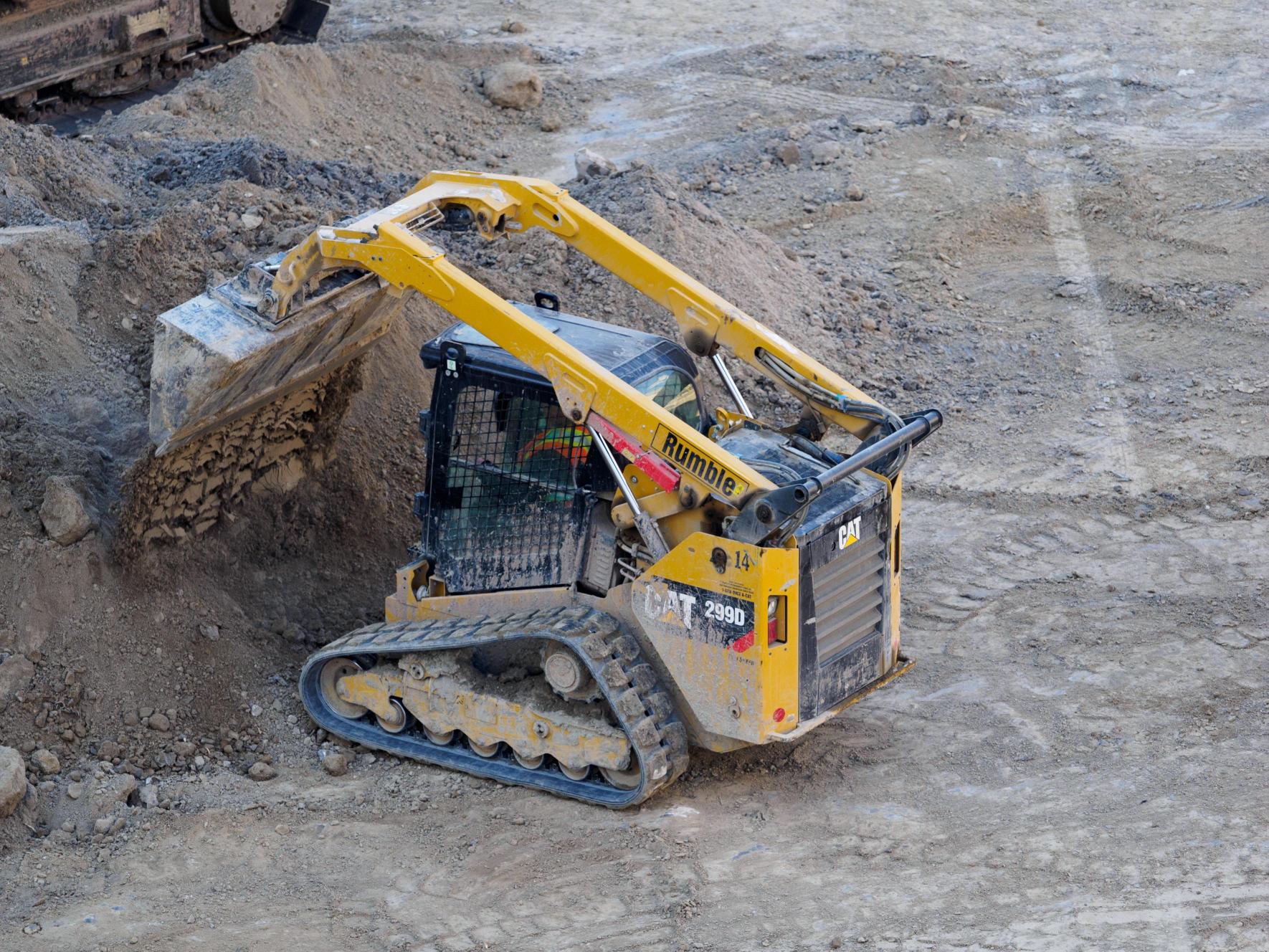
Germany compact construction equipment market is supported by the country strong construction sector, extensive infrastructure development, and ongoing urban renewal activities. Compact equipment such as mini excavators, skid-steer loaders, compact wheel loaders, and telehandlers are increasingly preferred for projects requiring maneuverability in confined urban spaces. Germany recorded construction investment of approximately EUR 450.66 billion in 2024, highlighting the scale of ongoing development activities. Additionally, 145,010 building permits and construction measures were reported in 2024, creating sustained demand for compact machinery across residential, commercial, and public infrastructure projects.
Market Drivers Advancing the Germany Compact Construction Equipment Growth
Growing Infrastructure and Construction Investments
Germany continues to invest heavily in transportation, public infrastructure, commercial facilities, and residential projects. Construction investment reached approximately EUR 450.66 billion in 2024, demonstrating the sector’s significance to the national economy. Large-scale road modernization, rail upgrades, bridge rehabilitation, and utility projects require compact equipment capable of operating efficiently in constrained spaces. Contractors increasingly favor compact machines because they reduce operating costs while enhancing productivity on urban construction sites.
Rising Urban Redevelopment Activities
Major cities such as Berlin, Hamburg, Munich, and Cologne are witnessing significant redevelopment and modernization efforts. Urban projects often involve work in densely populated locations where larger machinery is impractical. Compact excavators, loaders, and telehandlers provide flexibility for utility installation, demolition, landscaping, and building renovation projects. The growing emphasis on smart city initiatives and sustainable urban infrastructure further supports equipment adoption.
Demand for Efficient and Sustainable Equipment
Construction companies are increasingly seeking fuel-efficient and environmentally friendly machinery to comply with Germany’s stringent environmental regulations. Manufacturers are responding with electric and hybrid compact equipment that offers lower emissions and reduced operating costs. Advanced technologies such as telematics, remote monitoring, and automation are also improving fleet efficiency, encouraging contractors to upgrade aging equipment fleets and invest in modern compact machines.
Government Initiatives Supporting Germany Compact Construction Equipment Industry
The German government continues to support infrastructure modernization through investments in transportation networks, public utilities, energy transition projects, and sustainable construction. Programs focused on railway expansion, renewable energy infrastructure, and urban development create opportunities for construction contractors and equipment suppliers. Environmental policies promoting low-emission machinery also encourage the adoption of advanced compact construction equipment across public and private projects.
Competitive Landscape of Germany Compact Construction Equipment Sector
The Germany compact construction equipment market is highly competitive, with global and regional manufacturers competing through product innovation, dealer networks, and after-sales support. Key participants include Caterpillar, Volvo Construction Equipment, JCB, Komatsu, Kubota, Bobcat, Liebherr, and Wacker Neuson. Companies are increasingly investing in electric machinery, digital fleet management solutions, and equipment customization to strengthen their market positions and meet evolving customer requirements.
Challenges Impacting Germany Compact Construction Equipment Industry
High Equipment Costs and Economic Uncertainty
Advanced compact construction equipment often requires significant upfront investment, creating challenges for smaller contractors. Rising financing costs and economic uncertainty may delay equipment purchases, particularly among cost-sensitive buyers.
Labor Shortages and Regulatory Compliance
Germany construction industry continues to face skilled labor shortages, which can affect project timelines and equipment utilization. Additionally, compliance with strict environmental and safety regulations increases operational complexity and can raise ownership costs for contractors and fleet operators.
Future Outlook
The future of Germany compact construction equipment market remains positive, supported by continued infrastructure investments, urban redevelopment projects, and growing demand for sustainable construction solutions. Increasing adoption of electric and low-emission equipment is expected to reshape purchasing patterns over the coming years. As construction firms focus on productivity, efficiency, and environmental compliance, demand for technologically advanced compact machinery will continue to grow. Strong activity across transportation, utilities, residential construction, and industrial development is expected to provide long-term opportunities for equipment manufacturers and suppliers operating in the German market.
Consultants at Nexdigm, in their latest publication “Germany Compact Construction Equipment Market Outlook to 2035,” analyze the sector By (Market Definition and Scope, Compact Construction Equipment Classification, Equipment Operating Weight Classification, Mini Excavator Assessment, Compact Wheel Loader Assessment,)
Nexdigm suggests that businesses in the Germany Compact Construction Equipment Industry focus on innovation, sustainability, and equipment efficiency to capitalize on infrastructure development opportunities. Companies should strengthen dealer networks, invest in advanced technologies, and align with evolving environmental regulations to enhance competitiveness and long-term growth.
To take the next step, simply visit our Request a Consultation page and share your requirements with us.
Harsh Mittal
+91-8422857704