
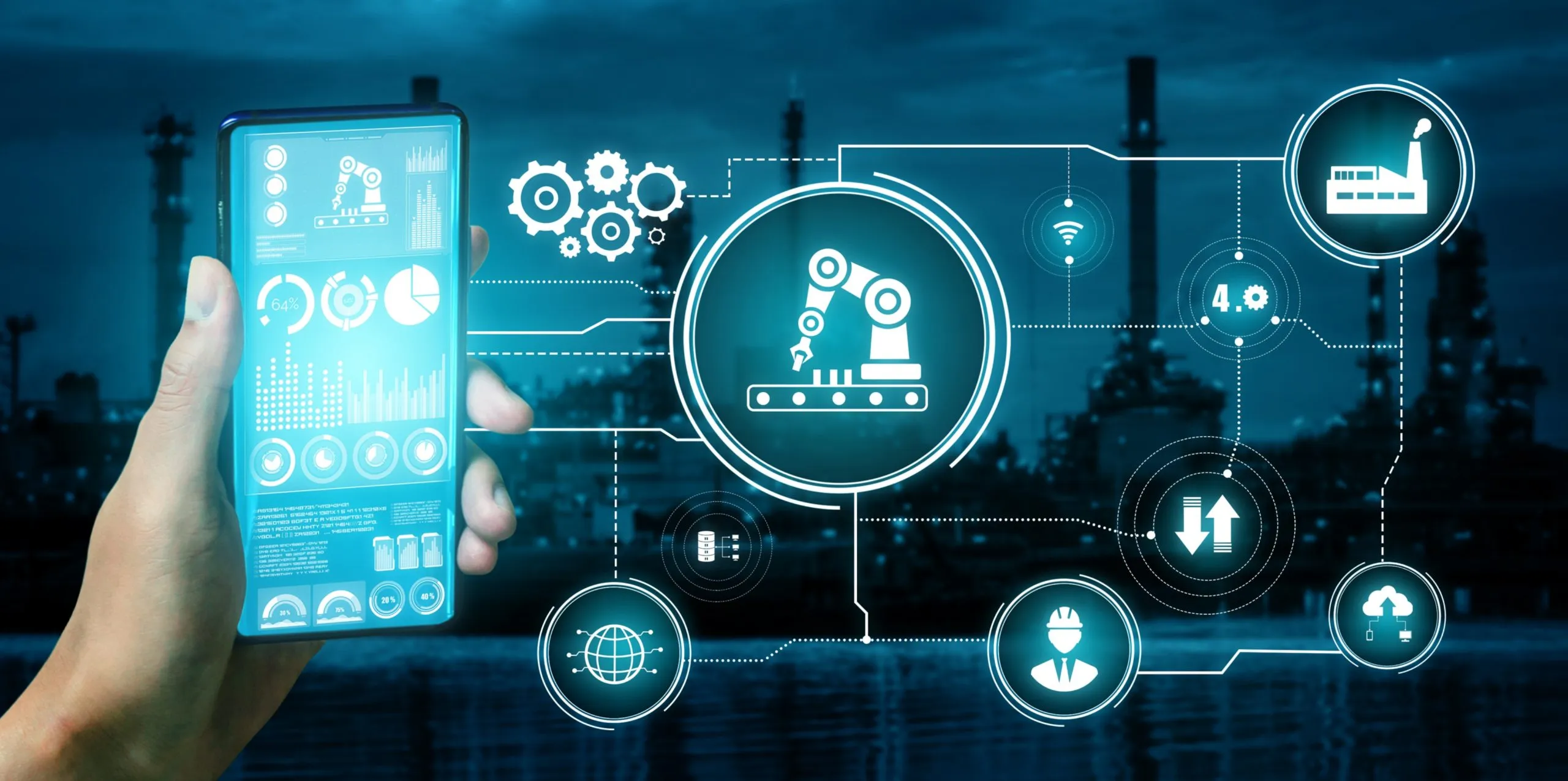
Germany’s Industrial IoT (IIoT) market is experiencing rapid expansion, fueled by the country’s push toward smart manufacturing and digital transformation. Earlier, the market was valued at approximately USD 8.5 billion, and it’s set to grow at a remarkable pace over the next decade. As Germany’s industries become more interconnected and data‑driven, IIoT is playing a pivotal role in improving efficiency, optimizing production, and enabling real‑time decision-making. In the coming years, the integration of AI, machine learning, and advanced sensors into manufacturing systems will revolutionize production environments, enhancing both flexibility and responsiveness. This market is central to Germany’s ongoing transformation, making its manufacturing sector more agile, efficient, and ready for future challenges.
Key Drivers of Germany’s Industrial IoT Growth
Industry 4.0 Adoption and Smart Manufacturing
Germany’s commitment to Industry 4.0 is one of the main drivers of IIoT growth. Industry, which integrates cyber‑physical systems, IoT, and cloud computing, enables factories to become smart, self‑optimizing units that work more efficiently and with greater flexibility. In automotive manufacturing, for example, robots work seamlessly alongside human workers, carrying out tasks like assembly, quality control, and material handling. This integration not only improves efficiency but also allows for customized production runs that respond to market needs. As more industries follow suit and incorporate connected technologies, the demand for IIoT solutions will continue to rise.
Need for Predictive Maintenance and Increased Efficiency
One of the key benefits of IIoT in Germany is the ability to implement predictive maintenance. Through connected devices and sensors, industrial systems can monitor machinery performance in real time, detecting potential failures before they happen. This reduces costly downtimes and extends the lifespan of expensive machinery. Companies in sectors like automotive, aerospace, and chemicals are leveraging IIoT to keep operations running smoothly and to avoid expensive repairs. Predictive maintenance allows manufacturers to move from reactive approaches to more efficient, data‑driven models of asset management. By adopting IIoT, German manufacturers are not just improving efficiency; they’re also making significant strides in reducing operational costs and increasing their competitiveness.
Real-Time Data Insights and Supply Chain Optimization
Germany’s IIoT market is also driven by the need for real‑time data and improved supply chain visibility. As industries increasingly demand faster delivery times and more responsive production, IIoT solutions are becoming essential for monitoring and tracking the movement of goods across supply chains. Sensors embedded in machines and vehicles send data that help managers monitor the performance of assets, track goods in transit, and forecast production needs more accurately. By enabling more connected and efficient supply chains, IIoT enhances decision‑making and speeds up processes across Germany’s manufacturing landscape.
Government support driving the Industrial IoT Revolution in Germany
The German government is strongly backing the growth of IIoT through various public initiatives and funding programs aimed at encouraging digital transformation. Programs like Germany’s High-Tech Strategy and funding under the EU’s Horizon Europe initiative are designed to stimulate research and development (R&D) in IoT and smart manufacturing technologies. In addition, the German Mittelstand the country’s backbone of small and medium‑sized enterprises (SMEs) benefits from government incentives that make it easier for them to adopt IIoT solutions. These programs not only support technological advancement but also encourage collaboration between industry leaders, tech firms, and academic institutions. These efforts are helping Germany’s industrial sectors not just keep up with global trends but lead the way in digital innovation.
Key Players in Germany’s Industrial IoT Market
Germany is home to several major players in the IIoT space, with Siemens, Bosch, and SAP leading the way. These companies offer comprehensive IIoT solutions that include hardware, software, and data analytics services, helping manufacturers optimize their operations. Siemens, for instance, integrates its MindSphere IoT platform to enable industrial businesses to connect machines, devices, and sensors, transforming raw data into actionable insights. Additionally, specialized firms like KUKA Robotics and Festo are contributing with advanced automation solutions. The competitive landscape also includes growing numbers of startups offering niche solutions for specific industries like food production, pharmaceuticals, and logistics. With both established players and emerging innovators contributing, Germany’s IIoT ecosystem is diverse, fostering an environment of constant technological advancement.
Market Challenges faced in the Germany IoT Industry
Integration and Cost Barriers
One of the key barriers to wider IIoT adoption in Germany is the integration complexity and initial investment costs. For many businesses, particularly small and medium‑sized enterprises (SMEs), the transition to IIoT requires significant upfront capital for new equipment, sensors, and system upgrades. Integrating IIoT systems with existing legacy machines and production lines can also be complex and time‑consuming, adding to the challenges of adoption. While the long‑term benefits are clear, the upfront costs can deter some companies from making the switch.
Data Security and Workforce Skills Gap
With the rise of connected devices and real-time data, ensuring the security of industrial networks is becoming a critical challenge. Cybersecurity risks associated with connected machines and systems can lead to costly disruptions or data breaches. Additionally, there is a growing shortage of skilled professionals trained to work with IIoT technologies. Engineers and technicians with expertise in data analytics, IoT networks, and cybersecurity are in high demand, creating a talent gap that may slow widespread adoption.
Future Outlook
Germany’s IIoT market is projected to continue its impressive growth over the next decade, with estimates predicting it will exceed in the coming years. As Industry 4.0 technologies like AI, machine learning, and edge computing become more prevalent, IIoT solutions will become even more advanced and integral to production operations. In future, nearly every manufacturing plant in Germany will likely be equipped with IIoT systems, improving everything from production efficiency to energy management. With smart factories and data‑driven decision making becoming the norm, Germany is set to remain at the forefront of global manufacturing innovation. The future looks promising, as IIoT continues to evolve, offering even greater opportunities for efficiency, productivity, and competitive advantage in Germany’s manufacturing sectors.
Consultants at Nexdigm, in their latest publication Germany Industrial IoT Market Outlook to 2035 analyze the sector by Platform Types (Cloud based Platforms, Edge promoting platforms, On premises Platforms, Embedded systems, Hybrid Platforms), by End User Segment (Automotive sector, Oil and Gas, Manufacturing Industries, Electronics and Semiconductors and Energy and Utilities).
Nexdigm suggests that businesses in Germany must adopt digital transformation by integrating Industrial IoT (IIoT) and smart manufacturing technologies to maintain their competitive edge. Leveraging advancements in AI, automation, and real-time data analytics will help improve operational efficiency, minimize downtime, and enhance decision-making.
To take the next step, simply visit our Request a Consultation page and share your requirements with us.
Harsh Mittal
+91-8422857704