
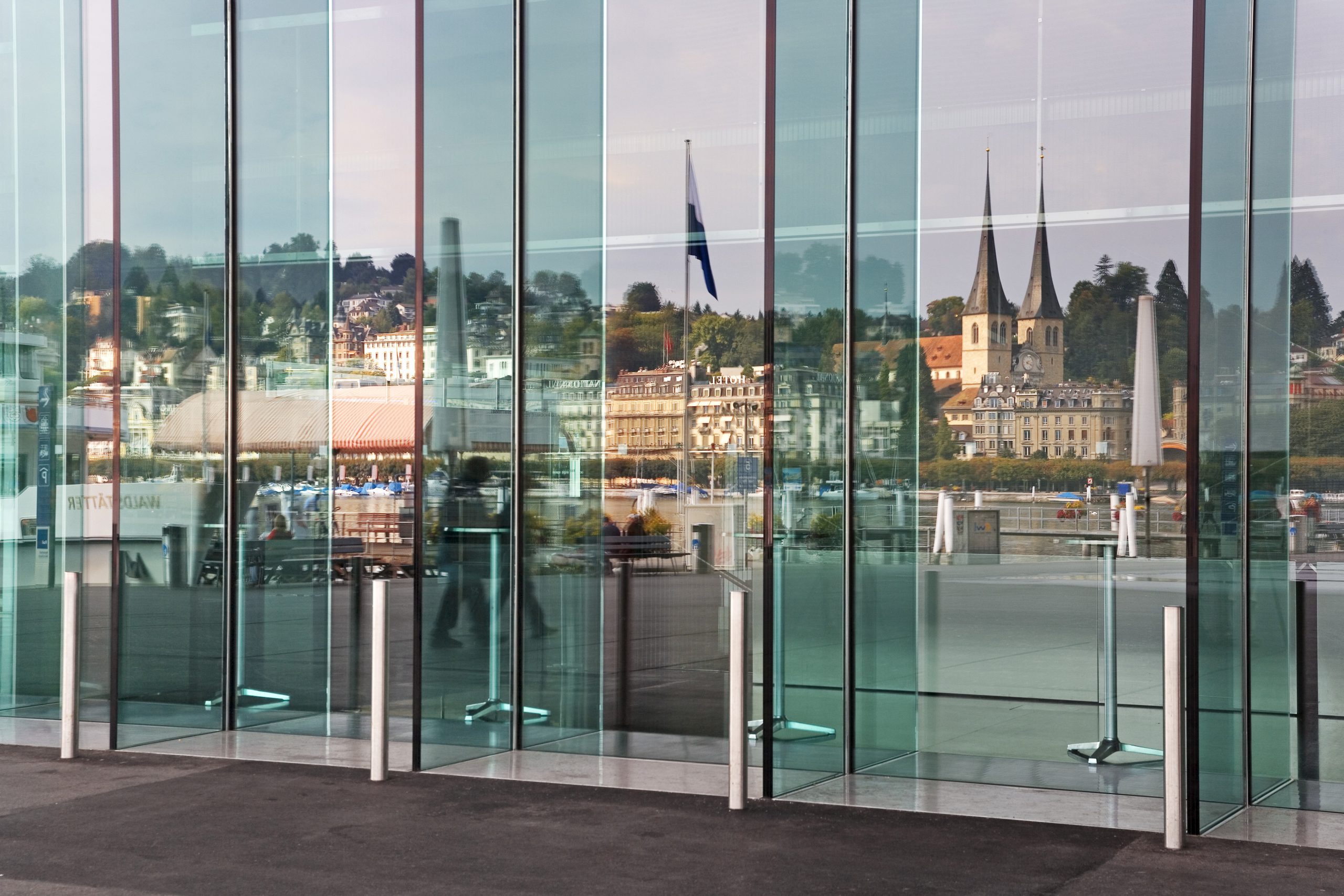
Germany’s laminated glass industry is gaining attention as construction, renovation, automotive, and architectural applications increasingly prioritize safety, durability, comfort, and energy performance. Laminated glass combines multiple glass layers with an interlayer, helping reduce shattering risks while also supporting acoustic and solar-control requirements. Industry estimates indicate that Germany’s laminated glass market could expand at a 7.1% CAGR over the forecast period. Germany also has an established glass manufacturing base, supporting innovation in high-performance and specialized glazing solutions for buildings, vehicles, and infrastructure.
Key Drivers Shaping Germany’s Laminated Glass Industry
Building Safety and Energy Efficiency in Germany
Safety remains a fundamental reason for adopting laminated glass in façades, windows, skylights, balustrades, and other architectural applications. Its ability to hold broken glass together can improve occupant protection and makes it suitable for areas where impact resistance is important. Energy efficiency is another significant demand factor. Germany’s building-renovation agenda is encouraging improvements to older windows and building envelopes. The Federal Funding for Efficient Buildings framework provides 15% funding for eligible window replacement measures, creating an additional incentive for energy-related glazing upgrades.
Automotive Applications Supporting Germany’s Glass Industry
Germany’s automotive sector is another important source of demand for laminated glazing. Vehicle manufacturers increasingly use advanced glass for safety, acoustic comfort, solar control, and design requirements. Laminated solutions can combine several functions within a single component, increasing their value in modern vehicle production. Germany also has a substantial glass-manufacturing ecosystem. Industry research estimates that the country has approximately 400 glass companies and around 54,000 employees, with the sector generating roughly €11.3 billion in turnover in 2024.
Government Initiatives Supporting Germany’s Laminated Glass Industry
Government-backed energy-efficiency programs provide an important foundation for Germany’s laminated glass industry. The revised Federal Funding for Efficient Buildings framework took effect on 21 July 2026, continuing support for energy-efficient building improvements and renovation. The program includes assistance for modern windows and other efficiency measures. Such initiatives can indirectly strengthen demand for high-performance glazing, including laminated configurations, particularly in renovation projects.
Competitive Landscape of Germany’s Laminated Glass Industry
Germany has a developed ecosystem of international and domestic glass manufacturers, processors, and fabricators. Companies such as Saint-Gobain Glass and AGC/INTERPANE serve architectural and safety-glass applications. Saint-Gobain’s German insulating-glass operations, for example, produce and market more than 1.7 million square meters of insulating glass annually. Competition within Germany’s laminated glass industry is increasingly influenced by product performance, customization, sustainability, processing capabilities, and supply reliability.
Challenges Facing Germany’s Laminated Glass Industry
Energy Costs and Manufacturing Pressures in Germany
Glass manufacturing is energy-intensive, making producers sensitive to electricity and fuel costs. German industry research highlights the technical complexity involved in transitioning furnaces toward electrification and other lower-carbon technologies. High operating expenses can therefore place pressure on domestic manufacturers while increasing the importance of production efficiency.
Recycling Challenges in Germany’s Glass Industry
Recycling laminated and processed flat glass remains more complex than recycling conventional container glass. Germany uses around 1,670 kilotons of flat glass in buildings annually. According to Fraunhofer ISE, only about 55 kilotons of roughly 526 kilotons of generated cullet are currently upcycled into high-value float-glass production. Better collection, separation, and recycling infrastructure will be important for improving circularity within the industry.
Future Outlook
Looking ahead, Germany’s laminated glass industry is likely to become increasingly multifunctional rather than simply larger. Developers, automakers, and manufacturers are seeking glazing that can provide safety, thermal performance, acoustic comfort, aesthetics, and lower environmental impact within the same solution. The estimated 7.1% CAGR indicates sustained expansion potential. At the same time, investments in lower-carbon manufacturing could reshape product offerings. For example, Saint-Gobain’s ORAÉ glass produced in Germany contains 64% recycled content and has a reported carbon footprint 42% below its standard European clear-glass equivalent. As renovation and advanced automotive applications develop, performance and circularity are likely to remain important areas of opportunity.
Consultants at Nexdigm, in their latest publication “Germany Laminated Glass Market Outlook to 2035,” analyze the sector By Product Type (PVP, SGA, Resin, Acoustic, EVA, Coloured, Low E Laminated Glass), By Interlayer Type (Polyvinyl Butyral, Ethylene Vinyl Acetate, SentryGlas Plus and Specialty Acoustic Interlayers), By Applications (Marine Glazing, Skylines and Canopies)
Nexdigm suggests that businesses in Germany’s Laminated Glass Industry should focus on making investments in customized products, designed for green buildings and modern infrastructure projects. They should also focus on strengthening partnerships with architects, developers, and construction firms that can help expand market opportunities.
To take the next step, simply visit our Request a Consultation page and share your requirements with us.
Harsh Mittal
+91-8422857704