
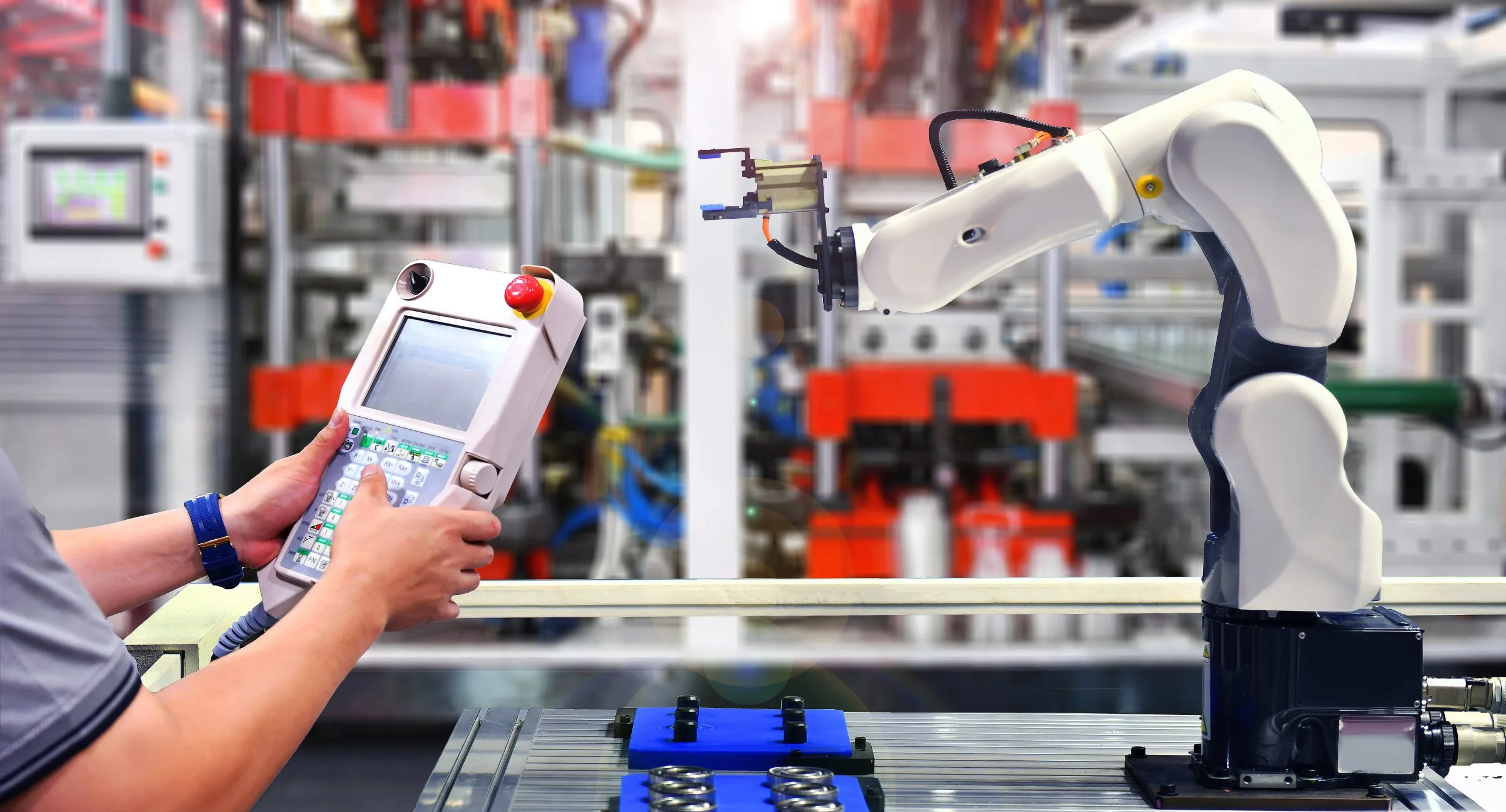
The India CNC controllers market is expanding as manufacturers increasingly adopt automated machining, digital control systems, and precision production technologies. CNC controllers are the core systems that guide cutting, milling, turning, drilling, and grinding operations across industries such as automotive, aerospace, electronics, defence, and industrial machinery. India’s CNC machines market reached USD 8.5 billion and is projected to reach USD 12.4 billion, reflecting rising demand for advanced manufacturing systems. As companies modernize factories and improve productivity, CNC controllers are becoming critical for accuracy, repeatability, and operational efficiency.
Key Growth Drivers of the India CNC controllers market
Industrial Automation Is Increasing CNC Controller Adoption
Indian manufacturers are moving toward automation to improve productivity, reduce manual errors, and maintain consistent output quality. CNC controllers help automate machine tool operations and enable better control over speed, positioning, tool movement, and machining accuracy. As small, medium, and large manufacturers upgrade from conventional machines to CNC systems, demand for reliable controllers is increasing. The shift toward precision manufacturing is especially visible in engineering, metalworking, tooling, and component production.
Automotive and Aerospace Manufacturing Are Strengthening Market Demand
Automotive, electric vehicle, aerospace, and defence manufacturing require highly accurate parts with tight tolerances. CNC controllers support the production of engine components, transmission parts, moulds, dies, aerospace structures, and complex metal components. India’s machine tools market reached USD 1.83 billion and is expected to reach USD 3.51 billion, showing strong momentum for machining technologies. As OEMs and suppliers invest in advanced production lines, demand is rising for multi-axis, high-speed, and IoT-enabled CNC controller systems.
Industry 4.0 Is Creating Demand for Smarter Controllers
Manufacturers are increasingly seeking CNC controllers with real-time monitoring, predictive maintenance, data connectivity, and remote diagnostics. These features help factories reduce downtime and improve machine utilization.
Government Support Is Strengthening Advanced Manufacturing and Local Production
Government support for CNC controllers is linked to broader manufacturing growth, automation, and domestic production initiatives. Programs such as Make in India, Production Linked Incentive schemes, electronics manufacturing incentives, and industrial corridor development are encouraging investment in high-value manufacturing. The PLI scheme was launched to boost domestic manufacturing across strategic sectors, while recent electronics and automobile incentive disbursements show continued policy support for industrial capacity creation. These initiatives create a stronger environment for machine tools, CNC systems, and automation suppliers.
Competitive Landscape Is Shaped by Global Technology and Local Integration
The India CNC controllers market includes global automation companies, CNC system suppliers, machine tool manufacturers, local integrators, and retrofit solution providers. Competition is shaped by controller accuracy, software capability, machine compatibility, after-sales support, pricing, training, and service network reach. International brands compete strongly in advanced multi-axis and high-speed systems, while local players support cost-sensitive users through retrofits, customization, and maintenance services. Companies offering reliable technology with strong technical support are better positioned in the market.
High Costs, Skill Gaps, and Integration Complexity Remain Key Barriers
Advanced CNC Controllers Require Higher Investment
High-end CNC controllers, servo systems, software, and automation upgrades can be expensive for small and medium manufacturers. This can delay adoption among cost-sensitive users.
Skilled Workforce Shortage Limits Effective Usage
Operating and maintaining CNC controller systems requires trained programmers, operators, and service engineers. Skill gaps in programming, diagnostics, and machine integration can reduce productivity and slow technology adoption.
Future Outlook
The India CNC controllers market is expected to grow as manufacturers invest in automation, precision machining, and digital factory systems. Future demand will likely come from automotive components, aerospace parts, electronics manufacturing, medical devices, die and mould production, and EV supply chains. Smart CNC controllers with IoT connectivity, predictive maintenance, energy efficiency, and multi-axis machining capabilities will gain wider adoption. Businesses that offer affordable automation, strong service support, operator training, and integrated digital solutions are likely to capture stronger opportunities in India’s evolving manufacturing ecosystem.
Consultants at Nexdigm, in their latest publication “India CNC controllers market outlook to 2030,” analyze the sector By Controller Type (Axis Synchronization Capability, Precision Tolerance, Industrial Connectivity), By Machine Type (Machine Utilization Rate, Machining Precision, Operating Efficiency)
Nexdigm suggests that businesses should prioritize affordable automation solutions, smart CNC controller integration, operator training, and strong after-sales support to capture growth in India’s CNC controllers market.
To take the next step, simply visit our Request a Consultation page and share your requirements with us.
Harsh Mittal
+91-8422857704