
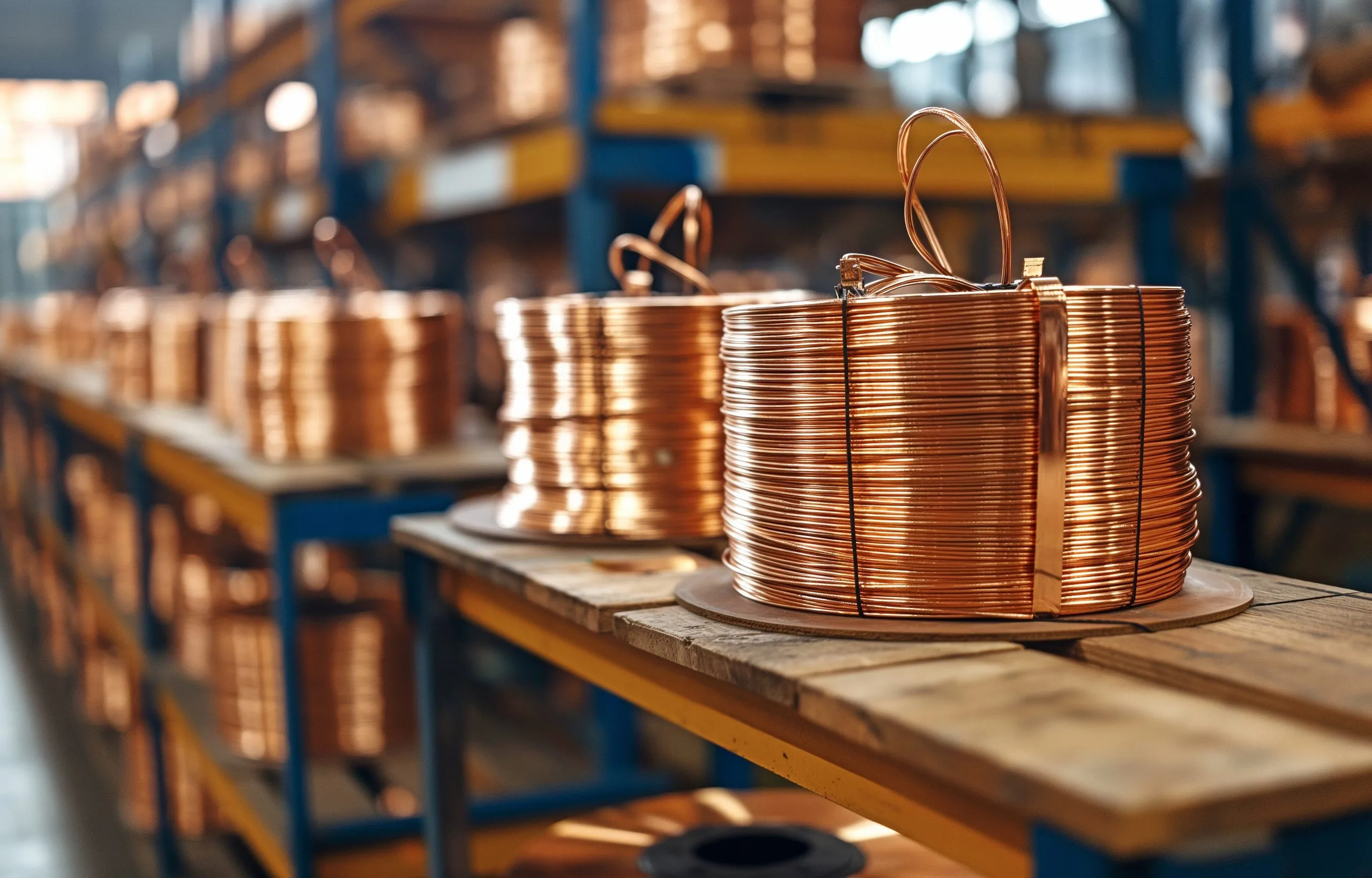
The India copper foil market is expanding as demand rises across lithium-ion batteries, printed circuit boards, electric vehicles, renewable energy systems, consumer electronics, and industrial applications. Copper foil is used as a conductive material in battery anodes, PCBs, flexible circuits, electromagnetic shielding, and electronic components. India’s copper foil market reached USD 629.4 million in 2025 and is projected to reach USD 947.9 million by 2034, growing at 4.52% CAGR. As India strengthens domestic electronics and battery manufacturing, copper foil is becoming a more strategic material in the clean energy and digital manufacturing ecosystem.
Key market drivers are strengthening copper foil demand in India
EV batteries and energy storage are increasing copper foil usage
Electric vehicle adoption and battery manufacturing are major demand drivers for copper foil in India. Copper foil is a key current collector in lithium-ion battery anodes, making it essential for EV batteries, energy storage systems, two-wheelers, passenger cars, commercial vehicles, and stationary storage projects. India has about 260 GWh of battery storage projects in development, creating long-term demand for battery materials and components. As local battery cell production increases, demand for high-quality, thin, and consistent copper foil is expected to rise. Suppliers that can meet battery-grade quality, thickness control, and reliable delivery requirements will be better positioned.
Electronics and PCB manufacturing are supporting industrial demand
India’s electronics manufacturing push is creating fresh opportunities for copper foil producers and importers. Copper foil is widely used in printed circuit boards, flexible printed circuits, smartphones, laptops, telecom equipment, automotive electronics, industrial controls, and consumer appliances. Domestic bare PCB manufacturing is projected to grow at 45% CAGR through FY2029, which can significantly increase demand for copper-clad laminates and related copper foil materials. As India expands electronics assembly and component manufacturing, the need for consistent material quality, supply reliability, and technical specifications will become more important.
Renewable energy and 5G infrastructure are widening applications
Solar power systems, inverters, power electronics, charging infrastructure, and 5G equipment are also supporting copper foil demand. These applications require efficient conductivity, thermal performance, and durable electronic components.
Government initiatives and manufacturing policies are supporting market growth
Government initiatives such as Make in India, production-linked incentive schemes, electronics manufacturing incentives, battery storage programs, EV policies, and renewable energy targets are supporting the copper foil market. These policies encourage domestic production of batteries, electronics, semiconductors, and clean energy components, which can increase demand for copper foil and related inputs. Support for advanced chemistry cell manufacturing and local supply chain development is particularly relevant. At the same time, businesses must meet quality, environmental, import, safety, and technical standards as the market becomes more advanced.
Competitive landscape is becoming technology and supply-chain focused
The India copper foil market includes domestic metal processors, copper product manufacturers, importers, battery material suppliers, PCB material providers, global copper foil producers, and electronics supply chain companies. Competition is shaped by product thickness, surface treatment, conductivity, tensile strength, quality consistency, pricing, certification, delivery reliability, and customer technical support. Battery-grade and PCB-grade copper foil require different performance specifications, creating opportunities for specialized suppliers. Companies that invest in technology, quality assurance, customer collaboration, and local supply reliability can build stronger market positioning.
Market challenges continue to affect quality and cost competitiveness
Raw material price volatility can affect margins
Copper foil production is closely linked to copper prices. Price volatility, currency movements, energy costs, and import dependence can affect procurement costs, pricing decisions, and profitability.
High technical standards can limit supplier readiness
Battery and electronics applications require precise thickness, purity, surface quality, and consistency. Meeting these standards requires advanced processing technology, testing systems, and strict quality control.
Future outlook
The future outlook for the India copper foil market remains positive, supported by EV growth, energy storage projects, PCB manufacturing, electronics localization, renewable energy, and 5G infrastructure. Opportunities are expected across battery-grade copper foil, ultra-thin foil, electrodeposited copper foil, rolled copper foil, copper-clad laminates, flexible circuits, and power electronics. As the market moves toward USD 947.9 million by 2034, businesses that combine technical capability, quality consistency, cost efficiency, local supply chain partnerships, and customer-specific product development will be better positioned to capture long-term growth.
Consultants at Nexdigm, in their latest publication “India copper foil market outlook to 2035,” analyze the sector By Copper Foil Grade (Battery-Grade Electrodeposited Copper Foil, Rolled Annealed Copper Foil, High-Frequency/RF Copper Foil, Standard Industrial Copper Foil), By Manufacturing Route (Electrodeposited Copper Foil, Rolled Copper Foil, Treated Copper Foil)
Nexdigm suggests that businesses in the India copper foil market should focus on battery-grade, PCB-grade, and high-performance copper foil products that support EV batteries, electronics, and energy storage demand.
To take the next step, simply visit our Request a Consultation page and share your requirements with us.
Harsh Mittal
+91-8422857704