
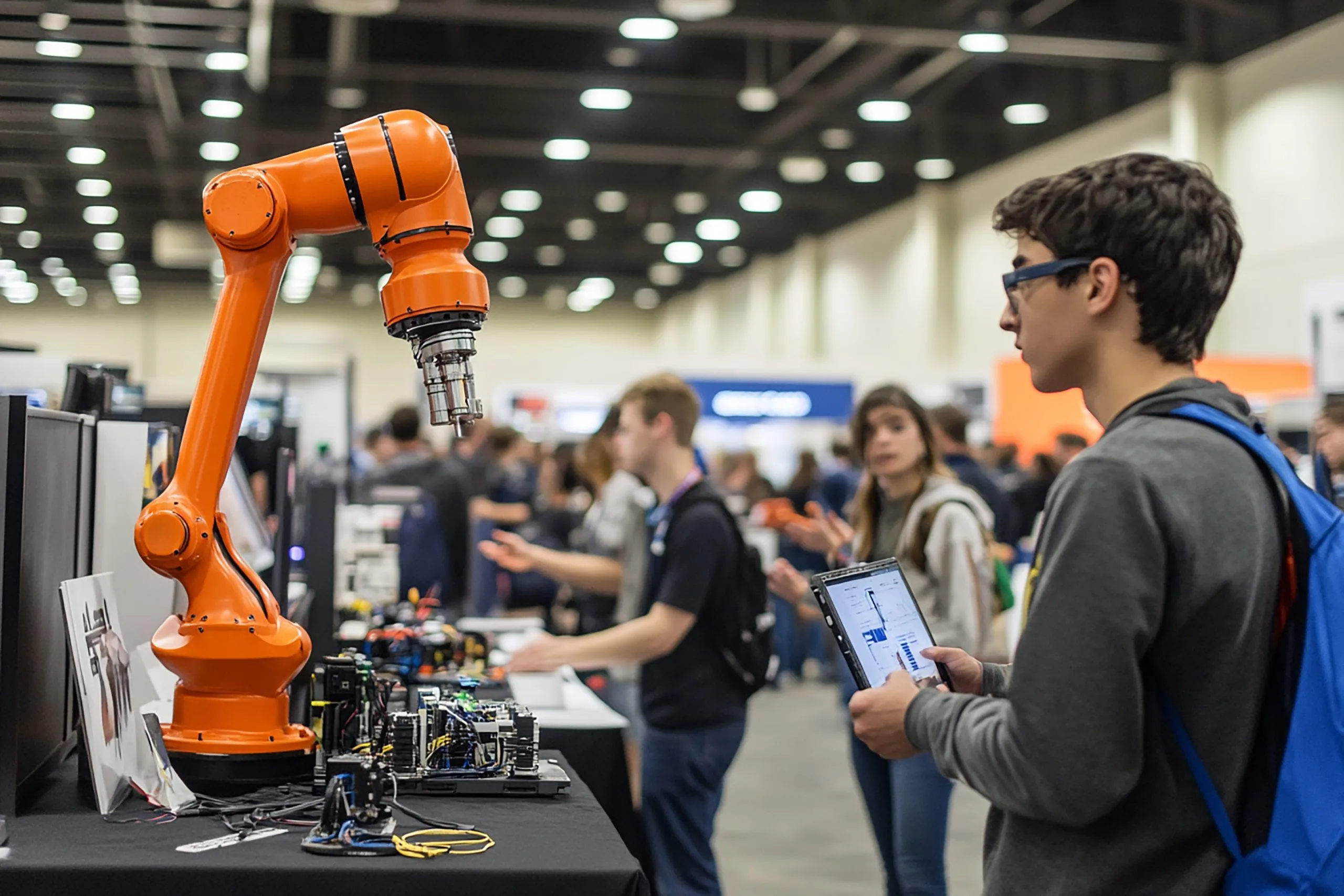
The India industrial robots and robot controllers market is growing as manufacturers adopt automation to improve productivity, accuracy, safety, and production consistency. Industrial robots are increasingly used in welding, assembly, material handling, painting, packaging, inspection, and machine tending applications. Robot controllers act as the operational brain of these systems, enabling motion control, programming, safety coordination, and process synchronization. India’s industrial robotics revenue is estimated at USD 4.86 billion and projected to reach USD 13.47 billion, supported by rising automation demand across automotive, electronics, metals, pharmaceuticals, and precision manufacturing sectors.
Key Growth Drivers of the India AC Servo Drives and Motors System Market
Smart Manufacturing Is Increasing Robot Adoption
Indian manufacturers are shifting toward smart factories to improve production speed, quality, and flexibility. Industrial robots help reduce manual errors, improve repeatability, and support continuous operations in high-volume production environments. Robot controllers are becoming more advanced with features such as real-time monitoring, programmable motion paths, safety functions, and machine connectivity. As factories modernize, demand is rising for robots that can be integrated with sensors, vision systems, conveyors, CNC machines, and digital manufacturing platforms.
Automotive and Electronics Manufacturing Are Strengthening Market Growth
Automotive, electric vehicle, electronics, and component manufacturing sectors are major users of industrial robots. Robots are used for welding, painting, assembly, inspection, packaging, and precision handling, while controllers ensure accurate movement and process coordination. Industrial robot installations in India reached around 8,510 units, showing stronger adoption across production lines. As OEMs and suppliers increase investments in automated plants, demand is rising for advanced robot controllers with higher speed, accuracy, and multi-axis control capabilities.
Labour Productivity and Workplace Safety Are Supporting Automation
Robots help companies manage repetitive, hazardous, and physically demanding tasks. This improves worker safety while allowing employees to focus on supervision, programming, maintenance, and quality control roles.
Government Support Is Encouraging Robotics and Advanced Manufacturing Adoption
Government support for the market is linked to Make in India, Production Linked Incentive schemes, electronics manufacturing, defence production, EV manufacturing, and industrial corridor development. These initiatives encourage companies to invest in automated production systems and improve domestic manufacturing competitiveness. Support for digital manufacturing, skilling, MSME modernization, and smart infrastructure also strengthens the adoption of robotics. As India aims to expand high-value manufacturing, robots and controllers are becoming important tools for productivity and quality improvement.
Competitive Landscape Is Shaped by Global Robotics Brands and Local Integrators
The India industrial robots and robot controllers market includes global robot manufacturers, automation companies, local system integrators, robot controller suppliers, machine builders, and engineering service providers. Competition is shaped by payload range, controller performance, software flexibility, safety features, integration capability, pricing, and after-sales service. International brands compete strongly in high-performance robotics, while domestic integrators provide customized automation cells, retrofits, programming, and maintenance support. Companies that combine reliable hardware with local technical service are better positioned.
High Investment Costs and Skill Shortages Remain Key Adoption Barriers
Automation Projects Require Significant Upfront Capital
Industrial robots, controllers, sensors, grippers, safety systems, and integration services can require high initial investment. This can slow adoption among small and medium manufacturers with limited capital budgets.
Skilled Programming and Maintenance Talent Is Limited
Robotics adoption requires trained engineers, programmers, operators, and service teams. Skill shortages in robot programming, controller tuning, troubleshooting, and system integration can affect project performance and adoption speed.
Future Outlook
The India industrial robots and robot controllers market is expected to grow as automation spreads across automotive, electronics, pharmaceuticals, food processing, logistics, metals, and precision engineering. Future demand will likely increase for collaborative robots, AI-enabled controllers, machine vision integration, predictive maintenance, and flexible automation cells. Robot controllers with better connectivity, safety, and analytics capabilities will gain importance as factories become more digital. Businesses that offer scalable automation, strong integration support, workforce training, and reliable after-sales service are likely to capture stronger opportunities.
Consultants at Nexdigm, in their latest publication “India industrial robots and robot controllers market outlook to 2032,” analyze the sector By Robot Type (Payload Handling Capacity, Axis Flexibility, Cycle Time Efficiency), By Robot Controller Type (Processing Speed, Connectivity Capability, AI Integration Level)
Nexdigm suggests that businesses should prioritize scalable automation solutions, advanced robot controller integration, workforce training, and strong after-sales support to capture growth in India’s industrial robots and robot controllers market.
To take the next step, simply visit our Request a Consultation page and share your requirements with us.
Harsh Mittal
+91-8422857704
[email protected]