
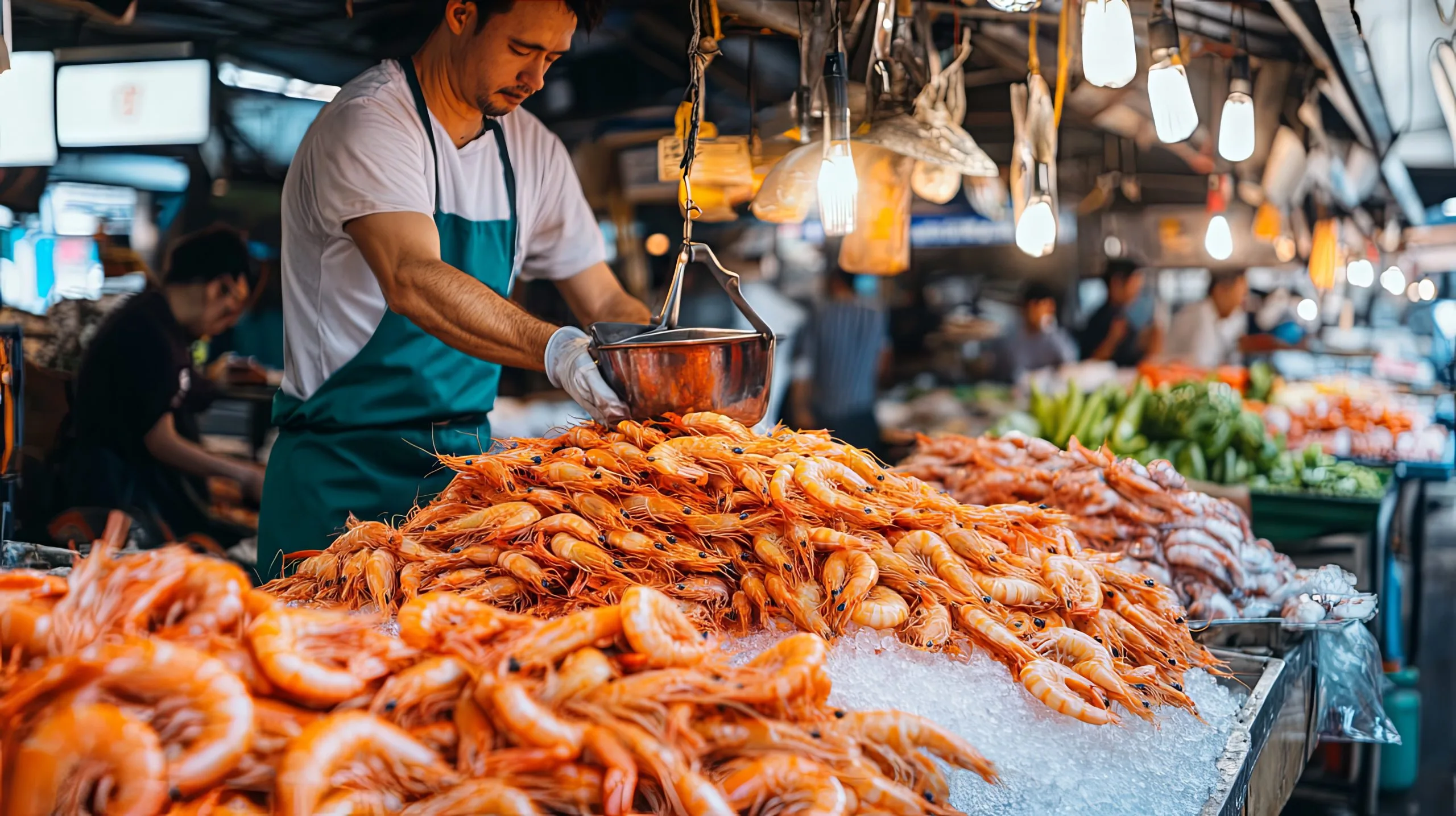
The India shrimp market is one of the most important segments of the country’s seafood economy, supported by aquaculture growth, export demand, processing capacity, and rising domestic consumption. India is a major global supplier of farmed shrimp, especially frozen shrimp, with strong demand from markets such as the United States, China, Japan, and Europe. The market reached around 1.02 MMT in 2025 and is projected to reach 2.55 MMT by 2035. As farmers, processors, and exporters modernize operations, shrimp continues to play a key role in India’s aquaculture growth story.
Key market drivers are strengthening India’s shrimp industry
Aquaculture expansion is improving shrimp production capacity
Aquaculture is the backbone of India’s shrimp market, with coastal states such as Andhra Pradesh, Gujarat, Odisha, Tamil Nadu, and West Bengal contributing significantly to production. Farmers are increasingly adopting better pond management, improved seed quality, formulated feed, aeration systems, and disease monitoring practices. These improvements are helping increase productivity and reduce production risks. Vannamei shrimp has become especially important because of its faster growth cycle and strong export acceptance. As farm-level technology improves, India’s shrimp production base is expected to become more efficient and commercially stable.
Export demand is supporting processing and value creation
Shrimp is one of India’s largest seafood export categories and a major contributor to marine export earnings. India’s marine product exports reached INR 62,408 crore in 2024–25, with shrimp exports valued at INR 43,334 crore. This shows shrimp’s importance in India’s seafood trade. Frozen shrimp remains the leading export format, supported by strong processing infrastructure, cold storage, quality testing, and global buyer relationships. Export demand encourages producers and processors to maintain international standards in food safety, traceability, certification, and packaging.
Domestic consumption is gradually creating new opportunities
While exports continue to dominate the market, domestic shrimp consumption is also gaining attention. Urban consumers are showing greater interest in protein-rich, easy-to-cook seafood products. Modern retail, online seafood platforms, quick commerce, and foodservice channels are making shrimp more accessible to Indian households. Restaurants and cloud kitchens are also using shrimp in biryani, curries, grills, noodles, appetizers, and regional seafood dishes. This gradual rise in domestic demand can help reduce overdependence on exports over the long term.
Government support and initiatives are improving aquaculture competitiveness
Government support is playing an important role in strengthening India’s shrimp and aquaculture ecosystem. Initiatives under the Pradhan Mantri Matsya Sampada Yojana, fisheries infrastructure development programs, export promotion measures, and cold chain investments are helping improve productivity, processing, and market access. Support for hatcheries, disease surveillance, quality testing, and farmer training can improve production reliability. These initiatives are important as India competes in global seafood markets where quality, traceability, sustainability, and compliance are becoming more important.
Competitive landscape is becoming more export and quality focused
The India shrimp market includes hatcheries, feed companies, farmers, processors, exporters, cold chain operators, domestic seafood brands, and foodservice suppliers. Competition is shaped by seed quality, feed efficiency, farm productivity, processing standards, export relationships, certifications, and price competitiveness. Large exporters focus on scale, quality control, and global buyer requirements, while domestic brands are building visibility through retail and online channels. Companies that can offer traceable, certified, and value-added shrimp products are likely to gain stronger market positions.
Market challenges continue to affect farmers and exporters
Disease outbreaks and farm-level risks remain important concerns
Shrimp farming is vulnerable to disease outbreaks, water quality issues, climate variability, and poor seed quality. These risks can affect survival rates, yields, and farmer incomes. Strong biosecurity, better pond management, and regular monitoring are essential for stable production.
Export dependence creates pricing and demand uncertainty
India’s shrimp industry depends heavily on international markets, making it sensitive to global prices, trade restrictions, freight costs, currency movement, and buyer demand. Any slowdown in key export destinations can affect farmgate prices and processor margins.
Future outlook
The future outlook for the India shrimp market remains positive, supported by aquaculture expansion, export competitiveness, domestic seafood consumption, and value-added processing. The market is projected to reach 2.55 MMT by 2035, reflecting strong long-term potential. Growth opportunities are expected in frozen shrimp, ready-to-cook products, certified seafood, improved farming technologies, and domestic retail formats. Businesses that invest in disease management, traceability, quality control, cold chain efficiency, and value-added product development will be better positioned to capture future opportunities.
Consultants at Nexdigm, in their latest publication “India shrimp market outlook to 2035,” analyze the sector By Shrimp Species (Farmed Shrimp Penetration, Wild-Caught Shrimp Utilization, Import Dependency, Species Consumption Preference), By Product Form (Ready-to-Cook Penetration, Frozen Seafood Utilization, Foodservice Demand)
Nexdigm suggests that businesses in the India shrimp market should focus on disease management, traceability, and farm-level productivity to strengthen production reliability and export competitiveness.
To take the next step, simply visit our Request a Consultation page and share your requirements with us.
Harsh Mittal
+91-8422857704