
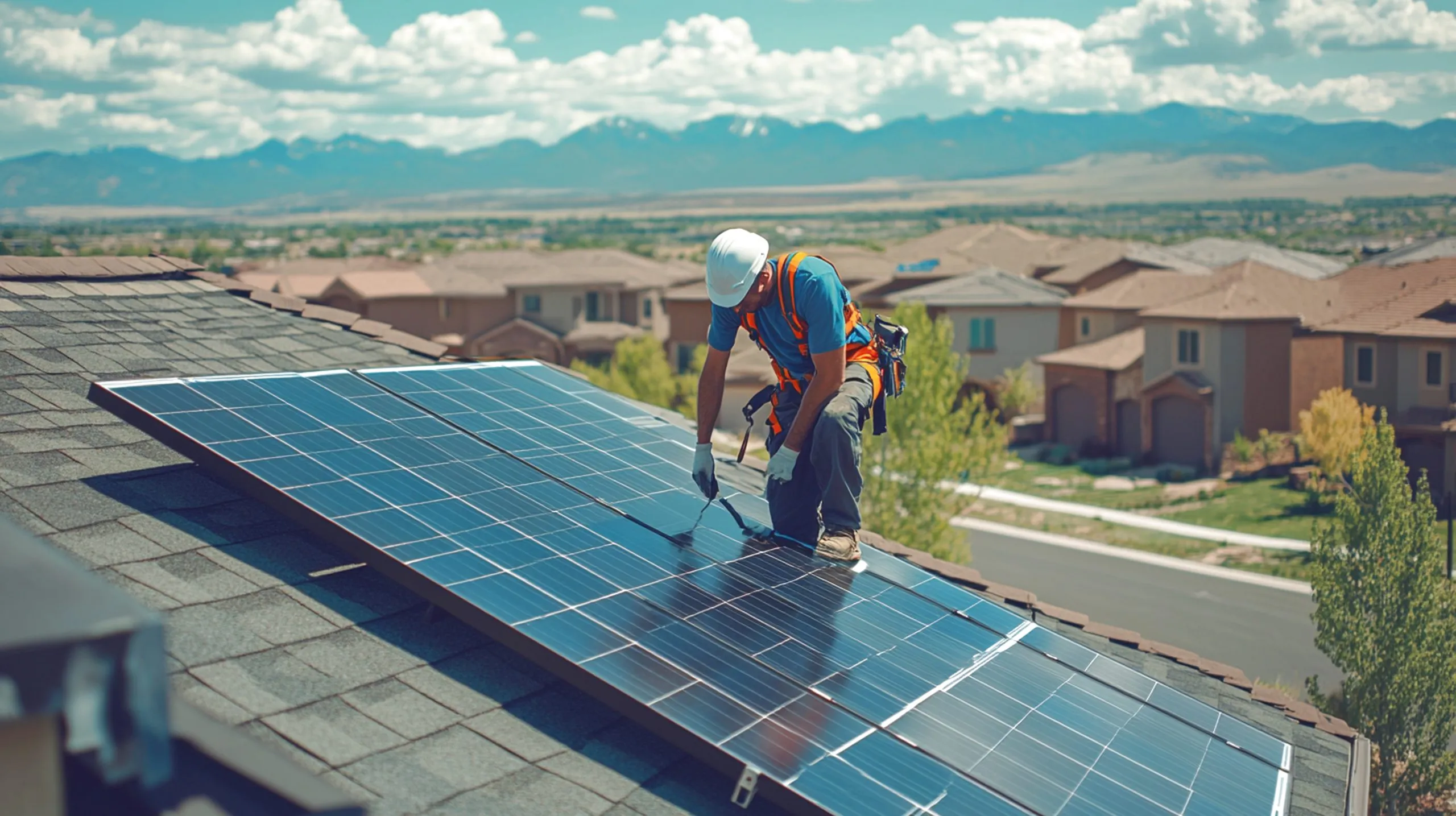
The India solar rooftop installation market is expanding as households, businesses, industries, institutions, and public buildings look for cleaner and more cost-efficient power solutions. Rooftop solar allows electricity users to generate power on-site, reduce dependence on grid electricity, and manage rising energy costs. India’s grid-connected rooftop solar capacity reached 30.11 GW, while the country’s total installed solar capacity crossed 150.26 GW. Market estimates also project rooftop solar capacity to rise from 20.84 GW to 48.55 GW at 18.41% CAGR, reflecting strong growth across residential, commercial, and industrial users.
Key market drivers are strengthening solar rooftop installation demand in India
Rising electricity costs are encouraging self-generation
Electricity cost reduction is one of the strongest reasons behind rooftop solar adoption in India. Commercial and industrial users often face high power tariffs, making rooftop solar attractive for factories, warehouses, offices, malls, hotels, hospitals, schools, and data centers. By generating electricity on-site, businesses can reduce monthly power bills and improve long-term energy cost predictability. The industrial segment is estimated to hold more than 53% share of the rooftop solar market, showing how strongly cost-sensitive power users are adopting distributed solar. For many businesses, solar rooftop installation is no longer viewed only as a sustainability project but also as a practical operating-cost decision.
Residential adoption is rising with subsidy-backed rooftop systems
Residential rooftop solar is gaining momentum as households become more aware of lower electricity bills, net metering benefits, and government-backed support. India added 8.71 GW of rooftop solar in a single fiscal year, showing rising installation momentum across consumer categories. Apartment societies, independent homes, housing colonies, and small businesses are increasingly exploring rooftop solar as equipment costs decline and financing options improve. The push toward residential solar also helps reduce grid pressure during daytime demand periods. As installers offer bundled services, including site surveys, financing, installation, and maintenance, adoption is becoming easier for first-time users.
Corporate decarbonization is supporting commercial and institutional demand
Companies are adopting rooftop solar to meet renewable energy targets, reduce emissions, and improve ESG performance. Educational institutions, hospitals, warehouses, and public facilities are also using rooftop solar to lower operating expenses and demonstrate sustainability leadership.
Government rooftop solar programmes are supporting faster market adoption
Government support is a key enabler for India’s solar rooftop installation market. Policies such as rooftop solar subsidies, net metering frameworks, simplified application processes, distribution company participation, and residential-focused programmes are improving adoption. The PM Surya Ghar Muft Bijli Yojana has brought stronger attention to household rooftop solar by encouraging wider residential participation. Government targets for renewable energy expansion and distributed solar are also pushing states, utilities, installers, and financiers to build stronger implementation capacity. These initiatives are helping rooftop solar move from early adopters to mainstream electricity consumers.
Competitive landscape is shaped by EPC players, developers, and financing models
The India solar rooftop installation market includes EPC companies, solar developers, module manufacturers, inverter suppliers, mounting structure providers, monitoring software firms, financing companies, DISCOM-linked vendors, and operations and maintenance service providers. Competition is shaped by installation quality, pricing, warranty support, financing options, net metering assistance, after-sales service, and project execution speed. Commercial and industrial users often prefer customized EPC or OPEX models, while residential customers look for trusted vendors and simple payback. Players with strong local service networks, reliable equipment partnerships, and digital monitoring capabilities are better positioned to scale.
Market challenges continue to affect rooftop solar deployment
Net metering delays and approval complexity can slow installations
Rooftop solar projects often require approval, inspections, grid connectivity, and net metering coordination. Delays at the distribution utility level can affect installation timelines and customer confidence.
Roof suitability and financing gaps remain practical barriers
Not every building has adequate roof space, structural strength, shadow-free area, or ownership clarity. Small consumers may also hesitate due to upfront costs, limited awareness, or uncertainty around savings and maintenance.
Future outlook
The future outlook for the India solar rooftop installation market remains positive, supported by high electricity demand, clean energy goals, residential subsidies, corporate decarbonization, falling equipment costs, and wider installer networks. Another market outlook projects rooftop solar growth from 17.60 GW to 41.52 GW at 18.73% CAGR, reinforcing strong expansion potential. Opportunities are expected across residential rooftops, commercial buildings, industrial facilities, educational campuses, hospitals, warehouses, MSMEs, battery-linked solar systems, smart meters, and digital monitoring platforms. Businesses that combine quality installation, financing support, net metering assistance, and reliable maintenance will be better positioned for long-term growth.
Consultants at Nexdigm, in their latest publication “India solar rooftop installation market outlook to 2032,” analyze the sector By End User Industry (Manufacturing, Automotive and Auto Components, Food & Beverage Processing, Pharmaceuticals), By Installation Type (Metal Sheet Roof Installations, RCC Roof Installations, Elevated Rooftop Systems)
Nexdigm suggests that businesses in the India solar rooftop installation market should focus on affordable, reliable, and easy-to-adopt rooftop solar solutions that support demand for lower electricity bills, clean energy use, and on-site power generation across residential, commercial, industrial, and institutional users.
To take the next step, simply visit our Request a Consultation page and share your requirements with us.
Harsh Mittal
+91-8422857704