
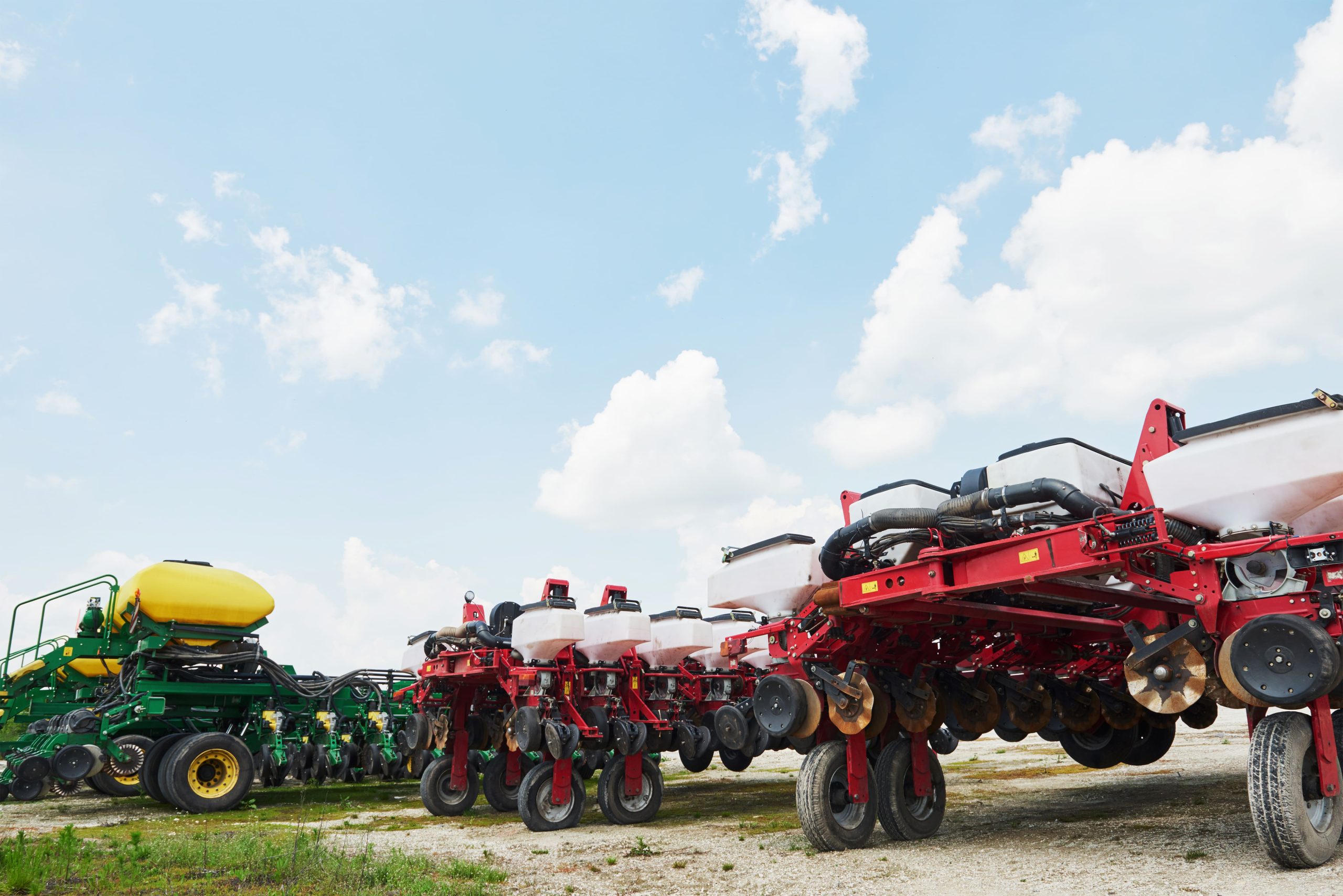
India’s agricultural sector is witnessing a steady mechanization as farmers seek to improve productivity, reduce labor dependency, and manage rising input costs. While tractor penetration has increased over the past decade, a large portion of small and marginal farmers still rely on affordable machinery solutions. As of 2026, India remains one of the world’s largest markets for agricultural equipment, with a significant share of implements—such as rotavators, seed drills, cultivators, harvesters, and threshers—circulating in the secondary market after 3–6 years of primary usage. The used agricultural implements segment is gaining traction due to price sensitivity among farmers, increasing equipment turnover by large farms and agri-contractors, and the rapid expansion of custom hiring centers (CHCs) across rural India.
What’s Driving the Used Agricultural Implements Market in India?
Rising Mechanization Among Small and Marginal Farmers
Over 85% of India’s farmers operate on small landholdings, making new machinery purchases economically challenging. Used agricultural implements offer a cost-effective pathway for mechanization, enabling farmers to adopt rotavators, power tiller attachments, seeders, and sprayers at 40–60% lower upfront costs compared to new equipment. This affordability is particularly relevant in eastern and central Indian states where mechanization levels remain below the national average. The growing awareness of productivity benefits, coupled with peer adoption within farming clusters, is accelerating acceptance of refurbished and pre-owned implements.
Expansion of Custom Hiring Centers (CHCs) and Farm Service Models
The rapid growth of custom hiring centers is structurally supporting demand for used implements. CHCs allow small farmers to rent machinery instead of owning it, while service providers optimize asset utilization by acquiring refurbished implements at lower capital costs. As CHCs scale across states such as Uttar Pradesh, Bihar, Madhya Pradesh, and Odisha, operators are increasingly sourcing used harvesters, planters, balers, and tillage equipment to expand their fleets quickly and profitably. This shared-economy model is strengthening secondary-market liquidity and improving equipment circulation in rural markets.
Labor Shortages and Shift Toward Timely Farm Operations
Seasonal labor shortages and rising rural wages are pushing farmers toward mechanized solutions for sowing, harvesting, and post-harvest operations. Used implements are becoming a practical option for time-sensitive activities, particularly during peak sowing and harvesting windows. Implements such as reapers, threshers, and straw management equipment are seeing higher turnover in the resale market as large farms and contractors upgrade to newer models, releasing mid-life assets into the secondary ecosystem.
Government-Led Initiatives Supporting Mechanization
Government schemes promoting farm mechanization and equipment access are indirectly strengthening the used implements market. Subsidies for farm machinery, support for CHCs, and financing programs through NABARD and state agriculture departments are improving affordability and access. As newer equipment is adopted under subsidy-linked programs, a replacement cycle is emerging, pushing older but serviceable implements into the secondary market. In addition, state-level initiatives promoting mechanization for crop residue management and precision sowing are expanding demand for specialized implements, including refurbished units.
Market Competition and Distribution Landscape
India’s used agricultural implements market remains largely fragmented and informal, dominated by local traders, village-level brokers, and small refurbishment workshops. However, organized dealerships associated with OEMs and tractor dealers are gradually entering the secondary space through certified pre-owned programs and trade-in models. The emergence of agri-equipment marketplaces and digital platforms is improving price discovery, buyer reach, and equipment traceability. Over time, warranty-backed refurbished implements and standardized quality checks are expected to formalize the market and improve buyer confidence.
Quality Variability and Limited Financing Access
The lack of standardized refurbishment and quality certification leads to wide variability in equipment condition and pricing. Farmers often face uncertainty around remaining equipment life, maintenance history, and spare parts availability. Additionally, financing options for used implements remain limited compared to new equipment, constraining adoption among highly price-sensitive buyers. Limited access to trained technicians in rural areas further affects uptime and lifecycle value for refurbished machinery.
Future Outlook
India’s used agricultural implements market is expected to witness steady growth through 2035, supported by deeper mechanization, expansion of CHCs, and increasing replacement cycles among commercial farms and agri-contractors. By 2035, the market is likely to become more organized, with wider adoption of certified refurbishment, digital trading platforms, and financing solutions tailored for pre-owned equipment. Demand will remain strong for mid-life tillage tools, seed drills, harvesters, and residue management equipment, particularly in states with fragmented landholdings.
Consultants at Nexdigm, in their latest publication “India Used Agricultural Implements Market Outlook to 2035”, analyzed the market by Implement Type (Tillage Equipment, Sowing & Planting Equipment, Harvesting Equipment, Post-Harvest Machinery), By Application (Cereals & Grains, Horticulture, Commercial Crops), and By Sales Channel (Authorized Dealers, Independent Traders, Digital Marketplaces, Auctions). Nexdigm believes that businesses should prioritize certified refurbishment models, rural service networks, and financing partnerships, while leveraging CHCs and agri-entrepreneurs as key growth channels in India’s evolving secondary farm equipment ecosystem.
To take the next step, simply visit our Request a Consultation page and share your requirements with us.
Harsh Mittal
+91-8422857704