
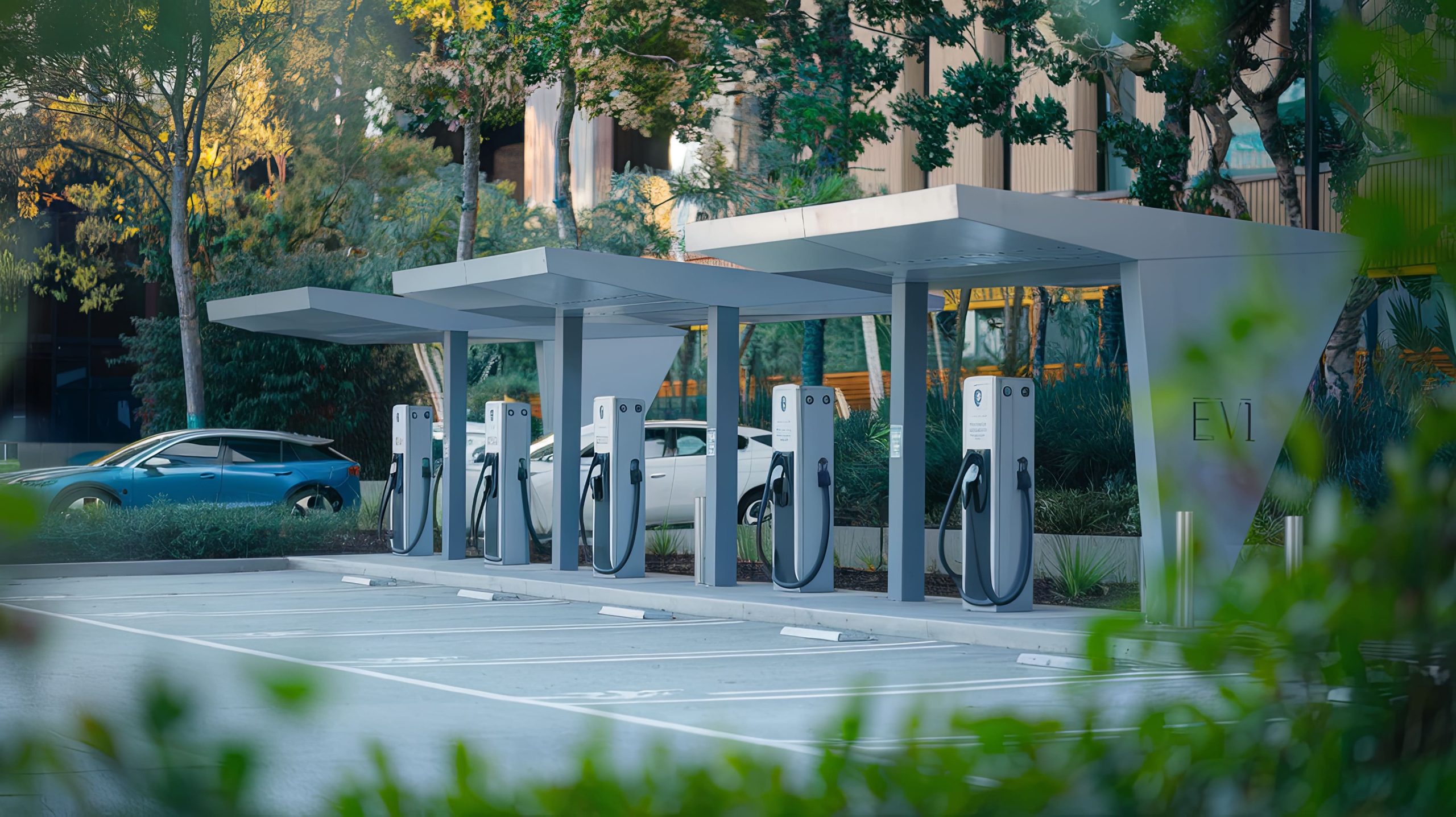
Indonesia’s electric vehicle ecosystem is entering a phase of accelerated development as the government pushes toward large-scale electrification of transportation. The country aims to reduce carbon emissions, cut fuel imports, and leverage its strong nickel reserves to build a comprehensive EV value chain. As of 2025, EV adoption in Indonesia remained at an early stage but is expanding rapidly with supportive policies, rising investments, and growing consumer awareness. However, the availability of charging infrastructure remains a critical enabler for sustained EV growth. The Indonesian government, along with state-owned utilities and private companies, is investing in public charging stations across major cities and highways. As the EV fleet expands through the next decade, the charging infrastructure market is expected to play a pivotal role in supporting Indonesia’s transition toward clean mobility.
What’s Driving the EV Charging Infrastructure Market in Indonesia?
Rapid Growth in Electric Vehicle Adoption
Indonesia is witnessing increasing adoption of electric vehicles, particularly electric two-wheelers and passenger cars. Government incentives such as tax reductions, import duty exemptions, and subsidies for EV purchases are encouraging consumers and fleet operators to shift from internal combustion engine vehicles to electric mobility. As EV ownership increases, the demand for reliable and accessible charging infrastructure is expanding across urban centers such as Jakarta, Surabaya, and Bandung.
Urbanization and Rising Mobility Demand
Indonesia’s rapid urbanization is increasing the need for sustainable transportation solutions. Large metropolitan areas are facing challenges related to congestion, pollution, and fuel consumption. Electric vehicles offer a cleaner alternative, but their adoption depends heavily on the availability of charging facilities. Consequently, public charging stations are being deployed in shopping malls, office complexes, parking facilities, and residential areas to support the growing EV user base.
Expansion of Public Charging Networks
State-owned utility companies and private investors are actively expanding EV charging networks across Indonesia. Charging stations are being installed along major transportation corridors and highways to enable intercity EV travel. Additionally, fast-charging technology is gaining traction as it significantly reduces charging time and improves convenience for EV owners. The gradual expansion of both fast and standard charging infrastructure is strengthening consumer confidence in electric mobility.
Government-Led Initiatives
The Indonesian government has introduced several policies to accelerate EV adoption and support charging infrastructure development. Regulations promoting battery-based electric vehicles aim to attract global investment and build domestic manufacturing capabilities. State-owned electricity company PLN has been tasked with deploying public charging stations across the country, while partnerships with private companies are being encouraged to scale infrastructure deployment. Furthermore, Indonesia’s roadmap for electric mobility targets millions of electric two-wheelers and hundreds of thousands of electric cars on the road by the early 2030s. To support this transition, the government is prioritizing charging infrastructure expansion along key economic corridors and in high-density urban areas. These initiatives are expected to significantly increase the number of public charging stations nationwide over the next decade.
Market Competition
The Indonesia EV charging infrastructure market is currently in an emerging stage with participation from state-owned utilities, automotive companies, and technology providers. The state electricity company PLN plays a central role in deploying and operating public charging stations across the country. Meanwhile, automotive manufacturers and energy companies are forming partnerships to expand charging networks and integrate charging solutions with EV sales. Global technology firms and charging equipment manufacturers are also entering the market to provide advanced charging solutions such as ultra-fast chargers, smart charging management systems, and mobile-based payment platforms. As the market matures, competition is expected to intensify with the entry of infrastructure developers, energy companies, and mobility service providers.
Infrastructure Gaps and Key Challenges
Despite strong policy support, Indonesia’s EV charging infrastructure market faces several challenges. One of the key issues is the uneven distribution of charging stations, with most installations concentrated in major urban centers. Rural and intercity routes still lack sufficient charging coverage, which can create range anxiety among EV users. Additionally, high installation costs and grid capacity constraints can slow down the deployment of fast-charging stations. The need for standardized charging technologies and interoperability across different charging networks also remains an important consideration for the market’s long-term development.
Future Outlook
Indonesia’s EV charging infrastructure market is expected to witness significant expansion through 2035 as electric mobility adoption accelerates across passenger vehicles, commercial fleets, and two-wheelers. The increasing presence of EV manufacturers, supportive government policies, and rising investments from energy and infrastructure companies will drive the deployment of both public and private charging networks. By 2035, Indonesia is expected to develop a nationwide charging ecosystem with thousands of public charging stations across urban centers, highways, and commercial hubs. Fast-charging technologies, smart grid integration, and renewable energy-powered charging stations are likely to become more prominent as the country moves toward a sustainable mobility ecosystem. The charging infrastructure market will therefore become a critical pillar supporting Indonesia’s broader clean energy and transportation transition.
Consultants at Nexdigm, in their latest publication “Indonesia EV Charging Infrastructure Market Outlook to 2035”, analyzed the market by Charging Type (AC Charging, DC Fast Charging, Battery Swapping), By Charger Level (Level 1, Level 2, DC Fast Chargers), By Application (Public Charging Stations, Residential Charging, Commercial Charging, Fleet Charging), and By Region (Java, Sumatra, Kalimantan, Sulawesi, Rest of Indonesia). Nexdigm believes that businesses should prioritize fast-charging deployment in high-density urban corridors, develop partnerships with automotive OEMs and energy companies, and integrate smart charging technologies to support Indonesia’s rapidly evolving electric mobility ecosystem.
To take the next step, simply visit our Request a Consultation page and share your requirements with us.
Harsh Mittal
+91-8422857704