
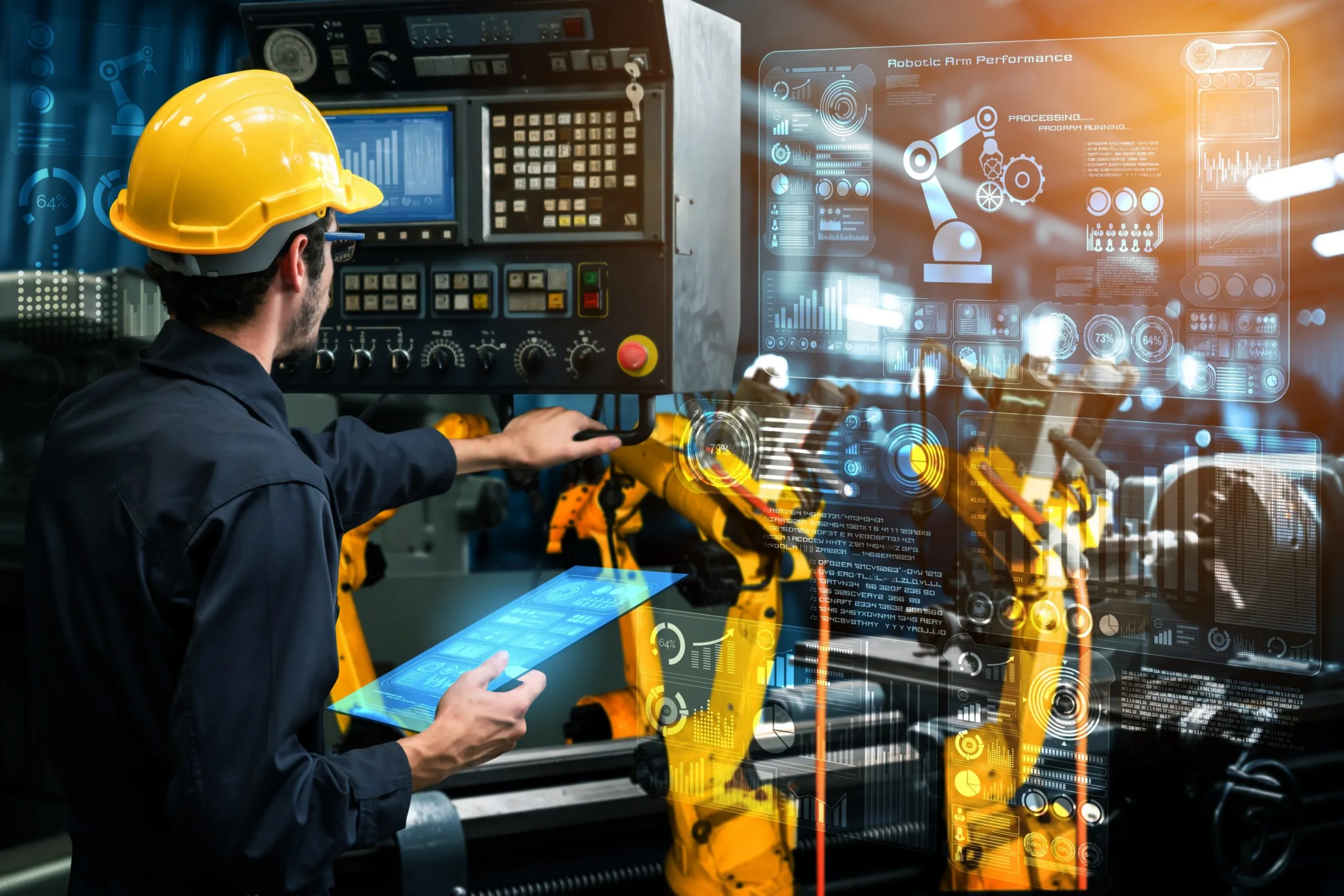
Italy’s industrial automation market is on a strong growth trajectory, driven by the increasing demand for advanced technologies across manufacturing, automotive, energy, and other key sectors. As industries look to enhance productivity, efficiency, and reduce operational costs, automation solutions like robotics, AI, and machine learning are becoming integral. Italy, with its well-established industrial base, is positioning itself as a leader in automation within Europe.
The country’s strong focus on smart manufacturing, fueled by technological advancements, is helping industries modernize and meet the demands of a rapidly changing global market. The market is projected to grow rapidly, driven by technological advancements and increasing investments in smart manufacturing solutions. As Italy embraces the fourth industrial revolution, its industries are poised to become more connected, efficient, and sustainable.
Market Drivers contributing to Italy’s Automation Sector growth
Rising Demand for Automation in Manufacturing
The manufacturing sector in Italy is embracing automation as a critical tool for increasing productivity and maintaining global competitiveness. With advancements in robotics, AI, and IoT technologies, Italian manufacturers can streamline their processes, reduce production costs, and improve quality. Industries such as automotive, electronics, and food production are adopting automated solutions to meet global demand and improve operational efficiency. Automation also offers manufacturers the ability to handle more complex production tasks with precision and reliability, further increasing its adoption.
Technological Advancements in Robotics and AI
The introduction of collaborative robots (cobots) and advanced AI technologies is reshaping Italy’s industrial automation landscape. Cobots, designed to work alongside human operators, are being widely adopted due to their flexibility, ease of use, and cost-effectiveness. Additionally, AI-driven analytics and machine learning are providing real-time insights into operations, allowing businesses to optimize workflows, predict maintenance needs, and enhance decision-making. These technological advancements are enabling companies to automate tasks that were previously manual, expanding the potential of automation in various industries.
Government Push for Digital Transformation
The Italian government is actively supporting the adoption of digital technologies through initiatives like the Industria 4.0 program, which offers incentives and tax breaks for businesses investing in automation and digitalization. This has encouraged a significant shift towards smart manufacturing, where automation is key to improving productivity. The push for digital transformation is not limited to large enterprises but is also extending to small and medium-sized businesses (SMEs), further accelerating the adoption of industrial automation across the country.
Italian Government Initiatives supporting growth of Industrial Automation Sector
The Italian government is playing a pivotal role in driving the growth of industrial automation through initiatives and funding programs aimed at encouraging businesses to adopt automation technologies. Tax credits, financial incentives, and subsidies are available to companies investing in digital transformation, fostering an environment conducive to innovation. Additionally, EU-driven programs are also supporting Italy’s push for smarter and more efficient industries, creating a strong foundation for the future of industrial automation.
Major Competitors within Italy’s Industrial Automation Market
The Italy industrial automation market is highly competitive, with both global and local players dominating the space. Key international companies like Siemens, Rockwell Automation, and ABB are leading the market by offering a wide range of automation solutions across industries. On the other hand, Italian companies such as Comau and STMicroelectronics are emerging as strong contenders, providing tailored automation solutions for local industries. The competition is expected to intensify as both international and domestic players ramp up investments in automation technologies, focusing on robotics, AI, and IoT integration.
Market Challenges faced by Italy’s Industrial Automation Sector
High Initial Investment and ROI Uncertainty
One of the major challenges in Italy’s industrial automation market is the high upfront cost of implementing automation systems. Small and medium-sized enterprises (SMEs) often struggle to justify the initial investment, especially when the return on investment (ROI) can take several years to materialize. The need for substantial capital investment in automation technologies, including robotics, AI, and IoT infrastructure, can slow adoption, particularly for businesses with limited financial resources. However, as automation technologies become more affordable and accessible, these barriers are likely to decrease.
Skilled Labor Shortage
Another challenge facing the industrial automation market in Italy is the shortage of skilled labor. As automation technologies become more advanced, there is an increasing need for a workforce that can operate, maintain, and optimize these systems. The lack of professionals with expertise in robotics, AI, and machine learning poses a challenge for companies looking to fully leverage the potential of industrial automation. Training and upskilling the workforce will be crucial to overcoming this obstacle and ensuring that Italy can sustain its growth in the automation sector.
Future Outlook
In the coming years, the future of Italy’s industrial automation market looks promising. The ongoing adoption of automation technologies across industries, combined with continuous advancements in robotics, AI, and IoT, will drive further growth. As the Italian government continues to support digital transformation initiatives and businesses look to improve efficiency and productivity, the demand for automation solutions will rise. While challenges related to initial investment costs and skilled labour remain, overcoming these barriers will unlock significant opportunities for both businesses and the economy, cementing Italy’s position as a leader in industrial automation in Europe.
Consultants at Nexdigm, in their latest publication Italy Industrial Automation Market Outlook to 2035, analyze the sector by System Type (PLC Type, SCADA System, DCS System, Industrial Robots, Safety Instrumented Systems), by End User segment (Automotive Industry, Electronics and Semi-Conductors, Oil and Gas, Food and Beverage, Pharmaceuticals).
Nexdigm suggests that businesses should stay ahead by thinking proactively rather than reacting to change. By strengthening internal processes, embracing digital innovation, and staying closely connected to market realities, companies can navigate uncertainty with greater ease. Blending strategic foresight with local insights helps build resilience and supports steady, long-term growth.
To take the next step, simply visit our Request a Consultation page and share your requirements with us.
Harsh Mittal
+91-8422857704