
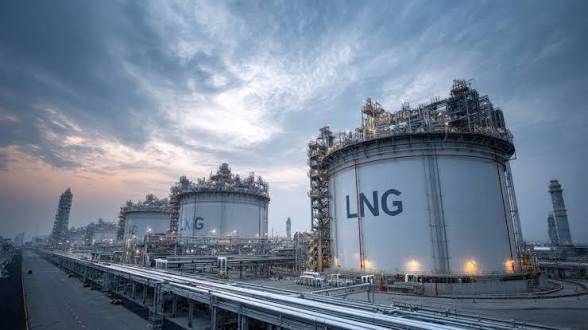
Italy has emerged as one of Europe’s most strategic LNG hubs, driven by a growing need for energy diversification, supply flexibility, and reduced dependence on traditional pipeline imports. Natural gas remains a vital part of the country’s energy mix, accounting for roughly 35% of total energy consumption, while more than 95% of gas demand is met through imports. LNG has become increasingly important in balancing energy security and supporting the transition toward cleaner energy systems. With five operational regasification facilities and approximately 28 billion cubic meters (BCM) of regasification capacity, Italy is strengthening its position as a critical gateway for LNG flows across Southern Europe.
Market Drivers Advancing the Italy LNG Infrastructure Industry
Rising Focus on Energy Diversification and Supply Security
One of the strongest drivers behind Italy’s LNG infrastructure market is the country’s ambition to diversify energy sources. Recent geopolitical developments highlighted the risks of relying heavily on a limited number of gas suppliers. In response, Italy has expanded LNG import capabilities, enabling access to global suppliers from North America, the Middle East, and Africa. LNG now represents nearly one-quarter of Italy’s natural gas imports, with major volumes arriving from Qatar, the United States, and Algeria. This diversified sourcing strategy reduces supply risks while improving long-term energy resilience.
Expansion of Regasification Capacity Across Strategic Coastal Regions
Investment in LNG terminals and floating storage regasification units (FSRUs) is significantly enhancing Italy’s infrastructure landscape. The operationalization of Piombino FSRU and Ravenna FSRU has substantially increased the country’s LNG processing capabilities. These facilities strengthen Italy’s ability to handle fluctuating demand while supporting regional energy distribution networks.
LNG as a Transition Fuel Supporting Decarbonization
While renewable energy deployment accelerates, LNG continues to play an essential bridging role within Italy’s energy transition strategy. Compared with coal and fuel oil, natural gas offers lower carbon emissions and greater operational flexibility for power generation. Industries, utilities, and transportation sectors increasingly view LNG infrastructure as a practical solution for maintaining reliable energy supplies while renewable capacity continues to scale. This balance between sustainability and energy security is encouraging further investment throughout the LNG value chain.
Government Initiatives Supporting the Italy LNG Infrastructure Industry
The Italian government has actively supported LNG infrastructure expansion through accelerated permitting processes, strategic energy planning, and investments in floating regasification terminals. Authorities have prioritized import diversification initiatives while collaborating with infrastructure operators such as Snam to strengthen national energy resilience. These efforts have enabled faster deployment of critical assets, including the Piombino and Ravenna FSRUs, enhancing Italy’s ability to secure LNG supplies from global markets and support broader European energy stability.
Competitive Landscape of the Italy LNG Infrastructure Industry
The Italy LNG infrastructure sector is characterized by the presence of major energy and infrastructure operators that manage import, regasification, and distribution assets. Key participants include Snam, Adriatic LNG, OLT Offshore LNG Toscana, FSRU Italia, and GNL Italia. Companies are focusing on capacity optimization, terminal modernization, digital monitoring solutions, and strategic partnerships to improve operational efficiency. Strong regulatory backing and increasing LNG demand continue to attract investments from both domestic and international stakeholders.
Challenges Facing Italy LNG Infrastructure Industry
High Capital Requirements and Infrastructure Costs
Developing LNG terminals, storage facilities, and related pipeline networks requires substantial capital investment. Cost pressures associated with construction, compliance, safety standards, and operational maintenance can impact project economics and investment decisions, particularly in uncertain market conditions.
Balancing LNG Investments with Long-Term Climate Targets
Italy faces the challenge of expanding LNG infrastructure while simultaneously pursuing ambitious decarbonization goals. Policymakers and investors must carefully balance energy security needs with commitments to renewable energy adoption and carbon reduction objectives. Ensuring LNG assets remain economically viable throughout the energy transition remains a key consideration.
Future Outlook
The outlook for Italy’s LNG infrastructure market remains highly positive as energy security, diversification, and supply flexibility continue to drive investment decisions. Growing LNG import volumes, expanded regasification capacity, and strengthened international supply partnerships are expected to reinforce Italy’s importance within the European gas network. As renewable energy deployment progresses, LNG will likely serve as a complementary transition fuel, supporting grid stability and industrial demand. Continued infrastructure upgrades, digitalization initiatives, and policy support are expected to position Italy as one of Europe’s leading LNG import and distribution hubs over the coming decade.
Consultants at Nexdigm, in their latest publication “Italy LNG Infrastructure Market Outlook to 2035“ analyze the sector By Gas Sourcing Origin (North African Pipeline Imports, US LNG Cargoes and Qatari LNG Cargoes), By Asset Ownership Model (State-Owned Infrastructure and Energy Major Joint Ventures) and By Development Stage (Operatonal Assets and Decommissioned Infrastructure).
Nexdigm suggests that businesses in “Italy LNG Infrastructure Industry” focusses on oilfield, desalination, construction, and industrial applications, strengthen local warehousing, develop application-specific grades, improve technical support, and build resilient sourcing networks to serve expanding energy, water, and manufacturing demand.
To take the next step, simply visit our Request a Consultation page and share your requirements with us.
Harsh Mittal
+91-8422857704