
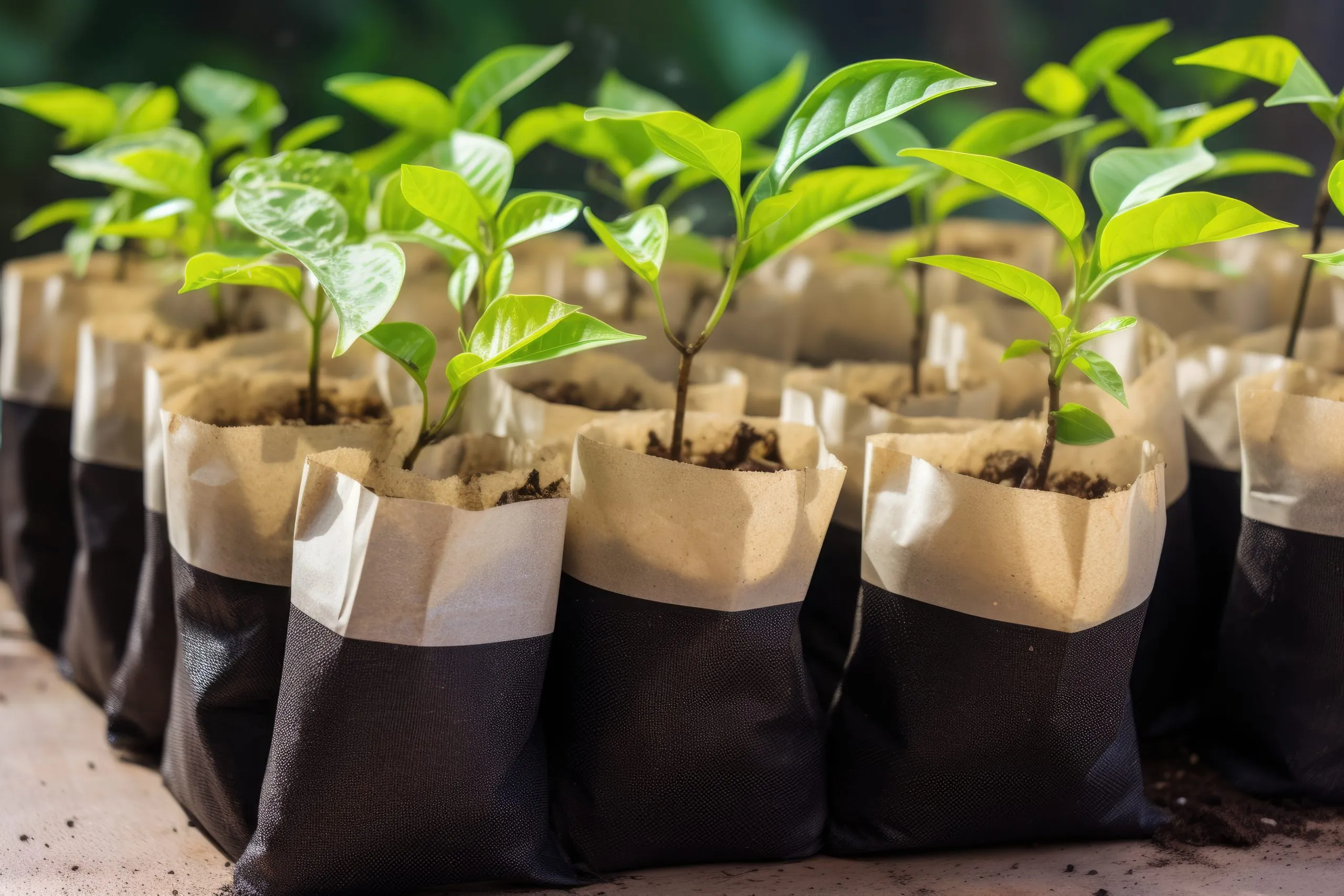
The KSA controlled release fertilizer market is developing as farmers, greenhouse operators, landscaping companies, turf managers, and agribusinesses look for nutrient solutions that perform reliably in arid conditions. Controlled release fertilizers release nutrients gradually, helping crops absorb nutrition over time while reducing wastage, leaching, and repeated application needs. Saudi Arabia’s controlled and slow release fertilizer market is estimated at USD 95–110 million and is projected to grow at 7.5–9.0% CAGR through 2035. Demand is being supported by food security priorities, water scarcity, protected cultivation, precision agriculture, and the need for more efficient fertilizer use.
Key market drivers are strengthening controlled release fertilizer demand in KSA
Food security and protected agriculture are improving adoption potential
Saudi Arabia is increasing its focus on local food production, greenhouse farming, hydroponics, desert agriculture, and controlled-environment systems. These farming models require careful nutrient management because growers must work with high temperatures, limited water availability, saline conditions, and controlled irrigation schedules. Controlled release fertilizers support steady nutrient delivery and can help reduce losses during irrigation. They are useful for vegetables, fruits, dates, nurseries, ornamentals, turf, and landscaping projects where consistent plant performance matters. Saudi fertilisers and nitrogen compounds demand reached around USD 1.6 billion, showing a sizeable base for advanced nutrient technologies. For growers, controlled release fertilizers offer a way to improve productivity while using inputs more carefully.
Water scarcity is making nutrient efficiency more important
Water scarcity remains one of the strongest factors shaping agriculture and landscaping in Saudi Arabia. Fertilizers that release nutrients gradually can help reduce nutrient leaching and improve plant uptake under drip irrigation, fertigation, greenhouse, and desert farming systems. This matters for growers trying to balance crop productivity, water-use efficiency, and input costs. Saudi Arabia’s nitrogenous fertilizer market is expected to grow at 4.1% CAGR from 2026 to 2033, reflecting continued demand for nitrogen-based nutrition. Controlled release nitrogen products, coated NPK blends, and specialty formulations can help users improve fertilizer timing, reduce waste, and support healthier crop development.
Urban greening and landscaping are creating new application areas
KSA’s urban development, tourism projects, public parks, sports facilities, golf courses, hospitality assets, and residential landscaping are creating demand for fertilizers that support visible plant quality and lower maintenance frequency. Controlled release fertilizers are useful where labor efficiency, stable growth, and predictable performance are important.
Government food security and sustainability initiatives are supporting efficient fertilizer use
Government priorities around food security, sustainable agriculture, water conservation, desert farming, local crop production, and agritech development are influencing the KSA controlled release fertilizer market. National programs linked to Vision 2030, modern farming, greenhouse expansion, water-efficient irrigation, and environmental sustainability create a stronger environment for advanced fertilizer solutions. Controlled release fertilizers align with these priorities because they help improve nutrient-use efficiency and reduce fertilizer wastage. While adoption remains strongest in selected applications, these products support Saudi Arabia’s broader shift toward smarter and more resource-efficient agriculture.
Competitive landscape is expanding across specialty fertilizers and protected cultivation
The KSA controlled release fertilizer market includes multinational fertilizer companies, local nutrient producers, specialty fertilizer suppliers, agricultural distributors, greenhouse input providers, landscaping product suppliers, turf companies, and agritech firms. Competition is shaped by release duration, coating technology, nutrient profile, crop suitability, price, water-use compatibility, technical support, and distribution reach. Suppliers are targeting protected vegetables, dates, fruits, nurseries, ornamentals, turf, landscaping, hydroponics, and controlled-environment farming. Saudi controlled-release fertilizer imports declined 34.59% compared with the previous year, creating room for supply-chain recovery, local partnerships, and more reliable distribution models.
Market challenges continue to affect wider adoption and cost justification
Higher product costs can limit routine use
Controlled release fertilizers usually cost more than conventional fertilizers because of coating materials, specialized production, and formulation complexity. Cost-sensitive growers may adopt them selectively unless performance benefits are clearly demonstrated.
Climate and water conditions require precise product selection
High temperatures, saline soils, irrigation quality, substrate type, and crop cycle can influence nutrient release patterns. Products must be matched carefully to local crops, water conditions, growing media, and application systems.
Future outlook
The future outlook for the KSA controlled release fertilizer market remains positive, supported by food security programs, protected cultivation, desert farming, urban greening, water scarcity, and pressure to improve nutrient efficiency. Opportunities are expected across polymer-coated urea, coated NPK blends, nitrogen stabilizers, micronutrient formulations, greenhouse fertilizers, hydroponic-compatible nutrition, turf products, date palm nutrition, and ornamental plant solutions. As the controlled and slow release fertilizer market expands at 7.5–9.0% CAGR, businesses that combine proven performance, water-efficiency benefits, technical guidance, local partnerships, and reliable distribution will be better positioned for long-term growth.
Consultants at Nexdigm, in their latest publication “KSA controlled release fertilizer market outlook to 2035,” analyze the sector By Nutrient Type (Nitrogen-Based Controlled Release Fertilizers, Phosphorus-Based Controlled Release Fertilizers, NPK Controlled Release Fertilizers, Micronutrient Controlled Release Fertilizers), By Coating Technology (Polymer-Coated Fertilizers, Sulfur-Coated Fertilizers, Polymer-Sulfur Coated Fertilizers)
Nexdigm suggests that businesses in the KSA controlled release fertilizer market should focus on water-efficient, crop-specific, and sustainability-aligned fertilizer solutions that support demand for improved nutrient-use efficiency, reduced fertilizer losses, and consistent crop performance in arid growing conditions.
To take the next step, simply visit our Request a Consultation page and share your requirements with us.
Harsh Mittal
+91-8422857704