
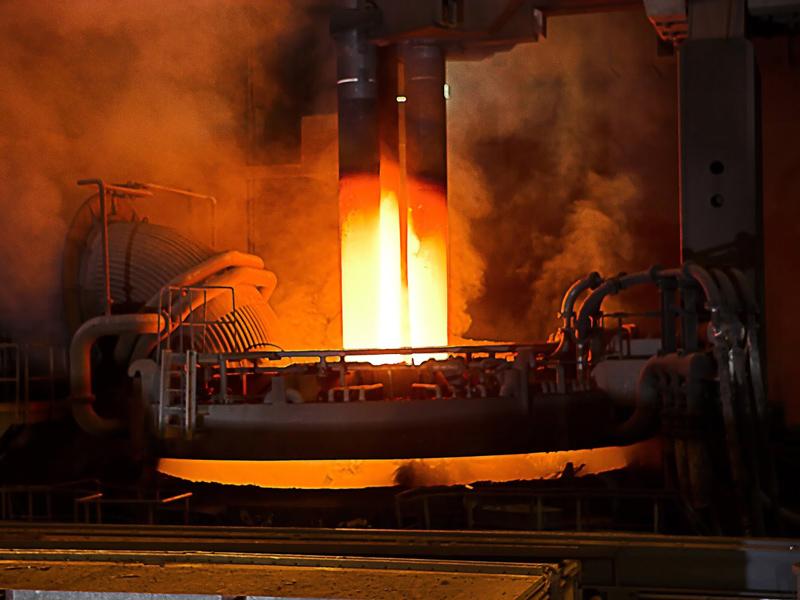
The KSA fire clay market plays a vital role in supporting the country’s refractory, steelmaking, cement, petrochemical, and industrial processing sectors. Fire clay is a key raw material used in the production of heat-resistant bricks, furnace linings, and insulation products required for high-temperature industrial applications. The market benefits from Saudi Arabia’s expanding industrial base and growing investments in manufacturing infrastructure. Recent trade data indicates imports of approximately 2.94 million kg of fire clay valued at USD 1.23 million, highlighting the ongoing reliance on high-quality refractory materials. Increasing localization efforts are expected to further strengthen market development.
Market Drivers Supporting KSA Fire Clay Industry
Expanding Steel, Cement, and Petrochemical Industries
Saudi Arabia’s industrial diversification strategy continues to boost demand for refractory materials, creating significant opportunities for the fire clay market. Steel plants, cement kilns, petrochemical furnaces, and metal processing facilities require durable refractory products capable of withstanding extreme temperatures. Major industrial hubs such as Jubail, Dammam, Riyadh, and Jeddah are witnessing growing consumption of fire clay-based refractories due to expanding production capacities and infrastructure projects.
Rising Refractory Manufacturing Localization
The Kingdom is increasingly focusing on domestic manufacturing capabilities to reduce reliance on imported industrial materials. A notable development is the establishment of a 16,300-square-meter refractory manufacturing facility in Jubail, designed to serve industries including steel, cement, aluminum, petrochemicals, and non-ferrous metals. Such investments are expected to create steady demand for fire clay while strengthening local supply chains.
Growth in Mining and Industrial Processing Activities
Mining remains a strategic sector in Saudi Arabia’s economic transformation agenda. Expansion in mineral extraction, metal refining, and industrial processing activities requires high-performance refractory solutions that depend on fire clay as a critical raw material. Continuous investments in mining projects and downstream processing facilities are likely to support long-term market growth while enhancing industrial self-sufficiency.
Government Initiatives KSA Fire Clay Sector
Government-led economic diversification programs and industrial development initiatives continue to encourage investment in manufacturing, mining, and construction sectors. Through industrial localization strategies and support for domestic production facilities, Saudi Arabia aims to strengthen supply chains for essential industrial materials. The focus on expanding industrial cities, mining operations, and value-added manufacturing is expected to generate sustained demand for fire clay and refractory products across the Kingdom.
Competitive Landscape of KSA Fire Clay Industry
The KSA fire clay market consists of international raw material suppliers, regional distributors, and domestic refractory manufacturers. Competition is centered on product quality, supply reliability, technical performance, and pricing. Companies serving the market increasingly focus on partnerships with cement producers, steel manufacturers, and petrochemical facilities. Growing localization efforts are also encouraging investments in domestic refractory production, creating opportunities for both established players and new market entrants.
Challenges Affecting KSA Fire Clay Growth
Dependence on Imported Raw Materials
Despite increasing localization efforts, a significant portion of fire clay demand is still met through imports. Supply disruptions, logistics challenges, and fluctuations in international trade can impact availability and pricing within the domestic market.
Volatility in Industrial Demand
Demand fire clay largely depends on activity levels across steel, cement, mining, and petrochemical industries. Economic slowdowns, project delays, or reduced industrial output may affect consumption patterns and limit short-term market expansion.
Future Outlook
The outlook for the KSA fire clay market remains positive, supported by industrial diversification, mining sector expansion, and growing refractory manufacturing capacity. Increasing investments in steelmaking, cement production, petrochemical processing, and infrastructure development are expected to create sustained demand for heat-resistant materials. Furthermore, ongoing localization initiatives and new refractory production facilities will likely reduce import dependence while enhancing domestic value creation. As Saudi Arabia advances its industrial transformation goals, the fire clay market is positioned to benefit from stronger demand across multiple end-use sectors and evolving manufacturing ecosystems.
Consultants at Nexdigm, in their latest publication “KSA Fire Clay Market Outlook to 2035,” analyze the sector By Product Form (Market Definition and Scope, Fire Clay Classification Framework, Refractory Clay versus Fire Clay Delineation, Alumina Content Mapping, Silica Content Assessment).
Nexdigm suggests that businesses in the KSA Fire Clay Industry focus on increasing demand from refractory, steel, cement, and industrial manufacturing sectors. Companies can capitalize on opportunities through advanced processing technologies, reliable raw material sourcing, and the growing need for high-temperature resistant materials driven by industrial expansion and infrastructure development initiatives.
To take the next step, simply visit our Request a Consultation page and share your requirements with us.
Harsh Mittal
+91-8422857704