
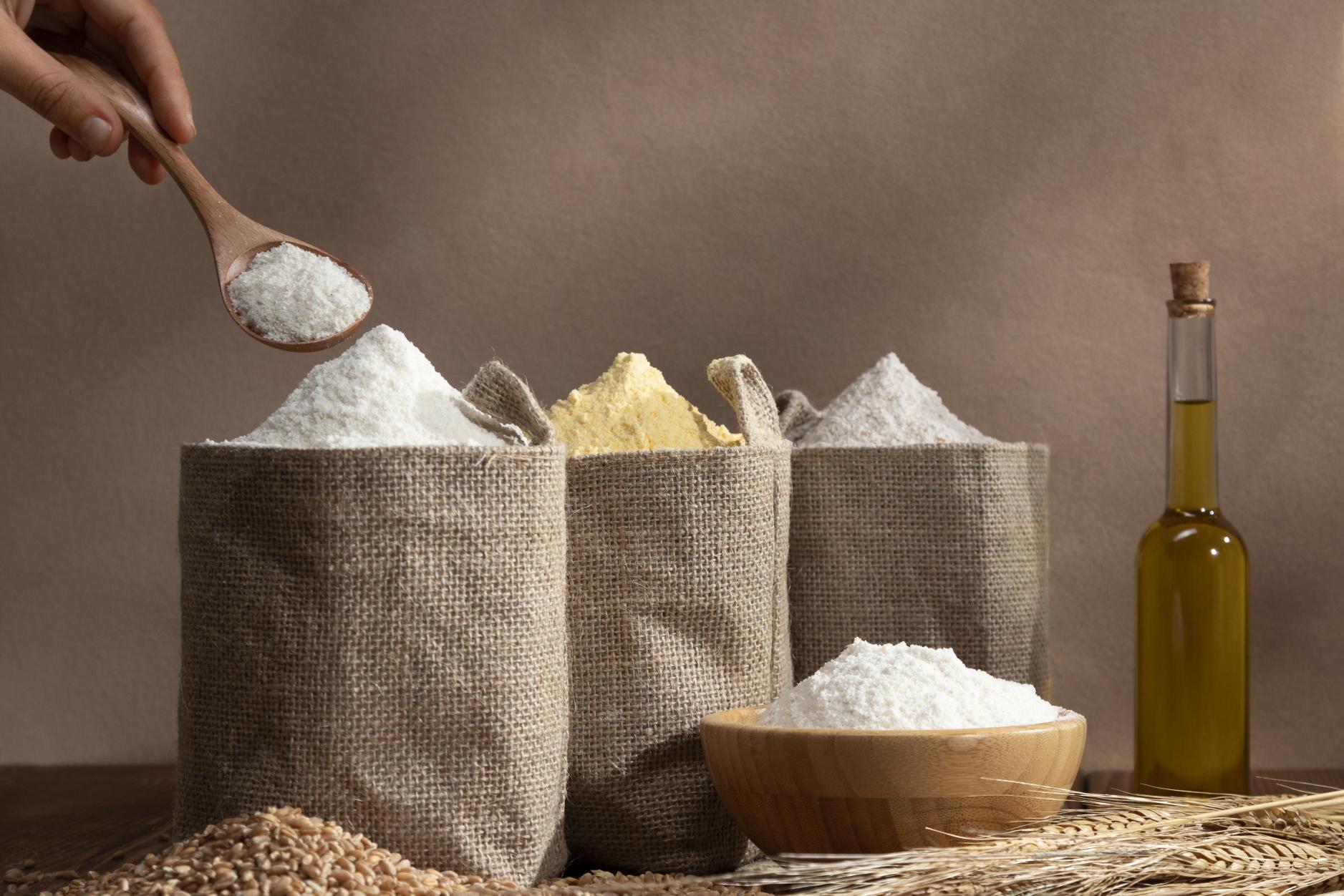
KSA’s native starch market is supported by expanding food manufacturing, packaged foods, bakery, dairy, confectionery, sauces, and industrial applications. Native starch is widely used as a thickener, binder, stabilizer, texturizer, and moisture-retention ingredient. Saudi Arabia has built a substantial food-processing base with more than 1,500 food factories and investments exceeding SAR88 billion. This industrial expansion is strengthening demand for corn, wheat, potato, and tapioca starch across food processing, packaging, adhesives, pharmaceuticals, and other manufacturing applications.
Market Drivers Supporting KSA’s Native Starch Industry
Food Manufacturing Growth Expands Ingredient Demand
Saudi Arabia’s food-processing sector continues to expand as the Kingdom localizes production and strengthens food security. The domestic food market is valued at more than SAR200 billion and is expected to reach around SAR214 billion, while the National Industrial Strategy seeks to attract approximately SAR78 billion in food-industry investments over the longer term. Native starch is widely used in bakery products, dairy preparations, soups, sauces, confectionery, processed meats, snacks, and convenience foods. As local production grows, manufacturers require reliable functional ingredients offering consistent viscosity, texture, binding, and moisture control.
Import Reliance Strengthens Supply Diversification
Saudi Arabia remains highly dependent on imported grains and agricultural commodities. Cereal import requirements are forecast at about 15 million tonnes, including approximately 4 million tonnes of maize and 4 million tonnes of wheat. This dependence increases the importance of diversified sourcing, strategic inventories, and reliable logistics for native starch suppliers. Companies able to maintain regional stocks and secure multiple international feedstock sources can reduce supply disruptions and improve customer service.
Industrial Applications Broaden Consumption
Beyond food, native starch is used in paper, corrugated packaging, adhesives, pharmaceuticals, textiles, and other industrial products. Saudi Arabia’s National Industrial Strategy targets industrial GDP of roughly SAR895 billion, creating a broader manufacturing base for starch-based applications.
Government Initiatives Supporting KSA’s Native Starch Market
Saudi Arabia’s Vision 2030 and National Industrial Strategy emphasize food security, industrial localization, domestic manufacturing, and supply-chain resilience. The Kingdom aims for local producers to meet 85% of domestic processed-food demand, supported by specialized food clusters connecting manufacturers with agriculture, logistics, and packaging suppliers. Recent licensing data also show strong momentum, with 693 food factories and 3,857 food warehouses licensed in a single year.
Competitive Landscape of KSA’s Native Starch Industry
KSA’s native starch industry includes international starch manufacturers, regional ingredient suppliers, local distributors, food processors, and industrial users. Competition focuses on price, starch purity, viscosity consistency, halal compliance, origin, delivery reliability, and technical support. International suppliers remain important because of imported feedstock dependence, while local distributors compete through inventory availability, shorter lead times, customer relationships, and application-specific support across food, packaging, pharmaceutical, and adhesive markets.
Challenges Affecting KSA’s Native Starch Market
Dependence on Imported Feedstocks
Limited domestic production of major starch crops means that Saudi buyers remain exposed to international grain prices, shipping costs, currency movements, weather conditions, and geopolitical disruptions.
Competition from Modified Starches
Native starch may not provide sufficient resistance to heat, acidity, shear, or freeze-thaw conditions in demanding applications. Food and industrial processors may therefore shift toward modified starches or alternative hydrocolloids when greater technical performance is required.
Future Outlook
As Saudi Arabia strengthens domestic food manufacturing and industrial localization, native starch should remain an important functional ingredient across food and non-food applications. The Kingdom already has more than 1,500 food factories, while government policy is encouraging further investment, food clusters, and local processing capacity. In the coming years, demand should increasingly favor consistent-quality, halal-compliant, traceable, and application-specific starches. Suppliers combining diversified sourcing, local inventory, reliable logistics, competitive pricing, and strong technical support should remain well positioned.
Consultants at Nexdigm, in their latest publication “KSA Native Starch Market Outlook to 2035,” analyze the sector By Product Material Type (Corn, Tapioca, Wheat, Potato and Rice Ntaive Starch), By Functionality Type (Thickening, Binding, Stabilizing, Gelling Starch), By Product Form (Powdered, Granulated and Food Grade Native Starch)
Nexdigm suggests that businesses in the KSA Native Starch Industry should diversify imported feedstock sources, strengthen local inventory and distribution, ensure consistent quality, and provide technical support to serve bakery, dairy, packaging, pharmaceutical, and adhesive manufacturers.
To take the next step, simply visit our Request a Consultation page and share your requirements with us.
Harsh Mittal
+91-8422857704