
Saudi Arabia has long been associated with large-scale petrochemical production, but its plastics industry is beginning to tell a broader story. The Kingdom is looking to turn more of its locally produced polymers into finished and specialized products for packaging, construction, automotive, healthcare, energy, and consumer applications. Under the National Industrial Strategy, Saudi Arabia is targeting more than 8.8 million tonnes of additional plastics and rubber conversion capacity, potentially taking total capacity to around 10.5 million tonnes. This creates room for manufacturers to capture more value locally while building a deeper and more diversified industrial ecosystem.
Market Drivers Taking Saudi Plastics Industry Into New Applications
Mega Projects Put Plastics Behind the Kingdom’s Transformation
Saudi Arabia’s investment in cities, transportation, utilities, water systems, energy, and industrial infrastructure is creating demand for products that are often less visible but essential to development. Plastic pipes, fittings, insulation, cables, geomembranes, and construction materials benefit from durability, corrosion resistance, and relatively low weight. As major projects progress, manufacturers have opportunities to supply increasingly specialized products designed for demanding infrastructure and environmental conditions.
Local Manufacturing Creates Room for Higher-Value Materials
The larger opportunity is not simply producing more plastic but producing materials that do more. Saudi industrial plans identify engineering plastics for automotive components, electrical applications, medical equipment, protective products, and other specialized uses. High-value packaging, elastomers, and polyurethanes are also priority areas. Developing these segments can help the Kingdom retain more value domestically and reduce the gap between its strong upstream petrochemical base and downstream manufacturing capabilities.
Plastic Waste Begins to Enter the Value Chain
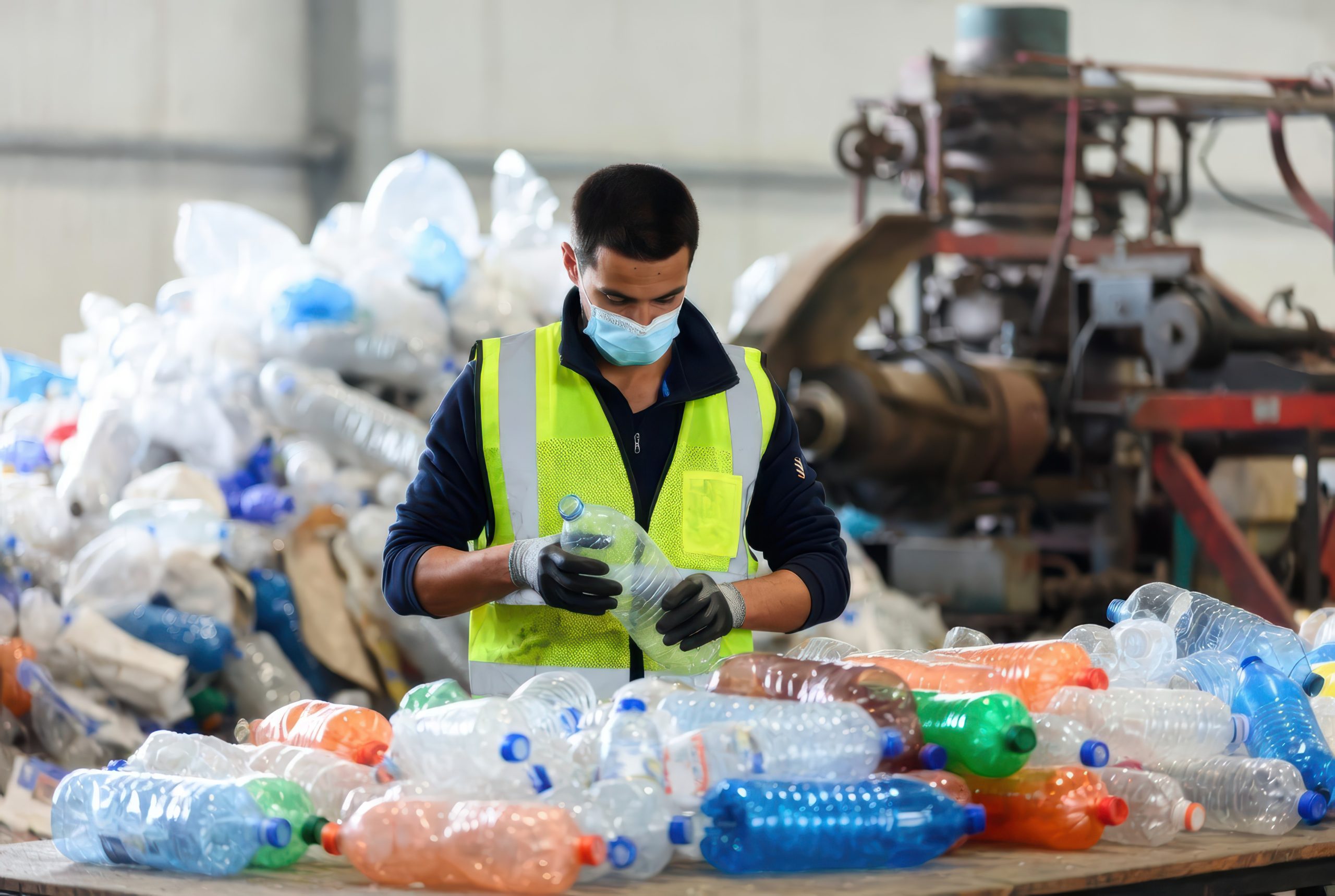
Circularity is gradually becoming part of the growth conversation. Saudi Arabia’s industrial strategy incorporates approximately 540,000 tonnes per year of recycling capacity within its plastics and rubber conversion plans. This opens opportunities for recyclers, waste-management businesses, technology providers, and manufacturers that can turn recovered plastic into commercially useful materials.
KSA Government Industrial Policy Affecting the Plastics Demand
Saudi Arabia’s National Industrial Strategy identifies 20 priority plastics and rubber conversion segments and applications, including high-value packaging, engineering plastics, recycling, automotive components, medical equipment, and construction products. The ambition to build conversion capacity to around 10.5 million tonnes reflects a wider effort to move more deeply into manufacturing and capture additional value from the Kingdom’s established petrochemical base.
Competitive Shifts within the KSA Plastics Industry
Saudi Arabia already has the advantage of major petrochemical producers and ready access to polymer feedstocks. The competitive landscape, however, is widening to include converters, packaging companies, compounders, pipe manufacturers, recyclers, and specialty-material producers. As downstream industries develop, technical expertise, customized products, consistent quality, and manufacturing efficiency will matter more. Companies able to transform locally available resins into sophisticated products can compete on value rather than relying primarily on production scale.
Market Challenges Affecting the KSA Plastics Industry
Global Polymer Oversupply Squeezes Commodity Margins
Expanding production alone may not guarantee stronger returns. Global polymer markets continue to experience excess capacity and pricing pressure, making commodity products more exposed to margin compression. For Saudi manufacturers, moving toward differentiated materials and specialized applications can become increasingly important as competition intensifies.
Circular Ambitions Need Infrastructure on the Ground
Saudi Arabia aims to divert 94% of waste from landfills, but achieving that ambition requires extensive collection, sorting, processing, and recycling infrastructure. Recent official reporting indicated overall waste diversion had reached around 18%, illustrating how much work remains. Building commercially viable recycling systems will be essential if recovered plastics are to become a meaningful source of industrial feedstock.
Future Outlook
The coming years could change how Saudi Arabia participates in the global plastics industry. Its petrochemical base will remain a major strength, but planned conversion capacity of around 10.5 million tonnes creates an opportunity to capture more value further downstream. Engineering plastics, healthcare products, automotive components, construction materials, advanced packaging, and recycling could all become more important. The companies best positioned for this transition will be those that combine reliable feedstock access with advanced processing, product development, manufacturing efficiency, and circular solutions that meet increasingly sophisticated customer requirements.
Consultants at Nexdigm, in their latest publication “KSA Plastics Market Outlook to 2035,” analyze the sector By Polymer Type (Polyethylene, High density Polyethylene, Low Density Polyethylene, Polypropylene, Polyurethane and Polyvinyl Chloride), By Application Type (Flexible Food Packaging, Industrial Packaging and Thermal Insulation).
Nexdigm suggests that businesses in the KSA Plastics Industry should move beyond commodity production by expanding downstream and higher-value manufacturing. Companies should strengthen local conversion capabilities, adopt advanced processing technologies, develop specialized materials, and invest in recycling to capture opportunities across construction, automotive, healthcare, packaging, and energy.
To take the next step, simply visit our Request a Consultation page and share your requirements with us.
Harsh Mittal
+91-8422857704