
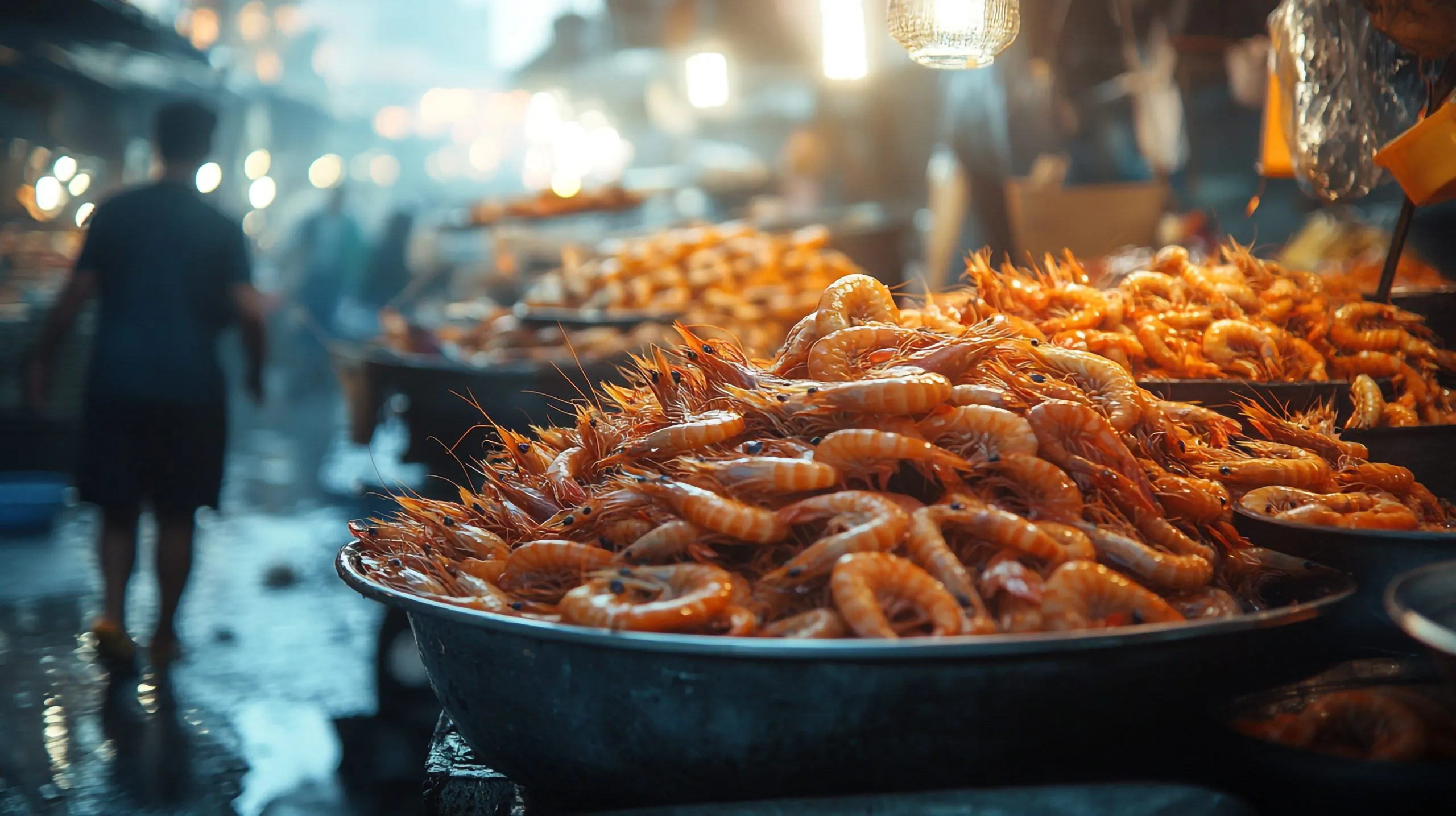
The KSA shrimp market is growing steadily as seafood consumption, aquaculture investment, tourism, and foodservice demand increase across the Kingdom. Shrimp is widely used in hotels, restaurants, retail seafood counters, frozen packs, home cooking, and premium dining formats. The market was valued at around USD 277.77 million in 2025 and is projected to reach USD 384.76 million by 2034. As Saudi Arabia works to strengthen food security and domestic aquaculture under Vision 2030, shrimp is becoming an important part of the country’s seafood growth story.
Key market drivers are strengthening shrimp demand across Saudi Arabia
Aquaculture investment is improving domestic shrimp production
Aquaculture is one of the most important growth drivers for the KSA shrimp market. Saudi Arabia is investing in local seafood production to reduce import dependence and improve food security. The country’s aquaculture strategy targets 600,000 tonnes of production, creating opportunities for shrimp farming, hatcheries, feed suppliers, processors, cold chain operators, and technology providers. Shrimp farming is gaining attention because it can support consistent supply, controlled quality, and scalable production. As modern aquaculture systems expand, domestic shrimp production is expected to become more efficient and commercially important.
Foodservice and hospitality are supporting premium shrimp consumption
Saudi Arabia’s growing hospitality, tourism, events, and restaurant sectors are increasing demand for seafood, including shrimp. Hotels, fine-dining restaurants, casual dining chains, catering companies, and entertainment destinations use shrimp in grilled dishes, appetizers, seafood platters, pasta, rice dishes, and international cuisines. Vision 2030-led tourism development is also creating new dining occasions across major cities and emerging tourism destinations. Shrimp is valued by foodservice operators because it is familiar, versatile, and suitable for both premium and everyday menus.
Retail and home cooking are creating new seafood opportunities
Modern retail, supermarkets, hypermarkets, and online grocery platforms are making shrimp more accessible to Saudi consumers. Frozen shrimp, cleaned shrimp, marinated shrimp, and ready-to-cook packs are gaining relevance among households seeking convenient protein options. Rising disposable incomes, changing diets, and growing interest in healthier meals are also supporting seafood demand. As consumers become more comfortable preparing seafood at home, shrimp products with clear labelling, easy preparation, and consistent quality can gain stronger traction.
Government support and initiatives are strengthening seafood production
Government initiatives under Vision 2030 are supporting the development of aquaculture, food security, domestic production, and seafood supply chains. Programs focused on fisheries development, aquaculture licensing, infrastructure, investment incentives, and sustainable production are helping expand the sector. These initiatives are important because Saudi Arabia aims to reduce reliance on imports while improving local seafood availability. Support for modern farming systems, biosecurity, and processing capacity can help shrimp producers scale more efficiently and compete with imported products.
Competitive landscape is becoming more aquaculture and quality focused
The KSA shrimp market includes domestic aquaculture companies, importers, seafood processors, wholesalers, hypermarkets, restaurants, hotels, and foodservice distributors. Competition is shaped by product freshness, price, origin, certification, cold chain reliability, and supply consistency. Imported shrimp remains important, but domestic producers are gaining relevance as the Kingdom invests in aquaculture. Companies that can provide safe, traceable, high-quality, and convenient shrimp products are likely to strengthen their position across retail and foodservice channels.
Market challenges continue to affect production and supply stability
Harsh climate and farm management risks require careful control
Shrimp farming in Saudi Arabia requires strong water management, disease prevention, feed efficiency, and biosecurity systems. Climate conditions, salinity levels, and operational costs can affect farm performance. Producers need modern technology and skilled management to maintain stable output.
Import competition and price sensitivity can pressure margins
Imported shrimp continues to compete with domestic products on price and variety. Freight costs, global supply changes, and consumer price sensitivity can affect profitability. Businesses need efficient operations and clear value positioning to remain competitive.
Future outlook
The future outlook for the KSA shrimp market remains positive, supported by aquaculture investment, food security priorities, tourism growth, hospitality demand, and modern retail expansion. The market is projected to reach around USD 384.76 million by 2034, showing steady long-term growth potential. Opportunities are expected in domestic farmed shrimp, frozen retail products, ready-to-cook formats, premium foodservice supply, and certified seafood. Businesses that invest in sustainable aquaculture, traceability, cold chain efficiency, and quality assurance will be better positioned to capture future market growth.
Consultants at Nexdigm, in their latest publication “KSA shrimp market outlook to 2035,” analyze the sector By Shrimp Species (Farmed Shrimp Penetration, Wild-Caught Shrimp Utilization, Import Dependency, Species Consumption Preference), By Product Form (Ready-to-Cook Penetration, Frozen Seafood Utilization, Foodservice Demand)
Nexdigm suggests that businesses in the KSA shrimp market should focus on sustainable aquaculture, biosecurity, and cold chain efficiency to support reliable domestic seafood supply.
To take the next step, simply visit our Request a Consultation page and share your requirements with us.
Harsh Mittal
+91-8422857704