
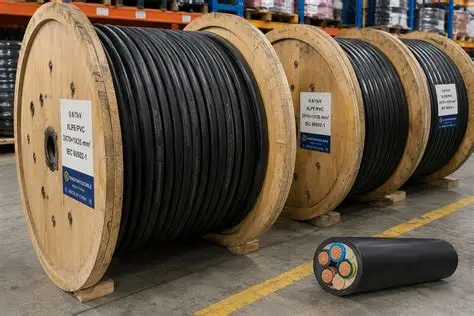
Malaysia’s Low Voltage Cable Market is witnessing steady growth, supported by rapid urbanization, industrial expansion, renewable energy deployment, and ongoing infrastructure modernization. Low voltage cables play a critical role in residential, commercial, industrial, and utility applications by enabling safe and efficient electricity distribution. With installed power generation capacity exceeding 29 GW and electricity consumption continuing to rise alongside economic development, demand for reliable cable infrastructure remains strong. Furthermore, Malaysia’s growing investments in data centers, manufacturing facilities, smart cities, and renewable energy projects are creating significant opportunities for low voltage cable manufacturers and suppliers across the country.
Key Market Drivers for Malaysia’s Low Voltage Cable Market
Infrastructure Development and Urbanization Fuel Cable Demand
Malaysia continues to invest heavily in transportation, residential, and commercial infrastructure projects. The country’s urbanization rate exceeds 78%, while ongoing smart city developments, industrial parks, transit systems, and housing projects require extensive low-voltage power distribution networks. Low voltage cables remain essential for powering buildings, public infrastructure, lighting systems, and utility connections, driving sustained market demand.
Renewable Energy Expansion Supports Grid and Distribution Upgrades
Malaysia is accelerating its energy transition through large-scale solar projects, rooftop solar installations, and battery energy storage initiatives. The country has installed more than 3 GW of solar capacity, with additional renewable projects under development. Low voltage cables are extensively used in solar photovoltaic systems, inverters, energy storage systems, and distribution networks, supporting growing demand from renewable energy applications.
Data Center and Manufacturing Growth Create New Opportunities
Malaysia has emerged as one of Southeast Asia’s leading destinations for data center investment, particularly in Johor and Kuala Lumpur. Billions of dollars are being invested in hyperscale data centers, semiconductor manufacturing, and industrial facilities. These operations require reliable power infrastructure and extensive cabling systems to support equipment, networking, automation, and energy distribution applications, strengthening market growth prospects.
Government Initiatives Supporting Malaysia’s Low Voltage Cable Market
The Malaysian government continues to support infrastructure development and energy-transition initiatives through the National Energy Transition Roadmap (NETR) and long-term economic development programs. The country aims to achieve 70% renewable energy capacity by 2050, while major investments are being directed toward grid modernization, industrial development, electric vehicle infrastructure, and digital connectivity projects. Additionally, infrastructure spending valued at more than MYR 95 billion across transportation, utilities, and industrial development is creating favorable conditions for the expansion of low voltage cable networks throughout the country.
Competitive Landscape of Malaysia’s Low Voltage Cable Market
Malaysia’s Low Voltage Cable Market is characterized by rising demand from utilities, construction companies, renewable energy developers, manufacturing facilities, and data center operators. Competition is increasingly focused on product quality, fire-resistant cable technologies, energy efficiency, compliance with international standards, and cost competitiveness. Manufacturers are investing in advanced insulation materials, halogen-free cables, and durable low-voltage solutions to address evolving customer requirements. Growing construction activity, renewable energy investments, and industrial expansion continue to strengthen competitive intensity across the market.
Major Challenges Facing Malaysia’s Low Voltage Cable Market
Raw Material Price Volatility
Low voltage cable manufacturers remain exposed to fluctuations in copper, aluminum, and polymer prices, which can significantly impact production costs and profit margins. Managing procurement risks and maintaining pricing competitiveness remain ongoing industry challenges.
Compliance with Safety and Quality Standards
As infrastructure projects become increasingly sophisticated, customers require cables that comply with stringent safety, fire resistance, and environmental standards. Meeting these evolving performance requirements often requires continuous investment in manufacturing technology and product development.
Future Outlook
Malaysia’s Low Voltage Cable Market is expected to witness sustained growth through 2035, driven by infrastructure development, renewable energy deployment, industrial automation, and digital economy investments. With power generation capacity exceeding 29 GW, rapid urbanization, growing data center investments worth billions of dollars, and long-term renewable energy targets, demand for low voltage cables will continue to expand across multiple sectors. Emerging opportunities in electric vehicle charging infrastructure, battery energy storage systems, smart buildings, and advanced manufacturing facilities are expected to further strengthen market growth. Companies focusing on high-performance cable technologies, sustainable manufacturing practices, and compliance with international quality standards will be best positioned to capitalize on Malaysia’s evolving power infrastructure landscape.
Consultants at Nexdigm, in their latest publication “Malaysia Low Voltage Cable Market Outlook to 2035,” analyse the sector By Breaker Technology Architecture (Fixed Mount MCCB, Plug-in Unit MCCB and Electronic Trip Unit MCCB), By Voltage Rating (Up to 250V DC and 251V to 600V DC) and By Installation Environment (Indoor Industrial Panel, Outdoor Enclosed Kisosk and Marine/Offshore Rig).
Nexdigm suggests that businesses in Malaysia’s Low Voltage Cable Industry prioritize high-performance power distribution solutions, fire-resistant and halogen-free cable technologies, and localized manufacturing capabilities to capitalize on the country’s 29 GW+ power generation capacity, expanding renewable energy installations, growing data center investments, and increasing demand for reliable electrical infrastructure across residential, commercial, industrial, and utility applications.
To take the next step, simply visit our Request a Consultation page and share your requirements with us.
Harsh Mittal
+91-8422857704