
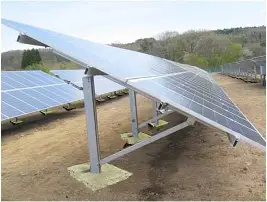
Malaysia’s solar PV mounting systems market is witnessing significant expansion as the country accelerates renewable energy deployment and strengthens energy transition initiatives. Malaysia has surpassed 3.5 GW of cumulative installed solar capacity, with solar emerging as a key contributor to the nation’s clean energy mix. The government is targeting 31% renewable energy capacity, supported by large-scale solar (LSS) programs, corporate green power initiatives, and expanding net energy metering schemes. Additionally, Malaysia’s infrastructure and development pipeline exceeds RM 400 billion, creating strong demand for utility-scale solar farms, industrial rooftop systems, logistics facilities, and commercial developments. Rising investments in data centers, manufacturing hubs, and industrial parks are further supporting solar adoption, increasing demand for advanced PV mounting systems that enhance structural reliability, energy yield, and long-term project performance.
Key Market Drivers for Malaysia’s Solar PV Mounting Systems Industry
Large-Scale Solar Projects Drive Demand for Ground-Mounted Structures
Malaysia continues to expand utility-scale solar deployment through large-scale solar (LSS) programs and renewable energy procurement initiatives. The country has installed more than 2.8 GW of solar capacity, supported by continuous investments in large solar farms across Peninsular Malaysia and East Malaysia. Ground-mounted solar installations require extensive support structures, including fixed-tilt systems and solar trackers, creating significant opportunities for mounting system suppliers. As renewable energy projects increase, demand for corrosion-resistant and weather-resilient mounting technologies is expected to rise.
Commercial and Industrial Rooftop Solar Adoption Supports Market Expansion
Malaysia’s commercial and industrial sectors are increasingly adopting rooftop solar systems to reduce electricity costs and meet ESG objectives. Corporate sustainability initiatives, rising energy consumption, and favorable net energy metering programs are encouraging businesses to install on-site solar generation systems. This trend is driving demand for lightweight rooftop mounting solutions capable of supporting installations on factories, warehouses, office buildings, and commercial facilities while maximizing energy generation efficiency.
Renewable Energy Targets and Energy Transition Policies Strengthen Market Growth
Malaysia aims to increase renewable energy’s contribution to the national power mix, creating favorable conditions for solar power expansion. The government has set targets to achieve 31% renewable energy capacity and continues to introduce policies supporting solar deployment across multiple segments. As solar installations grow, the need for advanced mounting systems that enhance durability, optimize panel performance, and reduce installation costs is expected to increase throughout the forecast period.
Government Support and Renewable Energy Initiatives Backed by Solar Deployment Programs and National Energy Transition Plans
Malaysia’s solar PV mounting systems market benefits from supportive government policies aimed at accelerating renewable energy adoption and reducing carbon emissions. The country has established a target of achieving 31% renewable energy capacity, supported by large-scale solar auctions, net energy metering schemes, and corporate green power programs. Additionally, investments in grid modernization, industrial decarbonization, and clean energy infrastructure are encouraging the deployment of solar PV systems across residential, commercial, and utility-scale projects, generating sustained demand for mounting structures and installation technologies.
Competitive Landscape Driven by Growing Solar Capacity and Increasing Demand for Advanced Mounting Technologies
Malaysia’s solar PV mounting systems market is becoming increasingly competitive as installed solar capacity exceeds 2.8 GW and new renewable energy projects continue to enter the development pipeline. Market participants are focusing on lightweight aluminum structures, galvanized steel mounting systems, solar trackers, floating solar platforms, and customized rooftop support solutions. Competition is primarily based on structural durability, installation efficiency, corrosion resistance, engineering expertise, and cost optimization. Suppliers capable of delivering innovative and climate-resilient mounting solutions are expected to strengthen their market position as solar deployment continues to expand.
Major Challenges Facing Malaysia’s Solar PV Mounting Systems Industry
Raw Material Cost Volatility and Supply Chain Dependence
The market remains vulnerable to fluctuations in steel, aluminum, and imported component prices, which can influence project economics and equipment costs. Supply chain disruptions and changing commodity prices may affect profitability for mounting system manufacturers and project developers.
Land Availability and Regulatory Approval Challenges
Large-scale solar projects often face land acquisition constraints and permitting procedures, particularly in densely developed regions. Delays in approvals and site development can impact project timelines and temporarily affect demand for mounting systems associated with utility-scale installations.
Future Outlook
Malaysia’s solar PV mounting systems market is expected to witness strong growth through 2035, driven by the country’s target of achieving 31% renewable energy capacity, cumulative solar installations exceeding 3.5 GW, and a development pipeline valued at more than RM 400 billion. Rising investments in utility-scale solar parks, commercial rooftop systems, industrial facilities, data centers, and floating solar projects are expected to accelerate demand for advanced mounting solutions. Additionally, increasing corporate renewable energy procurement, battery energy storage deployment, and grid modernization initiatives will support market expansion. Future growth is likely to be driven by innovative tracker technologies, lightweight mounting structures, and localized manufacturing capabilities that improve project efficiency, durability, and energy generation performance.
Consultants at Nexdigm, in their latest publication “Malaysia Solar PV Mounting Systems Market Outlook to 2035,” analyse the sector By Mounting System Technology (Driven Pile Foundations, Concrete Ballast Blocks and Screw Pile Anchoring), By End-User Segment (Utility-Scale Solar Farms and Commercial and Industrial Rooftop) and By Material Composition (Anodized Aluminum Alloy 6005-T5, Hot-Dip Galvanized Steel, High-Density Polyethylene).
Nexdigm suggests that businesses in Malaysia’s Solar PV Mounting Systems Industry prioritize advanced mounting technologies, localized supply chain capabilities, and partnerships with utility-scale and commercial solar developers to capitalize on the country’s growing renewable energy capacity and increasing demand for efficient solar infrastructure solutions.
To take the next step, simply visit our Request a Consultation page and share your requirements with us.
Harsh Mittal
+91-8422857704