
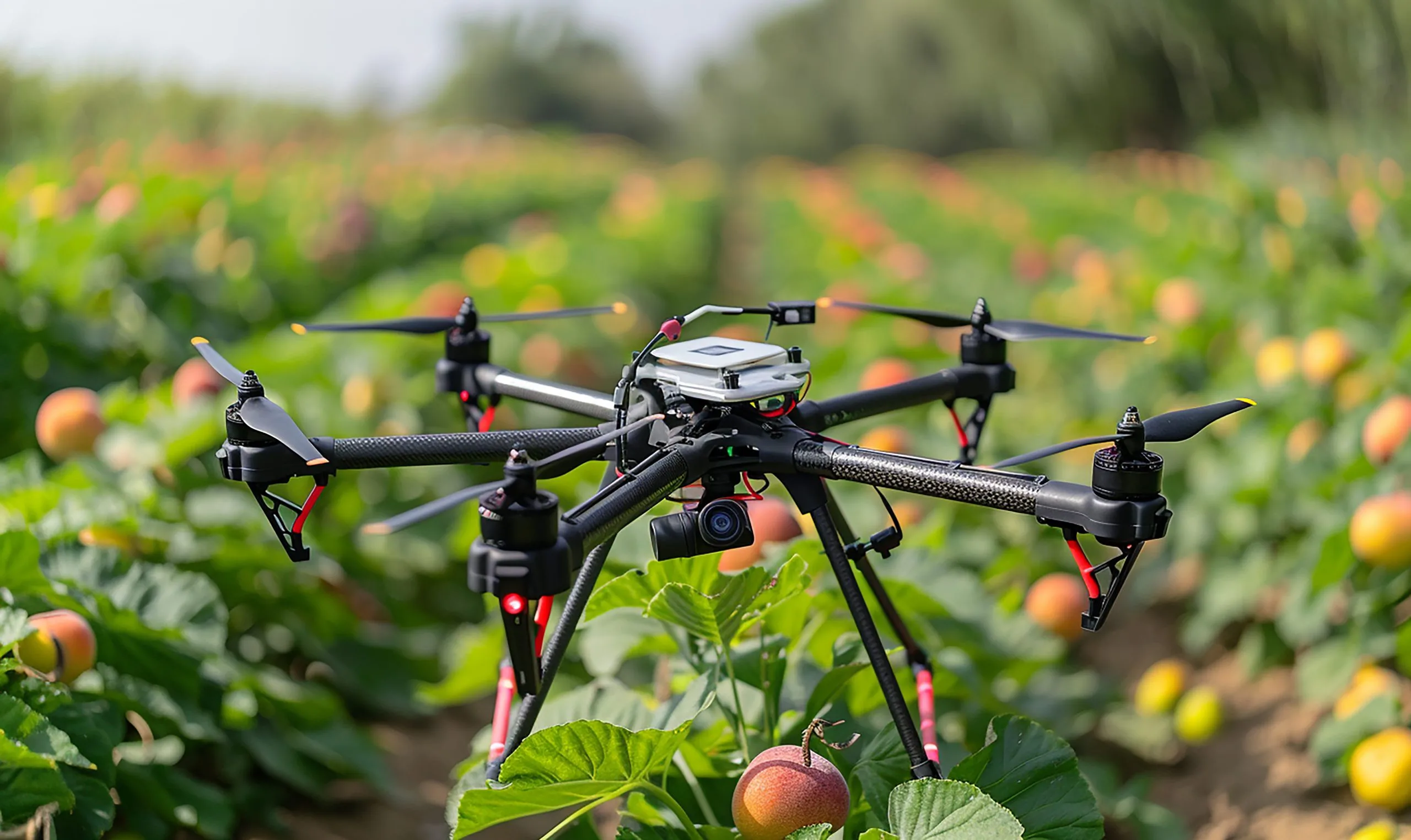
The Nigeria agriculture drones market is developing as farmers, agribusinesses, cooperatives, food security programmes, and technology service providers look for better ways to improve farm productivity. Drones are being used for crop monitoring, field mapping, spraying, spreading, pest detection, irrigation assessment, soil analysis, and yield planning. Nigeria’s digital agriculture drones market is valued at USD 150 million, while the broader UAV market is projected to grow from USD 18.9 million to USD 33.3 million at 12.0% CAGR. Demand is being supported by food security needs, large arable land potential, labor efficiency, and the push toward digital agriculture.
Key market drivers are strengthening agriculture drone demand in Nigeria
Food security priorities are increasing the need for better farm visibility
Nigeria’s agriculture sector plays an important role in livelihoods, food supply, rural employment, and economic diversification. However, many farmers continue to face crop losses linked to pests, diseases, poor field visibility, changing rainfall patterns, and limited access to timely agronomic support. Drones can help by capturing field images, identifying crop stress, monitoring plant growth, mapping damaged areas, and supporting better spraying or fertilizer planning. Crop monitoring and field surveillance accounted for 38.0% of the Middle East and Africa agriculture drones market, showing that field intelligence is one of the strongest use cases. For Nigerian farmers, better visibility can support faster decisions and reduce avoidable yield losses.
Spraying and spreading applications are improving input efficiency
Drone-based spraying and spreading can help farmers apply pesticides, herbicides, fertilizers, and biological inputs more efficiently. This is especially useful where farms are difficult to access, labor is limited, or farmers need quick treatment during pest and disease outbreaks. Crop spraying and spreading in the regional agriculture drones market is projected to grow at 18.0% CAGR, reflecting rising interest in targeted application tools. In Nigeria, drone spraying can support rice, maize, cassava, cocoa, vegetables, cotton, and plantation crops by improving application timing and reducing manual exposure to chemicals.
Drone services are helping overcome direct ownership barriers
Many smallholder farmers may not be able to buy drones directly. Drone-as-a-service models, cooperative ownership, agritech operators, and service providers can make drone access more practical through pay-per-acre spraying, mapping, and monitoring services.
Government digital agriculture and food security initiatives are supporting adoption
Government priorities around food security, agricultural modernization, youth entrepreneurship, digital transformation, and rural productivity are creating opportunities for agriculture drone adoption in Nigeria. Public programmes that encourage mechanisation, technology-enabled farming, extension services, and private-sector participation can help farmers access newer tools such as drones. Drone use is also shaped by aviation rules, safety requirements, and operating approvals, making compliance and trained operators important for market development. As Nigeria looks to improve crop yields and reduce food import dependence, drones can support better field monitoring, targeted input use, and data-led farm planning.
Competitive landscape is expanding across agritech firms and drone service providers
The Nigeria agriculture drones market includes drone suppliers, agritech startups, UAV service companies, input distributors, cooperatives, crop consultants, development programmes, and farm technology platforms. Competition is shaped by affordability, service coverage, payload capacity, battery life, spraying accuracy, software usability, pilot training, repair support, and farmer education. Rotary-wing drones hold around 65.0% share in the Middle East and Africa agriculture drones market, reflecting demand for flexible platforms that can hover, spray, inspect, and operate across varied farm settings. Providers that offer practical pricing, local training, and measurable farm benefits are better positioned to scale.
Market challenges continue to affect affordability and adoption confidence
Smallholder affordability can limit direct adoption
Drone purchase, sensors, batteries, software, licensing, maintenance, and operator training can be expensive for many farmers. Service-based and cooperative models are therefore important for wider market access.
Skills, infrastructure, and regulation remain key barriers
Operators need training in flight safety, spraying calibration, maintenance, data interpretation, and compliance. Limited rural connectivity, repair access, spare parts availability, and awareness can also slow adoption.
Future outlook
The future outlook for the Nigeria agriculture drones market remains positive, supported by food security priorities, digital agriculture, precision spraying, crop monitoring, and service-led adoption models. The Middle East and Africa agriculture drones market is projected to grow from USD 226.8 million to USD 476.3 million at 16.0% CAGR, while regional drone services are projected to expand at nearly 17.2% CAGR. Opportunities are expected across crop monitoring drones, spraying drones, rotary-wing platforms, multispectral sensors, rice and maize applications, cocoa farm monitoring, irrigation analytics, AI-based field intelligence, cooperative-led services, and drone-as-a-service models. Businesses that focus on affordability, farmer training, local maintenance, crop-specific solutions, and partnerships with cooperatives or agribusinesses will be better positioned for long-term growth.
Consultants at Nexdigm, in their latest publication “Nigeria agriculture drones market outlook to 2035,” analyze the sector By Drone Type (Fixed-Wing Drones, Rotary-Wing Drones, Hybrid VTOL Drones, Spraying Drones), By Application (Precision Spraying, Crop Health Monitoring, Field Mapping & Surveying, Irrigation Management)
Nexdigm suggests that businesses in the Nigeria agriculture drones market should focus on affordable, service-led, and crop-specific drone solutions that support demand for crop monitoring, field mapping, spraying, spreading, pest detection, irrigation assessment, soil analysis, and yield planning.
To take the next step, simply visit our Request a Consultation page and share your requirements with us.
Harsh Mittal
+91-8422857704