
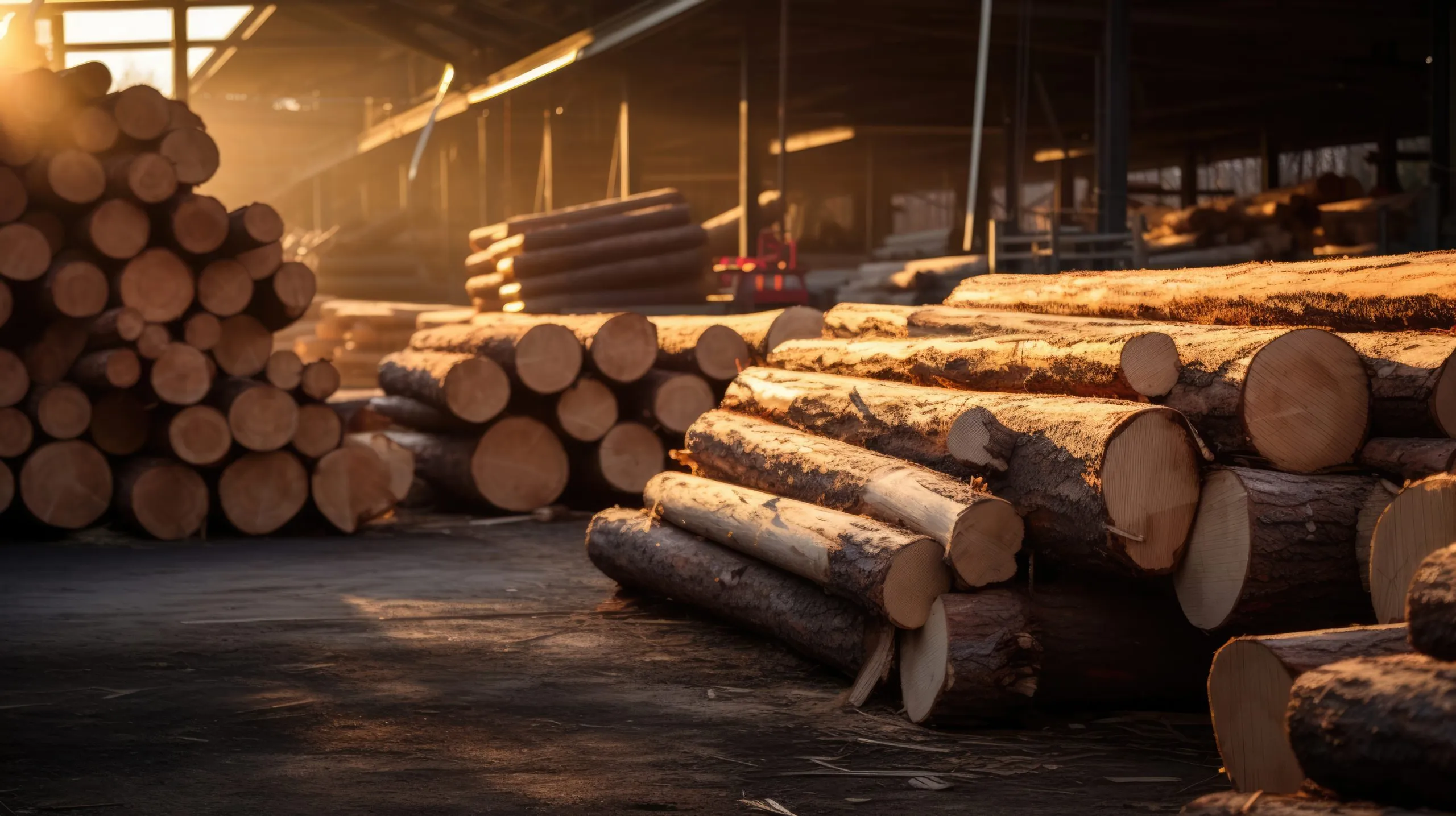
The Nigeria sawnwood market is developing as construction, furniture, interiors, packaging, joinery, and industrial wood applications continue to expand across the country. Sawnwood is used in doors, windows, roofing, flooring, furniture, crates, pallets, formwork, cabinetry, and decorative interiors because it is workable, durable, and suitable for both functional and aesthetic uses. Nigeria consumed around 2 million cubic meters of non-coniferous sawnwood, making it one of Africa’s major consumption markets. Demand is being supported by housing needs, urbanization, furniture manufacturing, commercial interiors, and steady use of timber in everyday construction.
Key market drivers are strengthening sawnwood demand in Nigeria
Housing and construction activity are supporting timber consumption
Nigeria’s growing population, urban expansion, and housing deficit continue to create demand for building materials, including sawnwood. Timber is used across roofing support, doors, windows, ceiling structures, flooring, interior finishing, formwork, fencing, and temporary construction works. In many residential and small commercial projects, sawnwood remains practical because it is familiar, easy to process, and available through local timber markets and traders. Africa’s non-coniferous sawnwood market revenue was estimated at USD 3.3 billion, with regional consumption at 8.9 million cubic meters, showing the scale of wood use across the continent. For Nigerian builders and carpenters, sawnwood continues to offer flexibility across both low-cost and higher-value projects.
Furniture and joinery demand are expanding market relevance
Nigeria has a large and growing base of furniture makers, carpenters, joinery workshops, interior contractors, and small-scale wood processors. Sawnwood is used in beds, wardrobes, tables, chairs, cabinets, doors, shelves, wall panels, and customized interior fittings. Rising urban incomes, office development, hospitality projects, and home improvement spending are supporting demand for better-quality furniture and interior wood products. Nigeria, South Africa, and Cote d’Ivoire together accounted for 46% of Africa’s total non-coniferous sawnwood consumption, highlighting Nigeria’s importance in regional wood demand. As consumers seek durable furniture and locally made interiors, sawnwood remains a core raw material.
Packaging and industrial wood use are adding steady volume
Growth in agriculture, food distribution, manufacturing, retail, exports, and logistics is supporting demand for pallets, crates, wooden boxes, and transport packaging. These applications provide regular volume demand beyond construction and furniture cycles.
Government forestry and housing initiatives are supporting market development
Government priorities around housing delivery, infrastructure development, forestry management, rural livelihoods, local manufacturing, and sustainable resource use influence Nigeria’s sawnwood market. Housing and construction programs indirectly support timber demand through residential and commercial building activity. At the same time, policies that encourage forest conservation, plantation development, legal timber trade, and domestic processing can improve long-term raw material availability. Stronger enforcement of responsible sourcing and improved support for wood-processing enterprises can also help formalize the market. These initiatives are important for balancing economic demand with forest protection and sustainable timber supply.
Competitive landscape is shaped by timber traders, sawmills, and furniture-linked suppliers
The Nigeria sawnwood market includes sawmills, timber merchants, hardwood traders, building material suppliers, furniture manufacturers, carpentry workshops, joinery firms, pallet producers, and local distributors. Competition is shaped by wood species, price, availability, moisture content, cutting quality, durability, transport access, and buyer relationships. Informal and fragmented supply channels remain common, but organized buyers increasingly look for consistent grading, treated wood, reliable delivery, and documented sourcing. Suppliers that combine stable timber access, processing quality, kiln drying, treatment capability, and distribution reach are better positioned to serve builders, furniture makers, and commercial buyers.
Market challenges continue to affect supply reliability and sustainability
Forest pressure and informal sourcing create long-term risks
Nigeria’s sawnwood market faces pressure from deforestation, illegal logging, weak traceability, and uneven forest management. These issues can affect raw material availability and buyer confidence over time.
Quality variation and logistics costs can reduce competitiveness
Moisture variation, inconsistent cutting, poor seasoning, and limited treatment can affect product performance. Transport costs and regional supply gaps can also raise prices for buyers and reduce supplier margins.
Future outlook
The future outlook for the Nigeria sawnwood market remains steady, supported by housing demand, urbanization, furniture production, construction activity, packaging needs, and local wood processing. Africa’s non-coniferous sawnwood market is projected to reach 9.9 million cubic meters and USD 4.3 billion, growing at 1.0% CAGR in volume and 2.3% CAGR in value. Opportunities are expected across hardwood lumber, treated timber, roofing wood, furniture-grade sawnwood, door and window frames, pallets, crates, joinery wood, kiln-dried products, and certified timber. Businesses that invest in responsible sourcing, quality control, drying technology, treatment, traceability, and value-added processing will be better positioned for long-term growth.
Consultants at Nexdigm, in their latest publication “Nigeria sawnwood market outlook to 2035,” analyze the sector By Wood Species Type (Southern Yellow Pine Sawnwood, Douglas Fir Sawnwood, Spruce-Pine-Fir Sawnwood, Hem-Fir Sawnwood), By Product Form (Rough Sawn Lumber, Planed Sawnwood, Kiln-Dried Sawnwood)
Nexdigm suggests that businesses in the Nigeria sawnwood market should focus on sustainable, quality-consistent, and value-added timber products that support demand across housing, construction, furniture, interiors, packaging, joinery, and industrial wood applications.
To take the next step, simply visit our Request a Consultation page and share your requirements with us.
Harsh Mittal
+91-8422857704