
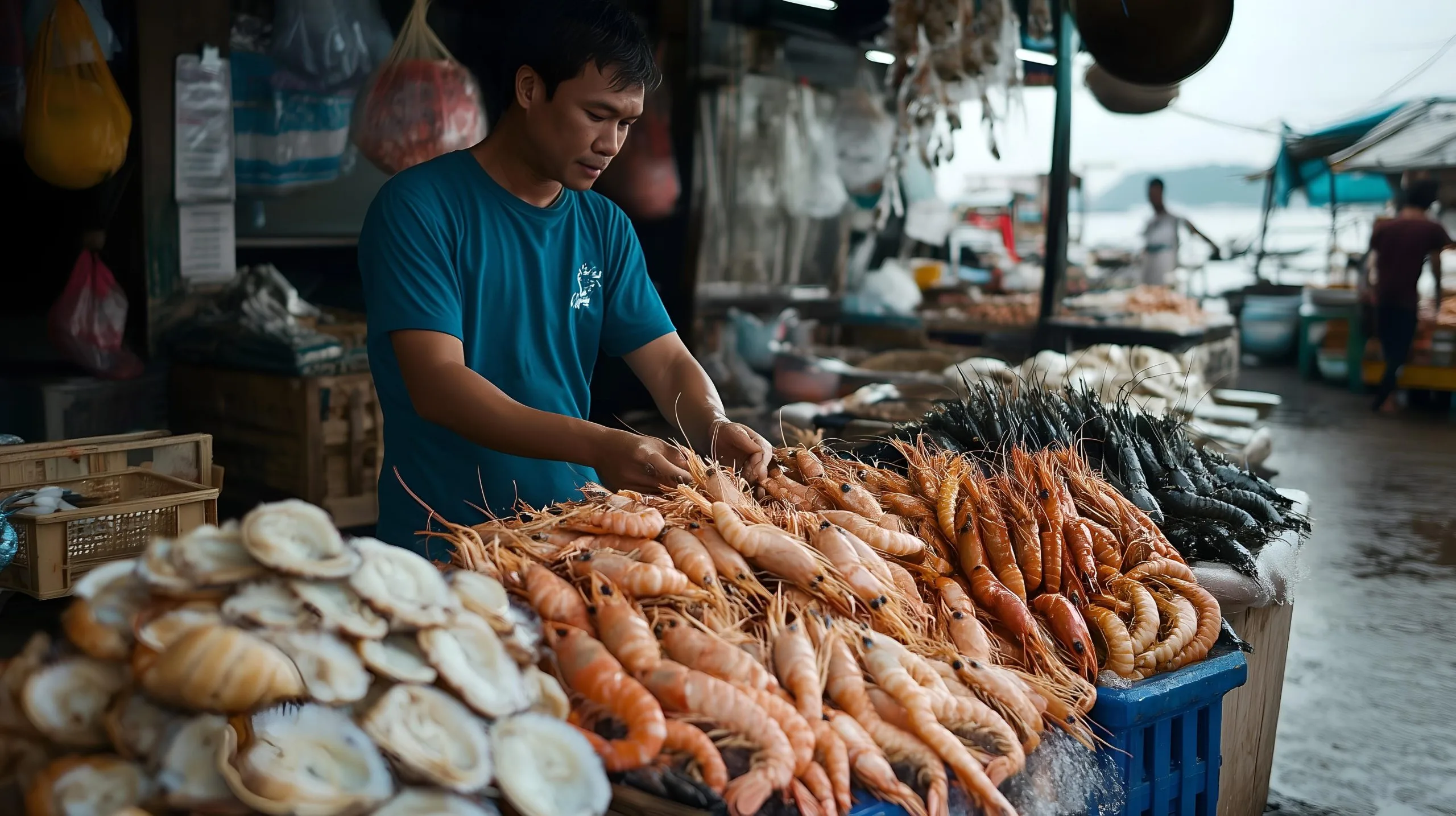
The Nigeria shrimp market is gradually gaining attention as seafood demand, aquaculture interest, export potential, and coastal fisheries activity continue to develop. Shrimp is consumed across households, restaurants, hotels, and local seafood markets, while also holding potential for export-oriented value chains. Nigeria’s coastal production includes nearly 10,000 tons of shrimp, supported by the country’s wider fisheries and aquaculture ecosystem. As seafood consumption rises and the blue economy becomes a stronger policy focus, shrimp can play a larger role in Nigeria’s food security, livelihoods, and trade development.
Key market drivers are supporting shrimp demand across Nigeria
Coastal fisheries are creating a foundation for shrimp supply
Nigeria’s coastal waters provide a natural base for shrimp harvesting, especially along communities connected to marine and brackish water resources. Shrimp production is closely linked to small-scale fisheries, local landing sites, seafood traders, and processing networks. The wider fisheries and aquaculture sector contributes around 2% of national GDP and supports about 1.5 million fishers, showing its importance to employment and rural livelihoods. While shrimp production remains smaller than major fish categories, it offers higher-value opportunities when supported by better handling, processing, and market access.
Domestic seafood consumption is increasing market relevance
Nigeria has a large and growing consumer base with strong demand for affordable and protein-rich food. Fish and seafood remain important sources of animal protein for many households, and shrimp is used in soups, stews, rice dishes, grills, restaurant meals, and premium seafood offerings. Urban consumers in cities such as Lagos, Abuja, Port Harcourt, and Calabar are also becoming more exposed to packaged, frozen, and restaurant-style seafood products. As income levels, foodservice demand, and modern retail channels grow, shrimp consumption can gradually expand beyond coastal markets.
Aquaculture and processing can unlock stronger value creation
Aquaculture development can support more stable shrimp supply over the long term. Investment in hatcheries, pond systems, feed, disease management, cold storage, and processing facilities can improve quality and reduce post-harvest losses. Value-added shrimp products, including frozen, cleaned, dried, and packaged formats, can help producers reach retail, foodservice, and export buyers. Stronger processing capacity can also help Nigeria move from informal trade toward more organized seafood value chains.
Government support and initiatives are strengthening blue economy potential
Government focus on fisheries, aquaculture, food security, and the blue economy is creating a more supportive environment for seafood development in Nigeria. Policies that encourage aquaculture investment, coastal resource management, cold chain infrastructure, and export readiness can benefit the shrimp sector. Support for small-scale fishers, training, quality standards, and access to finance can also improve productivity. These initiatives are important as Nigeria works to reduce seafood import dependence and strengthen domestic production.
Competitive landscape is becoming more supply and quality focused
The Nigeria shrimp market includes coastal fishers, aquaculture operators, traders, processors, cold chain providers, wholesalers, restaurants, hotels, retailers, and exporters. Competition is shaped by product freshness, price, supply reliability, handling practices, cold storage access, and distribution reach. Informal supply chains remain important, but demand for cleaner, packaged, and traceable seafood is increasing in urban and premium channels. Businesses that can provide consistent quality and reliable delivery are likely to gain stronger market access.
Market challenges continue to affect production and commercialization
Cold chain and post-harvest losses limit market expansion
Shrimp is highly perishable and requires proper handling, icing, storage, and transport. Cold chain gaps can reduce quality, increase waste, and limit access to higher-value markets. Better infrastructure is essential for retail and export growth.
Informal supply chains and financing gaps create barriers
Many small-scale producers and traders operate with limited access to finance, modern equipment, and quality certification. This can restrict productivity, traceability, and compliance with buyer requirements. Stronger organization and investment are needed.
Future outlook
The future outlook for the Nigeria shrimp market remains positive, supported by seafood demand, aquaculture potential, coastal resources, foodservice growth, and blue economy development. Opportunities are expected in farmed shrimp, frozen seafood, value-added processing, urban retail channels, and export-oriented supply chains. As Nigeria strengthens cold chain infrastructure, farmer training, quality control, and market access, shrimp can become a more commercially attractive seafood category. Businesses that invest in reliable sourcing, processing, traceability, and distribution partnerships will be better positioned to capture long-term growth.
Consultants at Nexdigm, in their latest publication “Nigeria shrimp market outlook to 2035,” analyze the sector By Shrimp Species (Farmed Shrimp Penetration, Wild-Caught Shrimp Utilization, Import Dependency, Species Consumption Preference), By Product Form (Ready-to-Cook Penetration, Frozen Seafood Utilization, Foodservice Demand)
Nexdigm suggests that businesses in the Nigeria shrimp market should focus on reliable sourcing, cold chain development, and quality handling to reduce post-harvest losses and improve market access.
To take the next step, simply visit our Request a Consultation page and share your requirements with us.
Harsh Mittal
+91-8422857704