
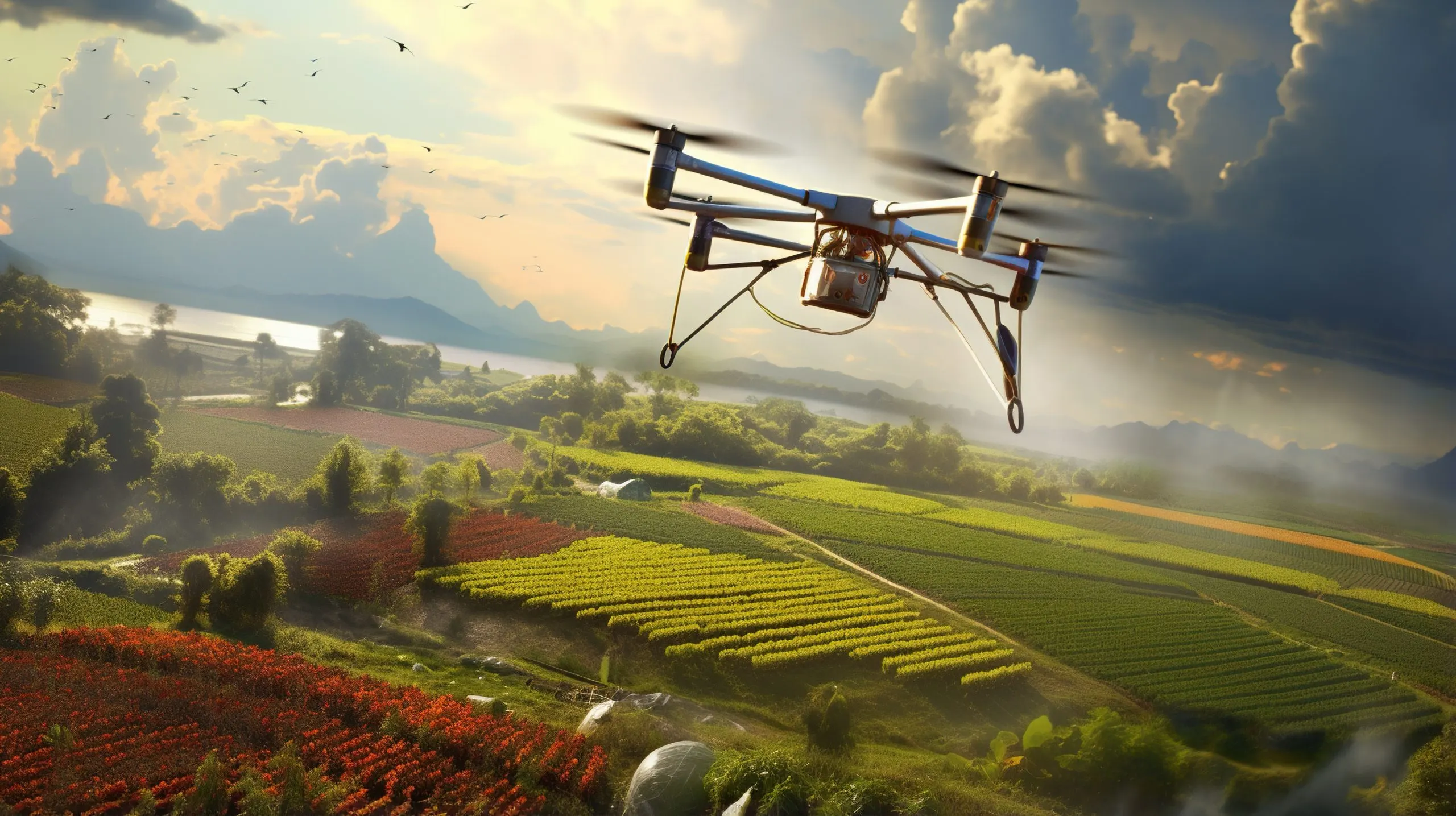
The Philippines agriculture drones market is expanding as farmers, cooperatives, agribusinesses, government agencies, and drone service providers look for more efficient ways to manage crops and improve farm productivity. Drones are being used for crop monitoring, spraying, land analysis, pest detection, mapping, irrigation assessment, plant health monitoring, and yield planning. The Philippines agriculture drones market is projected to reach USD 172.0 million, growing at 29.46% CAGR. Demand is being supported by smart farming adoption, agricultural modernization, labor efficiency needs, and the push to improve productivity across rice, corn, coconut, sugarcane, fruits, and vegetables.
Key market drivers are strengthening agriculture drone demand in the Philippines
Crop spraying is improving efficiency and farmer safety
Drone spraying is becoming more relevant in the Philippines because it can help farmers apply pesticides, fertilizers, and biological inputs faster and more evenly. This is useful in rice fields, corn farms, vegetable plots, plantations, and areas where manual spraying is difficult or time-consuming. Drones can reduce direct farmer exposure to chemicals and help complete spraying within narrow weather windows. For smallholders, service-based spraying models are especially important because they allow access to drone technology without requiring direct ownership. As farms look for more efficient input application, drones can help reduce labor dependency and improve field-level operating consistency.
Smart agriculture is supporting better crop decisions
Agriculture drones are increasingly being used with sensors, AI tools, cloud analytics, and farm management platforms to convert aerial images into practical field insights. These tools can help detect crop stress, pest pressure, uneven growth, waterlogging, and nutrient issues before they become larger problems. A Philippines smart agriculture and drones market outlook valued the segment at USD 2.9 billion, supported by IoT sensors, precision farming, and modernization initiatives. For farmers and cooperatives, drone-enabled insights can improve decisions around irrigation, spraying, crop nutrition, harvest timing, and yield planning.
Broader drone adoption is strengthening the technology base
The broader Philippines drone market is projected to reach USD 1,586.9 million at 9.61% CAGR, with agriculture modernization cited as one of the key demand drivers. This wider drone ecosystem can improve access to operators, training, repair services, software platforms, and drone-as-a-service models.
Government modernization initiatives are supporting agricultural drone adoption
Government priorities around farm modernization, food security, digital agriculture, mechanization, disaster resilience, and rural productivity are supporting the use of drones in the Philippines agriculture sector. Public agencies and research bodies are encouraging technologies that can improve field monitoring, crop protection, and farm planning. Drone adoption is also shaped by aviation safety rules, registration requirements, and responsible operating standards, making compliance and operator training important. As the country works to improve yields, reduce production losses, and support farmer livelihoods, drones can contribute to more precise and timely farm management.
Competitive landscape is expanding across drone suppliers and agri-tech services
The Philippines agriculture drones market includes drone suppliers, local distributors, spraying service providers, agri-tech startups, cooperatives, farm input companies, software platforms, crop consultants, and drone-as-a-service operators. Competition is shaped by affordability, spraying accuracy, payload capacity, battery life, sensor quality, software usability, repair access, training support, and local service coverage. Providers are targeting rice, corn, coconut, sugarcane, banana, vegetables, fruits, and plantation crops. Companies that combine reliable equipment, farmer education, affordable service pricing, local maintenance, and practical agronomic insights are better positioned to build adoption.
Market challenges continue to affect affordability and adoption scale
Smallholder farm economics can limit direct ownership
Many farms in the Philippines are small or fragmented, making drone ownership difficult for individual farmers. Purchase cost, batteries, maintenance, software, training, and compliance can add to adoption barriers.
Skills, regulation, and rural service access remain key barriers
Farmers and operators need training in safe flying, spraying calibration, battery handling, weather conditions, data interpretation, and compliance. Rural repair networks and spare parts availability are also important for sustained adoption.
Future outlook
The future outlook for the Philippines agriculture drones market remains strong, supported by smart farming, crop spraying, food security needs, climate resilience, and service-led adoption models. Globally, agriculture drones are projected to grow from USD 5.19 billion to USD 18.03 billion at 16.8% CAGR, reinforcing the wider momentum behind drone-enabled farming. Opportunities are expected across spraying drones, mapping drones, AI-based crop analytics, cloud farm platforms, multispectral imaging, rice and corn applications, plantation monitoring, cooperative-led services, disaster assessment, and drone-as-a-service models. Businesses that focus on affordability, farmer training, crop-specific solutions, compliance support, and local maintenance will be better positioned for long-term growth.
Consultants at Nexdigm, in their latest publication “Philippines agriculture drones market outlook to 2035,” analyze the sector By Drone Type (Fixed-Wing Drones, Rotary-Wing Drones, Hybrid VTOL Drones, Spraying Drones), By Application (Precision Spraying, Crop Health Monitoring, Field Mapping & Surveying, Irrigation Management)
Nexdigm suggests that businesses in the Philippines agriculture drones market should focus on affordable, service-ready, and crop-specific drone solutions that support demand for crop monitoring, spraying, land analysis, pest detection, mapping, irrigation assessment, plant health monitoring, and yield planning.
To take the next step, simply visit our Request a Consultation page and share your requirements with us.
Harsh Mittal
+91-8422857704