
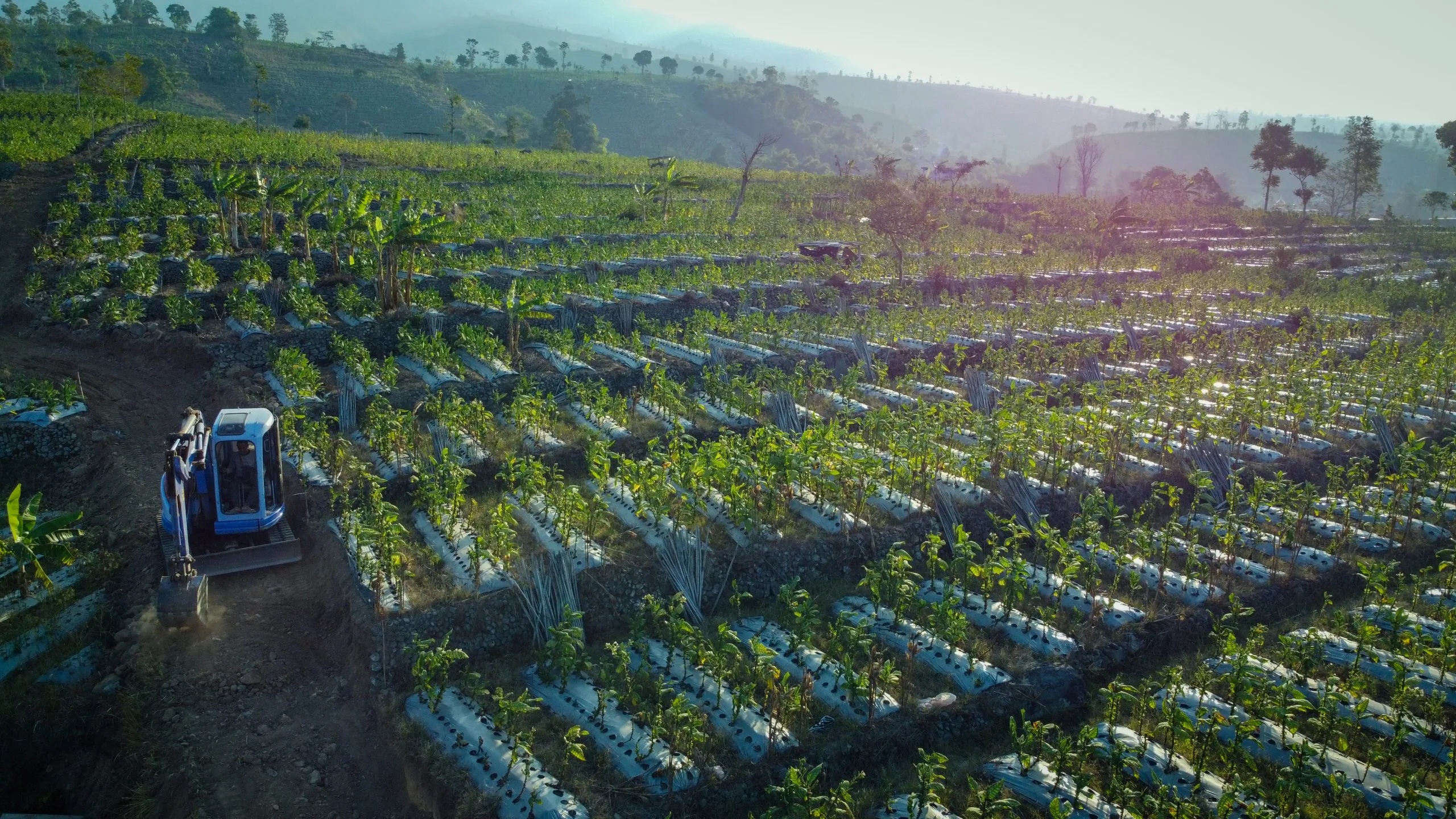
The Philippines controlled release fertilizer market is developing as farmers, cooperatives, plantation growers, horticulture producers, and agribusinesses look for better ways to improve fertilizer efficiency and crop performance. Controlled release fertilizers release nutrients gradually, helping crops absorb nitrogen, phosphorus, potassium, and micronutrients over time while reducing losses from leaching, runoff, and poor application timing. Asia-Pacific controlled-release fertilizer demand reached USD 1.12 billion and is projected to rise to USD 1.74 billion, growing at 7.60% CAGR. In the Philippines, demand is being supported by food security priorities, high-value crop production, soil health concerns, and climate-resilient farming needs.
Key market drivers are strengthening controlled release fertilizer demand in the Philippines
Fertilizer efficiency is becoming more important for crop productivity
The Philippines has a diverse agricultural base across rice, corn, coconut, sugarcane, banana, pineapple, vegetables, fruits, and plantation crops. For many farmers, fertilizer performance directly affects yield, crop quality, and income stability. Conventional fertilizers can lose nutrients through heavy rainfall, flooding, leaching, runoff, or uneven application, especially in tropical growing conditions. Controlled release fertilizers help nutrients become available more gradually, allowing plants to use them over a longer period. This can reduce wastage, lower the need for repeated applications, and support more stable crop growth. The Philippines controlled-release fertilizer industry recorded 5.93% CAGR from 2020 to 2024, indicating rising market interest in more efficient nutrient technologies.
Horticulture and plantation crops are creating stronger adoption pathways
Controlled release fertilizers are particularly relevant for high-value crops where quality, size, consistency, and export standards matter. Across Asia-Pacific, horticultural crops account for 43.9% of controlled-release fertilizer market revenue, showing strong demand from fruit, vegetable, nursery, and specialty crop applications. In the Philippines, products such as banana, pineapple, coconut, mango, vegetables, ornamentals, and nursery crops can benefit from planned nutrient delivery. Polymer-coated products hold 71.2% of the Asia-Pacific controlled-release fertilizer market, reflecting strong preference for coating-based nutrient release systems. These formats can help farmers manage fertilizer timing more effectively, especially when combined with irrigation planning, soil testing, and crop advisory support.
Climate variability and soil health concerns are shaping fertilizer decisions
Frequent rainfall, typhoons, erosion, nutrient depletion, and changing weather patterns are making nutrient management more difficult for farmers. Controlled release fertilizers can support more responsible fertilizer use when paired with balanced fertilization, improved soil management, and crop-specific application guidance.
Government agriculture initiatives are supporting better nutrient management
Government priorities around food security, rice productivity, fertilizer access, soil health, rural development, climate resilience, and sustainable agriculture are influencing the Philippines controlled release fertilizer market. Programs that support farmer training, input availability, modern crop practices, irrigation improvement, and agricultural productivity can create a stronger environment for advanced fertilizers. Policies focused on improving domestic food production and reducing farm input inefficiencies also support interest in better nutrient technologies. While controlled release fertilizers are still developing in broader adoption, they align well with national goals around higher yields, reduced nutrient losses, and more resilient farming systems.
Competitive landscape is expanding across specialty fertilizers and crop-focused solutions
The Philippines controlled release fertilizer market includes multinational fertilizer companies, local fertilizer producers, specialty nutrient suppliers, importers, distributors, cooperatives, agro-dealers, plantation input providers, and crop advisory firms. Competition is shaped by price, product availability, coating quality, nutrient release duration, crop suitability, farmer education, and distribution reach. Suppliers are targeting rice, corn, banana, pineapple, coconut, vegetables, fruits, nurseries, and ornamental crops with more efficient nutrient solutions. Companies that offer practical field demonstrations, affordable pack sizes, technical support, and reliable provincial distribution are better positioned to build grower confidence and repeat adoption.
Market challenges continue to affect wider farmer adoption
Higher upfront costs can limit smallholder use
Controlled release fertilizers often cost more than conventional fertilizers because of coating materials, specialized manufacturing, and formulation complexity. Smallholder farmers may hesitate unless benefits such as higher yields, lower application frequency, and reduced nutrient losses are clearly demonstrated.
Awareness and field validation remain important barriers
Many farmers still need practical guidance on how controlled release fertilizers work, which crops they suit, and how to apply them correctly. Performance can vary by crop, soil type, rainfall, irrigation method, temperature, and fertilizer formulation.
Future outlook
The future outlook for the Philippines controlled release fertilizer market remains positive, supported by food security needs, specialty crop growth, plantation agriculture, climate-resilient farming, and rising demand for better nutrient efficiency. Asia-Pacific controlled-release fertilizer demand is projected to grow at 7.60% CAGR, while global controlled-release fertilizers are projected to move from USD 1.75 billion to USD 3.46 billion at 8.85% CAGR. Opportunities are expected across polymer-coated fertilizers, polymer-sulfur coated products, coated NPK blends, slow-release fertilizers, micronutrient formulations, rice and corn inputs, plantation crop fertilizers, nursery products, and horticulture solutions. Businesses that combine affordability, field validation, farmer education, advisory support, and strong distribution networks will be better positioned for long-term growth.
Consultants at Nexdigm, in their latest publication “Philippines controlled release fertilizer market outlook to 2035,” analyze the sector By Nutrient Type (Nitrogen-Based Controlled Release Fertilizers, Phosphorus-Based Controlled Release Fertilizers, NPK Controlled Release Fertilizers, Micronutrient Controlled Release Fertilizers), By Coating Technology (Polymer-Coated Fertilizers, Sulfur-Coated Fertilizers, Polymer-Sulfur Coated Fertilizers)
Nexdigm suggests that businesses in the Philippines controlled release fertilizer market should focus on affordable, crop-specific, and efficiency-driven fertilizer solutions that support demand for improved nutrient-use efficiency, reduced nutrient losses, and consistent crop performance in tropical farming conditions.
To take the next step, simply visit our Request a Consultation page and share your requirements with us.
Harsh Mittal
+91-8422857704