
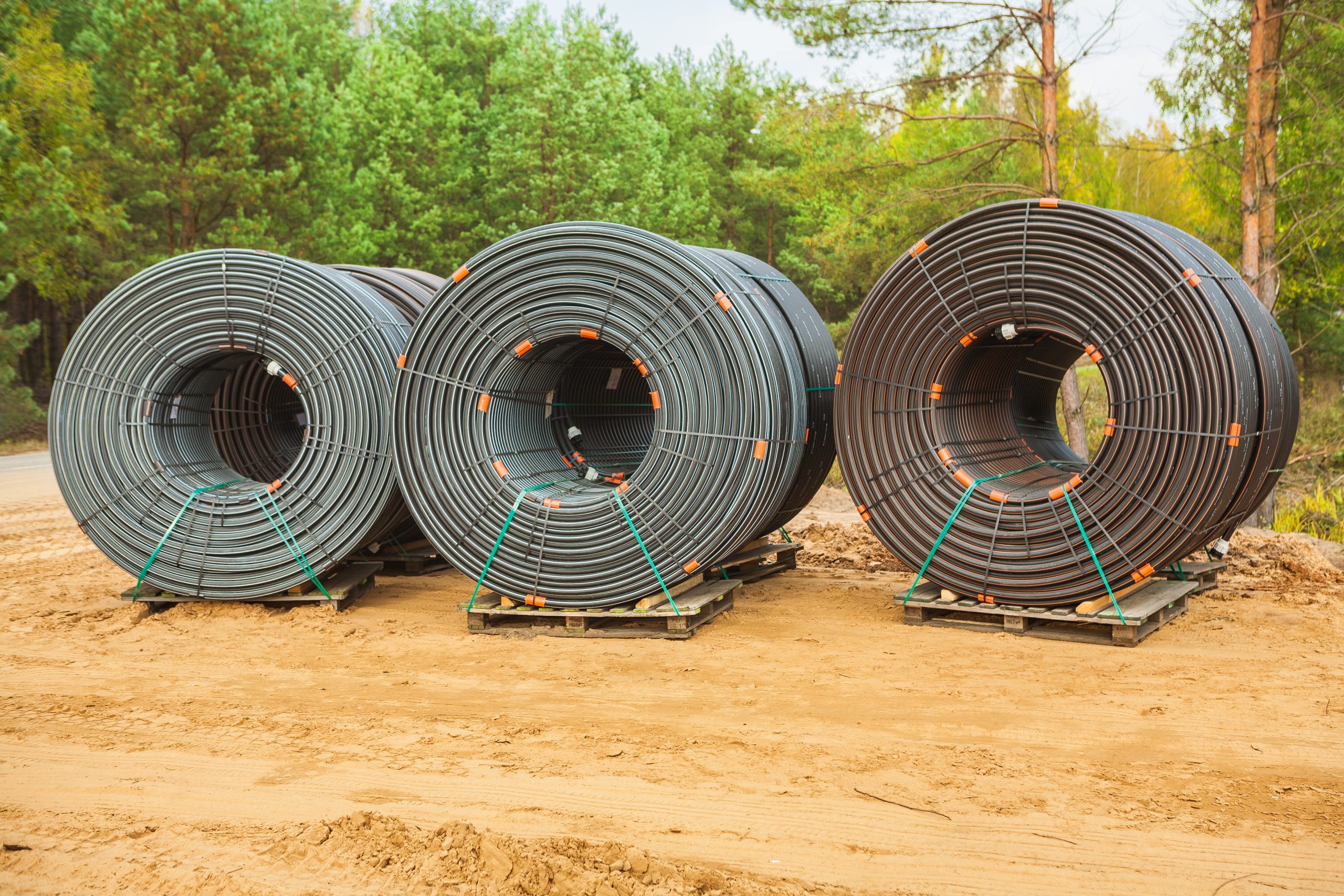
The Philippines flexible pipe market is gaining relevance as the country works to strengthen domestic gas production and reduce its dependence on imported energy. Flexible pipes are particularly useful in offshore applications where corrosion resistance, seabed movement, and installation flexibility are important. In 2025, imported energy accounted for 52% of the Philippines’ total primary energy supply, while domestic sources provided 48%. The renewed Malampaya development is especially significant, with two newly drilled wells containing an estimated 222 billion cubic feet of natural gas.
Market Drivers Supporting Growth in Philippines Flexible Pipe Industry
Energy Import Dependence Encourages Domestic Gas Development
Energy security is another important market driver. In 2025, imported sources accounted for 35.18 million tonnes of oil equivalent, or 52% of the country’s primary energy supply. Within the natural gas market, imported LNG supplied 55%, while Malampaya contributed the remaining 45%. This dependence gives the government and energy companies a strong incentive to develop indigenous gas resources. Expanding domestic offshore production could increase requirements for gathering systems, subsea pipelines, terminal connections, and specialized flexible piping technologies.
New Exploration Contracts Broaden the Project Pipeline
The Philippines is also opening more areas for domestic exploration. Between July 2022 and July 2026, the government awarded 14 new petroleum service contracts covering prospective areas including offshore Palawan, the Sulu Sea, Cagayan, Cebu, and other regions. More exploration activity could create longer-term opportunities for flexible pipe suppliers if discoveries progress into commercial offshore developments.
Government Initiatives Supporting the Philippines Flexible Pipe Sector
The government is strengthening the regulatory and investment environment for domestic natural gas. Republic Act No. 12120 and its implementing rules give greater priority to indigenous natural gas over imported fuel. Authorities have also extended the Malampaya service contract until 2039 and encouraged further exploration in areas near existing offshore infrastructure. These measures could support future investment in subsea systems, pipelines, offshore production facilities, and associated flexible pipe applications.
Competitive Insights of the Philippines Flexible Pipe Industry
The Philippines flexible pipe market includes offshore energy operators, international subsea equipment suppliers, EPC contractors, pipeline specialists, marine service companies, and local engineering firms. Competition increasingly focuses on corrosion resistance, fatigue performance, pressure capability, installation reliability, and technical support. Companies able to integrate flexible pipe supply with subsea engineering, installation, inspection, and lifecycle maintenance should be better positioned as new offshore gas projects move from exploration toward production.
Challenges Affecting the Philippines Flexible Pipe Market
Offshore Projects Require High Capital Investment
Flexible pipe systems for subsea applications require advanced materials, specialized manufacturing, installation vessels, and rigorous qualification. These requirements can raise project costs and create barriers for smaller suppliers.
Imported Technology Can Increase Project Risk
The Philippines still depends on international suppliers for many advanced subsea technologies and specialized components. Exchange-rate volatility, logistics costs, long lead times, and limited domestic manufacturing capacity can affect project schedules and overall economics.
Future Outlook
As we move ahead, the Philippines flexible pipe industry is entering a more active phase as domestic gas development returns to the centre of the country’s energy-security strategy. The 222 Bcf of reserves identified at Malampaya East-1 and Camago-3 could extend the productive life of Malampaya to around 2034, while new exploration contracts broaden the future project pipeline. The opportunity goes beyond one field. As the Philippines develops more offshore resources and reduces reliance on imported LNG, demand could strengthen for flexible risers, flowlines, subsea connections, and specialized pipeline systems. Suppliers combining strong offshore engineering capabilities with reliable local support should be well positioned.
Consultants at Nexdigm, in their latest publication “Philippines Flexible Pipe Market Outlook to 2035,” analyze the sector By Product Type (Bounded, Unbounded Flexible Pipes, Flexible Jumpers, Risers and Flowlines), By Application (Offshore Oil and Gas Production, Shale Oil and Gas Production, Mining Slurry Transportation and Chemical Transfer Systems).
Nexdigm suggests that businesses in the Philippines’ Flexible Pipe Industry should prioritize alternative-fuel-compatible piping, strengthen maritime and petrochemical partnerships, invest in advanced materials and certifications, and leverage Singapore as a regional hub for Southeast Asian energy infrastructure opportunities.
To take the next step, simply visit our Request a Consultation page and share your requirements with us.
Harsh Mittal
+91-8422857704