
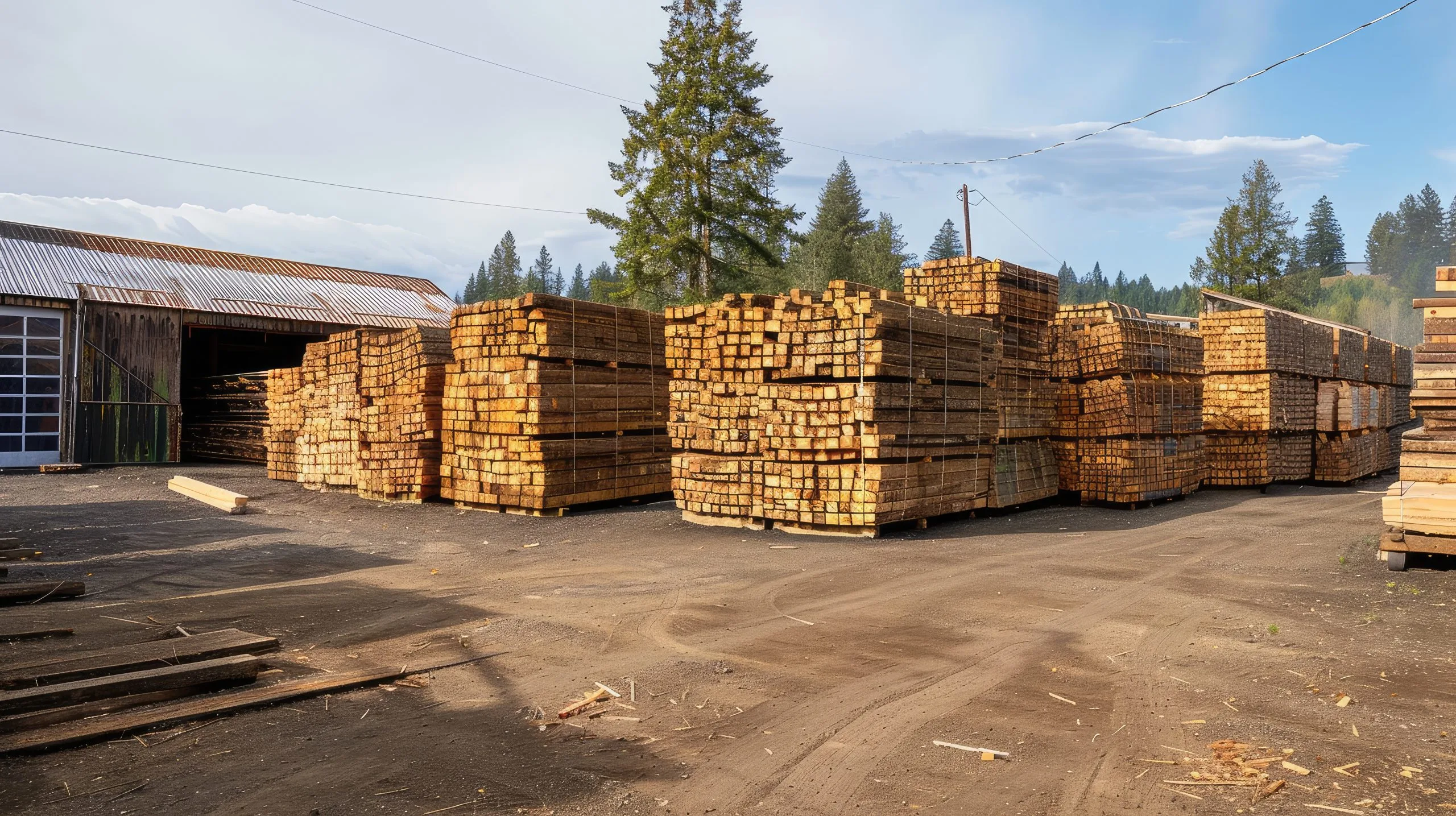
The Philippines sawnwood market is developing as construction, furniture, interiors, packaging, joinery, and industrial wood applications continue to expand across the country. Sawnwood is used in doors, windows, roofing, flooring, furniture, cabinets, pallets, crates, formwork, and decorative interiors because it is workable, durable, and suitable for both functional and design-led applications. In the Philippines, non-coniferous sawnwood consumption increased 27% to 1.2 million cubic meters, reflecting stronger demand for hardwood and broadleaf wood products. Market growth is being supported by housing needs, urban development, furniture production, renovation activity, and logistics-linked packaging demand.
Key market drivers are strengthening sawnwood demand in the Philippines
Housing and construction activity are supporting timber consumption
The Philippines continues to see demand for residential construction, commercial spaces, renovation projects, tourism facilities, and infrastructure-linked development. Sawnwood is used in roofing support, doors, windows, flooring, ceiling structures, interior partitions, formwork, decking, and finishing applications. For many builders, carpenters, and homeowners, timber remains practical because it is familiar, easy to cut and shape, and suitable for both traditional and modern designs. Asia-Pacific sawnwood consumption reached 153 million cubic meters, with regional market value at USD 67.1 billion, showing the scale of timber use across construction and manufacturing in the wider region. In the Philippines, this regional momentum supports timber demand across both urban and provincial markets.
Furniture, interiors, and wood processing are expanding market relevance
Furniture manufacturing, home improvement, hospitality interiors, office fit-outs, and custom joinery are major demand areas for sawnwood in the Philippines. Wood is widely used in tables, chairs, beds, cabinets, shelves, wall panels, doors, and decorative interior products. As consumers spend more on better homes, rental spaces, resorts, restaurants, and retail environments, demand for durable and attractive timber products is improving. The Philippines recorded higher sawnwood import prices at USD 322 per cubic meter, while coniferous import prices reached USD 278 per cubic meter, indicating the value attached to imported timber grades and supply quality. Export prices also rose 8.7% to USD 318 per cubic meter, showing stronger value movement in traded sawnwood.
Packaging and logistics applications are adding steady volume
Growth in food distribution, agriculture, manufacturing, retail, e-commerce, and exports is supporting demand for pallets, crates, wooden boxes, and transport packaging. These applications provide regular volume demand and help diversify the market beyond construction and furniture cycles.
Government housing and forestry initiatives are supporting responsible market development
Government priorities around housing, infrastructure, forestry management, local manufacturing, rural livelihoods, and sustainable resource use influence the Philippines sawnwood market. Housing and public works programs indirectly support demand for timber used in construction, renovation, and interior applications. At the same time, policies focused on forest protection, legal timber sourcing, reforestation, and plantation development can help improve long-term raw material availability. Stronger attention to wood-processing enterprises, traceability, and sustainable forestry practices can support more formal and responsible market growth. These initiatives are important for balancing timber demand with environmental protection and supply security.
Competitive landscape is shaped by sawmills, importers, and furniture-linked suppliers
The Philippines sawnwood market includes local sawmills, timber traders, importers, hardwood and softwood distributors, furniture manufacturers, carpentry workshops, joinery firms, pallet producers, and building material suppliers. Competition is shaped by species availability, price, moisture content, grading consistency, cutting quality, treatment, certification, delivery reliability, and buyer relationships. Imported timber plays an important role in meeting demand where local supply is limited or application-specific quality is required. Suppliers that provide kiln-dried wood, treated timber, reliable grades, documented sourcing, and practical distribution support are better positioned to serve contractors, furniture makers, and commercial buyers.
Market challenges continue to affect supply reliability and sustainability
Raw material constraints and import dependence create pressure
Domestic timber availability can be affected by forest protection rules, plantation cycles, weather disruptions, and uneven supply quality. Import dependence also exposes buyers to freight rates, currency movement, supplier-country policies, and global timber price changes.
Quality variation and compliance needs remain important barriers
Moisture variation, inconsistent grading, poor seasoning, and limited treatment can affect product performance. Buyers are also becoming more attentive to legality documentation, certification, and responsible sourcing.
Future outlook
The future outlook for the Philippines sawnwood market remains steady, supported by housing demand, furniture manufacturing, renovation activity, hospitality projects, packaging needs, and wood-based interiors. Asia’s wider sawnwood demand is projected to move toward 175 million cubic meters and USD 82.7 billion, while Asia-Pacific sawnwood value is expected to grow at 1.0% CAGR. Opportunities are expected across hardwood lumber, softwood lumber, treated timber, furniture-grade sawnwood, door and window frames, flooring, pallets, crates, joinery wood, kiln-dried products, and certified timber. Businesses that invest in responsible sourcing, drying technology, grading standards, treatment, traceability, and value-added processing will be better positioned for long-term growth.
Consultants at Nexdigm, in their latest publication “Philippines sawnwood market outlook to 2035,” analyze the sector By Wood Species Type (Southern Yellow Pine Sawnwood, Douglas Fir Sawnwood, Spruce-Pine-Fir Sawnwood, Hem-Fir Sawnwood), By Product Form (Rough Sawn Lumber, Planed Sawnwood, Kiln-Dried Sawnwood)
Nexdigm suggests that businesses in the Philippines sawnwood market should focus on sustainable, quality-consistent, and value-added timber products that support demand across housing, construction, furniture, interiors, packaging, joinery, and industrial wood applications.
To take the next step, simply visit our Request a Consultation page and share your requirements with us.
Harsh Mittal
+91-8422857704