
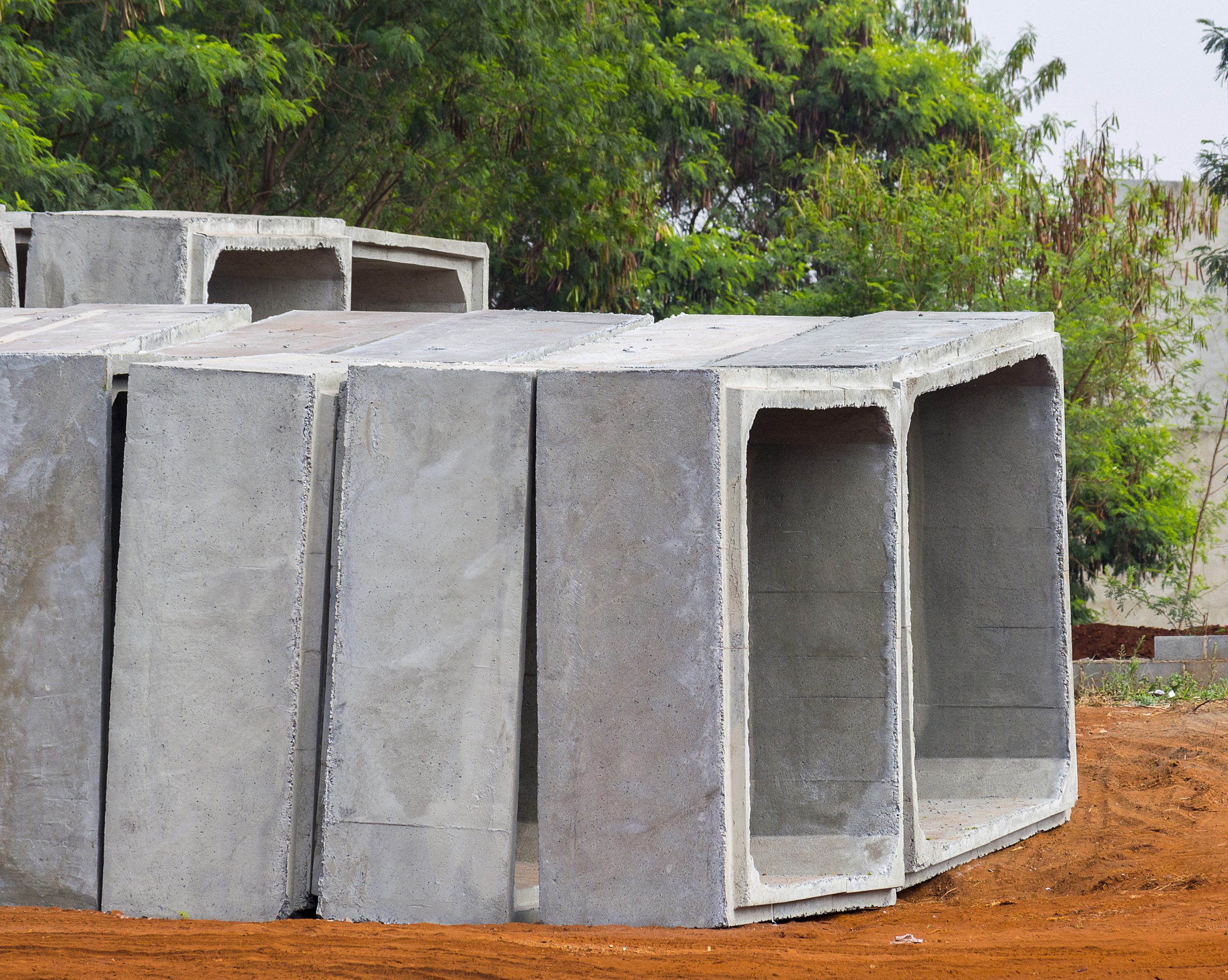
Qatar’s rapidly evolving built environment is creating demand for construction solutions that can handle demanding climate conditions while supporting efficient project delivery. Insulated concrete forms (ICFs) combine insulated formwork with reinforced concrete, creating wall assemblies that provide structural strength alongside thermal and acoustic performance. Qatar’s construction sector grew 6.2% year over year in the first quarter of 2026, contributing QAR1.374 billion to growth in real non-hydrocarbon GDP. Building activity has also remained active, with 2,240 building permits issued in Q2 2026, 26.1% more than in Q1. These conditions are creating opportunities for ICF systems across residential, commercial, and institutional developments.
Market Drivers for Qatar’s Insulated Concrete Form Industry
Thermal Performance Supports Qatar’s ICF Market
Qatar’s hot climate makes thermal insulation an important consideration for buildings, particularly where air-conditioning represents a significant portion of energy use. ICF walls combine continuous insulation with a concrete core, helping reduce heat transfer through exterior walls and potentially supporting more stable indoor temperatures when incorporated into an appropriate building-envelope design. This characteristic gives ICF systems relevance as developers examine ways to improve building performance. Qatar’s broader construction market is also increasingly connected with sustainability, smart-city development, and energy-conscious infrastructure. For ICF suppliers, demonstrating measurable thermal performance, durability, and lifecycle value can help position the technology within projects where operating efficiency matters.
Construction Activity Creates Opportunities for Qatar’s ICF Market
Qatar continues to maintain a substantial construction pipeline. The country’s construction market was estimated at QR198.44 billion in 2026 and is projected to reach QR242.96 billion by 2031, representing a 4.14% CAGR, according to Mordor Intelligence data reported by The Peninsula. Building permits also increased significantly, reaching 2,240 in Q2 2026, compared with 1,777 in Q1. Completion certificates rose 33.5% during the same period. This activity provides potential applications for ICFs in villas, apartment buildings, hotels, offices, schools, healthcare facilities, and other developments where durable and insulated wall systems are required.
Modern Construction Methods Strengthen Qatar’s ICF Market
Qatar’s construction sector is increasingly exploring methods that can support faster delivery, consistency, and improved project efficiency. ICF systems integrate insulation and formwork around reinforced concrete, potentially reducing the number of separate wall-construction stages in suitable applications. The market environment is also becoming more receptive to alternative construction approaches. Traditional on-site construction accounted for nearly 86% of activity in 2025, while modular and off-site construction methods were gaining traction as developers looked for faster delivery and greater cost efficiency. ICF suppliers can therefore position their systems around practical benefits such as installation consistency, durability, insulation, and reduced construction complexity.
Government Support for Qatar’s Insulated Concrete Form Industry
Qatar’s development agenda continues to support infrastructure, urban development, and economic diversification through Qatar National Vision 2030. Government spending remains a major driver of construction activity, with public expenditure accounting for almost 78% of construction activity in 2025, according to industry data. Ashghal’s QR80.91 billion five-year development plan for 2025–2029 is also sustaining investment in roads, drainage, tunnels, and public facilities. These initiatives do not specifically promote ICFs but create a large project environment for modern construction technologies.
Competitive Insights of Qatar’s Insulated Concrete Form Industry
Qatar’s ICF landscape includes specialist system providers, insulation manufacturers, construction-material suppliers, distributors, contractors, and international building-technology companies. Competition can focus on thermal performance, structural capability, installation efficiency, material availability, technical support, and project economics. Qatar’s construction market also attracts international EPC firms working alongside local companies on major energy, infrastructure, and urban-development projects. Suppliers that combine reliable product availability with engineering assistance, contractor training, and local project support can improve their position as developers evaluate alternative wall systems.
Major Challenges Facing Qatar’s Insulated Concrete Form Industry
Project Costs Can Influence Qatar’s ICF Adoption
ICF construction requires developers to evaluate the combined cost of insulated forms, concrete, reinforcement, labour, transportation, and installation. Conventional reinforced-concrete and masonry methods already have established supply chains in Qatar. For projects with strict budgets, developers may therefore compare ICFs closely with familiar construction systems. Suppliers need to demonstrate how thermal performance, durability, construction efficiency, and potential lifecycle savings can contribute to overall project value.
Climate and Supply Conditions Remain Important
Qatar’s extreme heat requires careful planning for concrete placement, material handling, and construction-site operations. Supply-chain reliability is also important because many building materials are sourced internationally. Industry analysts have highlighted the importance of resilient supply chains and modern construction technologies as Qatar continues its development program. ICF suppliers therefore need dependable logistics, suitable materials, and technical support to ensure consistent project execution.
Future Outlook
In the upcoming years, Qatar’s ICF market has an opportunity to develop alongside continued investment in buildings, infrastructure, hospitality, and urban projects. Construction activity remains substantial, with the sector recording 6.2% year-over-year growth in Q1 2026 and building permits rising 26.1% quarter over quarter in Q2. The next stage of market development will depend on how effectively ICF suppliers translate technical advantages into practical project benefits. Competitive pricing, reliable supply, trained contractors, and evidence of thermal and structural performance will be important. As Qatar continues developing energy-conscious and modern buildings, ICF systems may receive greater consideration across residential, commercial, hospitality, and institutional applications.
Consultants at Nexdigm, in their latest publication “Qatar Insulated Concrete Form Market Outlook to 2035,” analyze the sector By ICF System Type (Flat Wall, Grid Wall, Screen Grid, Post and Beam System, Block Type and Vertical ICF Systems), By Building Applications (Basements and Foundations, Above Grade Exterior Walls and Multi Story Building Walls)
Nexdigm suggests that businesses in Qatar’s Insulated Concrete Form Industry should focus on expanding contractor training, and demonstrating the energy-efficiency, durability, and construction benefits of ICF systems. Aligning product development with evolving energy efficiency can also help suppliers respond to changing building-performance requirements.
To take the next step, simply visit our Request a Consultation page and share your requirements with us.
Harsh Mittal
+91-8422857704