
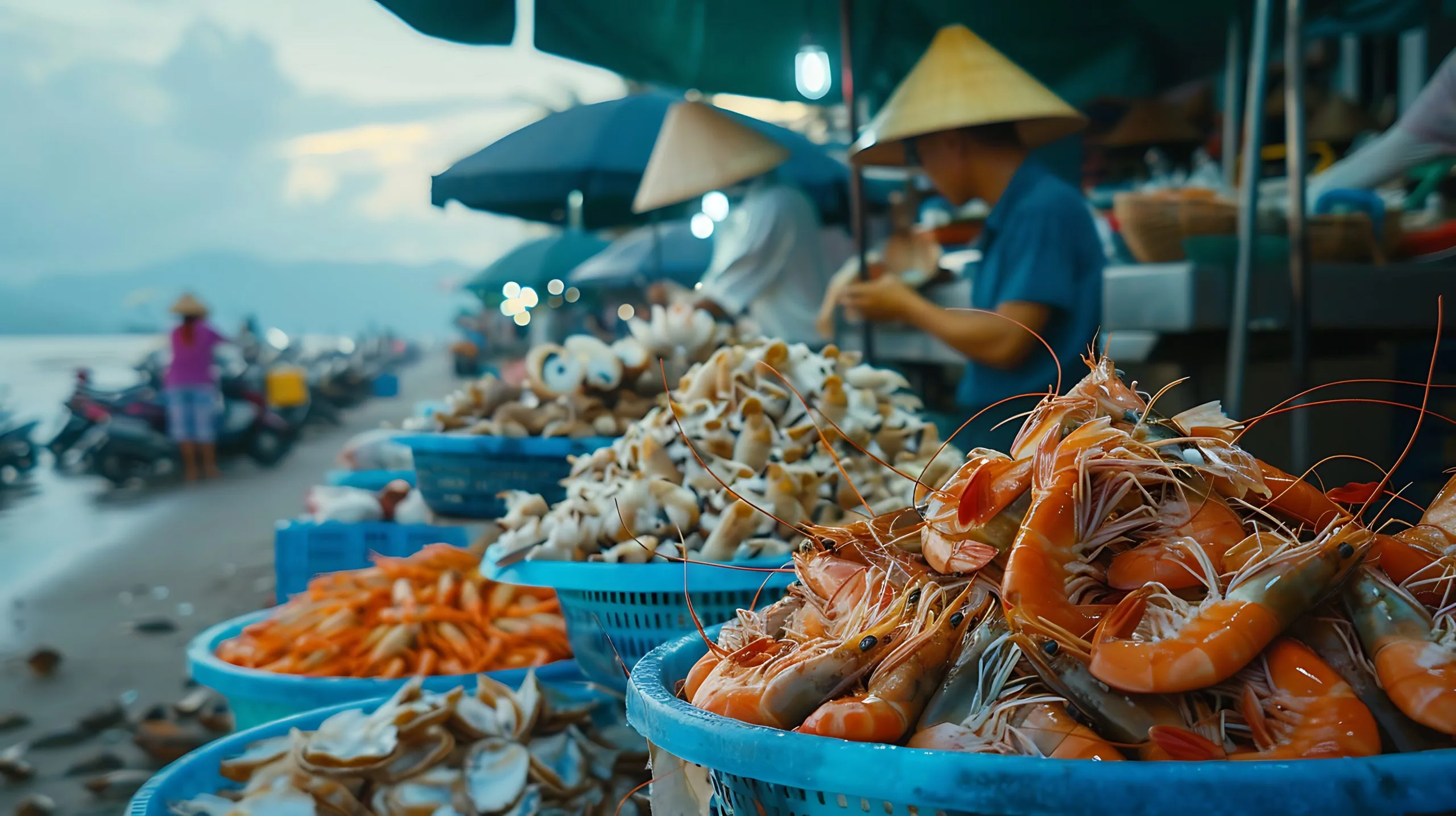
The Singapore shrimp market is supported by strong seafood consumption, high import dependence, modern retail channels, foodservice demand, and diverse culinary habits. Shrimp and prawns are widely used in hawker dishes, restaurants, hotels, seafood restaurants, frozen retail packs, and premium dining formats. Singapore consumes over 140 million kilograms of seafood annually, with seafood consumption of around 22 kg per capita. As consumers continue to seek convenient, high-quality, and responsibly sourced seafood, shrimp remains an important category in Singapore’s broader seafood economy.
Key market drivers are strengthening shrimp demand across Singapore
Imported seafood is supporting year-round shrimp availability
Singapore relies heavily on imported seafood to meet domestic demand, with around 95% of seafood supply coming from overseas markets. This makes import networks, cold chain logistics, supplier relationships, and food safety standards central to the shrimp market. Imported shrimp and prawns are available in frozen, chilled, cooked, peeled, and value-added formats, serving supermarkets, restaurants, hotels, and seafood wholesalers. Strong port infrastructure and efficient distribution systems help maintain availability across different price points and product types. This import-led structure gives consumers access to a wide variety of shrimp origins, sizes, and quality grades.
Foodservice and local cuisine are keeping shrimp demand strong
Shrimp is deeply integrated into Singapore’s food culture. It is used in hawker dishes, laksa, prawn noodles, seafood zi char, dim sum, stir-fries, curries, hotpot, buffets, and premium restaurant menus. Hotels, restaurants, cafés, caterers, and quick-service food operators use shrimp because it is versatile, familiar, and suited to both everyday meals and premium dining occasions. Singapore’s multicultural population and tourism-driven dining scene also support shrimp consumption across Chinese, Malay, Indian, Japanese, Korean, Thai, and Western cuisines. This wide usage helps keep shrimp demand stable across foodservice channels.
Retail and convenience seafood products are creating new opportunities
Modern retail, online grocery platforms, and specialty seafood stores are expanding access to frozen and ready-to-cook shrimp products. Consumers increasingly prefer cleaned, peeled, marinated, and portioned seafood formats that reduce preparation time and support home cooking. Health-conscious households also view shrimp as a protein-rich option that works well in salads, noodles, rice dishes, pasta, and quick meals. As shoppers look for convenience without compromising quality, value-added shrimp products are expected to gain stronger traction.
Government support and initiatives are improving food security and seafood resilience
Government initiatives focused on food security, import diversification, aquaculture innovation, and local food production are shaping Singapore’s seafood sector. Under Singapore’s food resilience goals, the country is encouraging technology-enabled farming, sustainable sourcing, and diversified supply chains. While shrimp production remains import-led, support for aquaculture innovation, food safety systems, and resilient logistics can benefit the wider seafood ecosystem. These efforts are important as Singapore manages global supply risks and strengthens access to safe, high-quality seafood.
Competitive landscape is becoming more sourcing and quality focused
The Singapore shrimp market includes importers, seafood distributors, wholesalers, supermarkets, online grocery platforms, hotels, restaurants, hawker suppliers, and specialty seafood retailers. Competition is shaped by product freshness, origin, certification, price, packaging, convenience, and cold chain reliability. Premium suppliers focus on hotels and restaurants, while retailers compete through frozen packs, private-label seafood, and value-added formats. Companies that can provide traceable, responsibly sourced, and consistently high-quality shrimp products are likely to build stronger buyer and consumer trust.
Market challenges continue to affect pricing and supply stability
Import dependence creates exposure to global seafood risks
Singapore’s reliance on imported seafood makes the shrimp market sensitive to freight costs, supplier disruptions, disease outbreaks in aquaculture regions, currency movement, and changing trade conditions. These risks can affect pricing, availability, and procurement planning.
Sustainability and affordability remain important concerns
Consumers and buyers are paying more attention to responsible sourcing, traceability, and environmental impact. At the same time, premium certified seafood may be more expensive. Businesses need to balance sustainability expectations with affordability and consistent supply.
Future outlook
The future outlook for the Singapore shrimp market remains positive, supported by strong seafood consumption, foodservice demand, modern retail growth, and Singapore’s role as a regional trade and logistics hub. Opportunities are expected in frozen shrimp, ready-to-cook formats, premium foodservice supply, certified seafood, and responsibly sourced products. As consumers become more aware of quality, convenience, and sustainability, businesses that invest in traceability, supplier diversification, cold chain efficiency, and value-added shrimp formats will be better positioned to capture long-term growth.
Consultants at Nexdigm, in their latest publication “Singapore shrimp market outlook to 2035,” analyze the sector By Shrimp Species (Farmed Shrimp Penetration, Wild-Caught Shrimp Utilization, Import Dependency, Species Consumption Preference), By Product Form (Ready-to-Cook Penetration, Frozen Seafood Utilization, Foodservice Demand)
Nexdigm suggests that businesses in the Singapore shrimp market should focus on reliable import sourcing, cold chain efficiency, and traceability to support consistent seafood availability..
To take the next step, simply visit our Request a Consultation page and share your requirements with us.
Harsh Mittal
+91-8422857704