
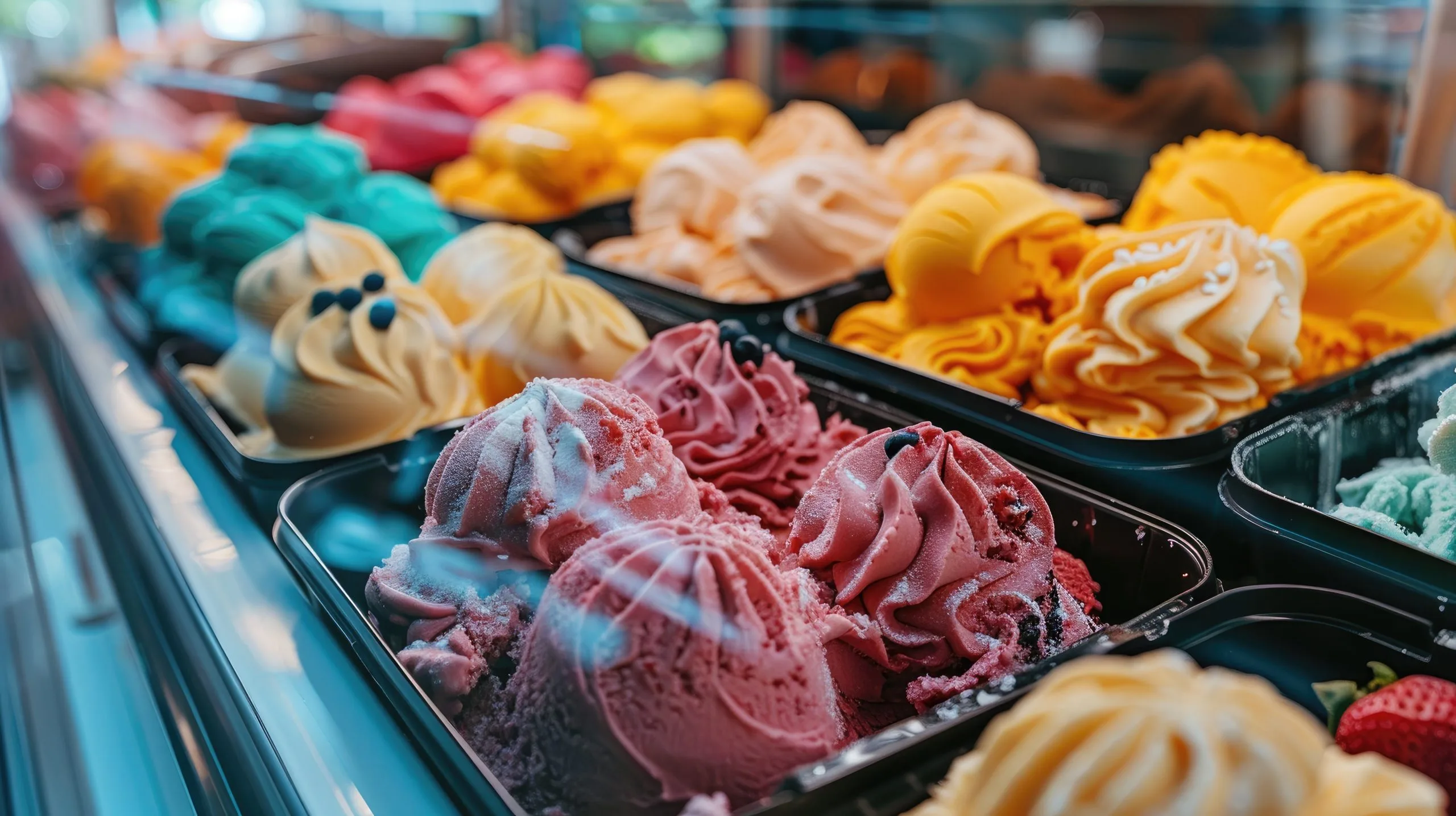
The South Africa commercial ice cream freezers market is expanding as supermarkets, convenience stores, cafés, hotels, restaurants, dessert parlours, and quick-service outlets strengthen their frozen dessert offerings. Rising demand for ice cream, growth in modern retail, urban foodservice expansion, and increased preference for packaged frozen desserts are supporting freezer adoption. South Africa’s ice cream market was valued at around USD 363.1 million and is projected to reach USD 469.2 million, creating demand for chest freezers, display cabinets, gelato units, and branded freezer solutions across retail and foodservice channels.
Key Market Drivers, Retail Expansion and Ice Cream Growth
Rising Ice Cream and Frozen Dessert Consumption
South Africa’s ice cream market is growing steadily, supported by changing consumer preferences, product innovation, and increasing demand for affordable indulgence. Consumers are buying impulse ice creams, family packs, premium tubs, frozen yoghurt, sorbets, and locally inspired dessert flavours. The market is expected to grow at a CAGR of 2.89%, indicating sustained demand for frozen dessert storage and display solutions. Commercial freezers are especially important in supermarkets, convenience stores, petrol stations, kiosks, and foodservice outlets where product visibility and temperature stability directly influence sales. As manufacturers expand packaged and impulse ice cream formats, freezer infrastructure becomes central to maintaining texture, quality, and availability.
Growth in Foodservice and Convenience Retail
Africa’s foodservice market is valued at around USD 79.81 billion and is expected to reach USD 102.43 billion, reflecting growing demand for dining, takeaway, and quick-service formats. South Africa is one of the region’s key foodservice markets, with restaurants, cafés, hotels, QSRs, bakeries, and dessert outlets requiring reliable freezing equipment. Convenience retail is also expanding, creating stronger demand for compact display freezers and branded cabinets suited to high-footfall environments.
Energy-Efficient Freezer Replacement
Retailers and foodservice operators are increasingly looking for freezer units that reduce electricity consumption while maintaining reliable low-temperature performance. Energy-efficient compressors, LED lighting, better insulation, digital controls, and low-impact refrigerants are becoming more relevant as businesses manage operating costs and sustainability goals.
Government Support, Energy Standards and Food Safety
Government support is mainly linked to food safety, energy efficiency, and refrigeration compliance. South Africa’s food safety regulations require proper handling, storage, and temperature control of frozen food products, encouraging businesses to use reliable commercial freezer systems. Energy-efficiency initiatives and appliance performance standards are also pushing refrigeration suppliers and operators toward more efficient equipment. These measures support demand for modern freezers that can reduce energy use, maintain product quality, and comply with food retail and foodservice requirements.
Competitive Landscape of the South Africa commercial ice cream freezers market
The South Africa commercial ice cream freezers market includes local refrigeration suppliers, imported equipment brands, foodservice equipment distributors, and branded freezer providers linked to ice cream manufacturers. Competition is shaped by price, energy efficiency, cooling reliability, storage capacity, cabinet durability, display design, and after-sales service. Demand spans chest freezers, upright display cabinets, countertop units, gelato counters, and branded impulse freezers. Suppliers with strong service networks and affordable product ranges are better positioned to serve modern retailers, cafés, hotels, and small businesses.
Challenges Facing the South Africa commercial ice cream freezers market
High Energy and Maintenance Costs
Commercial ice cream freezers operate continuously, making electricity consumption a major cost challenge. Power interruptions, compressor wear, poor maintenance, and unstable temperatures can increase operating costs and affect ice cream texture, shelf life, and product quality.
Affordability Barriers for Small Retailers
Small kiosks, cafés, convenience stores, and independent dessert outlets may hesitate to invest in advanced or energy-efficient freezer models because of higher upfront costs. This can slow equipment upgrades in price-sensitive segments.
Future Outlook
The South Africa commercial ice cream freezers market is expected to grow steadily as frozen dessert consumption, organised retail, foodservice expansion, and packaged ice cream demand continue to increase. Future opportunities will likely emerge in energy-efficient chest freezers, compact display cabinets, branded impulse freezers, gelato units, and smart temperature-controlled systems. Supermarkets, convenience stores, cafés, hotels, and QSRs will remain important demand channels. As businesses focus on product visibility, energy savings, and reliable cold storage, commercial freezer upgrades will become increasingly important across South Africa’s frozen dessert ecosystem.
Consultants at Nexdigm, in their latest publication “South Africa commercial ice cream freezers market Outlook to 2035,” analyze the sector By Freezer Type (Chest & Deep Freezers, Glass‑Top Freezers, Walk‑In & Custom Freezers), By Cooling Technology (Static Cooling Systems, IoT‑Enabled & Smart Control Freezer)
Nexdigm suggests that businesses should prioritize energy-efficient freezer models, affordable product options, strong after-sales service, and retail-focused display formats to capture growth in South Africa’s commercial ice cream freezers market.
To take the next step, simply visit our Request a Consultation page and share your requirements with us.
Harsh Mittal
+91-8422857704