
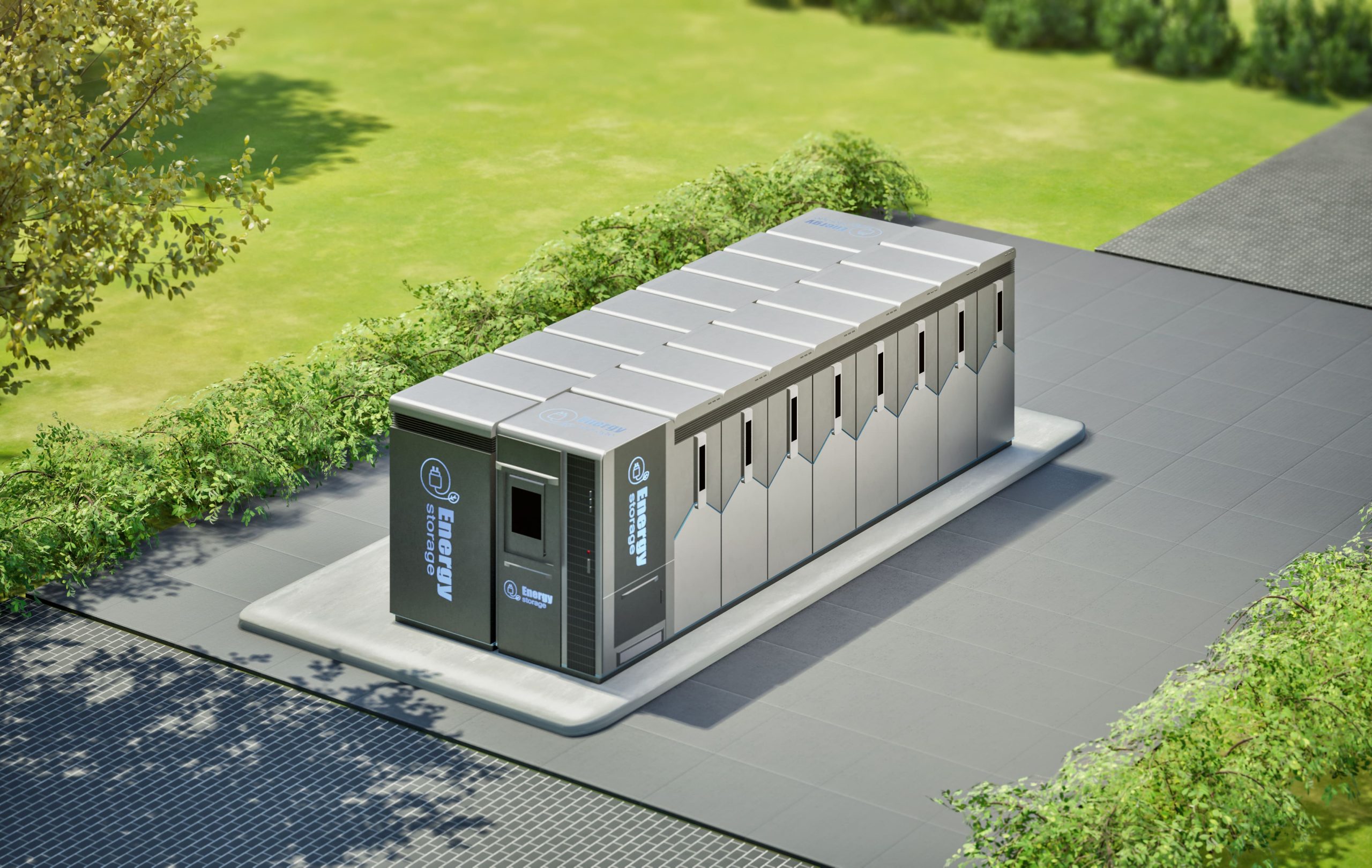
Spain’s Battery Energy Storage System (BESS) market has moved from being a niche concept to something far more central to how the country plans its power system. The shift is largely tied to the rapid expansion of renewables, particularly solar, which has begun to reshape how electricity is produced and consumed across the grid. By 2025, storage capacity remained relatively modest compared to generation, yet the policy direction is clear. Spain now targets 22.5 GW of storage by 2030, a figure that reflects both ambition and urgency. What stands out is the mismatch between when renewable energy is generated and when it is actually needed. Midday solar surpluses and evening demand peaks are becoming more pronounced. Without storage, this imbalance translates into wasted energy or price volatility. Batteries, in this context, are no longer optional infrastructure. They are quickly becoming part of the core system design.
What’s Driving the BESS Market in Spain?
Rapid Renewable Energy Expansion
Spain has seen one of the fastest solar buildouts in Europe over the past few years. Large-scale solar parks are coming online at a pace that, frankly, the grid was not originally designed to handle. On sunny days, generation can exceed demand in certain regions, forcing operators to curtail output. This creates a practical problem for developers. Projects that look profitable on paper begin to lose value when energy cannot be dispatched. Storage offers a way to recover that value by shifting supply to later hours. In practice, many new solar projects are now being planned with co-located batteries from day one rather than as an afterthought.
Need for Grid Stability and Flexibility
As renewable penetration rises, grid management becomes more complex. Unlike conventional power plants, solar and wind do not provide consistent output or inertia. This makes frequency control and voltage stability harder to maintain. Batteries step into this gap quite effectively. They respond within seconds, making them suitable for ancillary services such as frequency regulation. On the ground, grid operators are beginning to treat storage as an operational tool rather than just a backup resource. That shift in mindset is subtle but important. It signals that storage is becoming embedded in day-to-day grid operations.
Improving Project Economics
The economics of battery storage have improved, but not in a straight line. Equipment costs have declined over time, though recent supply chain fluctuations have shown that prices can still move unpredictably. At the same time, revenue opportunities have become more diverse. Developers are no longer relying on a single income stream. Instead, they combine arbitrage, capacity markets, and grid services. This stacking of revenues makes projects more resilient, though it also introduces complexity. A common challenge is accurately forecasting returns across multiple markets, especially when regulatory frameworks are still evolving.
Government-Led Initiatives
Policy support has played a meaningful role in pushing storage forward. Spain’s national energy and climate plan places storage alongside renewables as a priority area rather than a secondary consideration. Funding programs and grants have helped early projects get off the ground, particularly those that might not have been viable under purely commercial conditions. There is also a broader regulatory effort underway. Authorities are working to define how storage participates in electricity markets, including access to ancillary services. While progress has been steady, some gaps remain. Developers often point out that clearer long-term signals would help unlock larger investments.
Market Competition
The competitive landscape is still taking shape. Large utilities such as Iberdrola, Endesa, Naturgy, and Acciona Energía have taken an early lead, largely because they already control significant renewable portfolios. Their advantage lies in integration. They can pair storage with existing assets and optimize performance across a wider portfolio. At the same time, new entrants are beginning to test the waters. International developers, technology providers, and infrastructure funds are exploring opportunities, particularly in standalone storage. This mix of players is likely to make the market more dynamic, though it may also lead to tighter margins as competition increases.
Regulatory and Grid Bottlenecks
One issue that keeps coming up in industry discussions is the gap between ambition and execution. Spain has set strong targets, but translating those into operational projects is not always straightforward. Grid connection delays are a frequent bottleneck. In some regions, developers face long waiting times to secure capacity. Permitting can also be inconsistent, with processes varying across jurisdictions. On top of that, market rules for storage are still evolving, which creates uncertainty around revenue models. These factors do not stop projects entirely, but they do slow momentum. In a market that is otherwise moving quickly, even small delays can have a noticeable impact.
Future Outlook
Looking ahead, storage in Spain will likely move from early adoption to broader integration. By the early 2030s, batteries are expected to be a standard component in most large renewable projects. The conversation will shift from whether storage is needed to how it can be optimized. There is also potential for more sophisticated use cases. Industrial consumers may adopt on-site storage to manage energy costs, while hybrid systems combining solar, wind, and batteries could become more common. Over time, the market should become less reliant on subsidies and more driven by commercial logic.
Consultants at Nexdigm, in their latest publication “Spain Battery Energy Storage System (BESS) Market Outlook to 2035”, analyzed the market by Battery Type (Lithium-ion, Sodium-ion, Flow Batteries, Others), By Connectivity (On-Grid, Off-Grid), By Application (Utility-Scale, Commercial and Industrial, Residential), and By End User (Renewable Developers, Utilities, Industrial Consumers, Commercial Buildings). Nexdigm notes that companies entering this space should focus on flexible project design, careful site selection for grid access, and diversified revenue strategies to navigate Spain’s evolving storage landscape.
To take the next step, simply visit our Request a Consultation page and share your requirements with us.
Harsh Mittal
+91-8422857704